 By st20113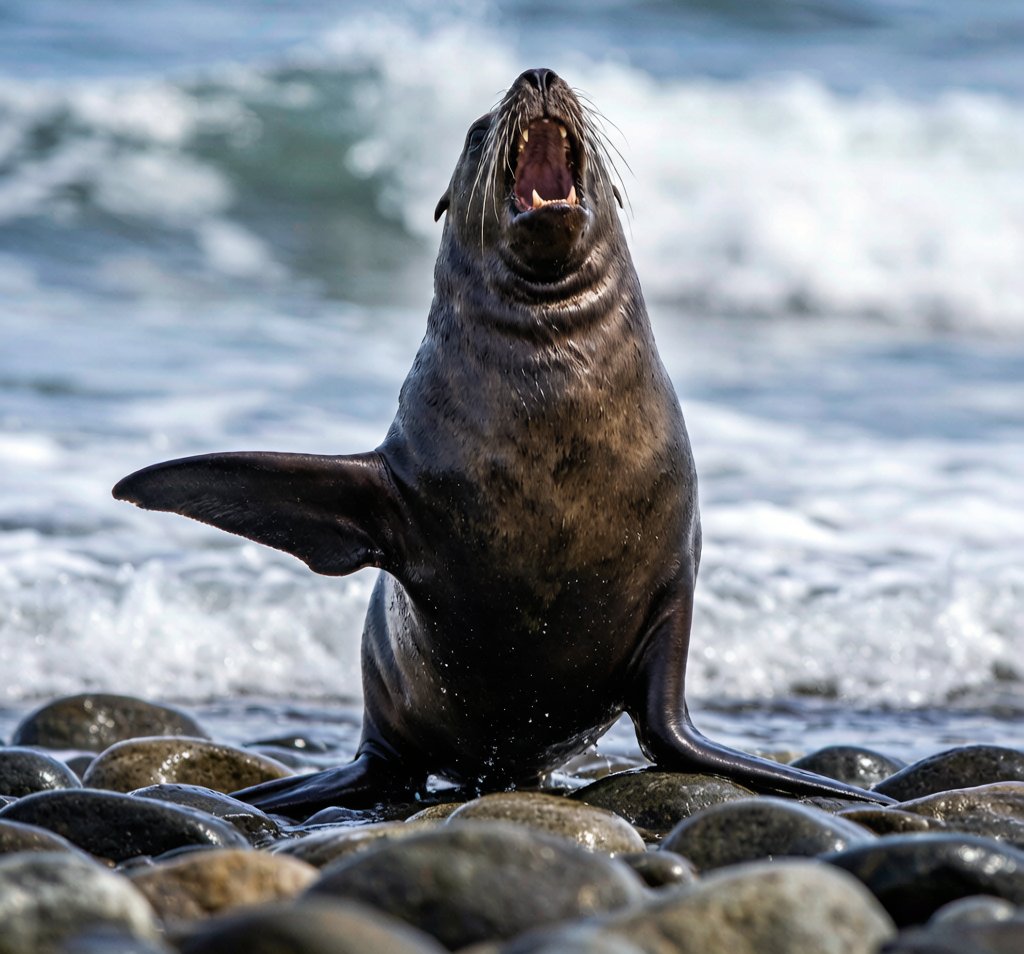
Introduction
The California sea lion (Zalophus californianus) is one of the most visible and charismatic marine mammals along the western coast of North America. From the rocky shores of San Francisco’s famous Pier 39 to the remote beaches of the Channel Islands, these sleek, vocal, and highly intelligent animals have become iconic representatives of California’s coastal ecosystems. Known for their playful behavior, trainability, and loud penetrating barks during breeding season, California sea lions have successfully adapted to life alongside human coastal communities. Their dark coats, whiskery snouts, and remarkable underwater agility make them instantly recognizable to millions of beachgoers and wildlife enthusiasts every year.
Taxonomy
Zalophus californianus belongs to the family Otariidae, the eared seals, which differ from true seals by possessing external ear flaps and the ability to rotate hind flippers forward for effective terrestrial locomotion. The species was first formally described by René-Primevérat Lesson in 1828. The genus Zalophus includes three species: the California sea lion, the extinct Japanese sea lion (Z. japonicus), and the Galápagos sea lion (Z. wollebaeki), which diverged from a common ancestor approximately 2–3 million years ago.
Physical Characteristics
Adult male California sea lions are substantially larger than females, reaching 2.0–2.5 meters and weighing 200–400 kilograms, while females measure 1.5–2.0 meters and weigh 50–110 kilograms. Males develop a prominent raised sagittal crest on the skull—a bony ridge that becomes increasingly prominent with age and gives the species its scientific name (Zalophus means “savage crest” in Greek). Their sleek, dark brown to golden-brown fur is water-repellent, and their highly sensitive whiskers detect even subtle water movements. Like all otariids, California sea lions use their powerful foreflippers to “fly” through the water at speeds up to 29 kilometers per hour.
Habitat
California sea lions range along the Pacific coast from southeastern Alaska to the Gulf of California, Mexico, with major breeding colonies on the Channel Islands of Southern California and in the Gulf. Non-breeding groups haul out on harbors, jetties, buoys, and offshore platforms—readily colonizing urban waterfronts where fishing activity provides easy food. Rookeries are typically sandy or rocky beaches where dominant males establish territories during the breeding season from May to August. The species has expanded its range northward in recent decades, with increasing sightings in British Columbia, likely linked to warming ocean temperatures and expanding prey distributions. Bald eagles and other aerial predators occasionally prey on young sea lions hauled out on exposed beaches.
Diet
California sea lions are opportunistic predators with a diverse diet reflecting the productivity of the California Current. Key prey includes sardine, anchovy, mackerel, rockfish, hake, squid, and octopus. They are skilled divers capable of reaching depths over 200 meters, though most foraging occurs in shallower nearshore waters. Like the red kangaroo on land, sea lions sometimes work cooperatively to herd fish schools into tight balls before diving through them to feed efficiently. Individual sea lions may consume 5–8 percent of their body weight in food daily.
Reproduction
California sea lions have a polygynous mating system, with dominant males holding territories on prime beaches during the summer breeding season. A single male may mate with up to 14 females in one season. Females give birth to a single pup shortly after arriving at the rookery and mate again approximately one week later before returning to sea to forage. The species exhibits delayed implantation, with the fertilized egg implanting months after mating to ensure spring and summer births. Pups are nursed for 6–12 months and can recognize their mothers’ voices among hundreds of other calling females and pups on crowded rookeries.
Conservation
The California sea lion is listed as a species of Least Concern, with populations of 250,000–300,000 individuals that have been stable or growing in recent decades. The species recovered remarkably from early 20th-century bounty hunting and incidental fishery bycatch. Ongoing threats include entanglement in fishing gear, occasional shooting by frustrated fishermen, and domoic acid poisoning from harmful algal blooms, which has caused mass strandings and pup deaths. Like the brown bear, which shares coastal habitats with sea lions in some regions, both species benefit from habitat protection and community stewardship. Like the blue whale, which was also driven to near-extinction and has since recovered, sea lions demonstrate the resilience of marine mammals when given the chance.
Fun Facts
California sea lions are among the most intelligent pinnipeds and have been trained by the U.S. Navy to detect mines and swimmers. Sea lion barks can be heard up to a kilometer away and serve multiple social functions from warning off rivals to calling pups. Unlike most marine mammals, California sea lions frequently rest on land in large, noisy groups draped over each other in classic “jug-holding” positions. Remarkably, they have been documented using rocks to scratch themselves—a sophisticated tool-use behavior rarely seen in marine mammals. Like the cheetah, which is built for explosive speed on land, sea lions are built for speed in water, with streamlined bodies making them among the fastest marine mammals relative to their size.