 By st20113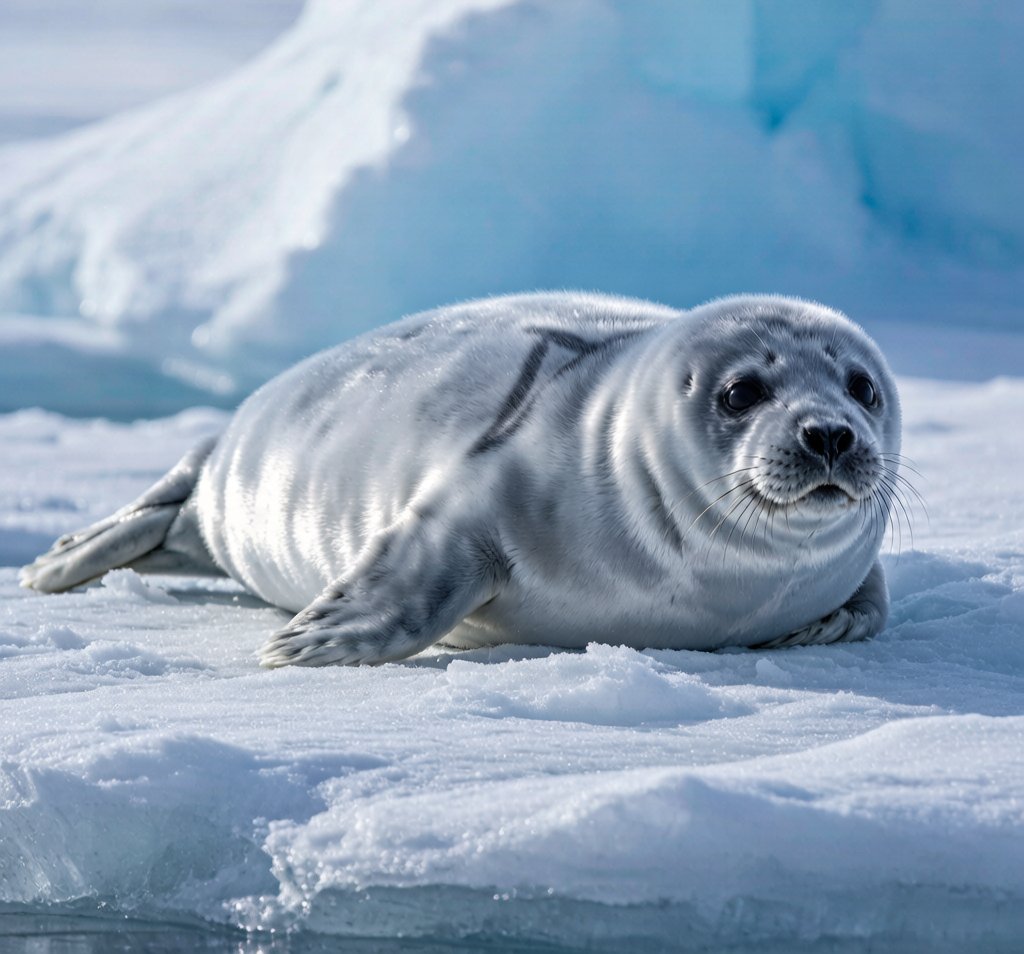
Introduction
The harp seal (Pagophilus groenlandicus) is one of the most abundant pinnipeds in the Arctic and North Atlantic, known worldwide for its iconic white-furred pups and remarkable deep-diving abilities. Native to the frigid waters and pack ice of the far north, this medium-sized seal has been celebrated as a symbol of Arctic wilderness and controversial due to historical commercial hunting. Adult harp seals are accomplished divers, capable of reaching depths over 270 meters and holding their breath for more than 15 minutes while pursuing fish and crustaceans beneath the ice. Their thick blubber layer and streamlined bodies make them perfectly engineered for life in one of Earth’s most extreme environments.
Taxonomy
Pagophilus groenlandicus was first described by the Danish naturalist Johann Christian Fabricius in 1777. The genus name Pagophilus translates from Greek as “ice-lover,” a fitting tribute to this seal’s lifelong dependence on pack ice. It belongs to the family Phocidae, the true seals, characterized by the absence of external ear flaps and a distinctive crawling locomotion on land. Molecular studies indicate the harp seal’s closest relatives are the ringed seal and the hooded seal, all shaped by the cyclical cooling and warming of Arctic seas over millions of years.
Physical Characteristics
Adult harp seals display a silver-gray coat with a distinctive black harp-shaped pattern across the back and flanks—giving the species its common name. Adults reach 1.7–2.0 meters in length and weigh 115–180 kilograms, with males slightly larger. Their large dark eyes are adapted for low-light vision in deep Arctic waters. A blubber layer up to 10 centimeters deep provides insulation and energy storage in an environment where food availability fluctuates dramatically. Newborn pups wear an extraordinarily dense white coat that provides exceptional camouflage against snow but is shed within two to three weeks. Like the red fox in warmer climates, harp seal pups rely on concealment rather than fighting ability to survive their first vulnerable weeks of life.
Habitat
Harp seals are circumpolar in distribution, found throughout the Arctic and North Atlantic from Canada’s Gulf of St. Lawrence to Russia’s Kara Sea. They are creatures of the pack ice, giving birth, nursing, and molting on stable ice floes each winter and spring. Three major populations are recognized: the Northwest Atlantic stock off Newfoundland and Labrador, the Front stock in the Gulf of St. Lawrence, and the East Ice stock in the Greenland Sea. While strongly ice-associated during breeding, harp seals spend much of the year foraging in open ocean waters far from land. Climate change poses a serious threat by reducing ice extent and stability, potentially shrinking critical pupping habitat in coming decades.
Diet
The harp seal is a generalist carnivore whose diet varies seasonally and regionally. Primary prey includes capelin, Arctic cod, Atlantic herring, and plaice, along with shrimp and krill. Adults consume an estimated 3–4 kilograms of food daily. Like the humpback whale, harp seals pursue prey through the water column, often making multiple deep dives per foraging trip. They rely on sensitive whiskers to detect minute water vibrations from moving prey in near-complete darkness. Juveniles feed more heavily on crustaceans before transitioning to fish as they mature and their diving capacity increases.
Reproduction
Harp seals mate on the ice in late March, but females experience delayed implantation—the fertilized egg does not begin developing until months later, ensuring birth the following year when ice conditions are suitable. After an 11-month total gestation, females give birth to a single white-coated pup between late February and mid-March. The pup nurses for approximately 12 days, during which the mother may lose up to 30 percent of her body weight. Weaning is abrupt: the mother simply leaves, triggering the pup’s transition to independent life. Pups must learn to swim and hunt within days, a perilous period when many fall prey to polar bears and other Arctic predators.
Conservation
The harp seal is listed as a species of Least Concern, with global populations estimated at 7–9 million individuals. The Northwest Atlantic population has experienced significant fluctuations due to commercial harvesting. Canada’s seal hunt, once the world’s largest, has declined from peaks of over 250,000 animals annually to only a few thousand in recent years. Climate change represents the greatest long-term threat as declining sea ice reduces pupping habitat and disrupts food webs. Like the blue whale, another Arctic marine species, harp seals benefit from international agreements and continued population monitoring.
Fun Facts
Harp seals are among the deepest-diving pinnipeds relative to their size, with documented dives reaching 274 meters and lasting over 16 minutes. Their blood is rich in hemoglobin and myoglobin—oxygen-binding proteins that maximize each breath and store it efficiently during extended dives. A pup’s white coat is so well camouflaged against Arctic snow that it reduces predation risk by up to 70 percent compared to darker seals. Harp seals can “bottle”—sleeping underwater with only their nostrils above the surface. Like the bald eagle, which has a unique fingerprint-like pattern of feathers on its head, each harp seal’s spot pattern is unique, allowing researchers to identify individuals without physical tags.
[…] populations have stabilized or recovered, though local declines still occur. Relatives such as the harp seal, the leopard seal, and the walrus face different regional pressures, while the California sea lion […]