 By st20113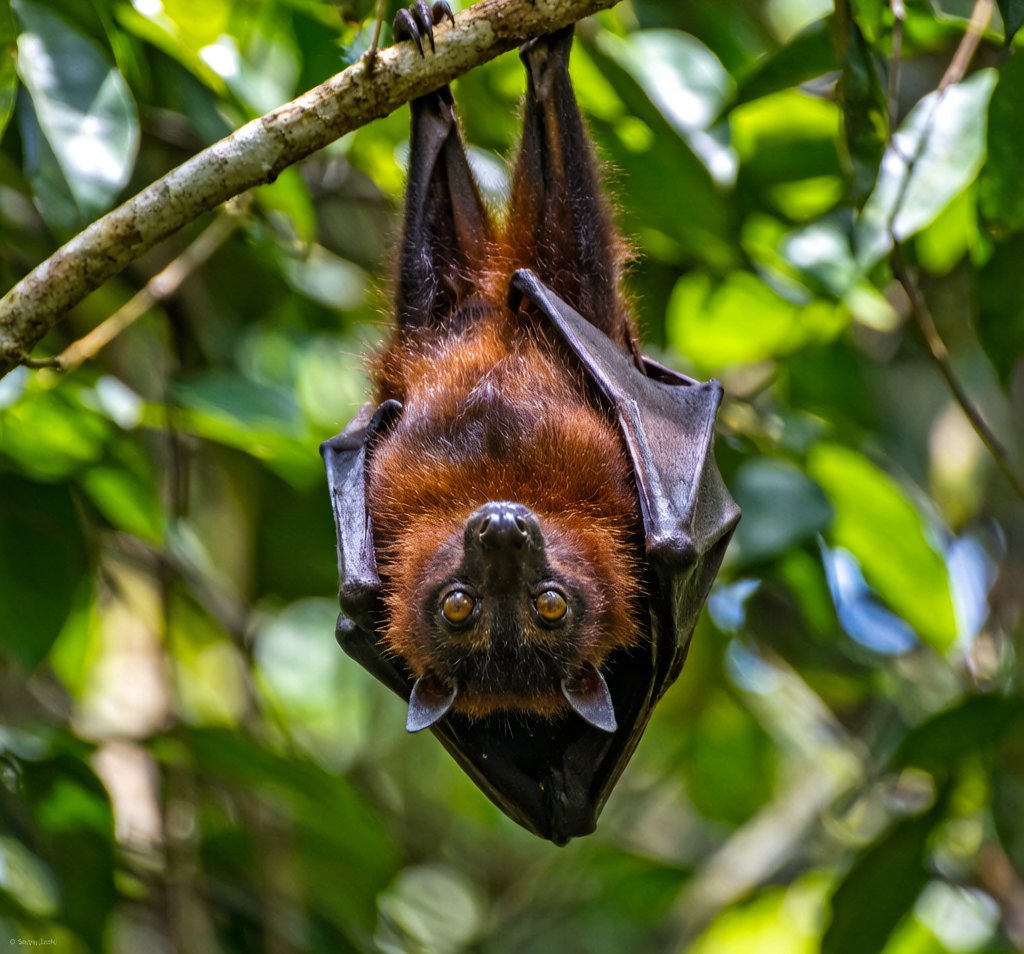
Introduction
The large flying fox (Pteropus vampyrus), also known as the greater flying fox, is one of the world’s largest bats, with a wingspan exceeding 1.7 meters. Despite its fearsome scientific name, it is a gentle, fruit-eating bat that never drinks blood. Found in the tropical forests and mangroves of Southeast Asia, it roosts in colonies that may number in the tens of thousands. Sometimes called megabats, they play a crucial role in forest health through pollination and seed dispersal. As the largest bat on Earth, it is a giant of the night sky, just as the blue whale is a giant of the sea.
Taxonomy
The large flying fox belongs to the family Pteropodidae, the Old World fruit bats, and to the genus Pteropus, which includes about 60 species found from Madagascar to the Pacific islands. Its scientific name, Pteropus vampyrus, means “flying-foot vampire,” given by early naturalists who misunderstood its diet. Flying foxes are not closely related to the small, echolocating bats that hunt insects; instead, they rely on large eyes and a keen sense of smell. Genetic evidence suggests fruit bats diverged very early from other bat lineages, making them a unique branch of the family tree.
Physical Characteristics
The large flying fox is among the heaviest bats, weighing 0.6 to 1.1 kilograms, with a wingspan of up to 1.7 meters. Its fur is dark brown or black with a tawny mantle over the shoulders and back. The face resembles that of a fox, with a long snout, large eyes, and small ears, which is how the animal got its common name. Unlike insect-eating bats, it has no echolocation and no tail, and its claws can hang from branches for hours. While small beside the ocean’s giants, the flying fox is the largest bat that has ever existed, a true giant among mammals of the air.
Habitat
Large flying foxes live in the tropical lowlands of Southeast Asia, from Indonesia and Malaysia to the Philippines, inhabiting forests, mangroves, and farmland. They roost in large colonies, often in tall trees near water, and may travel 30 to 50 kilometers each night to reach fruiting trees. These nightly commutes make them vital seed dispersers across vast areas. Some populations migrate seasonally, following the availability of fruit, a journey that echoes the long migrations of humpback whales through the oceans. Roosting sites are used for decades, making their protection essential to the species.
Diet
The large flying fox feeds on fruit, nectar, and flowers, using its long tongue to lap nectar and its strong jaws to crush soft fruit. It prefers figs, mangoes, and other tropical fruits, swallowing seeds along with the pulp and later dropping them far from the parent tree. In this way, flying foxes plant new trees wherever they travel and pollinate flowers as they feed, a role few other mammals share. Like the African elephant, which also disperses seeds over great distances, the flying fox is a gardener of the forest, and forests with healthy bat populations recover faster after disturbance.
Reproduction
Large flying foxes breed seasonally, mating between November and January across much of their range. Females give birth to a single pup after a gestation of about five months, usually between March and May. The pup is born furry with its eyes open and clings to its mother’s fur for the first weeks of life, even while she flies. Mothers leave their young in crèches at the roost while they forage, returning to nurse them several times a night. Pups begin to fly at about two months and are weaned by three. Females first breed at one to two years, and individuals may live more than 20 years.
Conservation
The large flying fox is listed as Near Threatened by the IUCN, and some island populations are endangered. It is hunted extensively for food across Southeast Asia, and deforestation and lost roosting sites have reduced its numbers. Because flying foxes travel far and reproduce slowly, heavy hunting can quickly drive local populations to collapse. In some countries it is legally protected, and researchers work with communities to promote sustainable practices. Just as the great white shark shapes ocean ecosystems as a top predator, the flying fox shapes forest ecosystems as a top disperser, so protecting it protects the forest itself.
Fun Facts
A colony can contain more than 20,000 individuals, and the sound of them squabbling can be heard a kilometer away. Despite its name, it is a strict vegetarian. It can fly up to 50 kilometers in a single night in search of food, a journey rivaling the sprint distances of a cheetah over a hunt. Flying foxes hang upside down even while eating, and they use their wings as blankets in cold weather. In many Southeast Asian cultures, flying foxes are seen as guardians of the night forest, and their huge colonies are natural wonders.