 By st20113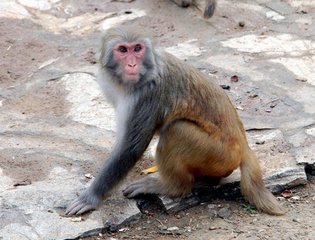
Introduction
The rhesus macaque (Macaca mulatta) is a medium-sized primate native to South and Southeast Asia. It is perhaps the most familiar monkey in the world because of its extensive use in biological research and its remarkable ability to live alongside humans in cities and temples. These adaptable animals belong to the Old World monkey family and share many behavioral traits with their close relatives, though they are more resilient in disturbed habitats than many apes such as the gorilla. Their success across such varied environments makes them a model species for studying primate adaptability, urbanization, and the flexible social lives of wild monkeys near people.
Taxonomy
Macaca mulatta was first described by Zimmermann in 1780. It sits within the genus Macaca, which contains more than twenty species of macaques spread across Asia and North Africa. Genetic studies confirm that rhesus macaques are closely related to other Asian macaques and, more distantly, to the great apes. Their lineage diverged from that of the chimpanzee tens of millions of years ago, yet they still share a surprising number of social and cognitive features with the hominids. Researchers continue to study their genome because it offers valuable clues about primate evolution and even human health.
Physical Characteristics
Adult rhesus macaques weigh between six and twelve kilograms, with males noticeably larger than females. Their fur is typically brown or greyish brown, and their faces are pinkish red, giving them a distinctive appearance. A short tail, expressive eyes, and dexterous hands make them agile both in trees and on the ground. Unlike the arboreal red panda, which relies on a bushy ringed tail for balance, the rhesus macaque uses its tail mainly for communication and posture rather than grasping. Their binocular vision and nimble fingers give them a precise grip much like that of humans.
Habitat
Rhesus macaques occupy an extraordinary range of habitats, from tropical forests and mangrove swamps to temperate mountains and arid grasslands. They are equally at home in remote wilderness and in the heart of crowded cities, where they forage on rooftops and raid market stalls. Their flexibility rivals that of the adaptable lion, though the macaque thrives in human-dominated landscapes that most large predators avoid. In some regions they have become so common that they are both a cultural symbol and a management challenge for local authorities.
Diet
These monkeys are opportunistic omnivores. They eat fruits, seeds, roots, leaves, insects, small vertebrates, and even human food waste. In agricultural areas they can become crop pests, feeding on rice, wheat, and vegetables. Their diet is far more varied than that of the specialized gray wolf, which depends heavily on hunting large hoofed mammals across open terrain. Groups often forage together, using social learning to find new foods and to avoid dangerous or unpleasant items.
Reproduction
Rhesus macaques breed seasonally in most parts of their range. After a gestation of roughly 165 days, a single infant is usually born, though twins occasionally occur. Mothers provide intensive care, carrying the infant on their belly for the first weeks of life. Infants learn social skills through play, and the troop’s hierarchy shapes their future status. Young males typically disperse, while females remain in their birth group for life. Females mature around four years of age, while males mature slightly later and must compete for higher rank.
Conservation
The rhesus macaque is listed as Least Concern by the IUCN because of its vast range and large population. However, localized declines occur where forests are cleared or where conflict with farmers leads to culling. They are also protected in many regions because of their importance in medical research. Continued coexistence with growing human populations remains the central challenge for their long-term stability. Education programs now teach communities to reduce conflict through secure waste management and protected feeding areas.
Fun Facts
Rhesus macaques were the first primates to travel into space, paving the way for human spaceflight. They recognize themselves in mirrors, a sign of self-awareness once thought unique to great apes. Their blood type system, known as the Rh factor, was named after them and remains vital in human medicine. Troops use more than thirty distinct vocalizations to coordinate movement and warn of danger. They have even learned to use tools such as stones to crack nuts in some populations. Some groups rinse food in water before eating, a rare habit among non-human animals.