 By st20113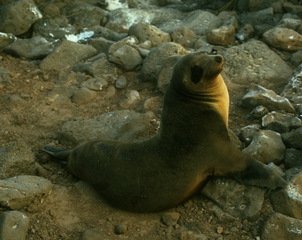
Introduction
The California Sea Lion (Zalophus californianus) is one of the most recognizable marine mammals along the Pacific coast of North America. With its sleek, streamlined body, large flippers, and remarkable intelligence, this pinniped has captured the public’s imagination for generations. Found basking on sandy beaches, performing in marine parks, or darting through coastal waters, the species ranges from the Gulf of California to British Columbia, making it one of the most adaptable and successful marine mammals in the eastern Pacific. Its capacity for vocal mimicry and complex problem-solving rivals that of some primates.
Taxonomy
The California Sea Lion belongs to the family Otariidae, the eared seals, which distinguish themselves from true seals (family Phocidae) by their external ear pinnae and the ability to rotate their hind flippers forward for terrestrial locomotion. The genus Zalophus contains three recognized species: the California Sea Lion (Zalophus californianus), the Galapagos Sea Lion (Zalophus wollebaeki), and the extinct Japanese Sea Lion (Zalophus japonicus). Molecular studies confirm the Galapagos Sea Lion is genetically distinct, having diverged from its mainland relative approximately 2 to 3 million years ago.
Physical Characteristics
The California Sea Lion displays pronounced sexual dimorphism. Adult males measure 2 to 2.5 meters and weigh between 300 and 400 kilograms, while females are considerably smaller at 1.5 to 2 meters and 60 to 100 kilograms. Adult males develop a distinctive raised forehead, or sagittal crest, composed of thickened bone beneath the skin. The coat is dark brown to tawny when dry, appearing black when wet. Its fore flippers are broad and wing-like, providing powerful aquatic propulsion, while a thick layer of blubber provides insulation and serves as an energy reserve.
Habitat
The California Sea Lion inhabits the coastal waters and terrestrial rookeries of the eastern Pacific Ocean, from the Gulf of California through the Channel Islands of Southern California northward to British Columbia, Canada. Major breeding colonies are concentrated on the Channel Islands, with the largest rookery at San Miguel Island supporting tens of thousands of individuals during the breeding season. At sea, they are primarily coastal animals, rarely venturing more than a few tens of kilometers from shore, feeding in continental shelf waters at depths typically less than 200 meters. Like the bottlenose dolphin, they are highly social coastal hunters.
Diet
California Sea Lions are opportunistic predators with a varied diet reflecting seasonal prey availability. Fish constitute the majority of their diet, including northern anchovy, Pacific sardine, Pacific mackerel, hake, and rockfish. They also consume significant quantities of squid and octopus, and have been documented eating shellfish, seabirds, and occasionally young seals. Satellite-linked data loggers reveal that sea lions regularly dive to depths of 100 to 200 meters, with dive durations of 3 to 8 minutes being typical. Like the walrus and the sea otter, they play an important role in coastal marine food webs as mid-level predators.
Reproduction
California Sea Lions are polygynous breeders, with dominant males establishing territories during the breeding season from May through August. A successful territorial male may control access to a harem of 5 to 15 females. Males do not feed during the entire breeding season, relying entirely on energy reserves. Females give birth to a single pup within 5 days of arriving at the rookery, and most mating occurs within 2 to 3 weeks of parturition. The gestation period is approximately 11 months, including delayed implantation that allows females to time parturition to coincide with favorable conditions.
Conservation
The California Sea Lion was hunted extensively during the 19th and early 20th centuries, causing significant population declines, but has recovered substantially under the Marine Mammal Protection Act of 1972. The current population is estimated at approximately 250,000 to 300,000 individuals and appears stable or slowly increasing. The species is listed as Least Concern on the IUCN Red List. Ongoing challenges include entanglement in fishing gear, marine pollution, harmful algal toxins, and fishery conflicts. Climate change and shifting prey distribution represent emerging long-term concerns.
Fun Facts
California Sea Lions are remarkably intelligent, capable of learning complex tricks and demonstrating self-awareness by recognizing themselves in mirrors — a cognitive feat shared with only a handful of other animal species. They reach burst swimming speeds of up to 29 kilometers per hour using simultaneous fore-flipper strokes. They can remain submerged for over 10 minutes during deep dives, with resting heart rate dropping from approximately 100 beats per minute at the surface to as low as 20 beats per minute during a dive. The polar bear and the great white pelican are among the most frequently studied marine relatives often compared for behavioral research.