 By Iris
Rhinoderma darwinii | Darwin’s Frog
Species Profile · Rhinodermatidae
Darwin’s Frog
A small frog sits on wet moss and looks like a dead leaf.
Endangered
Length
Weight
Brood
Stage
Range
Rating
The Darwin’s Frog
A throat full of froglets
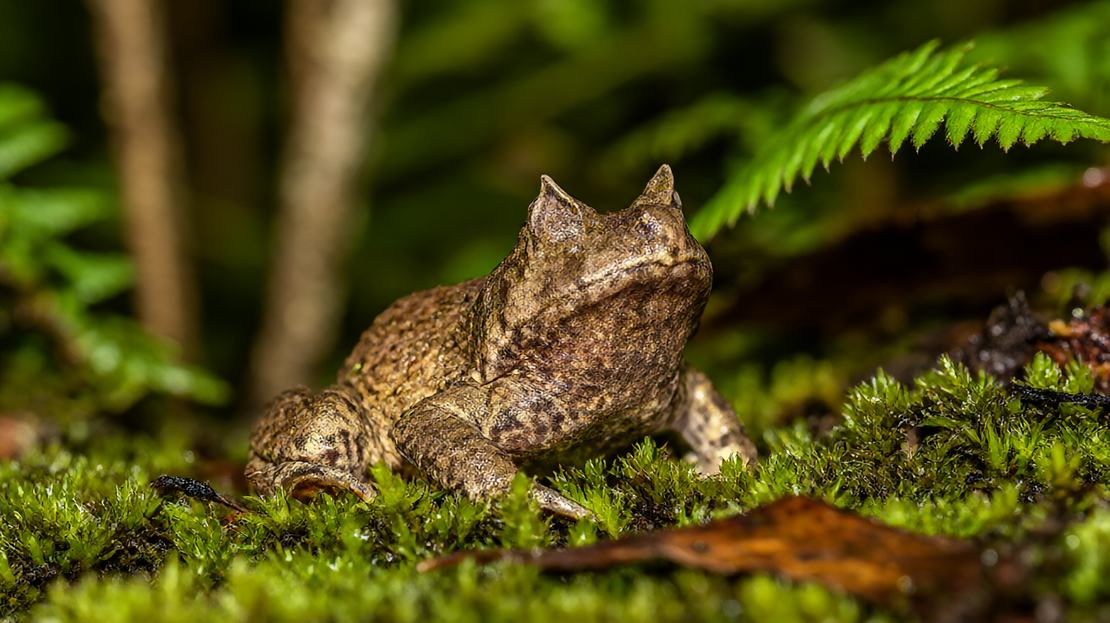
A small frog sits on wet moss and looks like a dead leaf. Its snout comes to a soft point. That shape gave it the name leaf-nose.
It lives in the cold forests of southern Chile. Because the male carries the eggs in his throat, the frog has one of the strangest breeding habits known. Charles Darwin found the animal in 1834, and it still bears his name.
Family tree
Rhinodermatidae, two species only
Its proper name is Rhinoderma darwinii, and it sits in a family of its own. Rhinodermatidae holds two species, and the second one may already be extinct. A Glass Frog also guards its eggs, though it keeps them on a leaf above a stream rather than in its throat.
Both animals belong to old southern lineages, and neither follows the usual frog plan. Its closest cousins remain unclear, though the family sits among the southern frogs. No subspecies are named.
A soft pointed snout
How to tell one
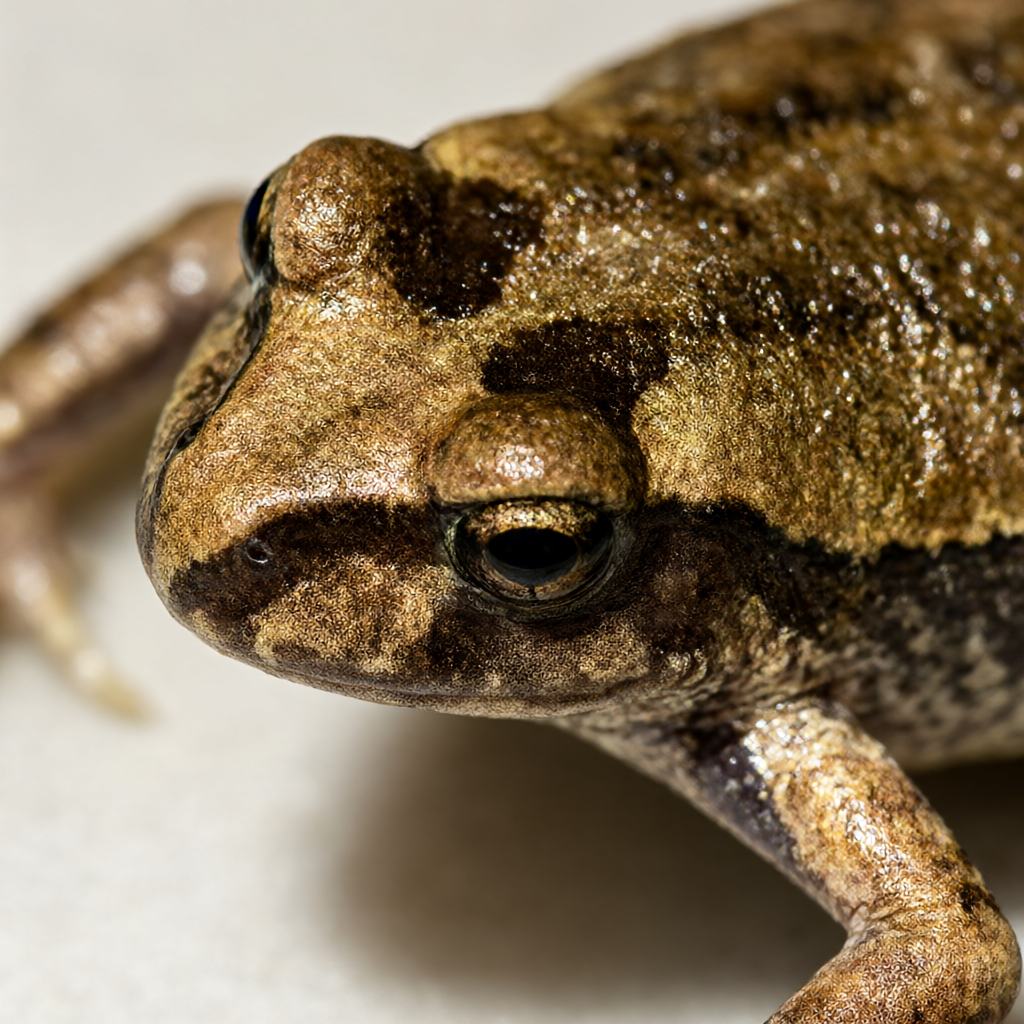
Length runs 2.5 to 3.5 cm, and weight stays under 3 g. Its skin is brown and green, with a mottled pattern that hides the outline of the body against wet leaves. The snout forms a fleshy point, and the eyes sit close together. Because the colour matches wet leaves, the animal goes on the forest floor.
Its hind legs are short, so it hops rather than leaps. The toes carry small pads, though they grip poorly on smooth rock. Females run slightly larger than males.
1
2
3
Damp litter, all year
Where it lives
Cool Nothofagus forest holds the species. Its range runs from central Chile into a small part of Argentina. It needs deep leaf litter and clean, slow water. Because the forest stays damp through the year, the frog never faces a dry season.
Streams with mossy banks matter most. Where logging opens the canopy, the litter dries and the frog vanishes. Nothing records it above about 1,500 m.
Small insects
What it eats
Small bugs make up the whole diet. Flies, beetles and spiders are taken from the ground. Because the frog hunts by waiting, it moves very little between meals.
Prey is caught with a quick tongue strike. Feeding happens mostly at dusk and after rain. Nothing large is attempted, since the mouth stays narrow.
The male carries them
The breeding cycle
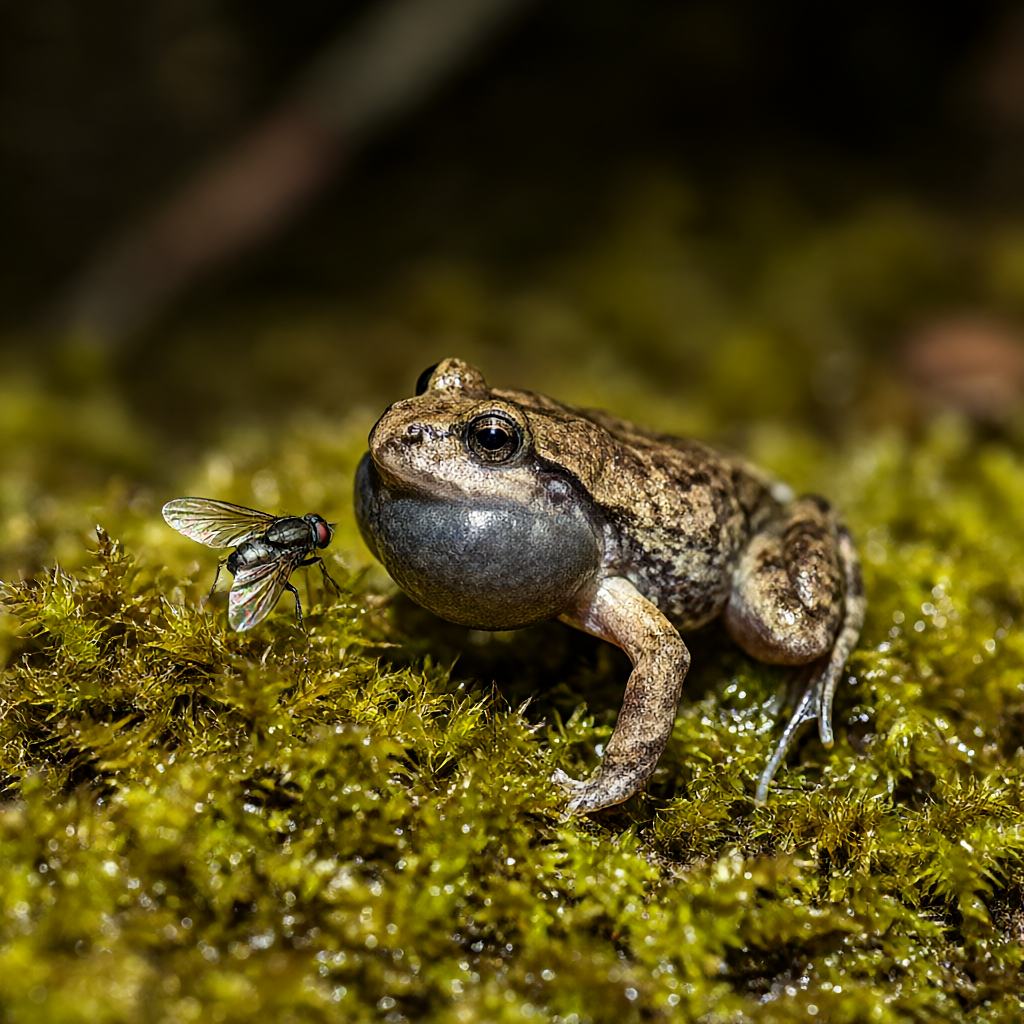
Males call from sheltered spots on the forest floor. A female lays about 20 eggs on damp ground, and the male watches over them. Because the eggs need moisture, he stays with them for several days. Then he takes them into his vocal sac, where they develop inside his throat.
The tadpoles grow there for about two months. When they finish change, he opens his mouth and lets them out. Because the young leave as froglets, no free-swimming stage ever exists.
Endangered
Conservation
Red List status is Endangered. Its range has shrunk badly since the 1990s. Because a skin fungus reached the region, whole numbers died within a few seasons, and no treatment exists.
Habitat loss from pine plantations adds pressure. Climate drying threatens the damp litter the frog needs. Captive breeding has begun in Chile and in Europe.
Surveys since 2010 have found the species at few sites. Because the animal cannot cross open ground, a cleared patch isolates a numbers for good.
Side by side
How It Compares
| Trait | Darwin’s Frog | Glass Frog |
|---|---|---|
| Family | Rhinodermatidae | Centrolenidae |
| Eggs | in the male’s vocal sac | on a leaf above water |
| Stage | no free-swimming tadpole | tadpoles drop to the stream |
| Skin | mottled brown | translucent green |
| Range | southern Chile | Central and South America |
| Rating | Endangered | Least Concern |
Common misreadings
What People Get Wrong
- Not a frog that leaves tadpoles. The young arrive formed. Development finishes inside the vocal sac, and the male releases froglets rather than larvae when the change is complete.
- Not a frog of warm lowland. Cool forest suits it. The species lives in Nothofagus woodland where the air stays damp all year, and it never faces a dry season.
- Not a species holding its ground. Fungus cut the range. A skin disease reached the region in the 1990s, and whole populations vanished within a few seasons before anyone could act.
Going further
Sources and Further Reading
Quick hits
Five things to remember
- The male carries up to 20 developing froglets in his vocal sac, and his throat swells visibly while they grow.
- Darwin collected the first skins on Chiloé in 1834, and the species still carries his name.
- The pointed snout is soft, and it bends when the frog presses into leaf litter.
- A related species skipped the tadpole stage entirely, and it is now feared extinct.
- This frog does not swim well, so it stays close to wet ground all its life.