 By st20113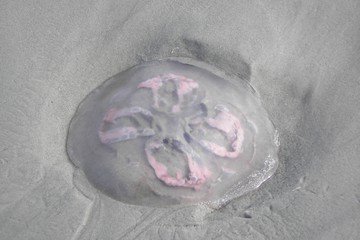
Introduction
The moon jellyfish (Aurelia aurita) is one of the most abundant and widely distributed gelatinous zooplankton species in the world’s oceans, found in nearly every coastal marine ecosystem from the Arctic to the tropics. Its translucent, saucer-shaped bell and gentle pulsing movements give it an almost ethereal quality as it drifts through the water column, trailing four delicate horseshoe-shaped gonads visible through its glass-clear body. Despite its simple appearance, the moon jellyfish is a sophisticated predator equipped with stinging cells capable of immobilizing tiny prey. In recent decades, it has become a subject of intense scientific interest as scientists grapple with jellyfish blooms that can disrupt marine industries and signal broader shifts in ocean health.
Taxonomy
The moon jellyfish belongs to the phylum Cnidaria, which encompasses all jellyfishes, corals, sea anemones, and hydroids, and is classified in the class Scyphozoa — the true jellyfishes — and the order Semaeostomeae. Its full scientific name is Aurelia aurita, though the genus Aurelia contains more than a dozen recognized species, many requiring genetic analysis for positive identification. Molecular phylogenetic studies have substantially clarified the species boundaries within the genus. Other large marine invertebrates sharing similar coastal habitats include the ocean sunfish, the world’s heaviest bony fish, which feeds on zooplankton in the same waters as the moon jellyfish.
Physical Characteristics
The moon jellyfish is immediately recognizable by its four horseshoe-shaped gonads suspended within its translucent bell. The bell can reach diameters of 10 to 16 inches (25 to 40 cm) in fully grown specimens. The bell’s margin is fringed with short, frilly tentacles and eight lobed rhopalia — sensory structures containing statocysts for balance and light-sensitive ocelli. Unlike many jellyfish species, the moon jellyfish’s nematocysts are relatively mild in potency and specialized for capturing small plankton rather than large prey or humans. The moon jellyfish’s body is approximately 95 percent water, and it lacks any skeleton, brain, heart, or blood, relying instead on diffusion to transport nutrients throughout its tissues.
Habitat
Moon jellyfish are primarily coastal species found in estuarine and neritic waters throughout the world’s temperate and polar regions. Their preferred habitats include sheltered bays, harbors, and coastal lagoons, where they are often swept along by tidal currents in dense aggregations. The species is remarkably tolerant of low salinities and has been recorded in the Baltic Sea at salinities as low as 6 parts per thousand. In the North Atlantic and Pacific, moon jellyfish populations follow pronounced seasonal patterns, appearing in coastal waters during spring and summer months. The polyps — the benthic, sessile stage of the life cycle — attach to hard substrates including marina structures and the undersides of docks and piers. Coastal species sharing these environments include the blue whale, which feeds on zooplankton in boreal coastal waters, and the remarkably intelligent octopus vulgaris, which preys on crustaceans in the same shallow coastal zones.
Diet
The moon jellyfish is a passive suspension feeder, drifting through the water column and intercepting small organisms that come into contact with its tentacles and oral arms. Its diet is dominated by zooplankton — copepods, larval fish, fish eggs, and other gelatinous organisms. The moon jellyfish’s hunting strategy relies on water currents bringing prey within reach of its tentacles, a passive foraging mode that is extraordinarily energy-efficient. Prey captured by the tentacles is transported to the mouth by the coordinated action of ciliary cells lining the eight channels that radiate from the center of the bell.
Reproduction
The moon jellyfish exhibits a complex biphasic life cycle alternating between a benthic, asexual polyp stage and a pelagic, sexual medusa stage. During summer, adult medusae release eggs and sperm into the water column, with fertilization occurring internally or externally. The resulting planula larvae settle on a suitable hard substrate and metamorphose into small polyps called scyphistomae. This polyp stage reproduces asexually by producing stacks of tiny medusae called ephyrae through strobilation. Each polyp can produce dozens of ephyrae over several weeks, explaining the rapid onset of jellyfish blooms in nutrient-rich coastal waters.
Conservation
The moon jellyfish is not considered threatened on a global scale, but in some regions, populations have shown dramatic fluctuations linked to overfishing, nutrient pollution, and climate-driven changes in ocean temperature and salinity. Eutrophication — the excessive enrichment of coastal waters with nutrients from agricultural runoff — promotes phytoplankton growth, indirectly supporting larger jellyfish populations. The removal of fish competitors and predators through overfishing can create conditions that favor jellyfish proliferation. Rising ocean temperatures may favor jellyfish over fish in many marine ecosystems. While the moon jellyfish itself is not at risk, its population dynamics serve as an important indicator of broader ecosystem health. Marine predators such as the green sea turtle help maintain balanced food webs and may be indirectly affected by shifts in jellyfish populations.
Fun Facts
The moon jellyfish is one of the few animal species known to be capable of biological immortality at the polyp stage: when environmental conditions become unfavorable, the polyp can revert to an earlier developmental stage rather than dying, effectively resetting its life clock through a process called transdifferentiation. This remarkable regenerative capability has made the moon jellyfish a focus of biomedical research aimed at understanding and potentially applying the mechanisms of cellular rejuvenation to human medicine. The moon jellyfish moves almost entirely by passive drifting and the gentle pulsation of its bell, yet it is an effective predator because it requires virtually no energy to maintain its position in the water column. In some parts of the world, moon jellyfish are harvested for food and used in traditional cuisine, particularly in China and Southeast Asia.