 By st20113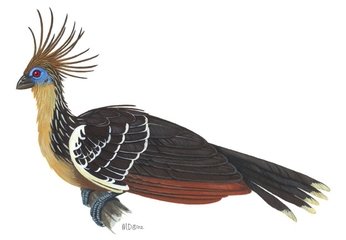
Introduction
The Hoatzin is one of the most peculiar birds in the world, often called the “stinkbird” due to its unique digestive system. Found in the swamps and mangroves of South America, this bird has puzzled scientists for centuries with its unusual characteristics. The Hoatzin is roughly the size of a pheasant, with a distinctive crest of feathers on its head and a blue facial patch around its eyes. Unlike most birds, the Hoatzin has a digestive system similar to cows, using bacterial fermentation to break down the leaves it eats. This remarkable adaptation produces a manure-like odor, giving the bird its unflattering nickname. Despite its strong smell, the Hoatzin plays an important ecological role in its wetland habitat.
Taxonomy
The Hoatzin’s taxonomic classification has been debated for many years. It is currently placed in its own order, Opisthocomiformes, and family, Opisthocomidae. Some researchers have suggested relationships with cuckoos, while others proposed links to game birds or even the emperor penguin. Genetic studies have provided conflicting results, but most modern classifications place the Hoatzin as a unique evolutionary lineage. The species name “hoazin” comes from a Latinized version of its indigenous name. This bird represents one of the most distinctive evolutionary branches in the avian world, with no close living relatives.
Physical Characteristics
The Hoatzin measures approximately 65 centimeters in length and weighs between 700 and 900 grams. Its plumage is primarily brown with white streaks, while the head features a spiky reddish-brown crest. A striking bright blue patch of bare skin surrounds each eye, contrasting with the bird’s otherwise earthy coloration. The Hoatzin has a long tail and broad wings, though it is a weak flyer. Young Hoatzins possess a remarkable feature: two claws on each wing, which they use to climb branches before they can fly properly. These claws disappear as the bird matures. The bird’s large crop, where fermentation occurs, gives it a somewhat hunched appearance.
Habitat
Hoatzins inhabit the slow-moving rivers, lakes, and swamps of northern South America. They range from the Amazon Basin through Venezuela, Colombia, and the Guianas to Brazil, Ecuador, Peru, and Bolivia. These birds prefer dense vegetation along waterways, particularly areas with abundant trees and shrubs that provide both food and nesting sites. They are most commonly found in areas where the green sea turtle might share similar tropical waters. Hoatzins rarely venture far from water, as their young often escape predators by dropping into the water and swimming to safety. They are non-migratory and maintain territories throughout the year.
Diet
The Hoatzin is primarily a folivore, meaning it eats leaves, which makes up about 82% of its diet. It also consumes flowers, buds, and occasionally fruits. Unlike other leaf-eating birds, the Hoatzin uses bacterial fermentation in its enlarged crop to digest plant material, similar to how ruminants process their food. This fermentation process takes longer than typical avian digestion, making the Hoatzin a slow-moving and somewhat lethargic bird. The bird feeds mainly on arum plants, mangrove leaves, and other water-loving vegetation. While scarlet ibis birds probe mud for food, Hoatzins feed entirely above water.
Reproduction
Hoatzins breed during the rainy season when water levels are highest. They are cooperative breeders, with offspring from previous years helping their parents raise new chicks. The nest is built over water, typically 2 to 5 meters above the surface, using dry branches. Females lay 2 to 3 eggs, which both parents and helpers incubate for about 28 days. The chicks are born with claws on their wings, which they use to climb back to the nest if they fall into the water. Young Hoatzins can swim and dive to escape predators before returning to the nest. The breeding system and nesting behavior help protect vulnerable chicks from the many predators found near the American crocodile habitat.
Conservation
The Hoatzin is currently listed as a species of Least Concern by the International Union for Conservation of Nature. Its population is stable across most of its range, though habitat destruction poses a potential threat. Deforestation and drainage of wetlands for agriculture could reduce suitable habitat in the future. Because Hoatzins are poor flyers, they cannot easily move to new areas when their habitat is disturbed. They are not hunted for food in most areas due to their unpleasant smell, which offers some protection from human exploitation. Conservation efforts focus on preserving wetland habitats and maintaining healthy river ecosystems. These habitats also benefit other species like the bald eagle in North America.
Fun Facts
The Hoatzin is sometimes called the “punk rock bird” because of its spiky crest and colorful face. Young Hoatzins are excellent swimmers and can hold their breath underwater for up to 60 seconds. The fermentation process in their crop makes them smell so bad that even predators often avoid them. Hoatzins are the only birds known to use foregut fermentation, a digestive strategy more commonly associated with cows and sheep. The wing claws of chicks are so distinctive that early naturalists thought Hoatzins were related to prehistoric birds. Despite being weak flyers, Hoatzins can live up to 14 years in the wild, making them one of the longer-lived birds in their ecosystem.