 By st20113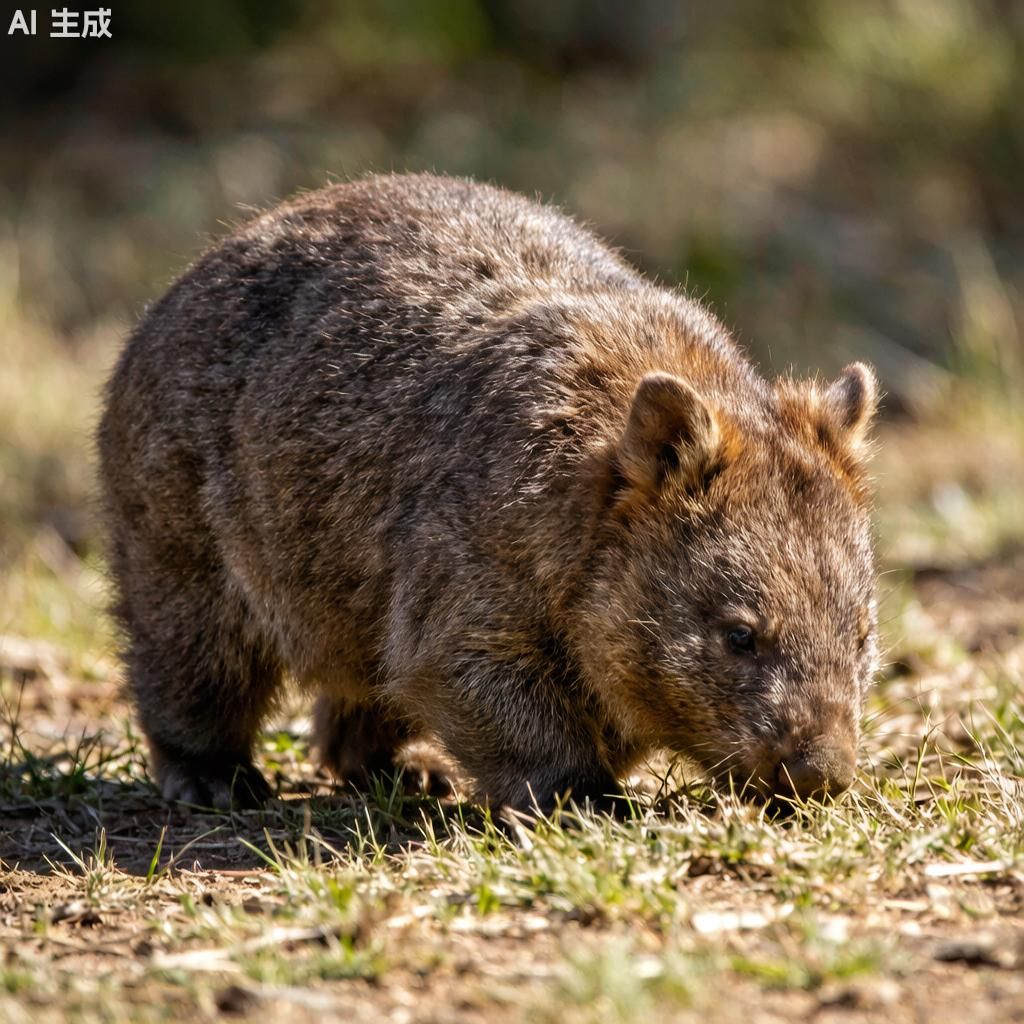
Introduction
The Vombatus ursinus, commonly called the common wombat, is a sturdy, burrowing marsupial found in the forests and grasslands of southeastern Australia. With a squat, barrel-shaped body, a comically blunt face, and a waddle that betrays its name, the wombat is among the most beloved of Australia’s native animals. Unlike the kangaroos and wallabies that hop across the outback, the wombat ambles on all fours, spending its days in elaborate underground tunnels and its nights foraging for grass. Its placid demeanor hides a remarkably tough constitution, honed by millions of years of isolation on the Australian continent.
Taxonomy
Wombats belong to the family Vombatidae, within the order Diprotodontia, the great radiation of herbivorous marsupials that also includes the Koala. In fact, genetic and fossil evidence places wombats and koalas as close relatives, both descended from a common ancestor that lived tens of millions of years ago. The common wombat is one of three living wombat species, the others being the northern and southern hairy-nosed wombats. All are endemic to Australia, and all share the distinctive backward-facing pouch that protects joeys from dirt while the mother digs.
Physical Characteristics
A mature common wombat measures about three to four feet in length and can weigh between 45 and 80 pounds. Its most distinctive feature is a cube-shaped pouch mouth and, famously, cube-shaped droppings, the only animal known to produce such geometrically precise feces. The rear is protected by a tough, cartilaginous plate, an evolutionary shield against predators that might grab from behind in a burrow. Wombats have powerful forelimbs tipped with long claws built for digging, and continuously growing incisors, like those of rodents, that they use to clip grass and roots.
Habitat
Common wombats occupy a range of habitats across southeastern Australia, from coastal heath and open woodland to alpine meadows and agricultural land. They are expert excavators, constructing extensive burrow systems with multiple entrances that can stretch more than 100 feet and house several sleeping chambers. These warrens provide refuge from heat, cold, and fire. In the same Australian landscapes one might encounter the Kangaroo, a fellow marsupial that has taken to a very different mode of locomotion, and the Tasmanian Devil, another pouch-bearing native, though the devil is now largely confined to Tasmania.
Diet
Wombats are strict herbivores, feeding almost entirely on grasses, roots, sedges, and the bark of some shrubs. Their digestive system is unusually slow, taking up to two weeks to process a meal, which allows them to extract maximum nutrition from low-quality forage. This slow metabolism means they need far less food than a comparably sized placental mammal. They emerge from their burrows at dusk to graze, clipping grass short with their rodent-like teeth, and return before sunrise to the safety of the underground warren.
Reproduction
Breeding can occur at any time of year, though it peaks in warmer months. After a short gestation of about 20 to 30 days, a single tiny, hairless joey is born and crawls into the mother’s backward-facing pouch, where it remains for roughly six to nine months. The cubed shape of the pouch opening prevents soil from entering as the mother digs. Joeys are weaned at around a year but may stay with the mother for a second year before dispersing to establish their own burrows. Females typically produce one offspring per year, a slow reproductive rate that makes populations vulnerable to sudden declines.
Conservation
The common wombat is currently listed as least concern, but it faces mounting pressures from habitat loss, vehicle strikes, drought, and competition with introduced livestock and rabbits. Sarcoptic mange, a parasitic skin disease, has devastated some local populations. Conservation groups work to treat mange, protect habitat corridors, and reduce road casualties. The species’ close relatives, the hairy-nosed wombats, are far more endangered, highlighting how fortunate the common wombat is compared with other Australian endemics such as the Echidna and the egg-laying Platypus, which also trace their lineage to Australia’s ancient isolation.
Fun Facts
Wombats can run at speeds up to 25 miles per hour over short distances, fast enough to outpace a human, and they can dive into a burrow, blocking the entrance with their armored rear. Their cube-shaped droppings are used to mark territory on rocks and logs without rolling away, an engineering marvel of the animal kingdom. A wombat’s teeth never stop growing, a necessity given the abrasive silica in grass, and its backwards pouch keeps dirt off the joey while the mother excavates. Few animals are as perfectly built for a life spent literally underground.