 By Iris
Chelodina longicollis | Eastern Long-necked Turtle
Species Profile · Chelidae
Eastern Long-necked Turtle
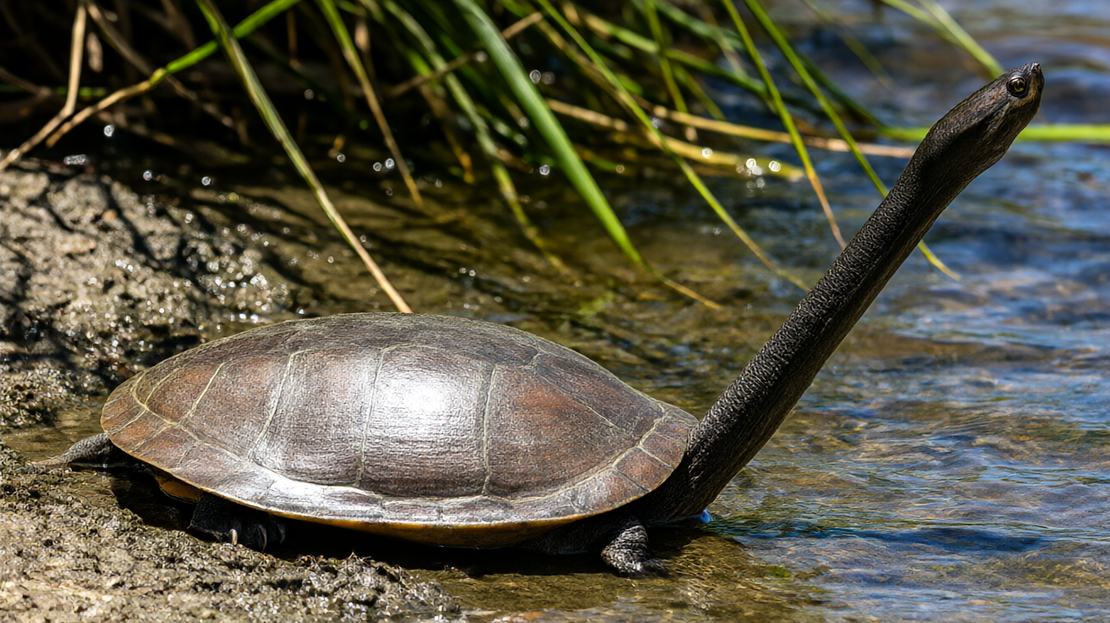
A turtle walks across a dry paddock with its neck stretched out.
Least Concern
Shell
Weight
Neck
Clutch
Incubation
Rating
The Eastern Long-necked Turtle
A neck as long as the shell
A turtle walks across a dry paddock with its neck stretched out. Its neck looks almost as long as the shell behind it. This animal can travel overland for a kilometre or more.
The eastern long-necked turtle lives in the rivers of southeastern Australia. Because its pools dry out each summer, it has learned to walk to the next one rather than wait. It also smells strongly when handled, which earned it the name stinker.
Family tree
Chelidae, and a long reach
Its proper name is Chelodina longicollis, and it belongs to the side-necked turtles. Chelidae holds the Australian and South American forms, and all of them fold the neck sideways. A Matamata Turtle shows the same trick from the other side of the ocean. Both animals share an old line, so the fold probably came before the regions split.
A Mojave Desert Tortoise handles drought in a similar way, since it also waits out the dry season. That resemblance stops there, because one holes and the other walks. Five subspecies are sometimes named, though most workers treat the species as single.
A sideways fold
How to tell one
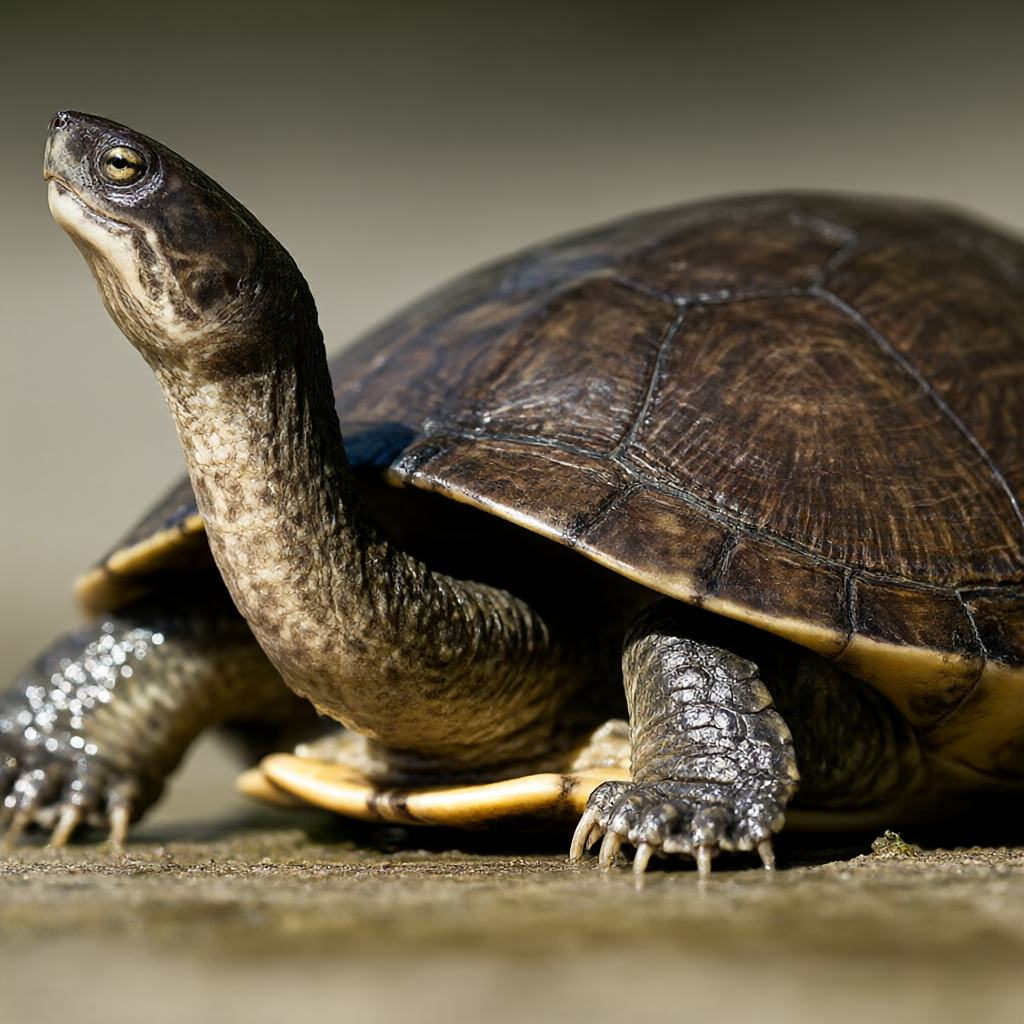
The shell runs 20 to 25 cm, and the neck is nearly as long. Weight falls between 400 and 800 g. Its shell is dark brown to black, with a paler edge. A cream plastron carries dark seams.
Because the neck folds to one side, the head rests against the shell rather than inside it. Its snout is narrow, and the eyes sit high. Females carry a shorter tail than males.
1
2
3
Pools that dry out
Where it lives
Slow rivers, billabongs and swamps hold the species. Its range covers the Murray-Darling basin and the coastal drainages of the southeast. Water with a soft bottom matters most. Because the animal hunts by feel, it needs mud and leaf litter.
It bears water that turns foul in summer. Where a pool dries, the turtle buries itself in the mud and waits. The species often appears in farm dams far from any river.
Fish and tadpoles
What it eats
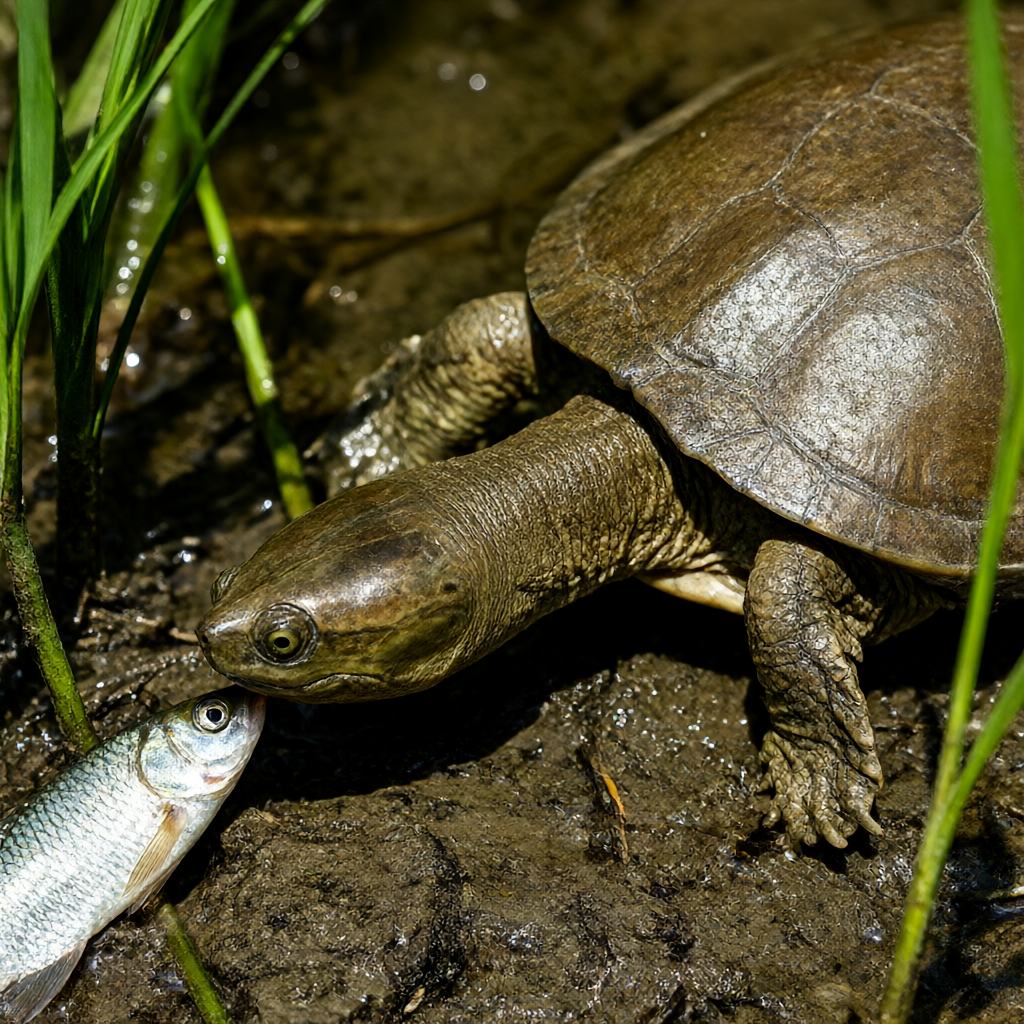
Fish, tadpoles and aquatic bugs make up most of the food. Crustaceans and carrion add a share. Because the animal strikes sideways with its long neck, it can reach prey behind a rock without turning the shell at all. That reach makes up for the slow body.
It feeds mostly in the early morning and late afternoon. Nothing is taken on land. Its bite is quick, and small prey is swallowed whole.
Eight to twelve eggs
The breeding cycle
Females nest in spring and again in early summer. Each clutch holds 8 to 12 eggs. Because the eggs need warmth, the female picks open ground with sun exposure. Incubation runs 60 to 90 days, depending on warmth.
Hatchlings emerge at the end of summer, when the pools still hold water and the mud has softened. No care follows the eggs. Sex is set by nest warmth, so a warm nest produces more females.
Least Concern
Conservation
Red List status is Least Concern. The species remains common across its large range. Because it bears farm dams, it has survived much of the landscape change.
Cars kill many animals, since turtles cross roads between pools. Foxes dig out nests, and that loss hits some numbers hard. River rules removes the flood cycle the species expects.
Collection for the pet trade takes young animals, though the law now limits it. Numbers appear stable overall, though local declines are logged.
Side by side
How It Compares
| Trait | Eastern Long-necked Turtle | Twist-necked Turtle |
|---|---|---|
| Family | Chelidae | Chelidae |
| Shell | 20-25 cm | 15-18 cm |
| Neck | nearly shell length | short, folds flat |
| Movement | walks between pools | stays in water |
| Clutch | 8-12 eggs | 1 egg |
| Rating | Least Concern | Least Concern |
Common misreadings
What People Get Wrong
- Not a turtle that waits for rain. It walks instead. Pools dry every summer, so the animal crosses open ground and can cover a kilometre before it finds water again.
- Not an animal with no smell. Glands do the work. A strong odour comes from glands near the shell, and the smell lingers on the hands long after the animal is put down.
- Not a species with fixed sexes. Warmth decides. Nest temperature sets whether an egg becomes male or female, so shade over a nest changes the balance of the whole clutch.
Going further
Sources and Further Reading
Quick hits
Five things to remember
- The neck can reach almost the full length of the shell, which lets the animal strike without moving its body.
- Its guard smell comes from glands near the shell, and the odour lingers on the hands.
- A turtle can bury itself in drying mud and stay there for months, with the heart slowed to almost nothing.
- Hatchling sex depends on nest warmth, so shade over a nest changes the balance.
- The animal can breathe through its skin under water, which helps when it buries itself.