 By Iris
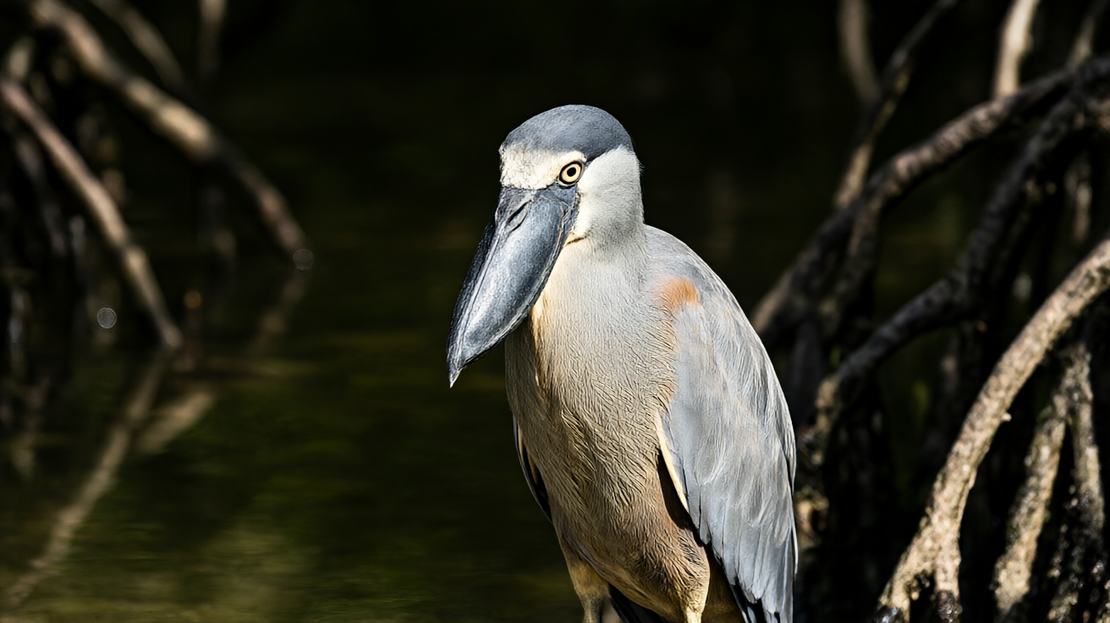
Cochlearius cochlearius | Boat-billed Heron
Species Profile · Ardeidae
Boat-billed Heron
A wide flat bill opens over black water at night.
Least Concern
Length
Bill width
Clutch
Incubation
Fledging
Rating
The Boat-billed Heron
A spoon that works as a trap
A wide flat bill opens over black water at night. Most herons hunt by day, and this one waits for darkness. Its eyes run large, and they gather what little light remains. No other heron carries a bill quite so broad.
The shape looks like an upturned boat, and the name follows from it. Fish rarely escape once that trap closes. Nothing about the bird suggests speed, though the strike comes fast once the bill reaches the water and the fish has nowhere to turn.
Family tree
Ardeidae, beside the night herons
Cochlearius cochlearius belongs to the heron family Ardeidae. For years, workers placed it alone in the family Cochlearidae. Genetic work moved the bird back beside the night herons, and the old family disappeared, though the name still appears in older field guides and checklists.
Five subspecies are named, though the differences between them stay small. The Latin cochlearium means a spoon, and the bill explains the choice. Its nearest relatives sit among the night herons, since the bird shares their habits.
Scoop bill, large eyes
How to tell one
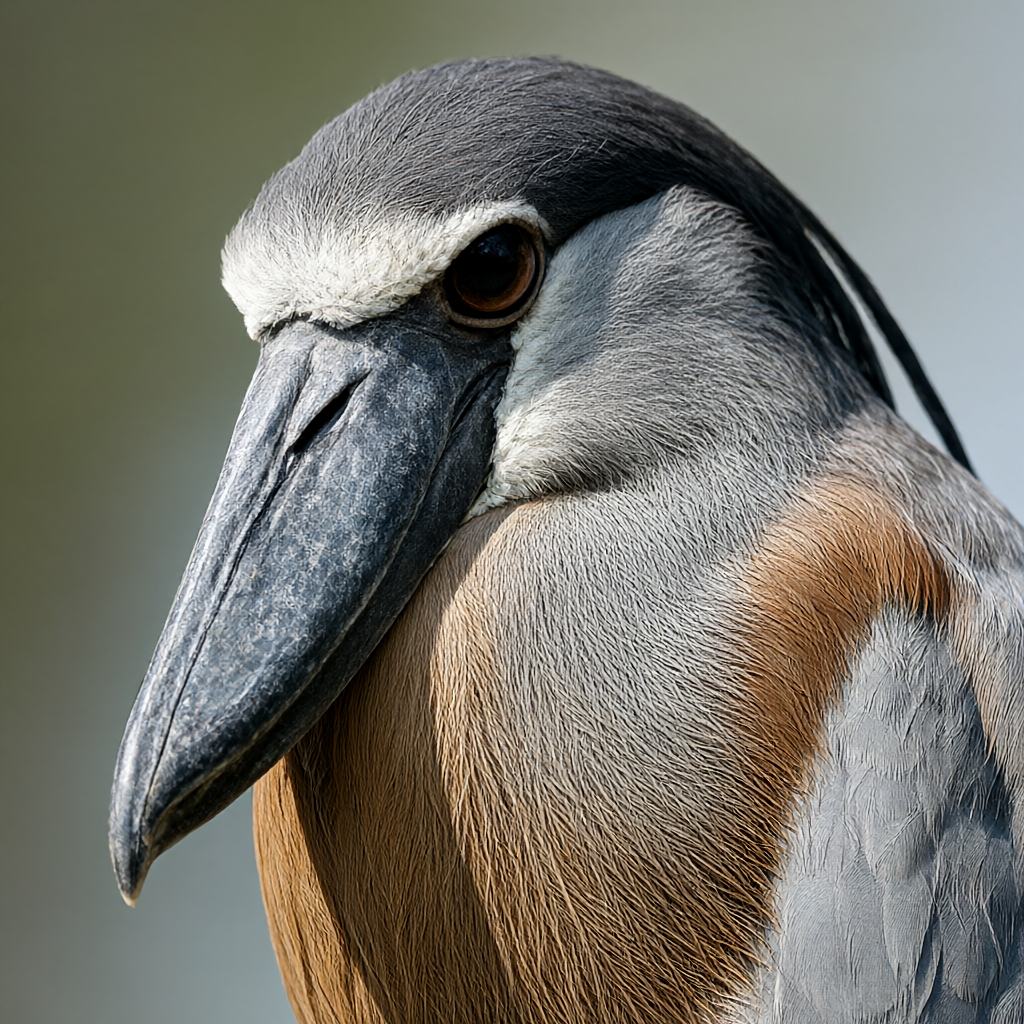
Adults reach 45 to 53 cm from bill to tail. Males run slightly heavier than females, though the two look alike. A black crest runs back from the head, and it lifts when the bird is startled. The back stays dark grey, and the underparts show pale buff.
One feature draws every eye, and that is the bill. It measures about 7 cm across, and it flares like a scoop at the tip, which lets the bird sweep a wide patch of water in one pass. Large eyes sit forward on the skull, which suits a hunter working without light.
1
2
3
Mangrove cover
Where it lives
Mangrove swamps hold most of the population. The bird also uses river banks, ponds and flooded pasture. Dense branches matter more than open water, since the bird needs cover by day. Its range runs from Mexico south to Brazil and northern Argentina.
Coastal lagoons carry the species wherever mangroves grow. Freshwater sites work too, though numbers run lower inland. One relative, the Grey Heron, works open marsh by day instead.
Fish, shrimp, insects
What it eats
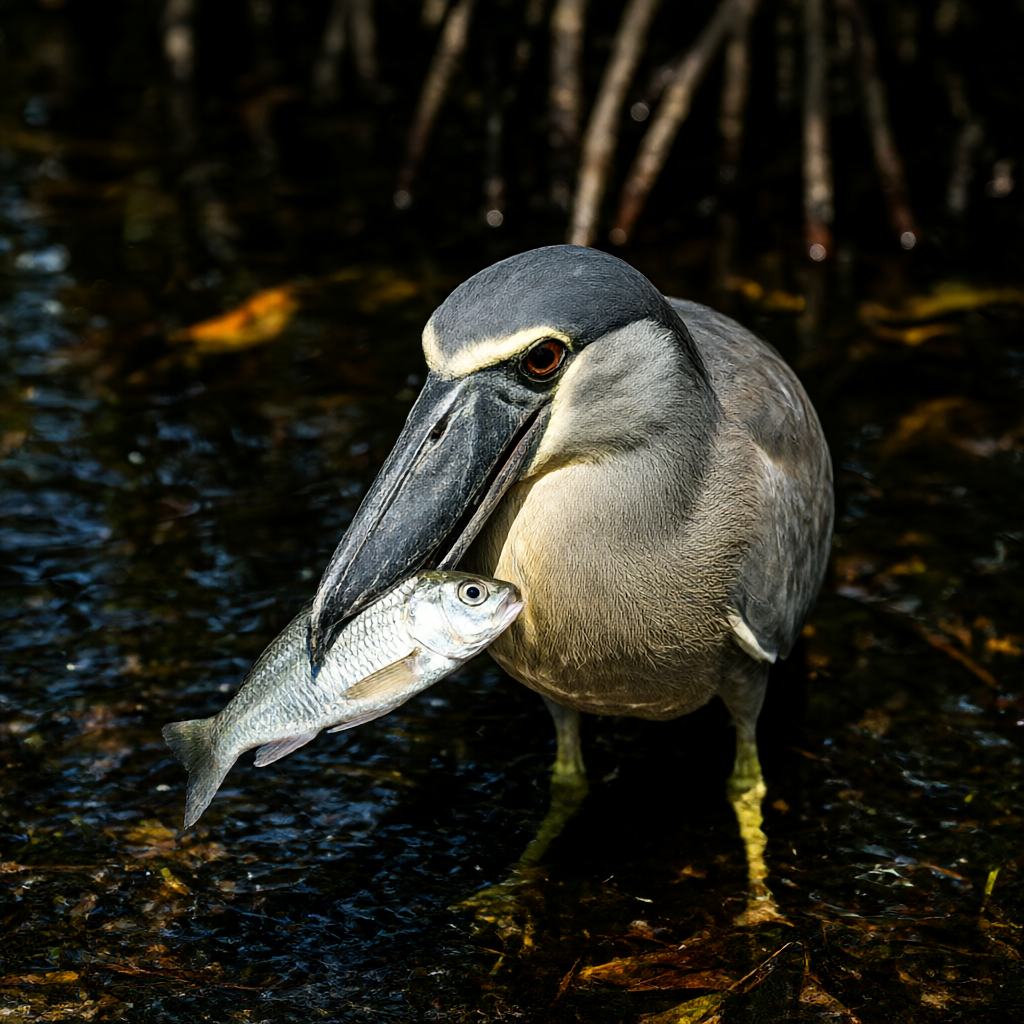
Fish fill most of the diet. Shrimp, crabs and aquatic insects cover the rest. The bird wades slowly through shallows, and the bill hangs open near the surface.
Contact tells it more than sight here, because the water stays black. A quick snap closes the mandibles, and the prey has nowhere to go, since the bill pins it against the mud before it can move. Night feeding cuts competition, because most other herons sleep through it.
Colonial, two to four eggs
The breeding cycle
Pairs nest in colonies, often beside other heron species. A platform of sticks sits low in a mangrove, and it holds two to four eggs. Both parents incubate, and the eggs hatch near 25 days.
Chicks arrive blind and covered in white down. Because the nest hangs over water, predators rarely reach it. Young birds leave after about six weeks, though they return to roost nearby.
Wetland drainage
Conservation
The Red List calls the species Least Concern. Its range is huge, and the population stays stable across most of that ground. Wetland drainage poses the main threat.
Mangrove clearing adds to the pressure, since coastal building keeps removing stands. Because the bird nests in colonies, one cleared site can remove many pairs at once, and the loss takes years to show in any count. Hunting pressure stays low, because the meat carries little value.
Side by side
How It Compares
| Trait | Boat-billed Heron | Grey Heron |
|---|---|---|
| Family | Ardeidae | Ardeidae |
| Length | 45-53 cm | 90-98 cm |
| Bill | 7 cm wide, flared | narrow and dagger like |
| Activity | night | day |
| Nest | low in mangrove | high in a tree |
| Rating | Least Concern | Least Concern |
Common misreadings
What People Get Wrong
- Not a pelican, despite the pouch. The bird belongs with the herons. Genetic work moved the species back beside the night herons, because the bill had pushed earlier workers toward a family of its own.
- Not a sight hunter. The water stays black at night. Because the bill hangs open near the surface, contact tells the bird more than the eyes ever could.
- Not a bird of open water. Mangrove edges and flooded pasture suit it. Cover matters more than depth, so dense branches decide where a colony settles and where it fails.
Going further
Sources and Further Reading
Quick hits
Five things to remember
- The bill works as a spoon and a trap at once, and the bird uses both jobs daily.
- Chicks clatter their bills to beg, and the noise carries across the colony.
- Its call is a low croak, and pairs answer each other over dark water.
- Scientists once gave the species a family of its own, and DNA cancelled that.
- The bird hunts in total darkness, since touch matters more than light.