 By st20113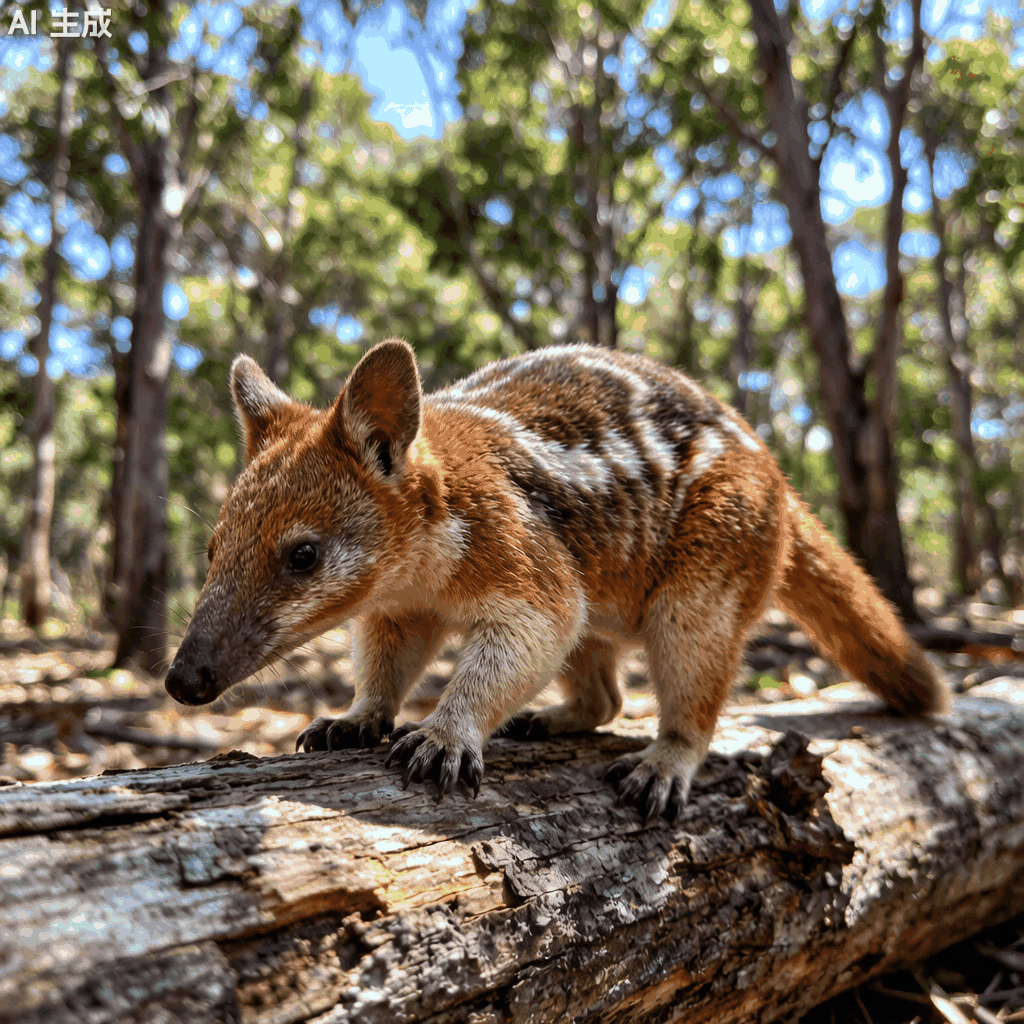
Introduction
The Numbat, scientifically known as Myrmecobius fuliginosus, is a small marsupial endemic to Western Australia. Also called the banded anteater or walpurti, this distinctive creature is one of Australia’s most endangered mammals and serves as the faunal emblem of Western Australia. Unlike most marsupials, numbats are diurnal and feed almost exclusively on termites, using their long, sticky tongues to capture their prey.
Once widespread across southern Australia, numbats now survive in only a few isolated populations in Western Australia. Conservation efforts have helped prevent their extinction, though they remain critically endangered. Their striking appearance, featuring distinctive white stripes across their reddish-brown bodies, makes them one of Australia’s most visually distinctive marsupials. Numbats are solitary animals that occupy large home ranges relative to their small body size.
Taxonomy
The Numbat belongs to the family Myrmecobiidae within the order Dasyuromorphia, which includes carnivorous marsupials such as quolls and the extinct thylacine. It is the sole living member of its family, making it a taxonomically unique species. The scientific name Myrmecobius fuliginosus reflects its termite-eating habits, with “myrmecobius” derived from Greek words meaning “termite life.”
Numbats are more closely related to other dasyurids than to other termite-eating mammals like anteaters or aardvarks, which evolved similar feeding adaptations independently. This represents a remarkable example of convergent evolution, where unrelated species develop similar traits to exploit similar ecological niches. Unlike the African lion, which hunts large prey, numbats specialize on tiny termites. Their closest relatives include other Australian dasyurid marsupials, though they diverged from their relatives millions of years ago to pursue their specialized diet.
Physical Characteristics
Numbats are small marsupials, measuring approximately 8-11 inches in body length with a bushy tail adding another 6-8 inches. Adults weigh between 0.6-1.1 pounds, with males slightly larger than females. Their most distinctive feature is their striking coat pattern: reddish-brown fur adorned with six or seven prominent white stripes across the back and rump, providing camouflage in their open forest habitats.
They possess long, slender snouts adapted for extracting termites from galleries, and remarkably long, sticky tongues that can extend up to 4 inches beyond the snout. Unlike most marsupials, female numbats lack a proper pouch. Instead, skin folds protect the four teats where young attach after birth. Their front feet have five claws used for digging into termite mounds, while hind feet are adapted for climbing. Unlike the red fox, numbats lack the speed to escape predators.
Habitat
Historically, numbats inhabited dry woodlands and forests across southern Australia from western New South Wales through South Australia to Western Australia. Today, they survive in only a few locations in Western Australia, primarily in eucalypt woodlands with abundant hollow logs for shelter. They require habitats with sufficient termite populations to sustain their specialized diet.
Numbats prefer areas with an open understory that allows easy movement while foraging. They use hollow logs for shelter at night and during the hottest parts of the day. Unlike the sun bear that inhabits tropical forests, numbats live in semi-arid woodlands. Territory size varies considerably based on termite availability, with individuals requiring 25-50 hectares or more to find sufficient food. Habitat degradation, particularly from altered fire regimes and predation by introduced species, has severely reduced their range. Conservation programs have established populations in predator-proof sanctuaries and fenced reserves.
Diet
Numbats are specialist termite feeders, consuming up to 20,000 termites daily. They detect termite activity by scent and sound, then use their front claws to break into termite galleries and mounds. Their long, sticky tongues rapidly capture termites before they can retreat deeper into their tunnels. Unlike other termite-eating mammals, numbats do not consume ants, making their diet more restrictive.
This specialized diet influences every aspect of numbat ecology and behavior. Their diurnal activity pattern matches the surface activity periods of their termite prey. They do not drink free-standing water, obtaining all necessary moisture from their food. The energy content of termites is relatively low, requiring numbats to spend much of their active period foraging. Unlike the fennec fox that hunts diverse prey, numbats focus exclusively on termites. Seasonal variations in termite availability affect numbat body condition and reproductive success, with individuals losing weight during winter when termite activity decreases.
Reproduction
Numbats breed during the Australian summer, with mating typically occurring in January. Females give birth to up to four young after a gestation period of approximately 14 days, one of the shortest among mammals. The tiny, underdeveloped young crawl to the mother’s underside and attach to teats, where they remain firmly attached for several months.
Unlike most marsupials, female numbats lack a pouch. Instead, the young cling to the mother’s belly fur and teats, protected only by long hairs and skin folds. Young detach from teats around July but continue nursing and riding on the mother’s back until September. By November, young numbats become independent and disperse to establish their own territories. Unlike the gray wolf that lives in packs, numbats are solitary throughout most of the year. Survival rates for young numbats are low, with predation by introduced foxes and cats being the primary cause of mortality.
Conservation
Numbats are classified as Endangered by the IUCN Red List, with fewer than 1,000 individuals remaining in the wild. Once abundant across southern Australia, they declined dramatically following European settlement due to habitat clearing, altered fire regimes, and predation by introduced red foxes and feral cats. By the 1970s, numbats survived in only two small areas in Western Australia.
Conservation efforts have included captive breeding programs, reintroduction to fox-free areas, and establishment of populations in fenced sanctuaries. Western Australia’s Department of Biodiversity, Conservation and Attractions leads recovery efforts, including regular monitoring and fox baiting programs. Successful reintroductions have established populations in South Australia and New South Wales within predator-proof fenced reserves. Unlike the African wild dog, which faces different conservation challenges, numbats must contend with introduced predators. Ongoing threats include predation, habitat fragmentation, and climate change affecting termite availability. Public education programs raise awareness about this unique species and its conservation needs.
Fun Facts
Numbats are the faunal emblem of Western Australia and appear on the logo of several conservation organizations. Their distinctive striped coat provides excellent camouflage, breaking up their outline in dappled forest light. They are one of the few diurnal marsupials, active during the day to match termite activity patterns.
A numbat’s tongue is so long that it must tuck it back into its mouth and throat when not feeding. They can extend and retract their tongue approximately 100 times per minute while feeding. Unlike most marsupials, numbats have 52 teeth – more than any other land mammal relative to body size – though they swallow termites whole without chewing. Their heart rate and metabolism are unusually low for their body size, an adaptation to their low-energy termite diet. Aboriginal Australians called numbats “walpurti” and featured them in Dreamtime stories. Conservation programs have helped increase populations from fewer than 200 individuals in the 1980s to current levels, demonstrating that recovery is possible with dedicated effort.