 By st20113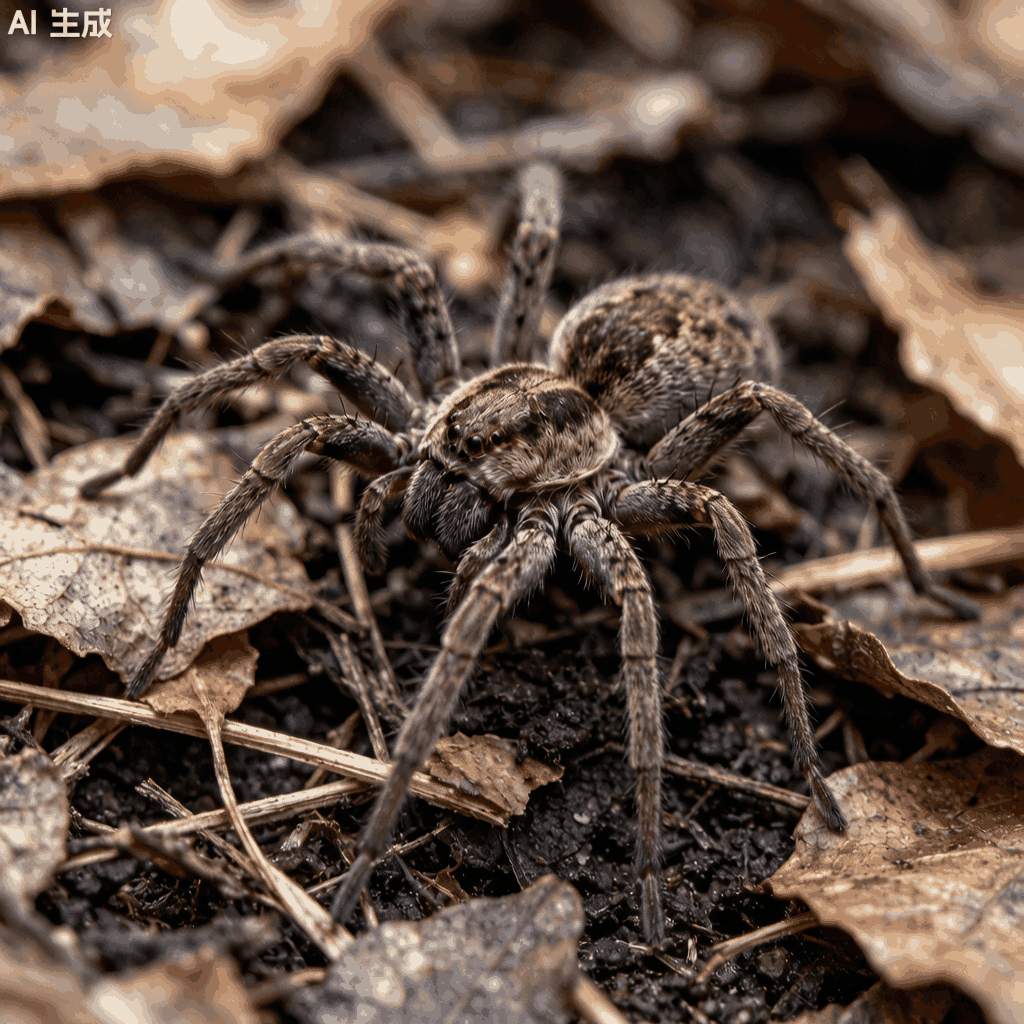
Introduction
Wolf spiders, members of the genus Lycosa and the broader family Lycosidae, are among the most common and recognizable spiders worldwide. Named for their wolf-like hunting style, these ground-dwelling arachnids do not build webs to catch prey but instead actively chase and pounce on their victims. Wolf spiders play crucial ecological roles as both predators and prey in various terrestrial ecosystems.
These spiders are found on every continent except Antarctica and inhabit diverse environments from forests and grasslands to deserts and wetlands. Their excellent vision, hunting prowess, and maternal care behaviors make them fascinating subjects for arachnological research. Despite their sometimes intimidating appearance, wolf spiders are generally harmless to humans and provide valuable pest control services in gardens and agricultural areas.
Taxonomy
Wolf spiders belong to the family Lycosidae, one of the largest spider families with over 2,400 described species in 124 genera. The genus Lycosa, from which the family takes its name, contains numerous species found across Europe, Asia, and the Americas. Carl Linnaeus established the genus in 1758, making it one of the earliest spider genera formally described. The type species, Lycosa tarantula, gave its name to tarantulas, though true tarantulas belong to a different family.
Lycosidae belongs to the infraorder Araneomorphae, the true spiders with opposing fangs. Unlike the butterfly, which undergoes complete metamorphosis, wolf spiders develop through gradual molts without a pupal stage. They share the hunting spider guild with families like Pisauridae (nursery web spiders) and Salticidae (jumping spiders), though each family employs different hunting strategies. Taxonomic revisions continue as molecular techniques reveal relationships among species and genera.
Physical Characteristics
Wolf spiders vary considerably in size, with body lengths ranging from less than half an inch to over an inch in the largest species. They possess robust, hairy bodies colored in shades of brown, gray, or black, often with patterns that provide excellent camouflage against soil and leaf litter. Their eight eyes are arranged in three rows, with the middle row containing two large forward-facing eyes that give them excellent binocular vision.
Their legs are long and strong, adapted for rapid running and quick turns during pursuit of prey. Unlike web-building spiders that rely on vibration detection, wolf spiders depend heavily on their keen eyesight for hunting. The arrangement of their eyes helps distinguish them from similar families. Females are typically larger than males, particularly when carrying eggs. Their hairy appearance sometimes causes people to confuse them with tarantulas, though they are not closely related to the brown bear or other mammals despite their “fur.”
Habitat
Wolf spiders occupy an exceptionally wide range of habitats across virtually all terrestrial ecosystems. They are found in forests, grasslands, deserts, wetlands, agricultural fields, and even suburban backyards. Some species prefer specific microhabitats such as leaf litter, while others are more generalist. Ground-dwelling species construct silk-lined burrows or retreats under rocks, logs, or debris.
Many wolf spiders are nocturnal, emerging at night to hunt across the ground surface. Some species climb vegetation while hunting, though most remain on or near the ground. They are particularly abundant in habitats with abundant insect prey. Unlike the aquatic blue whale, wolf spiders are entirely terrestrial. Their silk production is primarily used for constructing egg sacs, lining burrows, and creating draglines for safety rather than for prey capture. Habitat preferences vary by species, with some adapted to specific conditions while others are habitat generalists.
Diet
Wolf spiders are opportunistic predators that hunt a wide variety of prey items. Their diet consists primarily of insects and other arthropods, including crickets, beetles, ants, grasshoppers, and other spiders. Larger species may occasionally capture small vertebrates such as tiny frogs or lizards. Unlike web-building spiders that wait for prey to come to them, wolf spiders actively pursue their quarry across the ground.
Their hunting strategy involves a combination of ambush and active pursuit. Wolf spiders may wait motionless for prey to pass nearby, then launch into a rapid chase. Their excellent vision allows them to detect movement from considerable distances. Once prey is captured, wolf spiders inject venom to immobilize it and begin digesting the internal tissues before consumption. They play important roles in controlling insect populations in agricultural and garden settings. While they hunt on the ground, the polar bear hunts in very different circumstances.
Reproduction
Wolf spiders exhibit fascinating reproductive behaviors, including elaborate courtship rituals and remarkable maternal care. Males perform species-specific courtship displays involving leg waving, body vibrations, and sometimes drumming on the substrate. These displays help females recognize potential mates and assess their quality. Males must approach females carefully, as females may attack and eat unsuitable suitors.
After mating, females produce spherical egg sacs attached to their spinnerets at the rear of the abdomen. They carry these egg sacs everywhere they go, providing constant protection. Upon hatching, the spiderlings climb onto their mother’s back and remain there for several days to weeks, receiving protection and sometimes feeding on prey captured by the mother. This extended maternal care is unusual among spiders and helps ensure juvenile survival. Once the young disperse, they undergo multiple molts as they grow. These reproductive strategies differ significantly from those of the sloth or other mammals.
Conservation
Most wolf spider species are not currently considered threatened or endangered, though specific rare species with limited distributions may face conservation challenges. The primary threats to wolf spider populations include habitat destruction, pesticide use, and climate change. Agricultural intensification reduces habitat complexity and eliminates the diverse prey base wolf spiders require.
Pesticide use in agricultural and urban settings directly kills wolf spiders and reduces their prey availability. Habitat fragmentation isolates populations and reduces genetic diversity. Some specialized species with narrow habitat requirements may be particularly vulnerable. Conservation efforts focus on preserving habitat diversity and reducing pesticide applications. Wolf spiders benefit from organic farming practices and reduced tillage, which maintain ground cover and prey populations. Their role as natural pest control agents makes their conservation economically valuable alongside more charismatic species like the arctic fox.
Fun Facts
Wolf spiders possess one of the best vision systems among spiders, with eight eyes providing nearly 360-degree coverage. Their large forward-facing eyes give them excellent depth perception for judging distances during prey capture. When illuminated at night, wolf spider eyes reflect light, creating tiny sparkles across lawns and forest floors – a technique scientists use to estimate population densities.
The name “tarantula” originated from the European wolf spider Lycosa tarantula, found near Taranto, Italy. Historical folklore suggested that dancing the tarantella would cure the spider’s bite, though wolf spider venom is rarely harmful to humans. Female wolf spiders carrying egg sacs will retrieve them if dislodged, and have been observed using their pedipalps to manipulate eggs back into position. Some species can live for several years, unusually long for spiders. Their maternal care behaviors, including carrying young on their backs, represent some of the most advanced parental investment among arachnids.
200 eggs, making the mantis one of the most prolific insect predators on a per-clutch basis. The Wolf Spider shares the mantis habitat preferences in many regions, and both are efficient nocturnal predators