 By st20113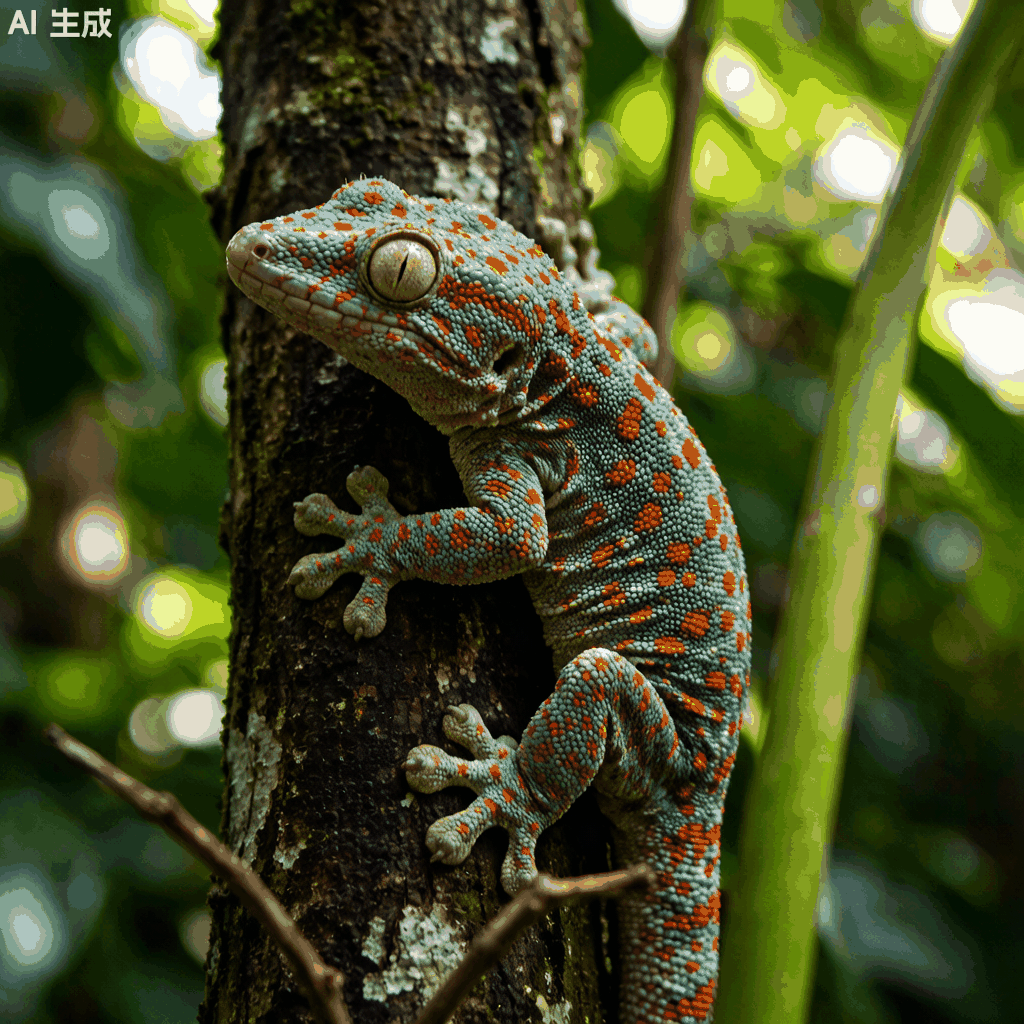
Introduction
The Tokay Gecko, scientifically named Gekko gecko, is one of the largest gecko species in the world and is renowned for its distinctive vocalizations. Named after its loud “to-kay” call, this nocturnal reptile is native to Southeast Asia and has become increasingly common in the international pet trade. The Tokay Gecko plays important roles in local ecosystems as both predator and prey.
These impressive lizards have been part of traditional medicine practices in various Asian cultures for centuries. Their striking appearance, featuring bright orange and blue-gray coloration, makes them visually distinctive among gecko species. Despite their popularity in captivity, Tokay Geckos are known for their aggressive temperament and willingness to defend themselves when threatened, making them challenging pets for inexperienced keepers.
Taxonomy
The Tokay Gecko belongs to the family Gekkonidae within the order Squamata. Its scientific name, Gekko gecko, reflects its status as the type species of the genus Gekko. This species was first described by Carl Linnaeus in 1758, making it one of the earliest gecko species formally documented by Western science. Multiple subspecies have been proposed, though taxonomic revisions continue as genetic studies reveal new insights.
Geckos represent one of the most diverse lizard families, with over 1,500 species worldwide. The genus Gekko includes numerous species distributed across Asia. Tokay Geckos share characteristics with other arboreal lizard species, though they are not closely related to amphibians like the red-eyed tree frog. Their specialized toe pads enable them to climb vertical surfaces with remarkable efficiency, a trait that has fascinated scientists for decades.
Physical Characteristics
Tokay Geckos are among the largest gecko species, reaching total lengths of up to 14 inches including their tail. Their bodies are robust and somewhat flattened, with large heads and prominent eyes. The base coloration is typically blue-gray to gray-brown, adorned with bright orange or red spots and bands that create a striking pattern. This coloration serves as both camouflage and warning coloration.
Their most remarkable feature is their specialized toe pads, covered with millions of microscopic hair-like structures called setae. These structures create van der Waals forces that allow Tokay Geckos to adhere to smooth surfaces, including glass, and even hang upside down. Unlike the poison dart frog, Tokay Geckos rely on their climbing abilities rather than toxins for protection. Their tails are thick at the base and serve as fat storage, and like many lizards, they can detach their tails as a defense mechanism when grabbed by predators.
Habitat
Tokay Geckos inhabit a variety of environments across their native range in Southeast Asia, including rainforests, bamboo forests, and agricultural areas. They are particularly fond of vertical surfaces and can be found on tree trunks, rock faces, and cliff walls. Their excellent climbing abilities allow them to access habitats inaccessible to many other predators.
In many parts of their range, Tokay Geckos have adapted well to human presence and are commonly found in buildings, where they hunt insects attracted to lights. They prefer warm, humid environments with temperatures between 75-85 degrees Fahrenheit. Unlike the aquatic Nile crocodile, Tokay Geckos are strictly terrestrial and arboreal. They are primarily nocturnal, spending daylight hours hiding in crevices, tree hollows, or behind loose bark. Their ability to thrive in both natural and modified habitats has contributed to their widespread distribution.
Diet
Tokay Geckos are opportunistic predators with a varied diet consisting primarily of invertebrates. They hunt a wide range of prey including moths, crickets, beetles, cockroaches, and other insects. Larger individuals may also consume small vertebrates such as smaller lizards, young mice, and occasionally small birds. Their hunting strategy involves patient waiting followed by rapid strikes at passing prey.
These geckos possess excellent night vision that allows them to hunt effectively in darkness. Their large eyes lack movable eyelids, instead covered by a transparent scale that they lick to keep clean. In captivity, Tokay Geckos readily accept commercially available insects and can be trained to take food from forceps. Unlike herbivorous species, they derive all their nutrition from animal prey. They play beneficial roles in controlling insect populations, particularly in areas where they coexist with humans. The bald eagle hunts very different prey in very different habitats.
Reproduction
Tokay Geckos are territorial and generally solitary outside of breeding season. Males establish territories and announce their presence through loud vocalizations, particularly the distinctive “to-kay” call from which they derive their common name. During breeding season, males actively seek females and may travel considerable distances to find mates.
Females typically lay clutches of one or two hard-shelled eggs, often in protected locations such as tree hollows or rock crevices. They may produce multiple clutches throughout the breeding season. Unlike most reptiles, female Tokay Geckos often guard their eggs until hatching, which occurs after approximately 60-90 days depending on temperature. Hatchlings emerge fully independent and receive no parental care. Sexual maturity is typically reached within one to two years. These reproductive habits differ significantly from those of the African lion or other mammals.
Conservation
While Tokay Geckos are not currently classified as endangered, they face increasing pressures from collection for the traditional medicine trade and pet industry. In some parts of their range, particularly China and Southeast Asia, they are harvested in large numbers for use in traditional remedies. Climate change and habitat destruction also threaten local populations, particularly those in forest habitats that cannot adapt to urban environments.
The international pet trade has significantly impacted wild populations, with thousands exported annually from range countries. CITES regulations now govern international trade in Tokay Geckos, though enforcement varies. Conservation efforts focus on sustainable harvest practices and protection of natural habitats. Captive breeding programs help supply the pet trade while reducing pressure on wild populations. Their adaptability to human-modified environments provides some protection, though populations in prime forest habitats require conservation attention alongside species like the harpy eagle that share their forest ecosystems.
Fun Facts
Tokay Geckos are among the most vocal reptiles in the world, capable of producing a variety of sounds including their namesake “to-kay” call, barks, clicks, and squeaks. Males call to establish territory and attract mates, and these vocalizations can be heard over considerable distances on quiet nights. Their loud calls have earned them nicknames in various local languages.
Their bite is notoriously strong and they are known for their unwillingness to let go once they have clamped down. In some cultures, handlers use techniques such as dripping vinegar on the gecko’s nose to encourage release. Tokay Geckos can live over 20 years in captivity, making them long-term commitments as pets. Their specialized toe pads have inspired scientific research into synthetic adhesives, with potential applications ranging from robotics to medical devices. Scientists continue studying their adhesive capabilities to develop new technologies for climbing and gripping.