 By Iris
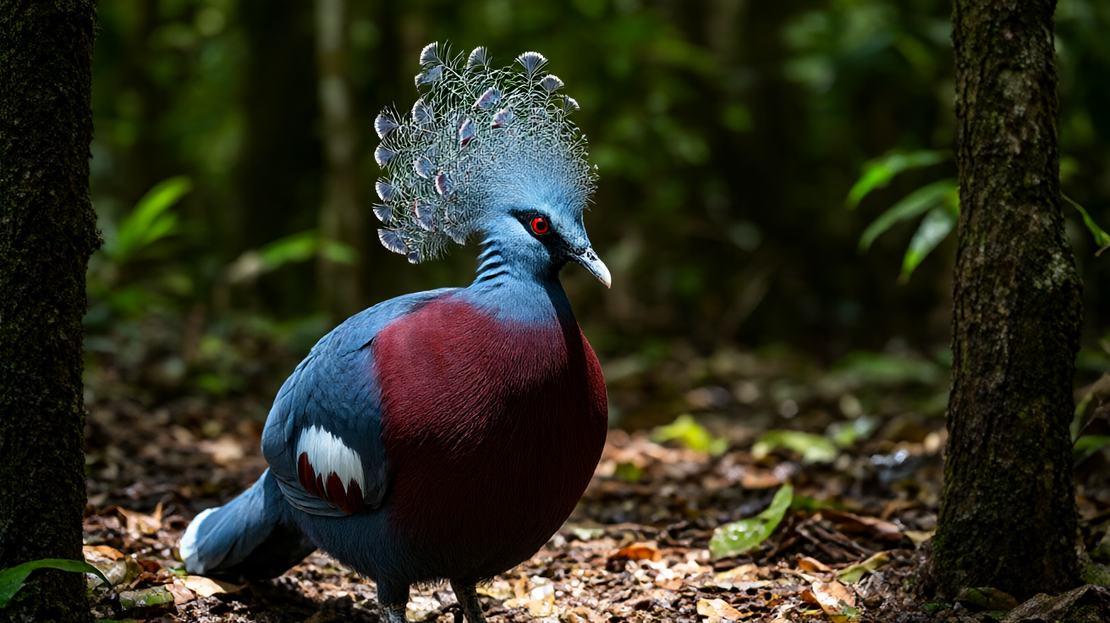
Goura victoria | Victoria Crowned Pigeon
Species Profile · Columbidae
Victoria Crowned Pigeon
A pigeon the size of a chicken walks out of the swamp forest.
Near Threatened
Length
Weight
Crest
Clutch
Incubation
Rating
The Victoria Crowned Pigeon
Lace on the forest floor
A pigeon the size of a chicken walks out of the swamp forest. A fan of blue lace sits on its head. Nothing about it looks like a city pigeon. One stands still, tilts its head, then moves on.
Victoria crowned pigeons live on the forest floor of New Guinea. They spend most of the day walking. Because the bird is large and slow to breed, hunting hits it harder than it hits smaller pigeons.
Family tree
Columbidae, the largest of the family
Its proper name is Goura victoria, one of four crowned pigeons. Columbidae is the family, which makes it a close relative of the birds on any city pavement. A Common Wood Pigeon shares the same basic body plan, though it weighs less than a fifth as much.
Crowned pigeons split from other pigeons long ago. New Guinea gave them no competitors of similar size. A European Turtle Dove shows the other end of the family, since that bird barely reaches 100 g.
Lace, tipped white
How to tell one
The bird runs 70 to 74 cm from beak to tail. Weight falls between 2 and 2.4 kg. That makes it the largest pigeon alive.
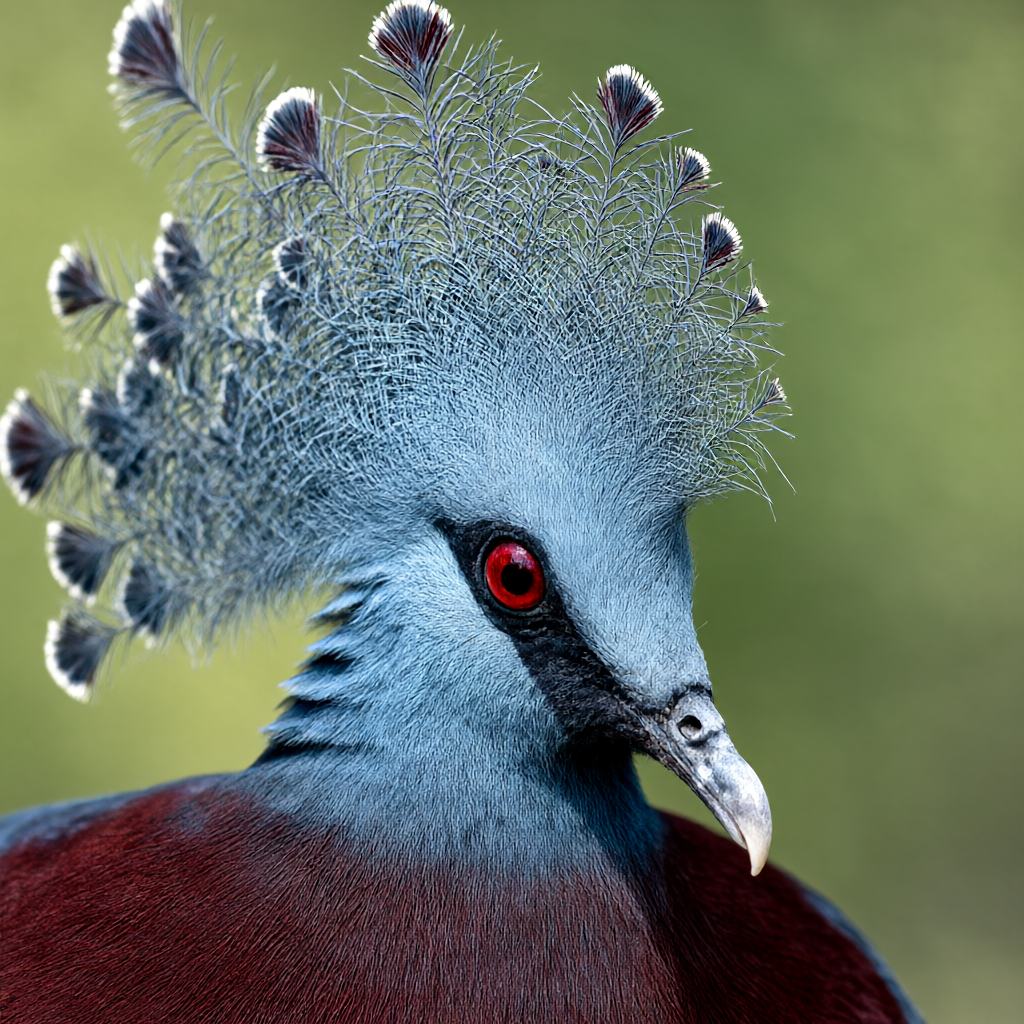
A fan of blue-grey lace forms the crest. Each feather tip carries a white edge. Breast is maroon, eye is crimson, and the shoulders show a broad white patch.
Because the wings are short and broad, the bird can climb through branches but cannot keep flying for long. Its legs are long and strong, and they carry it for hours. Walking matters more than flying here.
1
2
3
Swamp forest and sago
Where it lives
Lowland swamp forest and riverine woodland in northern New Guinea hold the species. Sago palm stands suit it. It feeds beneath them. Because the ground stays wet, the bird can walk quietly through the litter without breaking cover.
Drier forest inland suits it as well, though numbers run lower there. Islands off the coast hold small populations. Those groups stay isolated.
Whatever falls
What it eats
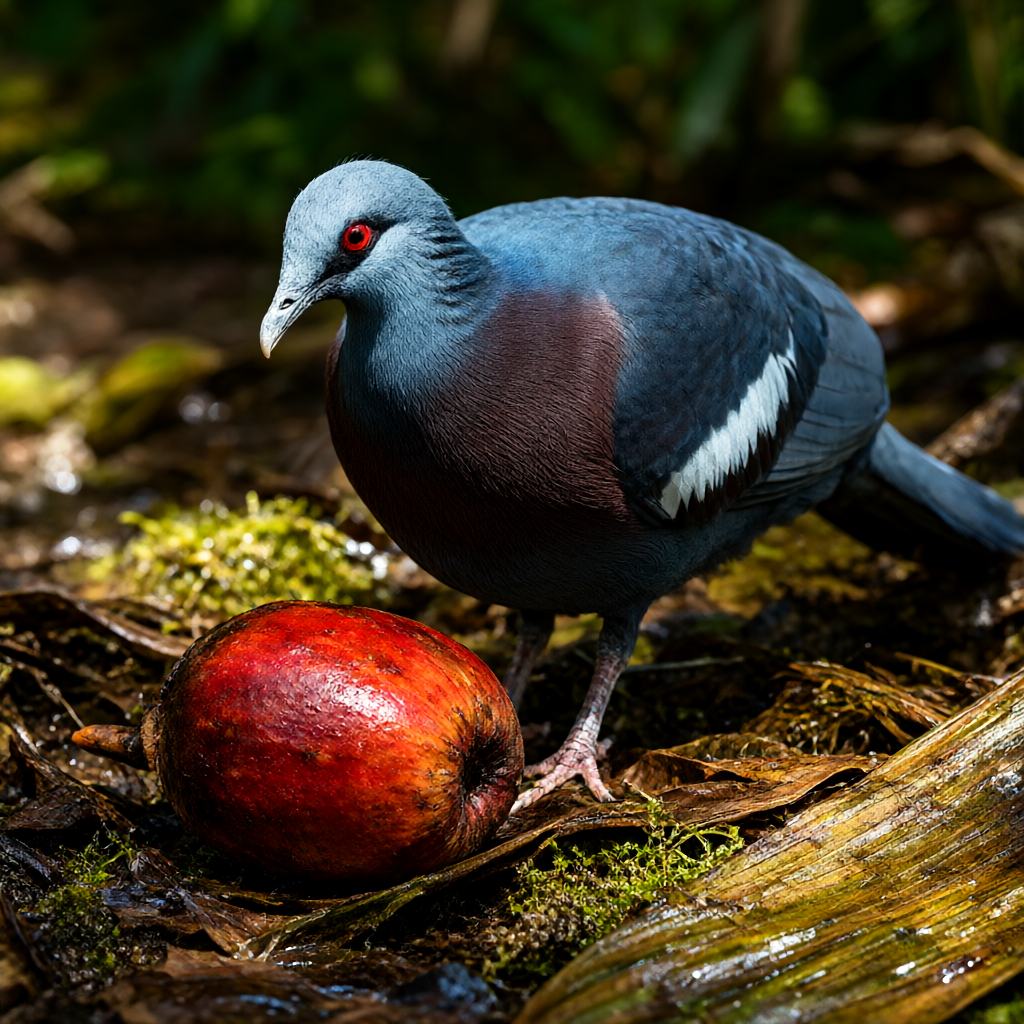
Fallen fruit makes up most of the food. Seeds, berries and small snails fill out the rest. Because the bird feeds on the forest floor, it takes whatever drops.
It rarely climbs for a meal. Groups walk in loose lines and pick at the litter as they go, though no bird leads. Its large size means a big daily intake.
Waking hours go almost entirely to feeding. Pairs often stay within a few metres of each other.
One egg, shared sitting
The breeding cycle
A pair builds a loose platform of sticks and palm fronds in a tree. One egg goes onto the platform, and both birds share the incubation. Because the egg takes about 30 days to hatch, the nest sits exposed on its platform for a long stretch.
Chicks stay in the nest for several weeks. It leaves long after most pigeons would. Pairs stay together across seasons, and the same two birds may nest again next year.
Plumes still sell
Conservation
The Red List calls the species Near Threatened. Hunting removes adults. Plumes are still sold for decoration. Because a pair raises one chick at a time, a population cannot replace losses quickly, so hunting bites deep.
Logging opens the forest and lets hunters reach places that once stayed remote. Captive birds breed well, however, and that helps the species. Collections around the world hold large numbers, which takes pressure off the wild ones.
Side by side
How It Compares
| Trait | Victoria Crowned Pigeon | Common Wood Pigeon |
|---|---|---|
| Family | Columbidae | Columbidae |
| Length | 70-74 cm | 40-42 cm |
| Weight | 2-2.4 kg | 300-500 g |
| Crest | blue lace fan | none |
| Clutch | one egg | two eggs |
| Rating | Near Threatened | Least Concern |
Common misreadings
What People Get Wrong
- Not a pheasant, despite the walk. Pigeon anatomy says otherwise. The bird carries a pigeon beak and pigeon feet, and its size alone makes people reach for a ground bird that it never was.
- Not a canopy feeder. Fruit is taken from the floor. Almost everything the animal eats has already fallen, so the bird walks the litter instead of climbing for a meal.
- Not a bird that flies well. Wings suit short bursts. Flight carries it into a tree when danger comes close, and beyond that short climb the bird walks from one patch to the next.
Going further
Sources and Further Reading
Quick hits
Five things to remember
- Its crest looks like lace, and each feather ends in a small white tip.
- Wings make a loud clapping whistle at take-off.
- A crowned pigeon can weigh more than a domestic cat.
- Pairs walk side by side and keep in contact with a soft call.
- Its name honours Queen Victoria, not any feature of the bird.