 By st20113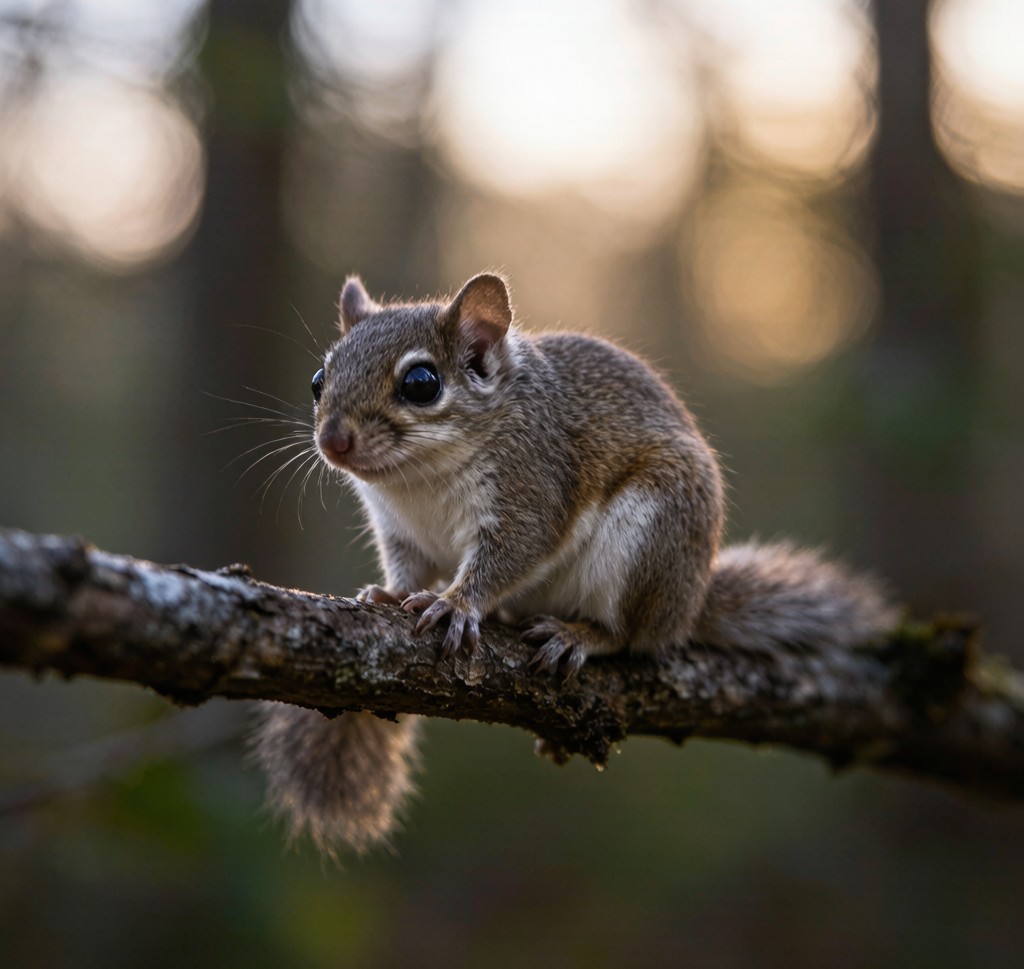
The southern flying squirrel (Glaucomys volans) is one of the smallest and most acrobatic tree squirrels in North America. Despite its name, it does not truly fly but glides using a membrane of loose skin called the patagium, which stretches from the wrist of the front leg to the ankle of the hind leg on each side of the body.
Adult southern flying squirrels measure 21 to 26 centimeters (8.3 to 10.2 inches) in total length, including the tail, and weigh 45 to 82 grams. Their fur is soft and dense, grayish-brown on the upperparts and white or creamy on the underside. The large, black eyes are highly adapted for nocturnal vision.
Southern flying squirrels are found throughout the eastern United States, from southern Maine to Florida and west to Minnesota and Texas, as well as in parts of Canada, Mexico, and Central America. They inhabit deciduous forests, preferring areas with abundant nut-producing trees such as oaks, hickories, and beech trees.
Gliding is the southern flying squirrel’s primary method of locomotion. Glides can cover 5 to 25 meters (16 to 82 feet) and are used to escape predators, reach food sources, and traverse gaps between trees. During a glide, the squirrel can adjust the tension and shape of the patagium to control direction, speed, and landing angle.
These squirrels are highly social and often share nest sites during winter, with groups of 10 or more individuals sometimes sharing a tree cavity to conserve body heat. They are also known to cache food, storing nuts and seeds in tree hollows or underground burrows for consumption during periods of food scarcity.
Southern flying squirrels are primarily granivorous, feeding on nuts, seeds, acorns, berries, and tree bark. Their seed-caching behavior plays an important ecological role in forest regeneration, as uneaten seeds germinate and contribute to forest renewal.