 By st20113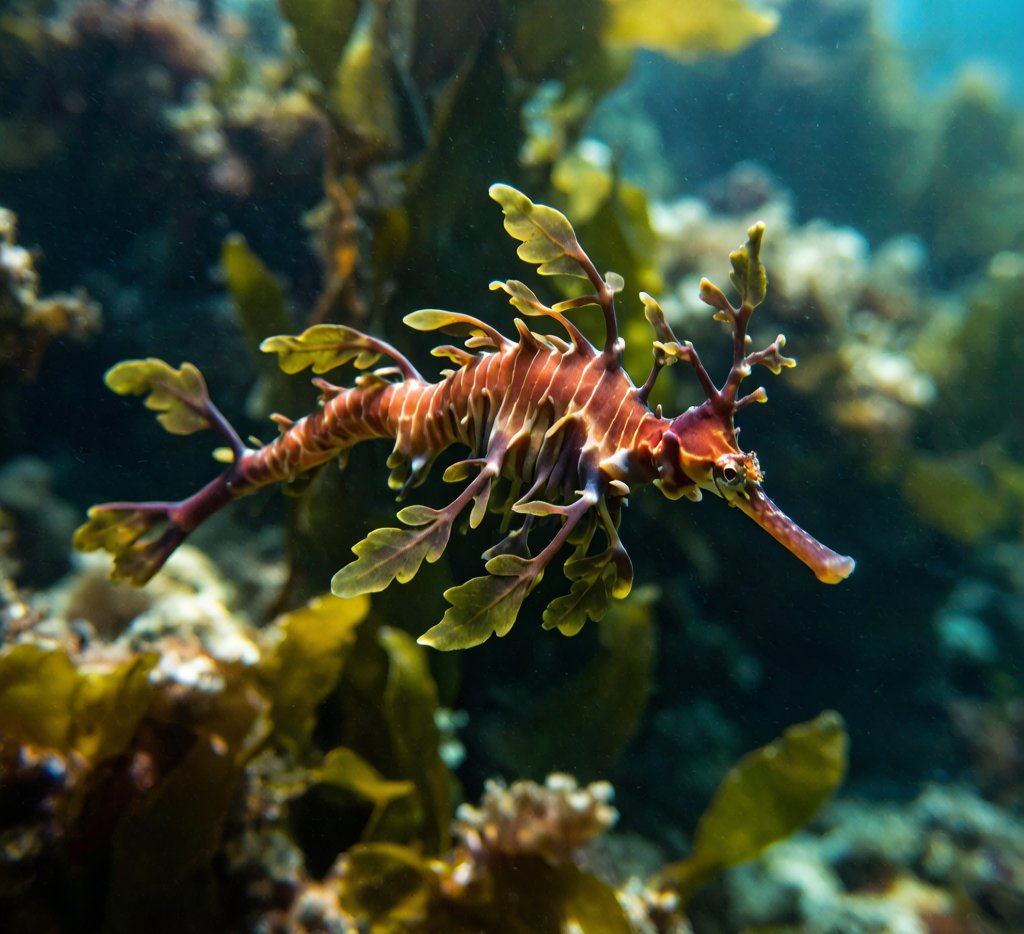
Introduction
The weedy seadragon (Phyllopteryx taeniolatus) is a marine fish found along the southern coast of Australia. Closely related to seahorses and pipefish, it is celebrated for its elaborate leafy appendages that resemble floating seaweed, providing superb camouflage among coastal reefs and seagrass meadows. Slow-moving and strikingly beautiful, it has become an icon of Australian marine life and a focus of citizen-science monitoring along populated coastlines.
Taxonomy
The weedy seadragon belongs to the family Syngnathidae, the same group that includes seahorses and pipefishes. Its genus, Phyllopteryx, means “leaf fin,” a reference to its ornate growths. A close relative is the leafy seadragon, which is even more extravagantly adorned. Unlike the fast pelagic great white shark, the seadragon is a slow, drifting ambush feeder that depends on stealth rather than speed to capture food and avoid danger in open water.
Physical Characteristics
Adults grow to about 45 centimeters long. Their bodies are reddish-brown to yellow, covered with leaf-like lobes that are not used for swimming but for camouflage. They lack a prehensile tail, unlike seahorses, so they cannot anchor to vegetation. Tiny fins on the back and chest beat rapidly to propel the animal gently through the water while the leafy lobes sway. A tough external armor of bony plates replaces scales, protecting them from minor predators while keeping their bodies rigid and energy-efficient to hold position in currents.
Habitat
Weedy seadragons live in temperate reefs, seagrass beds, and kelp forests at depths of a few meters to about 50 meters. They are weak swimmers and rely on camouflage rather than flight to avoid predators. They are often seen hovering nearly motionless among seaweed, where their leafy extensions make them almost invisible to both prey and threats. Seasonal kelp and seagrass loss, caused by warming and pollution, reduces the very habitat they need, and they are easily displaced by storms that strip away their cover. They are most abundant where seagrass meadows remain intact, because these beds supply both food for their prey and the disguise the dragons require.
Diet
They feed on small crustaceans such as mysid shrimp, sucking prey into their tube-like mouths with a quick strike. Their camouflage lets them approach prey closely without being noticed. Larger marine animals such as the manta ray share their coastal habitat but occupy very different feeding niches, the ray filtering plankton while the seadragon hunts individual shrimp among the weeds where it hides. A single seadragon may consume hundreds of shrimp in a week, constantly repositioning among the weeds to stay within striking range of drifting swarms.
Reproduction
Like other syngnathids, males bear the brood. The female deposits eggs onto a spongy patch on the male’s tail, where he fertilizes and carries them for several weeks until they hatch. The tiny young are independent from birth and drift among plankton before settling into reef habitats. Because the male carries the developing eggs, he is unusually vulnerable while brooding and tends to stay close to protective seaweed until the young are released.
Conservation
The weedy seadragon is classified as Near Threatened. Threats include habitat degradation, pollution, and accidental capture in fishing gear, as well as collection for the aquarium trade. It is a protected species in Australia, and its popularity has made it a symbol of marine conservation, much like the humpback whale is for larger ocean creatures, inspiring volunteer divers to record sightings each year. Targeted marine protected areas that shelter seagrass and kelp have proved the most effective way to keep local populations stable.
Fun Facts
Weedy seadragons cannot curl their tails, unlike seahorses. Each individual has a unique pattern of leafy lobes, allowing researchers to identify repeat visitors in long-term studies. They are the official marine emblem of the Australian state of Victoria, highlighting their cultural importance, and they are surprisingly long-lived for such delicate-looking fish, sometimes surviving more than a decade. Their driftwood-colored lobes make them nearly impossible to spot even for trained divers in clear water.