 By Iris
The Wari Empire | Roads of the High Andes
Historical Profile · Peru
The Wari Empire | Roads of the High Andes
An empire in the Andes built roads, storehouses and planned cities four centuries before the Inca, then vanished so completely that its name had to be recovered from ruins.
AD 600-1000
Founded
Reach
Capital
Craft
End
The big picture
Introduction
The high Andes hold the ruins of a state that few travellers can name. Its capital sat high above the valley floor, near modern Ayacucho. From there it reached the coast and the edge of the wet lowlands. Wari rulers held power from AD 600 to 1000.
They built walled sites three storeys high. Roads ran outward in every direction. No writing survives. Yet the plans of the cities are easy to read.
Pots and cloth carry the same designs across a thousand kilometres. This was an empire of standard parts. People here left no chronicle, so the story rests on stone and thread. A state that leaves no words still leaves a shape, and here the shape is a grid.
Setting
Historical Context
The Andes had seen large states before Wari rose. Tiwanaku ruled the shore of Lake Titicaca. Moche lords held the north coast. Between them lay a scatter of farm towns. Drought may have tipped the balance, since the first Wari walls appear suddenly.
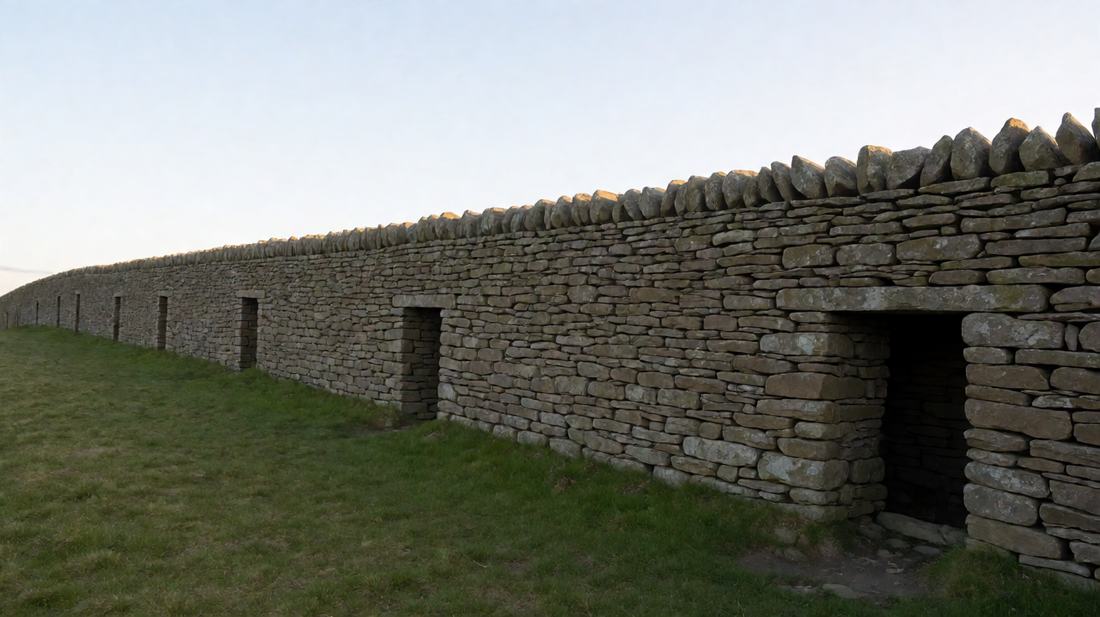
Huari grew from a village into a planned city of perhaps 20,000 people. Its core was rebuilt on a grid. Walls were fieldstone set in mud, and the rooms inside were small and dark. Craft shops clustered near the temples, while farm land lay outside the walls. Store halls held grain, salt and dried goods.
One wet year could fill a store, but a dry one could empty it, and that difference decided who ate in the spring. Rulers drew labour from the valleys below, and thus a small town became a capital. The first great sites went up within one lifetime. That pace suggests a strong hand, not slow growth. One strong ruler can change a valley, and here a single house changed a dozen of them at once.
Turning points
Key Events
Expansion came in stages. First the valleys around Huari were tied to the capital. Then settlers moved south toward Cusco, and north toward the Callejon de Huaylas. Pikillacta, a walled site near Cusco, shows the pattern. Its rooms are long and dark, and it has few doors. No market has been found inside, and thus the site may have been a store for tribute.
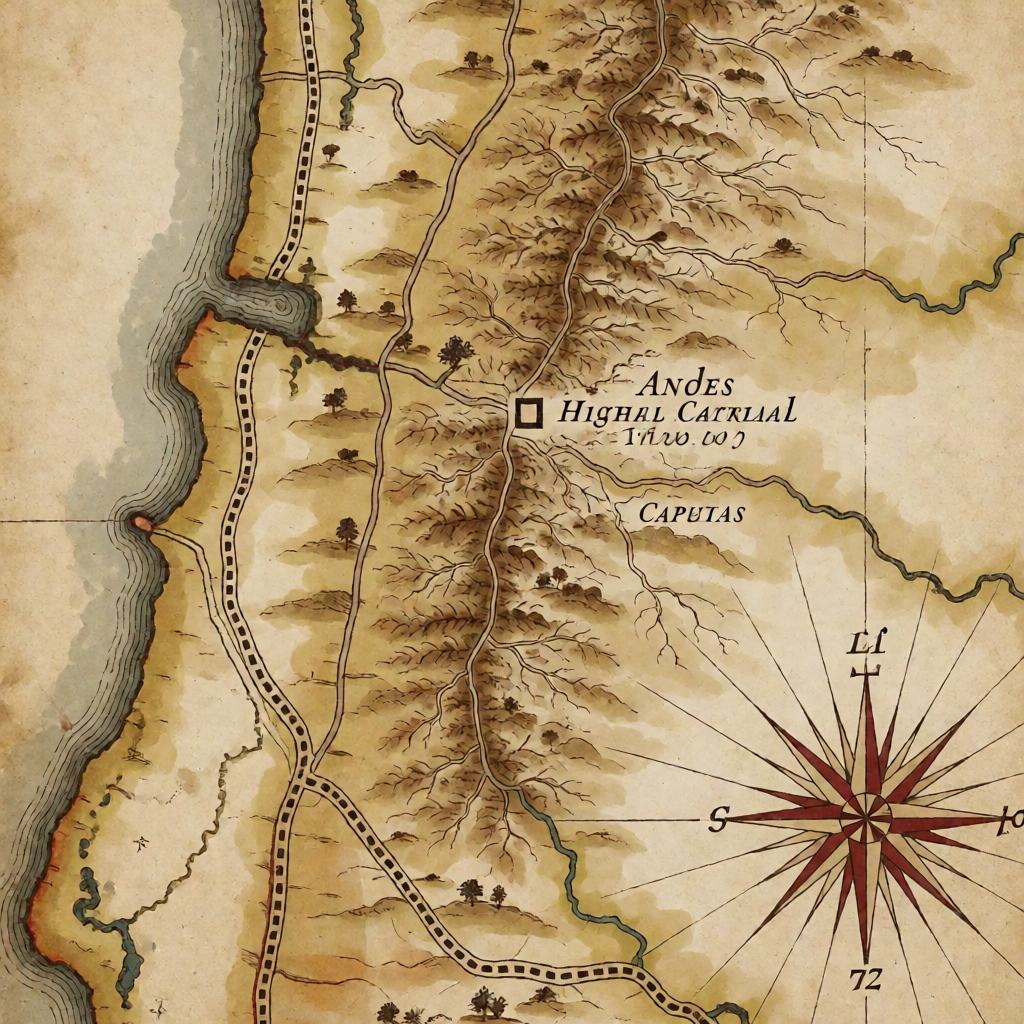
It looks like a barracks and a store at once. On the coast the Wari took old shrines and built terraces and canals. By AD 800 the state held perhaps 1,300 kilometres of road. Then the centre began to fail. Building stopped at Huari. Speed had counted for more than size, though the roads stood empty within a century.
Some towns burned, though others were simply left. By 1000 the capital was a ruin, and local lords kept the water. An empire that runs on stores cannot last once the stores run out. Roads alone could not hold a district together, and the fields went back to waste.
1
2
3
Who held power
People and Powers
No king of Wari is named, and no list of reigns survives. Scholars read the state from its buildings and its graves. Rich burials held fine cloth, silver masks and painted cups. The ruling group was small, and it kept its distance from farmers. Local governors lived in the walled sites.
Local lords kept their land, and they paid in labour rather than coin. Priests and craft masters sat close to power. Women of rank were buried with weaving tools. That detail suggests cloth carried real weight in public life. Power rested on people and on stored food, rather than on written law.
A governor who could feed a district for a year counted for more than any title. Loyalty followed the granary, and the granary followed the road. Office meant access to food, so a title without a store was worth very little. A ruler without a full store was simply a man with a good pedigree.
Everyday world
Daily Life and Society
Most families farmed terraced slopes above the valley floor. They carried loads on foot and paid their dues in days of work. Houses were small, with stone footings and walls of packed earth. Meals were plain, but never short: grain, cakes and dried goods from the coast. Cloth marked rank, since everyone could read a pattern.
A fine tunic could take months, and its patterns named a home district. Commoners wore coarse wool, but a good weaver could still rise. Weaving was women’s work, and a skilled hand could lift a family’s standing in a season. Children learned farming early, and they learned it by watching. Ritual life centred on ancestor bundles and on the mountain peaks.
Those peaks were treated as sources of water and of permission. Feasts marked the farm year, and they settled debts between households. Families that missed a feast lost credit as well as face. Work was shared at harvest, and a family that refused help found none when its own fields ripened.
Craft and ideas
Trade, Technology and Ideas
Builders here were practical. They cut canals across dry slopes and built terraces that held soil. Their roads were wide enough for a line of porters. Storage was the quiet craft. Stone granaries and open halls let a district survive a bad year.
Textiles carried the state’s visual language further than any army could. A single tunic might hold 200 colours, and the dyes came from minerals. Pots were pressed in moulds, so a household could own a standard cup. Ideas moved as well. The staff god appears on cloth and on pots from coast to highland.
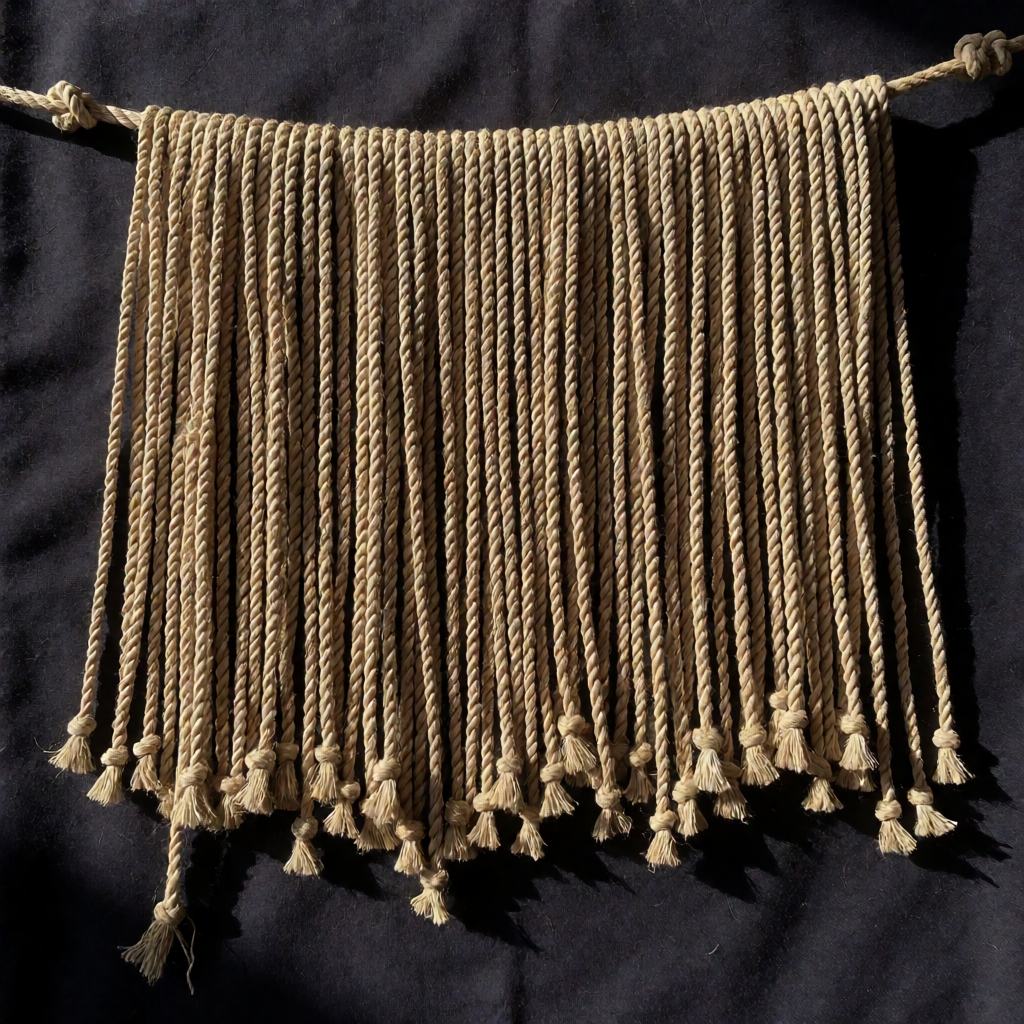
Its meaning is lost, though the image itself is everywhere. Wari had no writing, and its accounts may have used knotted cords, a device later central to the Inca Empire. That trick outlived the state that may have made it. Loom, mould and knotted cord did more for Wari reach than any campaign, and all three were cheap. Counting is a strange kind of empire, and a way of doing it travels further than any border.
What lasted
Legacy
Wari did not vanish. Those roads became the spine of later highland states. The Inca reused them and added relay posts. Five centuries later the builders of Machu Picchu worked in the same way. Terraces stayed in use, and some are still farmed today.
The planned site became a model for later centres. Stonework is another legacy. Inca masons cut blocks far better, yet they kept the same idea of a state. Memory of Wari faded, though the ruins never did. Local people called Huari a place of giants.
Digging has since given the state a name and a date range. Most of what we know comes from rubbish heaps and graves, and the picture is still full of gaps. Its lesson is plain: an empire can run on stores, roads and cloth without a written record. That lesson unsettles anyone who thinks history begins with a document. Travel anywhere in the highlands and the same plan appears, yet no two valleys were ever ruled in quite the same way.
Side by side
How It Compares
| Point | Wari | Inca |
|---|---|---|
| Dates | AD 600-1000 | AD 1438-1533 |
| Base | Ayacucho highlands | Cusco highlands |
| Roads | Over a thousand km of packed road | Forty thousand km of road |
| Cities | Gridded compounds with drains | Cut stone walls and terraces |
| Record | Knotted cords | Knotted cords |
| End | Abandoned around 1000 | Taken by Spain in 1533 |
Common misreadings
What People Get Wrong
- Wari is often called a rehearsal for the Inca. It ran for four centuries on its own terms, with its own capitals and its own collapse.
- Its cities are usually described as fortresses. Most were planned quarters with workshops, stores and drains, and only a few had real walls.
- The end is often blamed on invasion. Drought, terrace failure and a falling water table fit the evidence better.
Going further
Sources and Further Reading
- Wikipedia, Wari Empire
- Encyclopaedia Britannica, Wari. Encyclopaedia Britannica, Inc.
- Schreiber, K.J. 1992. Wari Imperialism in Middle Horizon Peru. University of Michigan Press.
- Isbell, W.H. and McEwan, G.F. 1991. Huari Administrative Structure. Dumbarton Oaks.
Quick hits
Five Things to Remember
- Wari rule ran from about AD 600 to 1000.
- Huari, its capital, may have held 20,000 people.
- Pikillacta near Cusco held hundreds of small rooms behind one wall.
- Wari roads covered some 1,300 kilometres, and the Inca reused them.
- Wari left no writing, so its history rests on objects.