 By Iris
The Ghurid Sultanate | From the Mountains to the Plain
Historical Profile · Afghanistan and India
The Ghurid Sultanate | From the Mountains to the Plain
A mountain district with no cities and no money produced a dynasty that took the plains of north India in a single generation and lost them just as fast.
AD 1148-1215
Rise
Reach
Capital
Craft
End
The big picture
Introduction
Mountain people from the central highlands broke two older empires and left a third behind. Ghurid power sat in the valleys of Ghor, a hard country of stone and snow. For a century they served the Ghaznavids, and then they turned on them. In 1150 they burned the Ghaznavid seat.
Fifty years later they took the plain of northern India. Their empire lasted less than seventy years as a single unit. It broke apart when a ruler was killed in his tent. States that followed were ruled by former officers.
Few empires have been so short lived and so consequential. Mountains gave them a refuge, and poverty gave them a reason to leave. Poor frontiers can produce rich empires, though the empire rarely stays poor, and this one did not.
Setting
Historical Context
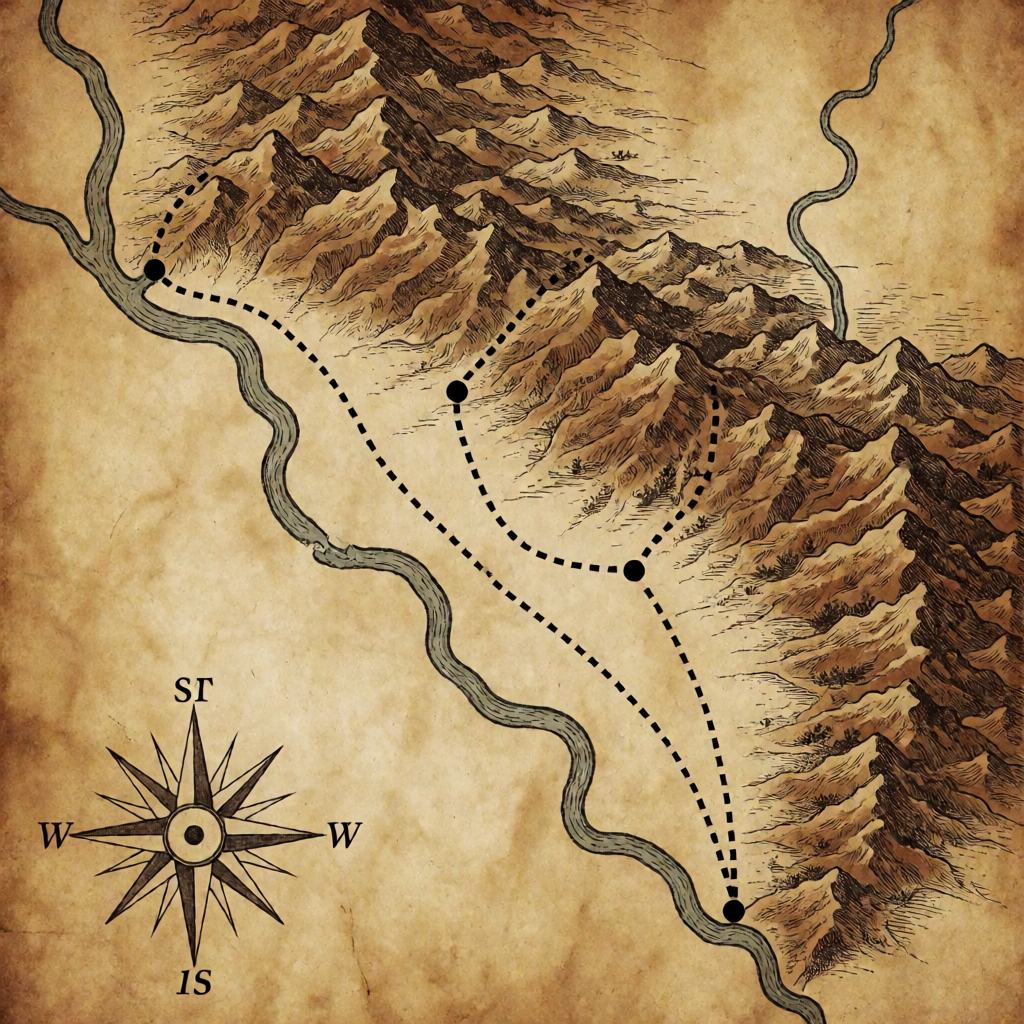
Ghor sat between the Ghaznavid lands and the Seljuk frontier. It was poor, and its people lived by grazing and by raiding convoys. Local chiefs held castles, and they fought each other more often than outsiders. Islam arrived late there, and it took root slowly, since the old shrines stayed open. After 1000 the Ghaznavids claimed tribute. They took Ghurid princes as hostages, and the practice taught those princes how a court worked.
When Seljuk power broke, the Ghurids expanded. Herat fell, and thus the border moved to the Oxus. Then they began to look south, toward the Indian plain. Dynasties that begin as hostage exchanges have learned something useful. Its rulers knew the value of a title, and they knew how cheap one could be. Their own land had little to sell, so they sold service instead.
That trade made them soldiers, and soldiers eventually make a state. Mountains kept them safe while they were weak. They kept them poor at the same time. Poverty is a hard school, but it teaches a ruler to count what he has, and counting is the first skill of a state.
Turning points
Key Events
Revenge came first, but the plan took years. Ala al-Din Husayn took Ghazna in 1150 and burned it. He is remembered as the World Burner. His nephew Ghiyath al-Din rebuilt the state, and he ruled for forty years. His brother Mu’izz al-Din commanded the Indian campaigns. In 1191 a Rajput coalition beat him at Tarain.
He returned the next year with a larger force. At Tarain in 1192 the second battle broke the Rajput alliance. Delhi was taken soon after, though the city changed hands more than once in the next decade. Ghurid generals pushed east to Bengal by 1204. Both brothers died within a few years of each other. No adult heir remained, and still the army held together.
Mu’izz was killed in 1206 by a man he had quarrelled with. His captain Qutb al-Din Aibak took Delhi, and a new line began. That line ruled for three centuries, though its founder had been a slave. Its court kept the forms of the mountain sultans. Conquests that end with the captain on the throne are a common story. Few tell it so quickly.
1
2
3
Who held power
People and Powers
Ghurid rule ran on two kinds of power. Old mountain families held districts, and they raised troops locally. Slave soldiers formed the core of the army. Capable commanders could rise to govern a province, and several did. Court business ran in Persian, and the sultans paid for Persian letters.
Local Indian chiefs kept their lands when they submitted. They paid tribute, and they supplied men when asked. Ghurid rulers called themselves sultans. They claimed no descent from the caliphs, so the right to rule came from victory and from building. A mosque raised over a temple foundation made the same point twice.
Building was a statement, and it was cheaper than a war. That is why so many of their monuments stand on old foundations, and why a single wall can carry two histories. Authority was personal, and it died with the man who held it, which is why the empire died young. Strong sultans could hold the parts together. Weak ones watched them drift.
Everyday world
Daily Life and Society
Ghor was a land of stone villages and terraced fields. Families lived in walled compounds, since a house had to hold three generations. Grain grew in the valleys, though the slopes were poor. Produce came from walled gardens, while wood came from the hills. Winter cut the passes, and each valley ran its own affairs for months.
In India the picture was different. Armies camped outside cities they had not yet taken. Supplies came from the countryside, and they came by force. Fort towns grew around the walls, and a market followed a garrison. The new faith spread slowly, and unevenly, since the tax was paid either way.
Most people stayed outside the new faith for centuries, though the rulers built mosques in every town. Tax collection was the real business of a province. It was farmed out to whoever could pay, and that made local lords stronger than the men who appointed them.
Craft and ideas
Trade, Technology and Ideas
Ghurid wealth came from plunder first, and from tolls later. The route from Samarkand to the Indian plain passed through their land. They taxed it, and they guarded it, because a route is worth what its guards are worth. Building used what was at hand. In India they reused carved stone from temples, and they set it into mosque walls.
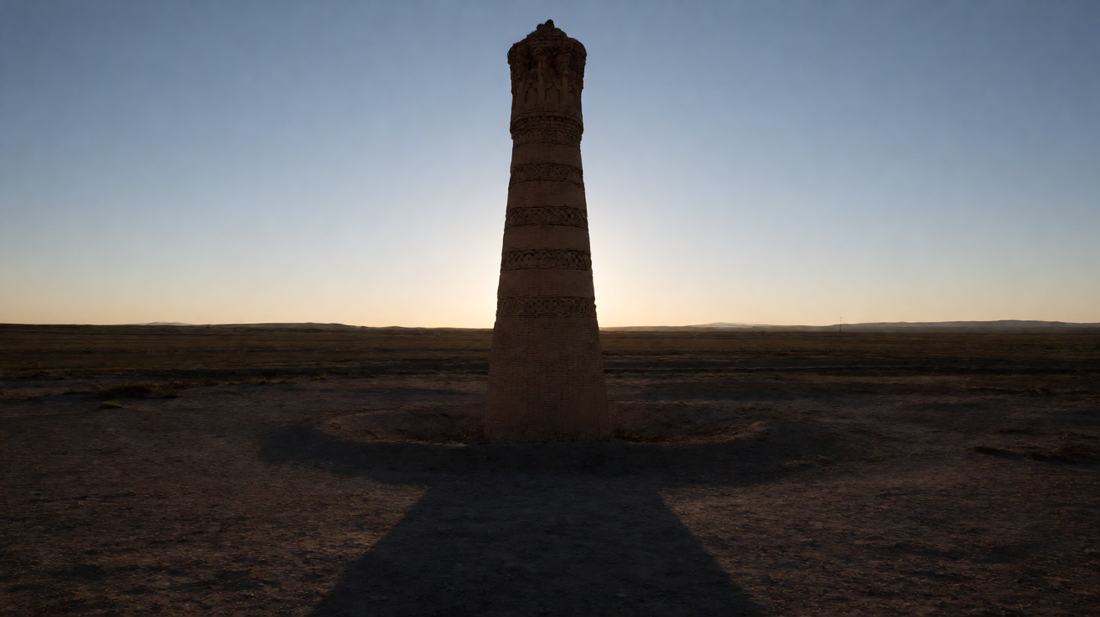
The minaret at Jam stands in a gorge in Ghor. It is 65 metres high, and it was built around 1190. Brickwork of that quality needs builders as much as money. Bands of script wrap the shaft, and the script records a sultan’s titles. Learning followed the court, and it followed the money as well.
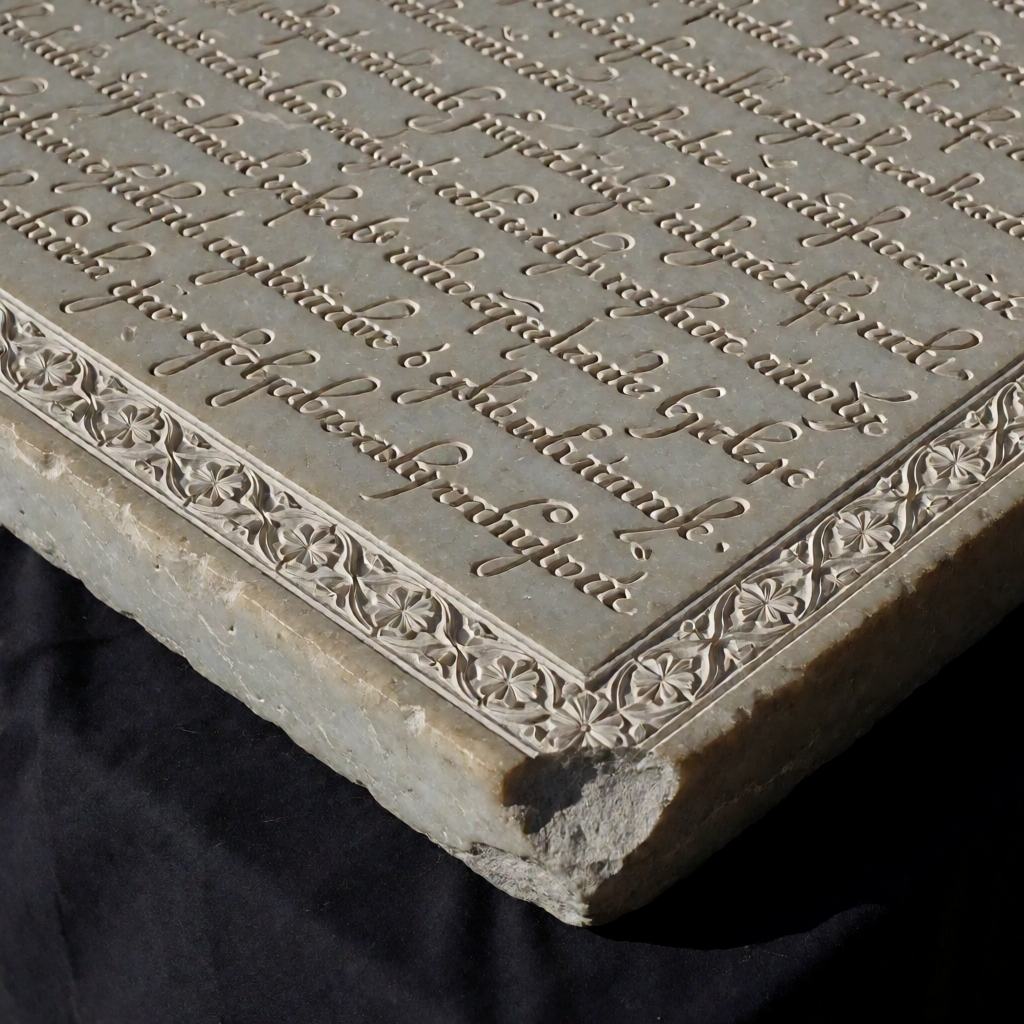
Persian histories written under their heirs give the main account of the dynasty, and they were written to flatter it. An office needed clerks, and clerks needed paper. Paper came from the west, and it made office work cheap enough to spread. Their buildings are few, but their office habits lasted, and habits of that kind are harder to see than a tower.
What lasted
Legacy
Ghurid rule broke, but its officers built lasting states. Aibak’s line ruled Delhi, and his successors pushed east and south. The Timurid Empire later drew on the same court culture. The Mughal Empire inherited its taste for a domed tomb and a formal garden. It still stands.
The river has crept close to it, and floods threaten the base. Historians argue about how much was conquest and how much was settlement. That answer matters for India, because the thirteenth century set a pattern. Five hundred years of rule from Delhi began with a raid. Short dynasties can fix long borders, and this one did.
That is the strangest thing about the Ghurids. They are remembered less for what they built than for what they started. Their name survives in a minaret, and their state survives in Delhi, though neither carries their name.
Side by side
How It Compares
| Point | Ghaznavid | Ghurid |
|---|---|---|
| Dates | AD 977-1186 | AD 1148-1215 |
| Base | Ghazni | Firuzkuh and Ghazni |
| Army | Turkish slave cavalry | Hill levies and horse archers |
| Money | Plunder and canal dues | Plunder and the slave trade |
| Court | Persian prose and poetry | Persian prose, plainer and harder |
| End | Crushed by the Ghurids in 1186 | Broken by Khwarezm in 1215 |
Common misreadings
What People Get Wrong
- The Ghurids are usually treated as Afghans. Their core was a mountain district, and their army and clerks came from everywhere.
- Mahmud of Ghazni is usually credited with the first raids. Raids from the same passes had run for two centuries before him.
- The dynasty is usually said to have founded Delhi. It left governors there, and one of those governors built the dynasty that followed.
Going further
Sources and Further Reading
- Wikipedia, Ghurid dynasty
- Encyclopaedia Britannica, Ghurids. Encyclopaedia Britannica, Inc.
- Bosworth, C.E. 1977. The Later Ghaznavids. Edinburgh University Press.
- Jackson, P. 1999. The Delhi Sultanate: A Political and Military History. Cambridge University Press.
Quick hits
Five Things to Remember
- The Ghurids came from Ghor, in the central mountains.
- They burned the Ghaznavid seat at Ghazna in 1150.
- Mu’izz al-Din won the second battle of Tarain in 1192.
- Ghurid generals reached Bengal by 1204.
- Qutb al-Din Aibak began the Delhi sultanate in 1206.