 By st20113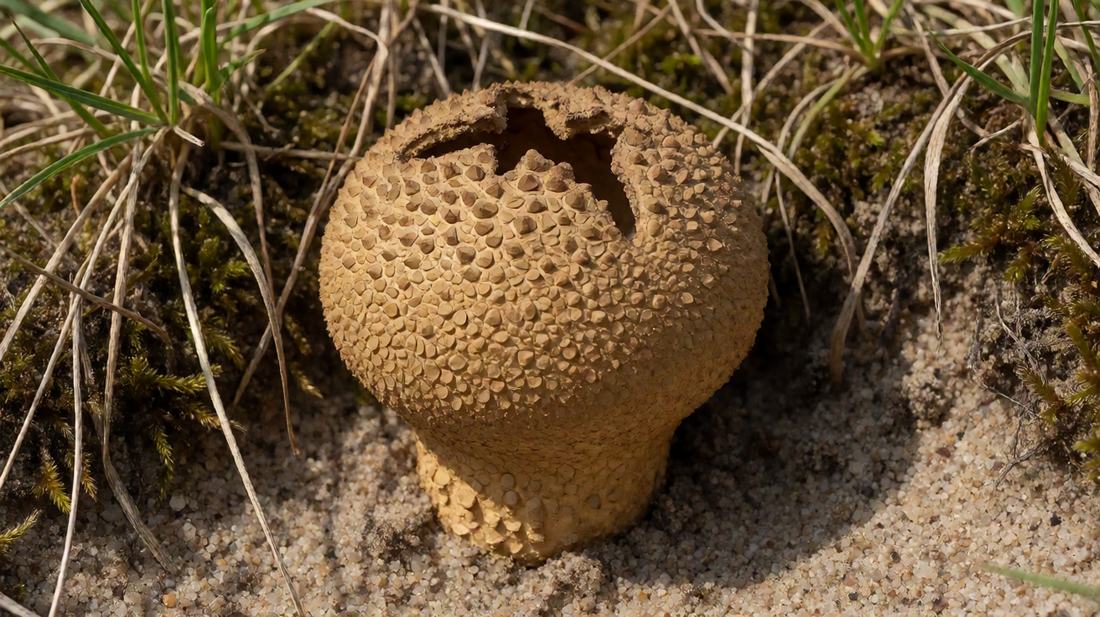
Scleroderma verrucosum | Scaly Earthball
Species Profile · Sclerodermataceae
Scaly Earthball
A tough round fungus of sandy ground that looks like a small potato and splits open at the top to release its spores.
A tough round fungus with a thick scaly skin on sandy ground
Body
Skin
Colour
Base
Spores
Family
The Scaly Earthball
A tough round fungus of sandy ground
The Scaly Earthball is a tough round fungus of sandy ground. It is 1 of several earthballs found in Europe. It looks like a small potato sitting on the soil. Its skin is thick and covered in coarse scales.
The top tears open when the spores are ripe. A puff of dark powder then escapes. The fungus is not safe to eat.
Family tree
Boletales, Sclerodermataceae
The Scaly Earthball belongs to the phylum Basidiomycota. Its class is the Agaricomycetes. Its order is the Boletales, the boletes and their allies. Its family is the Sclerodermataceae, the earthballs.
Our fungus shares the family with the Common Earthball. That fungus has a smooth warty skin. It grows in woodland on acid soil. Our fungus is more scaly and usually smaller.
Both release their spores through a torn opening. The family holds about 30 species.
6 cm and a scaly skin
How to tell one
The body measures about 2 to 6 cm across. It sits on a short stem like base. That base is made of thick white threads. The skin is thick, dry and leathery.
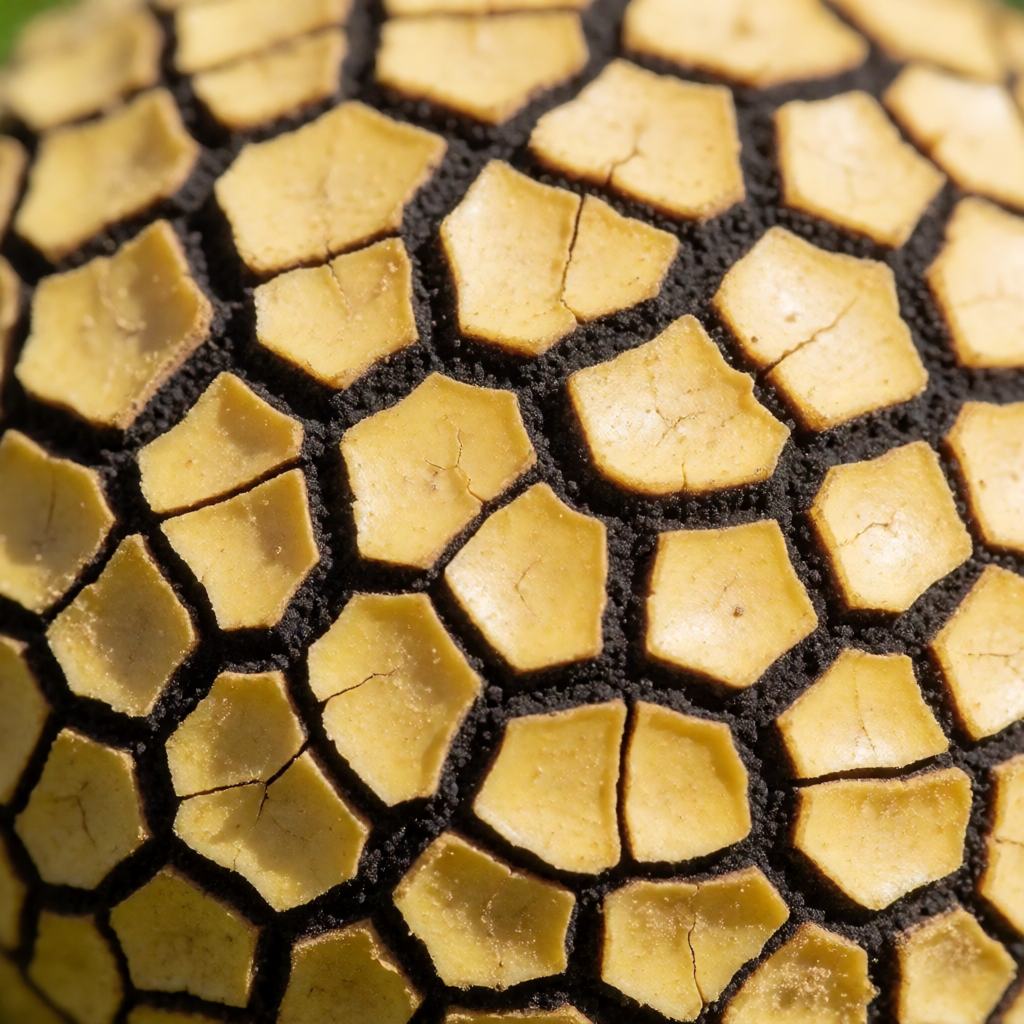
Its colour runs from ochre to dull yellow brown. Small flat scales cover the whole surface. Those scales sit on a background of fine cracks. Inside, the flesh starts pale and firm.
It turns purple black as the spores ripen. At the end it becomes a dry dark powder.
1
2
3
Heathland, dunes and sandy paths
Where it lives
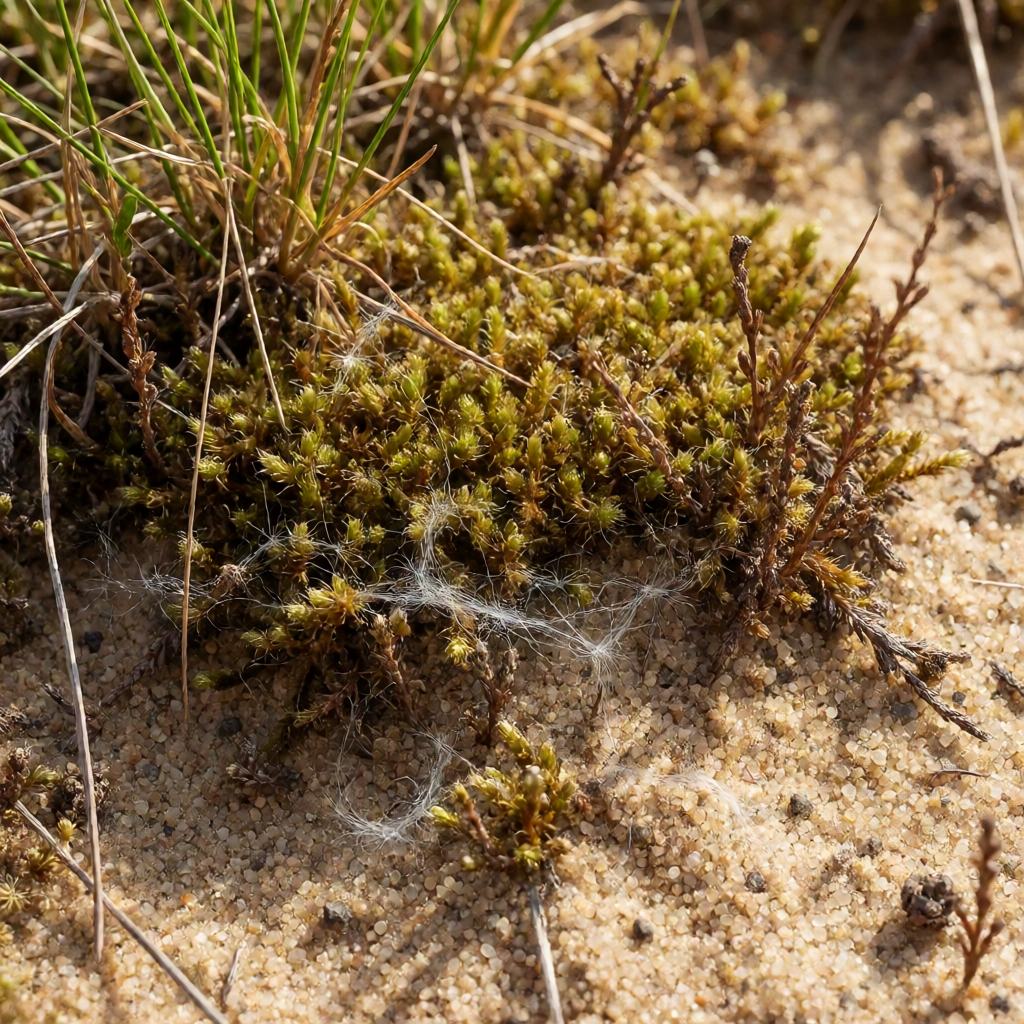
The species prefers light sandy soil. It grows on heathland, dunes and woodland edges. It also grows along sandy paths and banks. It often appears in small groups.
It likes ground that drains quickly. It does well where the soil has been disturbed. It is found in both acid and lime rich ground. It appears from late summer into autumn.
It can survive a short dry spell. Frost ends its season.
Leaves, roots and woody pieces
What it eats
The fungus feeds on dead plant matter and soil. It breaks down leaves, roots and woody pieces. It does not make food from sunlight. Its threads spread through the sandy ground.
They may also join the roots of nearby trees. That link may help both partners. The fungus takes sugars from the tree in some cases. It gives minerals back in return.
It builds its round body above the soil. The threads stay hidden below.
Spores through a ragged opening
The breeding cycle
The body forms under the ground at first. It pushes up as it grows. Inside, the flesh turns into a mass of spores. The skin then splits at the top.
The opening is ragged and irregular. Wind and rain move the powder out. Small animals may also carry spores away. A puff of spores rises when the body is squeezed.
Each body can produce a huge number of spores. The empty skin may last into the winter.
Building work and ploughing
Conservation
The Scaly Earthball is not assessed by the IUCN. It is fairly common across Europe and beyond. It is less common than the common earthball.
Its main need is open sandy ground. Building and ploughing remove such places. Spraying also reduces its numbers.
It has no legal protection. Heathland management helps it a great deal. Bare sandy patches should be left in place.
Quick hits
Five things to remember
- It is poisonous, so it should never be eaten.
- Its skin splits open at the top to let the spores out.
- It often grows on sandy heath and dunes.
- Its threads may link up with the roots of trees.
- The empty skin can survive into the winter.