 By Iris
Platanista gangetica | Ganges River Dolphin
Species Profile · Platanistidae
Ganges River Dolphin
A river dolphin that hunts by sound in water too muddy to see through.
Endangered
Length
Weight
Eyes
Range
Young
Rating
Two metres of blind river hunter
A dolphin in brown water
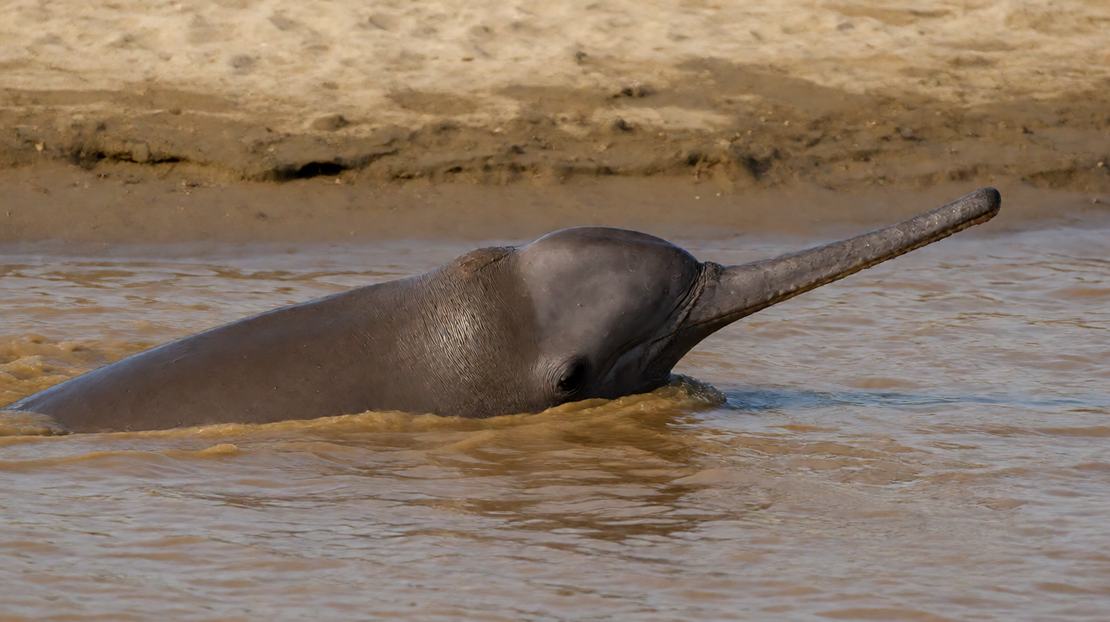
Ganges river dolphins swim through brown water with the snout raised. Sight means little here, and sound does the work instead. A dolphin clicks, then reads the echo that returns from the river bed. That skill suits water carrying silt through the year, since light never reaches far.
India named the animal its national water animal in 2009. Two great systems hold the species, the Ganges and the Brahmaputra. Both carry heavy traffic. Surfacing takes a few seconds.
Only the top of the head shows above the surface. Boat traffic and fishing nets take a heavy toll on animals of every age, since neither threat has been removed. Endangered is the current rating, and the trend still points down.
Family tree
Platanistidae, the river dolphins
Platanista gangetica sits in Platanistidae, a family of river dolphins with few living members. Its nearest relative on this site is the Amazon River Dolphin, a pink dolphin of South America. Both live in fresh water, and both rely on echo clicks to find fish.
Yet one is nearly blind, while the other keeps useful eyes. Ganges and Indus animals were once treated as separate species, although the split never held. Most workers now place them in one species with two local races.
Scientists described the animal in 1801 from a skull found near Calcutta. Family split from other whales early, and it holds only these animals.
An early branch of the whales
How to tell one
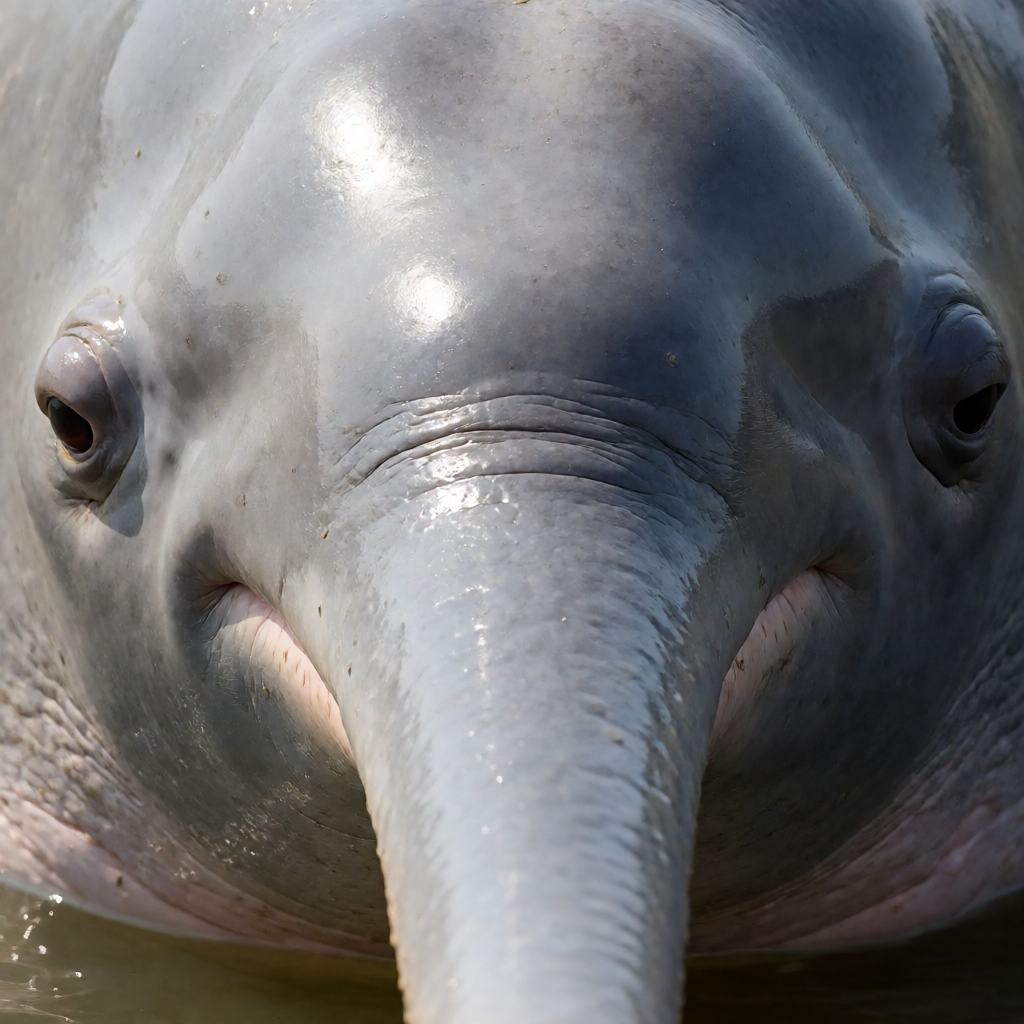
Body length runs 2 m to 2.5 m, and weight reaches 90 kg. Females grow larger than males. Snout is long and thin, and the teeth stay visible when the mouth closes. Eyes sit high on the head, and the lens is missing, so the animal cannot form an image.
Skin is grey brown, and it looks smooth in the water. Scars mark older animals. Dorsal fin is low, and it forms a small hump rather than a blade. Flippers are broad, and the tail carries wide flukes.
The animal swims on its side in shallow water. One flipper trails along the bottom. That habit may help it feel the bed of the river in water too dark to see through.
1
2
3
A body read by echo
Where it lives
Ganges, Brahmaputra and Meghna systems hold the species. Karnali and Sapta Kosi rivers carry smaller groups, though both run shallow in spring. Depth matters, since the animal needs pools that last through the dry season.
Monsoon floods spread the dolphins across the flat land, and calves follow the new water. Dams and barrages cut the river into sections. Each section holds its own group, and mixing stops once a barrier stands.
Temperature stays warm, and the water carries heavy silt. Fast water is avoided, and the animal keeps to eddies and bends while it hunts. Sand banks shift each year, so the channels move and the pools change shape.
Deep pools in a silty river
What it eats
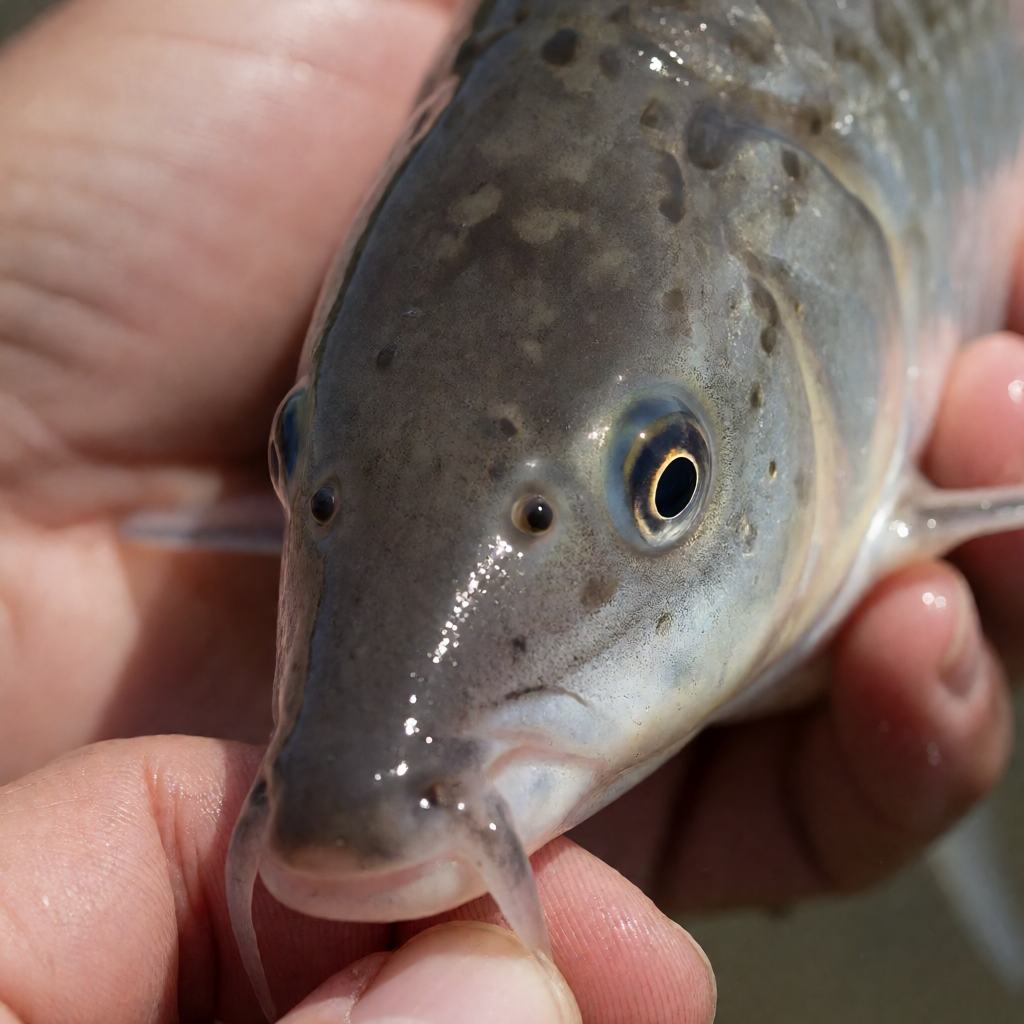
Fish and shrimp make up the diet, although crabs appear in stomachs now and then. A long snout works like a probe in soft mud, feeling for fish that hide in the silt. Echolocation finds prey in water too muddy to see through, so the hunt goes on at night.
A dolphin takes small fish one at a time. Feeding happens through the day, with peaks at dawn and dusk, while fish move into the shallows. Some animals follow fishing nets, and that habit brings risk with every haul.
River fish make up most of the diet. Prey is swallowed head first, and the teeth are thin and sharp. Nobody has measured how much a dolphin needs each day.
Fish taken one at a time
The breeding cycle
A female gives birth after a pregnancy of about ten months. One calf arrives. It measures around 70 cm. The mother nurses the calf for a year or more, while the pair stays apart from other animals.
Calves stay close, and they swim in the mother’s slipstream while she surfaces. Breeding happens through the year, with a peak in the dry season. A female breeds every two or three years, so a group grows slowly. Males take no part in raising the young.
Sexual maturity comes at about ten years, although few calves reach that age. That slow rate limits recovery, even where the river stays clean.
Endangered, and still declining
Conservation
Endangered is the current rating. Bycatch in gill nets kills animals every year. Dams and weirs split groups and block movement, and every barrier costs a few animals.
Pollution from cities and farms enters the river, and the load grows as towns expand. Water pumping lowers the pools in the dry season. The animals crowd into what remains.
Guarded river stretches now exist in India and Bangladesh, though enforcement stays thin. Local fishers receive nets that dolphins can detect. Numbers may run to a few thousand, yet the trend is downward across most of the range.
Side by side
How It Compares
| Trait | Ganges River Dolphin | Amazon River Dolphin |
|---|---|---|
| Length | 2 m to 2.5 m, and up to 90 kg | 2 m to 2.5 m, and up to 185 kg |
| Colour | grey brown, and evenly dull | pink, and it deepens with age |
| Eyes | no lens, so the animal is nearly blind | small eyes that still see |
| Home | the Ganges and Brahmaputra systems | the Amazon and Orinoco systems |
| Food | fish and shrimp taken near the bed | fish, crabs and river turtles |
| Neck | the neck is short, and the head turns stiffly | a flexible neck that bends easily |
Common misreadings
What People Get Wrong
- Many people think the dolphin sees through muddy water, yet the eye has no lens at all. Echo clicks do the work, and the animal reads the river bed by sound.
- A common tale says the species lives only in the Ganges, although the Brahmaputra holds a large share. The two rivers meet, and animals move between them in the wet season.
- Some reports claim the population is rising, yet the trend still falls across most of the range. Nets and dams remove animals faster than calves replace them.
Going further
Sources and Further Reading
Quick hits
Five things to remember
- It is nearly blind.
- It swims on its side in shallow water.
- India made it the national aquatic animal.
- The teeth show when the mouth is closed.
- A calf measures about 70 cm at birth.