 By Iris
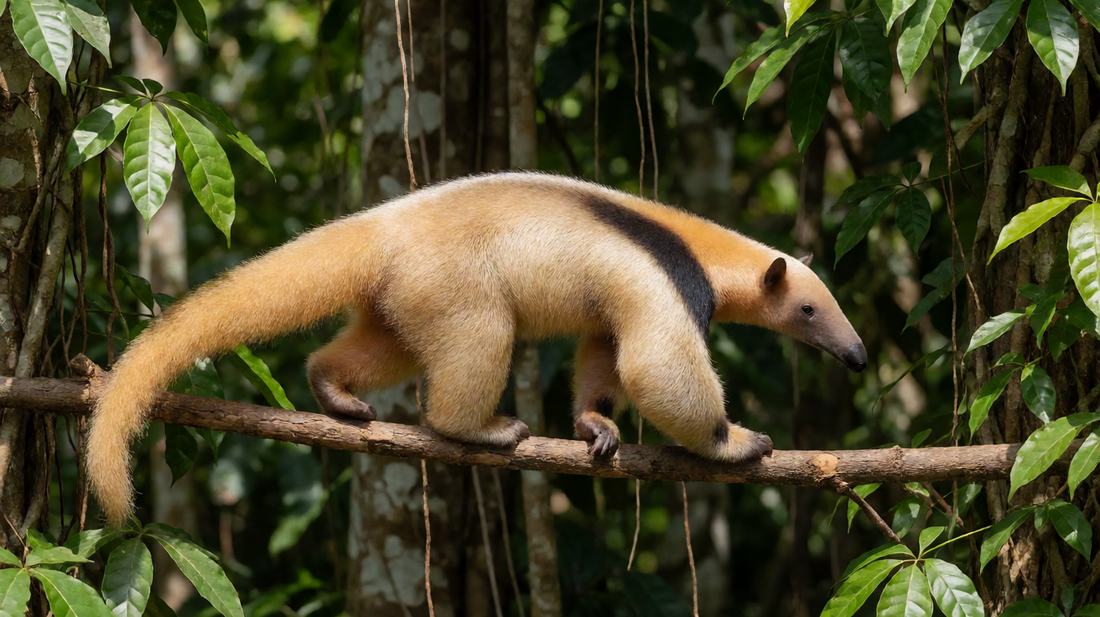
Tamandua mexicana | Northern Tamandua
Species Profile · Myrmecophagidae
Northern Tamandua
A slender anteater with a gripping tail that works the low branches after dark and tears open ant and termite nests with strong foreclaws.
Least Concern
Head and body
Tail
Weight
Tongue
Gestation
Rating
The Northern Tamandua
An anteater built around one long tongue
A slender anteater works the low branches of Central American forest. Its snout is long and thin. Its tail grips like a 5th limb. Ants and termites make up nearly every meal.
Strong foreclaws rip a nest open in seconds. That tongue then flicks in and out. It gathers thousands of insects an hour. Sight is poor, in fact.
So smell does most of the work. By day the animal dozes in a hollow tree. At night it travels farther, crossing branch and ground alike. Because neither teeth nor jaws can chew, the whole head is built around that one long tongue instead.
Family tree
Myrmecophagidae, the anteaters
The species sits in the family Myrmecophagidae, the anteaters. Henri de Saussure described it in 1860. He placed it in the genus Tamandua. Its closest kin is the southern tamandua.
That one lives in lowland South America. Both share a prehensile tail, in fact. Giant anteaters lack one. The three-toed sloth belongs to the same order, Pilosa.
That shared order is old. Both groups look nothing alike, however. Sloths grind leaves in a slow gut, whereas this anteater crushes insects in a gizzard built for the job.
No teeth anywhere
How to tell one
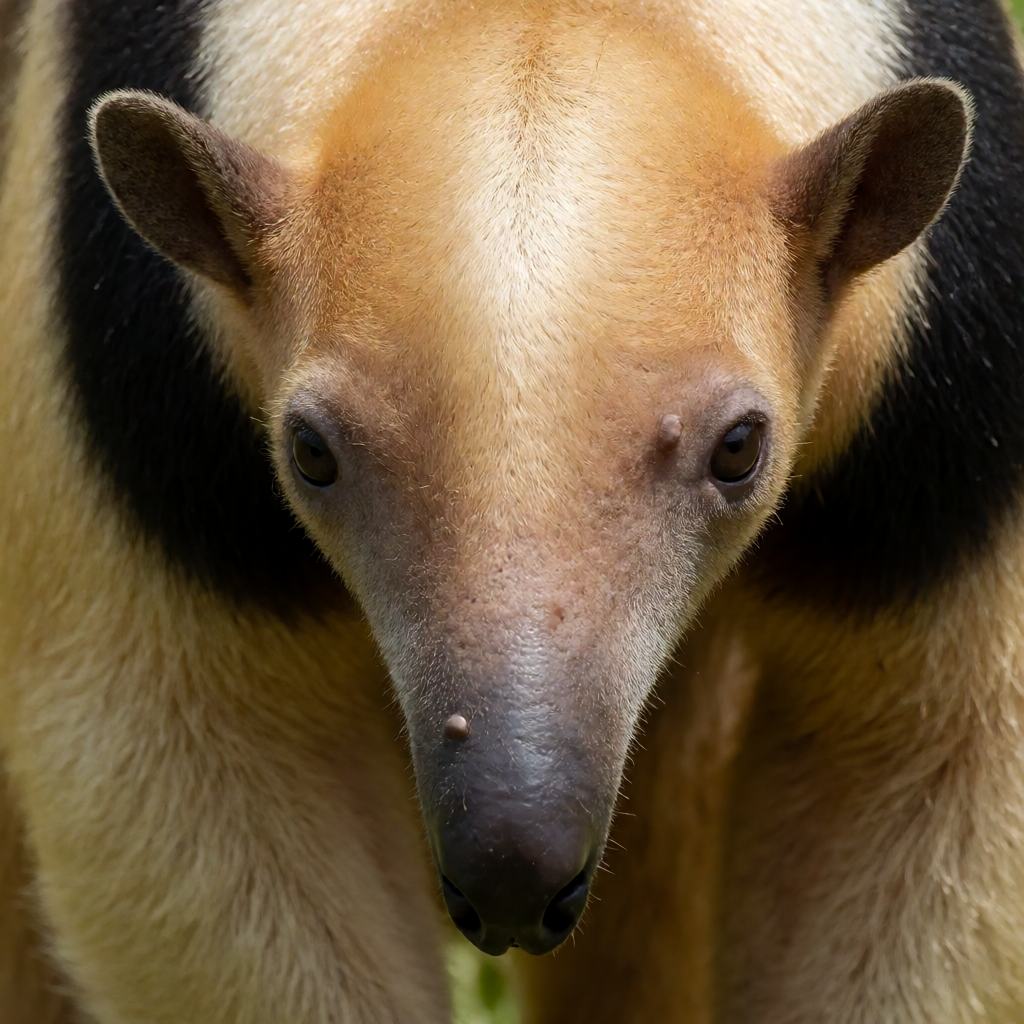
Head and body measure 47 to 77 cm. Tail length adds another 40 to 67 cm. Adults weigh 3.2 to 5.4 kg. Fur is short and stiff.
Tan on top, it darkens along the flanks. A black vest crosses the shoulders of many animals. The tail is bare underneath. That bare skin grips bark well.
Four curved claws arm each front foot. It knuckle-walks to keep them sharp. Tiny spines line the tongue and hold prey. No teeth appear anywhere in the mouth, of course.
1
2
3
Forest, mangrove and scrub
Where it lives
Lowland forest is the main home. Mangrove, dry scrub and plantation edges all work. Its range runs from southern Mexico to Ecuador. Western Venezuela marks the far edge.
Water matters here, of course. Termite nests cluster near streams. Tree cover gives food and a safe day bed as well. Farmland is crossed where hedges remain.
Truly open country is shunned, though. Where forest is cut into small blocks, the animal fades out of the smallest patches first and keeps to the bigger ones.
Ants, termites and larvae
What it eats
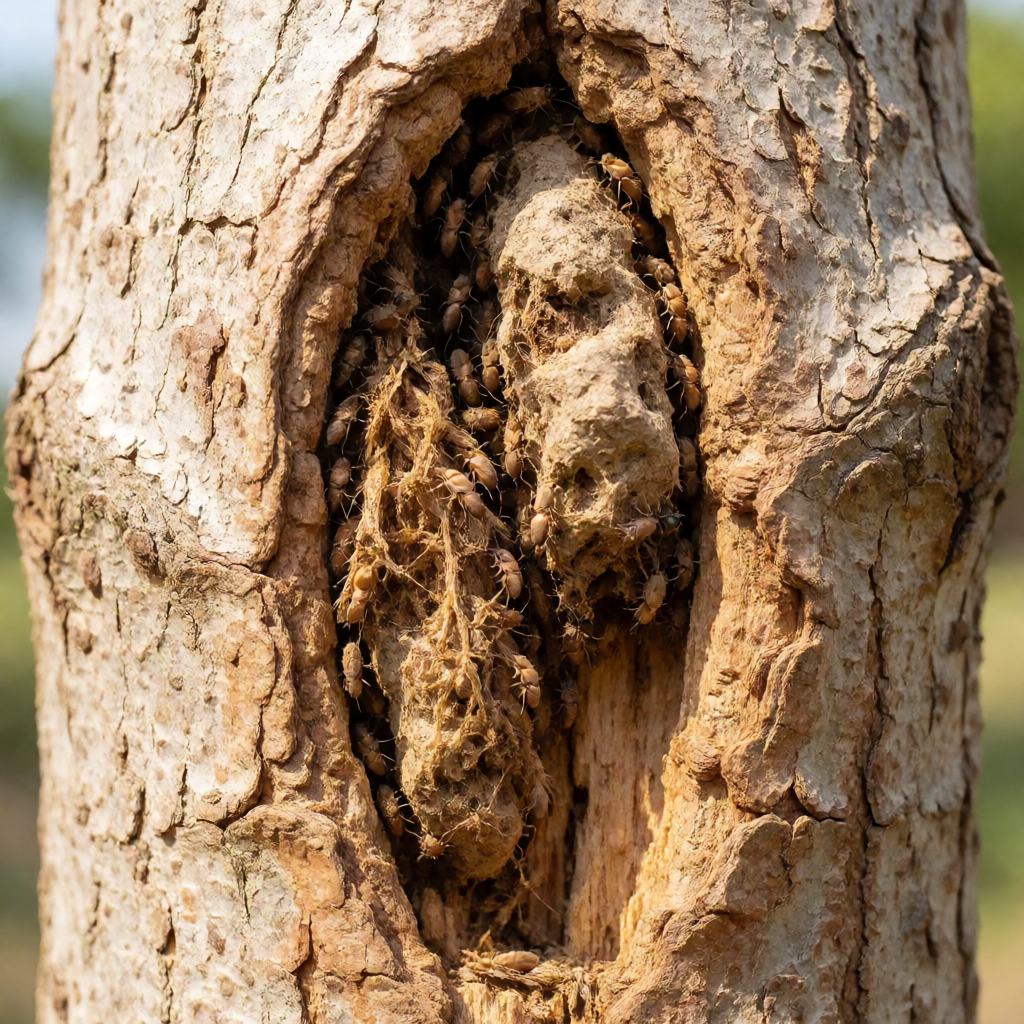
Ants and termites rule the menu. Bee and wasp larvae are taken too. Workers chew a nest open, then feed for a minute. That short stop limits stings and bites.
A gizzard grinds the prey. Swallowed sand helps with the work. Thousands of insects may go down in a day. Fruit is rare on the list.
Leaves, in turn, are rarer still. Because prey comes in patches, the animal keeps moving rather than sitting still and guarding one rich nest for long.
One young in a leaf nest
The breeding cycle
Breeding peaks in autumn across much of the range. One young is born after 130 to 190 days. Newborns rest in a nest of dry leaves. That nest sits inside a hollow tree.
Later the young rides on the mother’s back. Fathers play no part at all. Weaning comes near 10 months. In addition, females may breed twice in a good year.
Even so, most raise one young at a time. In short, the whole breeding pace stays slow, which suits an animal built for a low-energy life in the trees.
Least Concern
Conservation
The IUCN rates the species as Least Concern. A broad range protects it. Flexible habits help as well.
Roads kill many animals each year, however. In addition, dogs and hunters take others. Wildfire can wipe out prey over a wide area.
The jaguar is one of its few natural enemies. Large eagles take the young. Since the animal forages alone and crosses open ground at night, it meets far more people than its shy forest habits suggest.
Side by side
How It Compares
| Trait | Northern Tamandua | Southern Tamandua |
|---|---|---|
| Range | southern Mexico to Ecuador | lowland South America |
| Fur | tan, with a black vest on many | plainer tan, less black |
| Tail | bare underneath, grips well | also prehensile |
| Snout | long and thin | shorter and more curved |
| Teeth | none at all | none at all |
| IUCN status | Least Concern | Least Concern |
Common misreadings
What People Get Wrong
- Anteaters are said to chew their food. This one has no teeth and crushes insects in a gizzard.
- The black vest marks a separate species. It is just a common coat pattern.
- People think the tail is only for balance. It grips like a fifth limb.
Going further
Sources and Further Reading
- Wikipedia, Northern tamandua
- IUCN Red List, Tamandua mexicana. The IUCN Red List of Threatened Species.
- Animal Diversity Web, University of Michigan. Tamandua mexicana.
- Navarrete, D. and J. Ortega. 2011. Tamandua mexicana (Pilosa: Myrmecophagidae). Mammalian Species.
Quick hits
Five things to remember
- A tongue can extend up to 40 cm.
- This anteater has no teeth at all.
- Swallowed sand helps the stomach grind insects.
- Cornered animals rear up and strike with both foreclaws.
- The tail grips branches tightly enough to hold the whole animal.