 By st20113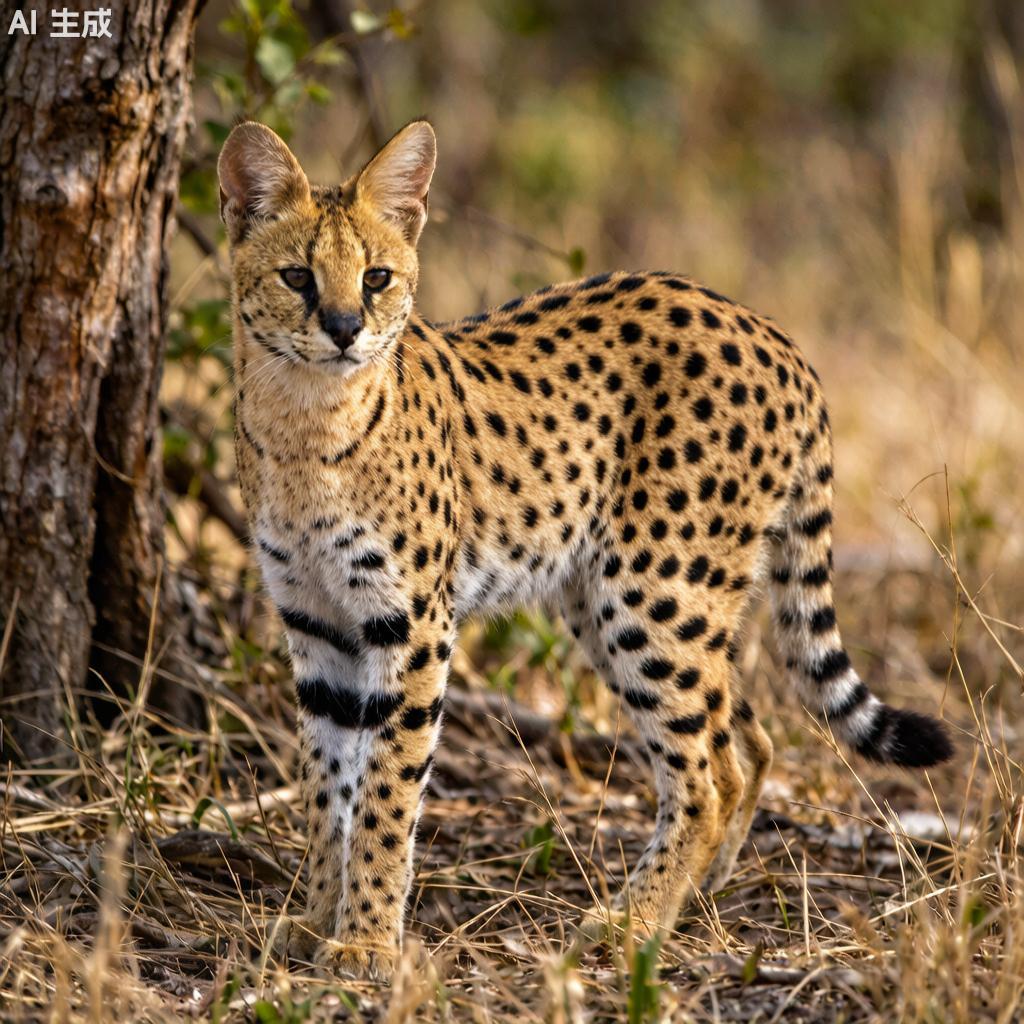
Introduction
The Leptailurus serval, known simply as the serval, is a slender, long-legged wild cat native to the grasslands and wetlands of sub-Saharan Africa. Famous for its oversized ears, golden coat splashed with bold black spots and stripes, and an extraordinary leaping ability, the serval is one of the most visually striking members of the cat family. Standing about two feet tall at the shoulder, it is built less for brute strength than for lightning-fast reflexes, using its keen hearing to locate prey hidden in tall grass and then pouncing with astonishing precision.
Taxonomy
The serval is the only member of the genus Leptailurus, though it sits within the family Felidae alongside the world’s other cats. Its closest relatives include the caracal and the African golden cat, all of which share a common ancestor among the small to medium cats of the Old World. Unlike the great roaring cats of the genus Panthera, the serval is a specialized hunter of small prey rather than a large-game predator. It is most closely allied with the Caracal, a cat that shares its African homeland and its elongated ears, though the caracal trades spots for a uniform reddish coat.
Physical Characteristics
A serval’s most remarkable traits are its legs, which are the longest relative to body size of any cat, and its enormous ears, which can rotate independently to pinpoint the rustle of a rodent. The coat is tawny to golden with black spots that often merge into streaks along the neck and back. A black-tipped tail and white markings around the eyes and muzzle complete a camouflage well suited to dappled grassland. Adults weigh between 20 and 40 pounds, with males slightly larger than females, and they move with a high-stepping gait that lets them peer over dense vegetation.
Habitat
Servals favor moist, tall grasslands, savannas near water, and reed beds where small mammals are abundant. They are found across much of Africa south of the Sahara, avoiding only dense rainforest and true desert. These cats are mostly solitary and territorial, patrolling home ranges that they mark with scent. Within this shared African landscape they coexist with larger predators such as the African Lion and the speedy Cheetah, though servals avoid direct competition by hunting prey too small to interest those bigger cats.
Diet
The serval is a dietary specialist on small vertebrates, especially rodents, which can make up more than 90 percent of its diet in some regions. It also takes birds, frogs, insects, reptiles, and occasional fish. Its hunting method is unique: the cat listens intently, then launches a vertical leap of up to ten feet to land squarely on its target, sometimes batting prey out of the air with a forepaw. This pounce-and-listen strategy is so effective that servals succeed in roughly half of their hunts, a high rate for a wild cat. The smaller, forest-dwelling Ocelot of the Americas uses a similar patient stalking approach, showing how convergent evolution shapes small spotted cats worldwide.
Reproduction
Breeding in servals is not strictly seasonal, though births peak in the wetter months when prey is plentiful. After a gestation of about 70 to 75 days, a female gives birth to a litter of one to four kittens in a hidden den among dense grass or abandoned burrows. The kittens are born blind and helpless, opening their eyes at around two weeks. They begin to accompany the mother on hunts at about three months and reach independence between six and twelve months. Young servals may stay near their mother’s territory for a time before dispersing to claim their own range.
Conservation
The serval is currently classified as least concern, with a widespread and relatively stable population across Africa. However, it faces localized threats from habitat conversion to agriculture, wetland drainage, and persecution by farmers who sometimes mistake it for a threat to poultry. The species is also trapped for the exotic pet trade, though international protections now regulate this. In the broader ecosystem, servals interact with pack hunters such as the African Wild Dog, which targets larger prey and helps maintain the balance of the savanna’s mammal community.
Fun Facts
A serval can leap more than nine feet straight up to snatch a bird from the air, and it can hear the ultrasonic squeaks of rodents from astonishing distances. Its scientific name, Leptailurus, roughly means ‘lynx-tailed,’ a nod to its short, black-tipped tail. Servals are excellent swimmers when necessary and will wade into shallow water to catch frogs and fish. Their hearing is so acute that they can detect prey moving underground, and they sometimes deliver a fatal strike through the soil without ever seeing their victim.