 By st20113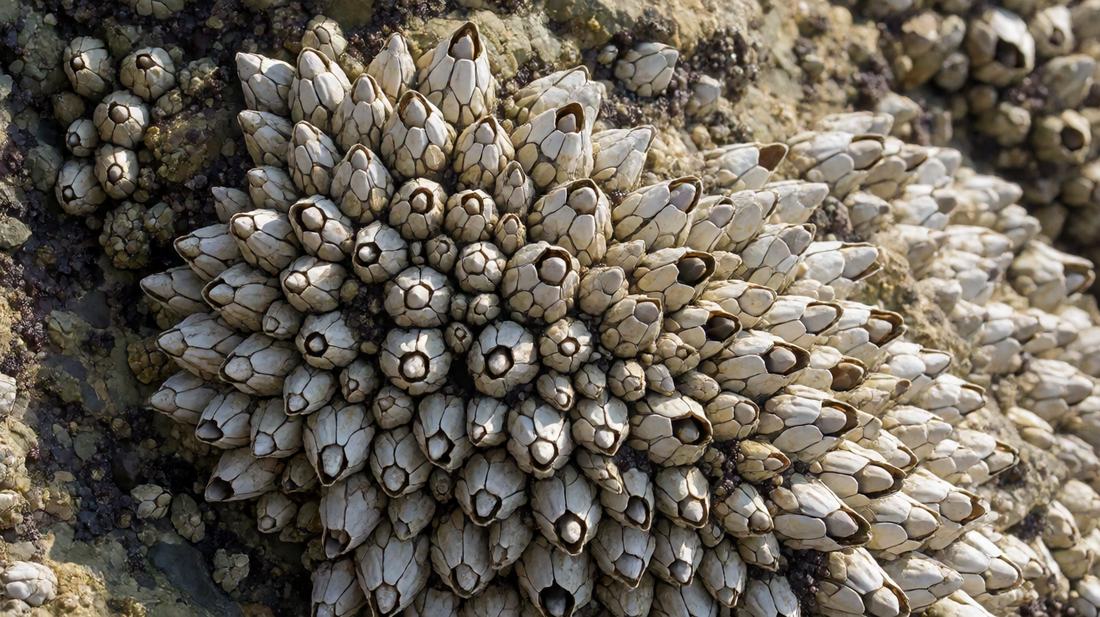
Semibalanus balanoides | Northern Acorn Barnacle
Species Profile · Balanidae
Northern Acorn Barnacle
A small crustacean of northern shores that cements itself to rock and feeds by sweeping plankton from the water with feathered legs.
A shrimp like animal that glues itself head down to rock and sweeps the sea with feathered legs
Shell width
Depth
Feeding
Sperm tube
Breeding
Family
The Northern Acorn Barnacle
A shrimp glued to rock
This animal is a small white cone on a rock. It lives where the tide comes and goes. Each cone is a crustacean, not a mollusc.
Crowds of them cover whole stretches of shore. They feed many shore birds and whelks.
Family tree
Cirripedia, Balanidae
The northern acorn barnacle is a crustacean. Its scientific name is Semibalanus balanoides. It sits in the barnacle group, the Cirripedia. Early naturalists took barnacles for molluscs.
They are in fact shrimps turned on their backs. A relative from the same subphylum is Common Prawn. Both wear a hard shell and jointed legs.
15 mm and six plates
How to tell one
The shell is a cone of 6 plates. It grows to about 15 mm across. Crowded animals form tall tubes instead. The plates grow as the animal grows.
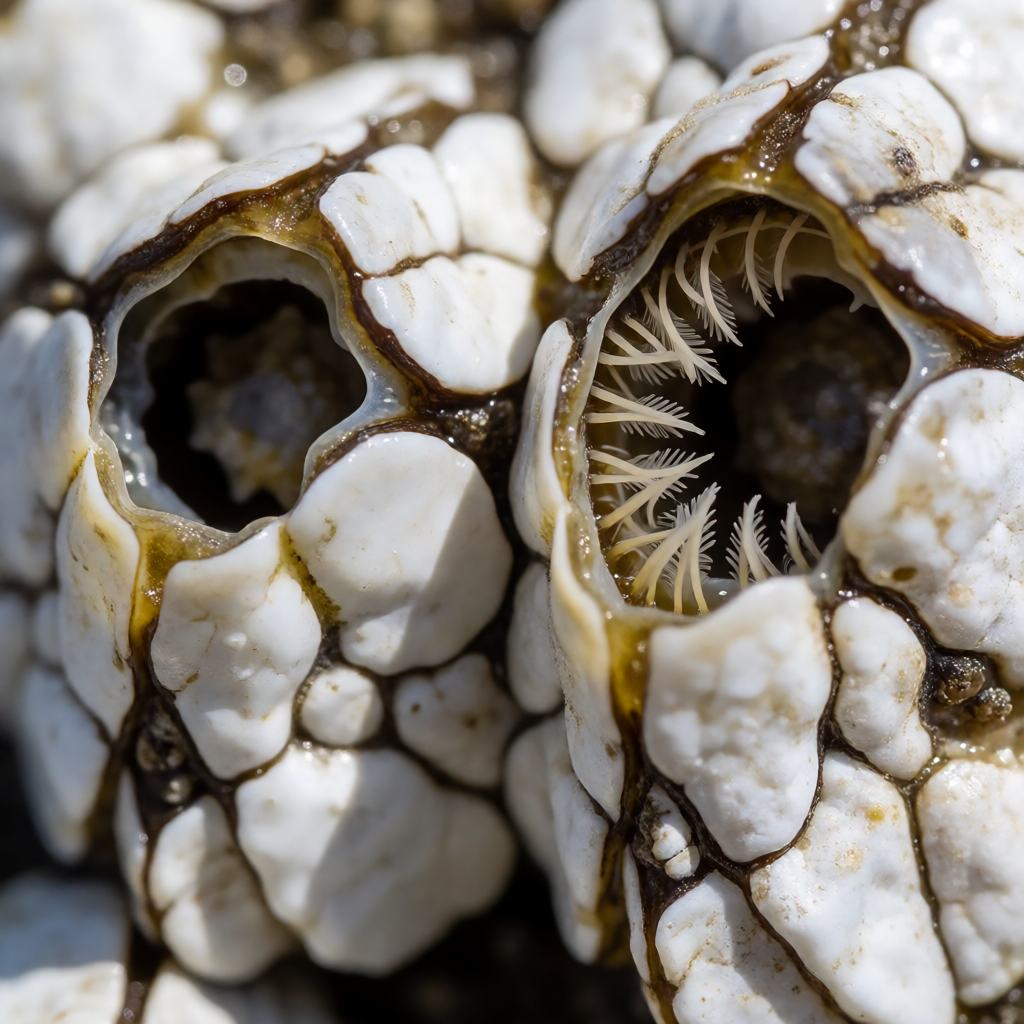
A dark slit at the top opens to feed. Inside, the body lies on its back. Its legs point up and sweep the water.
1
2
3
Hard rock in the tidal zone
Where it lives
It lives on hard rock in the tidal zone. It also settles on stones, wood and piers. It can reach 25 m down but rarely does. Northern seas are its true home.
It lives from Svalbard to north-west Spain. It cannot breed where the sea stays warm. Water temperature must drop below 7.2 degrees.
Plankton from moving water
What it eats
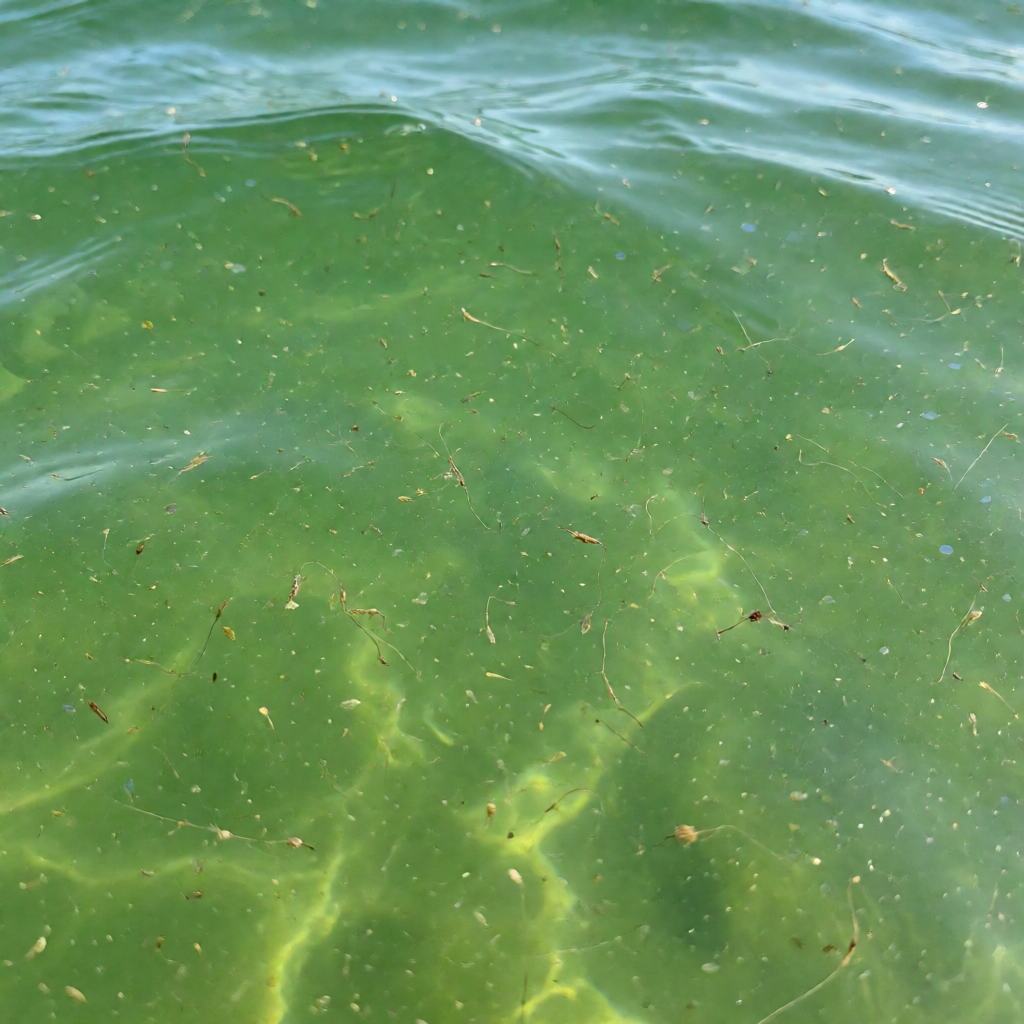
The animal is a filter feeder. Feathered legs sweep plankton from the water. In a strong current it holds them stiff.
In still water it beats them in a rhythm. Plankton is richest in spring and autumn. In winter it lives on stored food.
A tube that reaches a neighbour
The breeding cycle
Each animal is both male and female. Yet it cannot fertilise itself. A long tube passes sperm to a neighbour. That tube may reach 7.5 cm, a record for its body size.
Breeding peaks when the sea reaches 14 degrees. The eggs hatch into 6 swimming stages. A final larva settles and becomes a cone.
Commonest barnacle on British shores
Conservation
This species is not on the IUCN Red List. It is the commonest barnacle on British shores. It can enter estuaries, where the water is less salty.
It competes with mussels, limpets and seaweed. Grazing limpets and dog whelks clear patches for it. Charles Darwin spent 8 years studying barnacles, from 1846 to 1854.
Quick hits
Five things to remember
- A barnacle is a shrimp-like animal glued down by its head.
- Its shell has 6 plates instead of an older set of 8.
- For its body size, its male organ is a world record.
- Empty barnacle shells become shelters for small worms.
- Crowded animals grow tall and thin to avoid each other.