 By st20113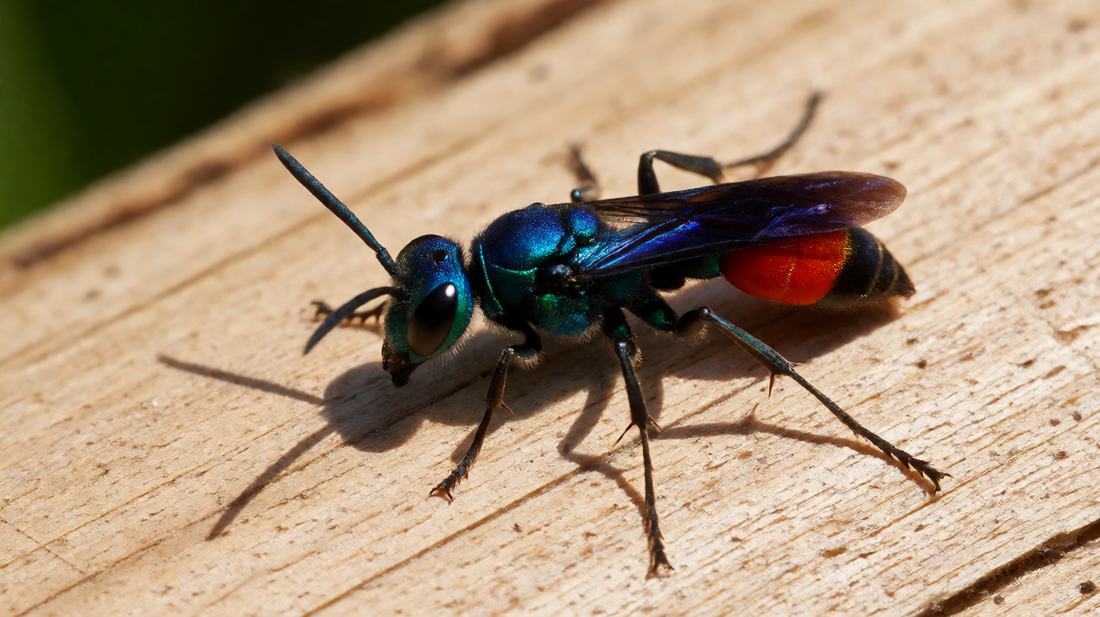
Chrysis ignita | Ruby-tailed Wasp
Species Profile · Chrysididae
Ruby-tailed Wasp
A small metallic wasp that lays its eggs in the nests of other bees and wasps, and can curl into an armoured ball when caught.
A jewel coloured wasp that rolls into a ball to escape
Length
Colour
Sting
Hosts
Defence
Family
The Ruby-tailed Wasp
A jewel that lives in other nests
This small wasp shines like a jewel. Its head is blue and its tail is red. It lays its eggs in another wasp’s nest. It has no sting at all.
Family tree
Hymenoptera, Chrysididae
The ruby tailed wasp is a parasite. Its name is Chrysis ignita. It is one of the cuckoo wasps. A larger relative is the European Paper Wasp.
10 mm of shining armour
How to tell one
An adult is only about 10 mm long. The body is brightly coloured. The head and chest look blue green. The tail is red and gold.
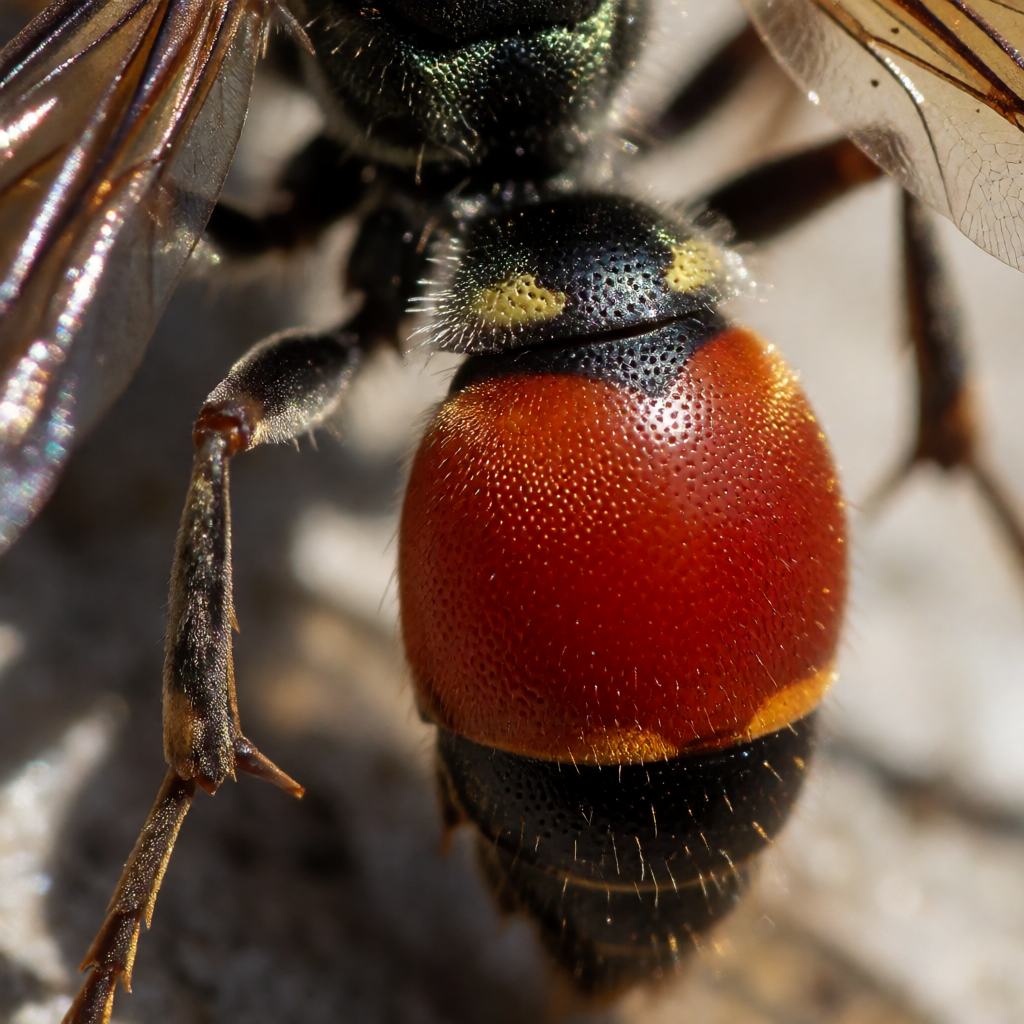
The surface is hard and pitted. The rear plates are thick and strong. It can fold up like a ball.
1
2
3
Warm walls and old wood
Where it lives
It lives in warm sunny places. You find it on walls and old wood. It follows the bees it depends on.
Mason bee nests are a favourite. It is common in gardens in summer. It needs bare earth and dry banks.
Nectar and host grubs
What it eats
Adults drink nectar and honeydew. They do not hunt for prey. The larva eats the host grub.
It also eats the food stored nearby. The young wasp then leaves the nest. Each nest holds only one grub.
One egg in a bee cell
The breeding cycle
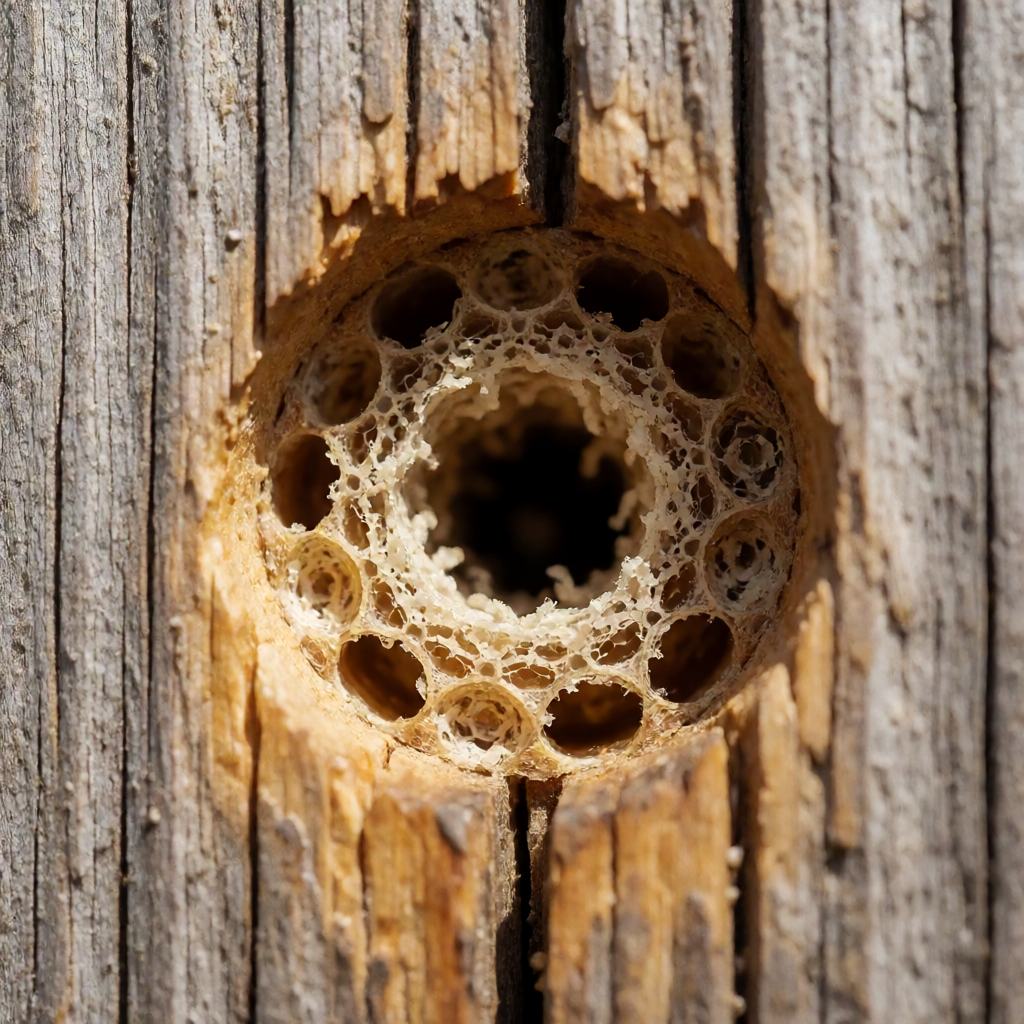
The female waits near a bee nest. She slips in when the owner is away. She hides one egg in the cell.
The egg hatches before the bee grub. The young wasp kills its neighbour. Some hosts sting the intruder.
Lost nesting sites
Conservation
This wasp has no Red List entry. It depends on wild bees and wasps. Lost nesting sites reduce its numbers.
Summer flowers help the adults feed. Old walls and dead wood are important. It is still fairly common in Europe.
Quick hits
Five things to remember
- Its colours come from light, not paint.
- It is also called the jewel wasp.
- The female sneaks past the guard bee.
- It can survive a sting from its host.
- It often sits still on warm stones.