 By st20113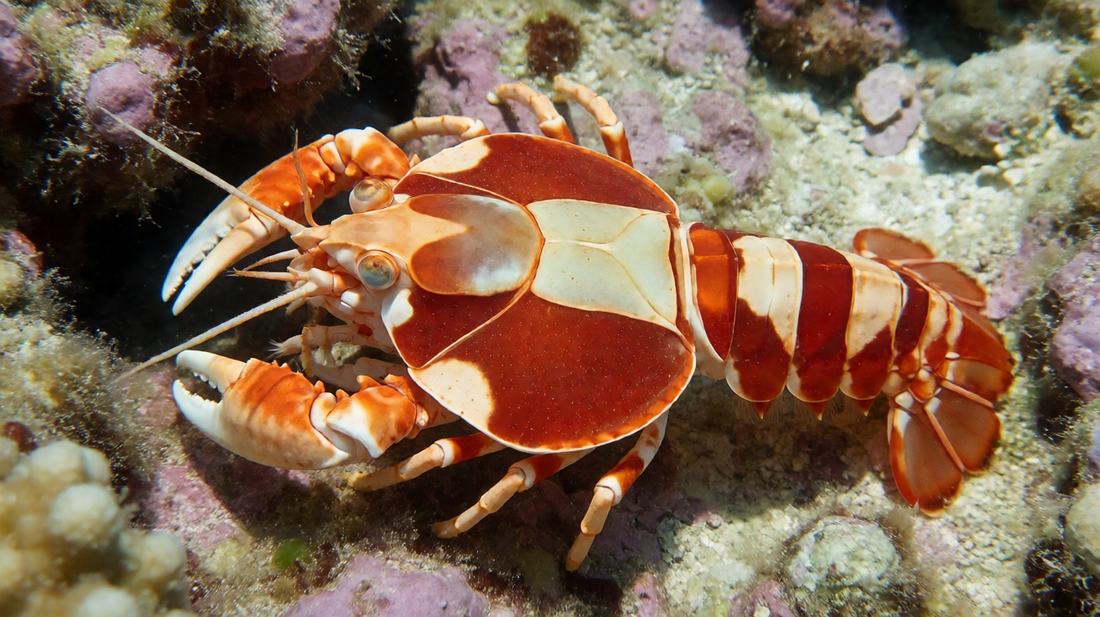
Scyllarus arctus | Small European Locust Lobster
Species Profile · Scyllaridae
Small European Locust Lobster
A small flat lobster of rocky reefs that has no large claws at all, but carries two broad flat plates over its head that work as a shield.
A flat lobster with no claws and antennae like broad shields
Body
Claws
Antennae
Legs
Depth
Life
The small European locust lobster
A flat crustacean of rocky reefs
The Small European Locust Lobster is a flat crustacean of rocky reefs. It is 1 of the smaller lobsters of the region. It has no big claws at all.
Its front antennae form 2 broad flat plates. The animal hides in a crevice by day. At night it walks out to feed.
It eats mussels and small worms. It lives in the warm seas of the Mediterranean.
Family tree
Decapoda, Scyllaridae
The Small European Locust Lobster sits in the phylum Arthropoda. Its class is the Malacostraca. Its order is the Decapoda. Its family is the Scyllaridae, the slipper lobsters.
Our animal shares the order with the Norway Lobster. That animal has 2 large front claws. It digs a burrow in soft mud. Our animal has no large claws at all.
It lives on hard rock and sea grass. The 2 species both carry 5 pairs of walking legs. Both also swim with the tail.
12 cm and a shield over the head
How to tell one
The body grows to about 12 cm in length. The animal is flat and broad. The shell is made of smooth plates. Those plates fit together like tiles.
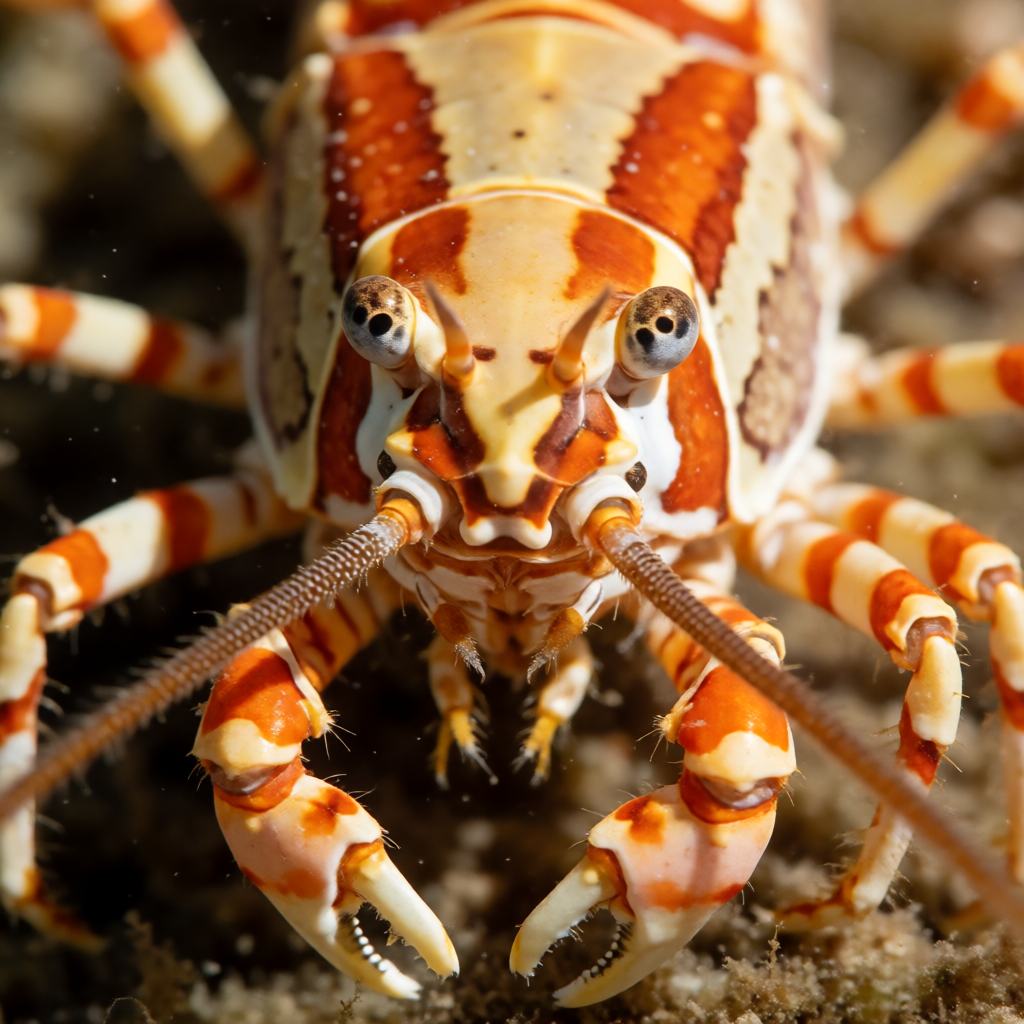
The colour is orange brown with cream marks. The eyes are small and set wide apart. The animal has 2 pairs of antennae. The front pair is broad and flat like a plate.
Those plates work as a shield. The legs are short and stout. The tail fan is large and broad. A soft belly sits under the body.
1
2
3
Rocky reefs and sea grass
Where it lives
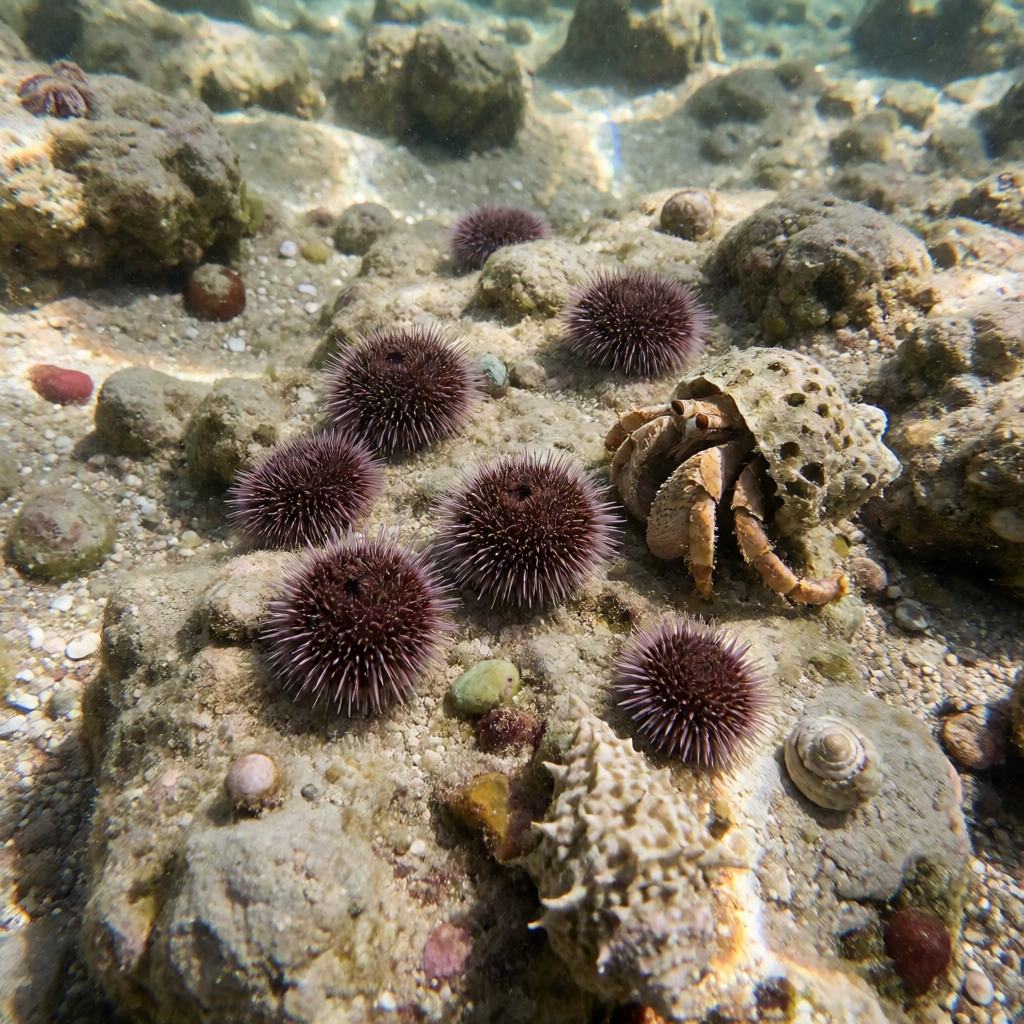
The species lives on rocky reefs and sea grass. It favours a reef with many cracks. It also lives on a bed of mussels. It lives from shallow water down to about 30 m.
It needs a dark place for the day. It also needs warm water through the year. It moves slowly over the rock at night. It dislikes open sand with no cover.
The young drift with the current for a while. They then settle on a rocky reef.
Mussels, limpets and worms
What it eats
The Small European Locust Lobster is a feeder on the seabed. It eats mussels and limpets. It also takes small worms and sea urchins. The animal finds food by touch.
Its antennae feel over the rock. The strong jaws then crush the shell. The animal has no claws to cut food. It must break the shell with its mouth.
It feeds for most of the night. It returns to its crevice before dawn.
Eggs carried under the body
The breeding cycle
The sexes are separate. The female carries her eggs under the body. The eggs stick to the small swimmerets. She holds them there for several months.
She then releases the young into the water. The young is a flat and clear larva. It drifts with the current for many weeks. It then settles on the seabed.
It grows slowly in cold water. The animal may live for 3 to 5 years. A female carries only 1 batch each year.
Nets and lost fishing gear
Conservation
The Small European Locust Lobster is not listed as endangered. It is common in some warm seas. It is rare in others. It has no legal protection of its own.
It is caught in nets set for other animals. It is also taken for food in some places. Dirty water and lost fishing gear do harm. The animal grows slowly and it breeds late.
Fishing during the egg season is a risk. A rocky reef kept free of nets helps it most. So does a protected sea grass bed.
Quick hits
Five things to remember
- Its flat front antennae work like a shield.
- It walks the seabed at night and hides by day.
- It can make a rasping sound with its legs.
- The female carries her eggs under her body.
- The young drifts for weeks before it settles.