 By st20113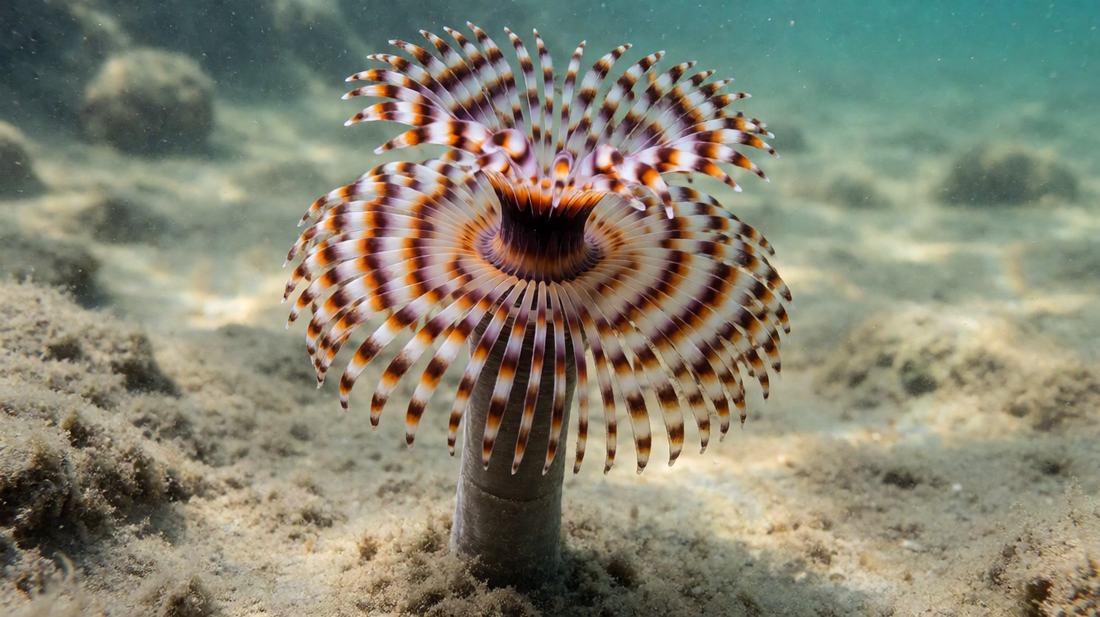
Sabella spallanzanii | Mediterranean Fanworm
Species Profile · Sabellidae
Mediterranean Fanworm
A large tube dwelling worm of harbours and piers whose two spirals of feathery arms filter food from the water and snap back out of sight at any shadow.
A big fan worm whose crown of arms vanishes at a shadow
Tube
Crown
Spread
Depth
Food
Life
The Mediterranean fanworm
A large worm of harbour walls
The Mediterranean Fanworm is a large worm of harbour walls. It is 1 of the biggest fan worms of the region. It lives inside a soft leathery tube.
2 spirals of feathery arms open above it. Those arms filter food from the water. The animal pulls them in at the first shadow.
It can grow a new crown if it loses one. It often forms dense groups on a pier.
Family tree
Polychaeta, Sabellidae
The Mediterranean Fanworm sits in the phylum Annelida. Its class is the Polychaeta. Its order is the Sabellida. Its family is the Sabellidae, the fan worms.
Our animal shares the class with the Baltic Ragworm. That animal has no tube at all. It hunts in the mud with strong jaws. Our animal lives inside a tube.
It filters its food from the water. The 2 species both have a body of many rings. Both also can regrow a lost part.
40 cm and a double spiral crown
How to tell one
The tube may reach 40 cm in length. The body inside is a little shorter. The tube is soft and rather like leather. It bends with the movement of the water.
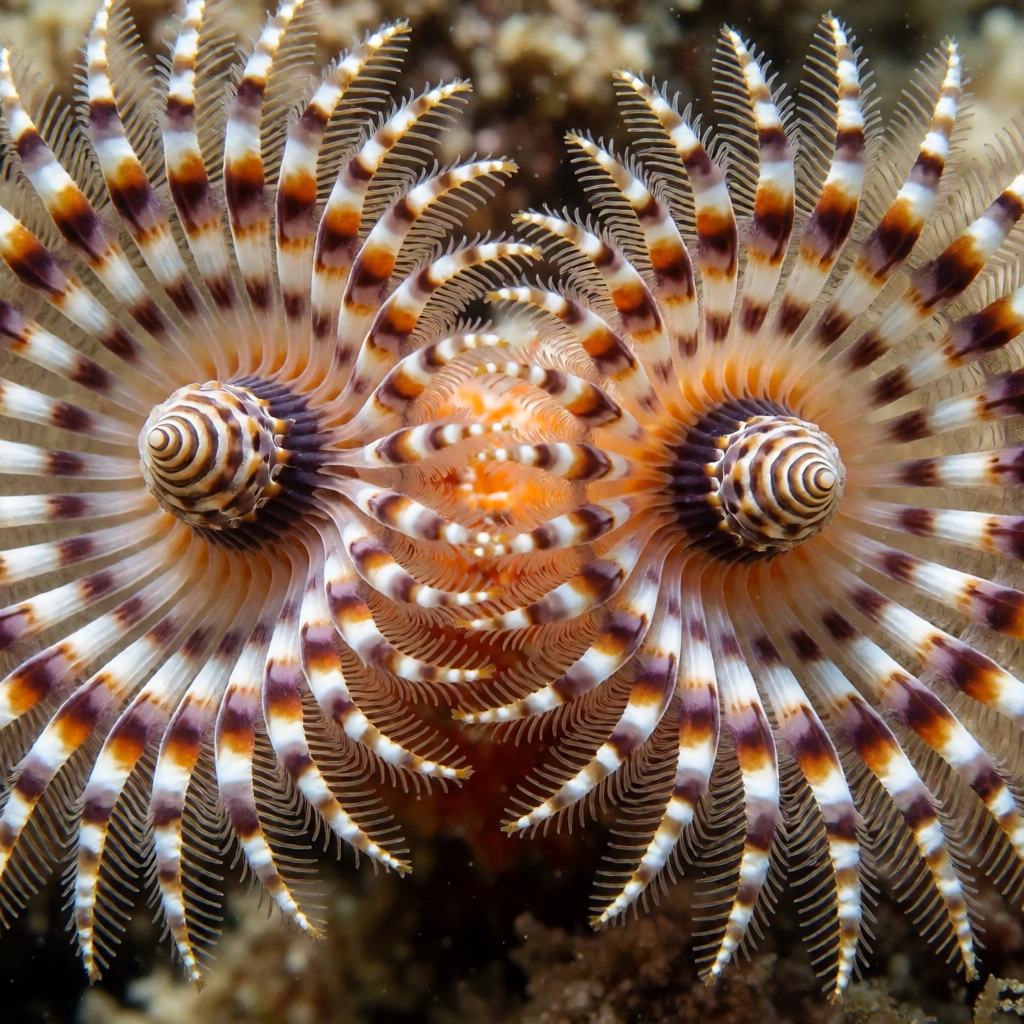
The worm has 2 spirals of feathery arms. Those arms may spread 15 cm across. Each arm carries fine side branches. The arms come in bands of white and orange.
Some carry brown or purple marks. One arm ends in a small funnel. That funnel plugs the tube when the worm hides. The body carries many small rings.
1
2
3
Sheltered harbours and piers
Where it lives
The species lives in sheltered harbours and bays. It favours a wall, a pier or a rock. It also lives on the hull of a boat. It lives from shallow water down to about 30 m.
It needs a steady flow of water. It also needs water with plenty of fine food. It can live in water that is rather dirty. It dislikes strong waves and bare sand.
The tube fixes to a hard surface. A busy harbour often holds a thick group.
Plankton filtered from the water
What it eats
The Mediterranean Fanworm is a filter feeder. It takes tiny plants and animals from the water. Those small drifting forms are called plankton. The feathery arms work as a net.
Fine hairs along each arm catch the food. Small channels then carry the food to the mouth. The worm can also take fine dead matter. It draws the arms in to clean them.
It feeds in the dark and in the light. A strong current brings it more food.
A drifting larva that builds a tube
The breeding cycle
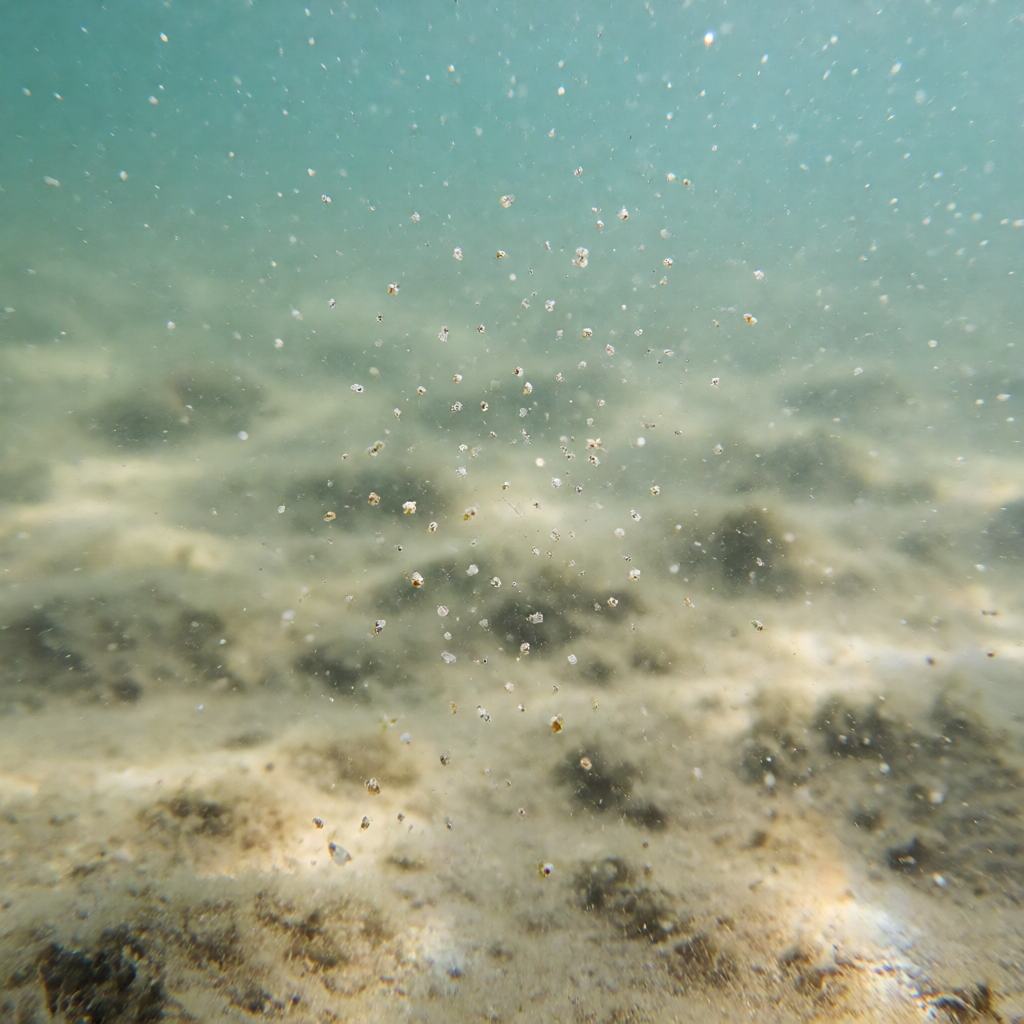
The sexes are separate. The male and the female release their cells into the water. The egg is fertilised in the open sea. The young larva drifts for several weeks.
It then settles on a hard surface. It builds a tube around its body. It grows fast in warm water. The worm can also grow a new crown.
It does so after a fish bites the old one. The animal may live for several years.
Boat hulls and new seas
Conservation
The Mediterranean Fanworm is not listed as endangered. It is common in its native range. It has no legal protection. It has reached new seas on the hull of ships.
There it may become a problem. It grows fast and it forms dense groups. It may take space from native animals. In its own range it does little harm.
A clean hull helps to stop its spread. Careful checks at a port help most.
Quick hits
Five things to remember
- It can pull its crown in faster than the eye can follow.
- It lives in a tube that feels like soft leather.
- Its crown has 2 spirals of feathery arms.
- It can grow a whole new crown if a fish bites it off.
- It has travelled to new seas on the hulls of ships.
[…] The fat innkeeper worm is a sea worm. Its name is Urechis caupo. It has no segments like an earthworm. A tube dwelling neighbour is the Mediterranean Fanworm. […]