 By st20113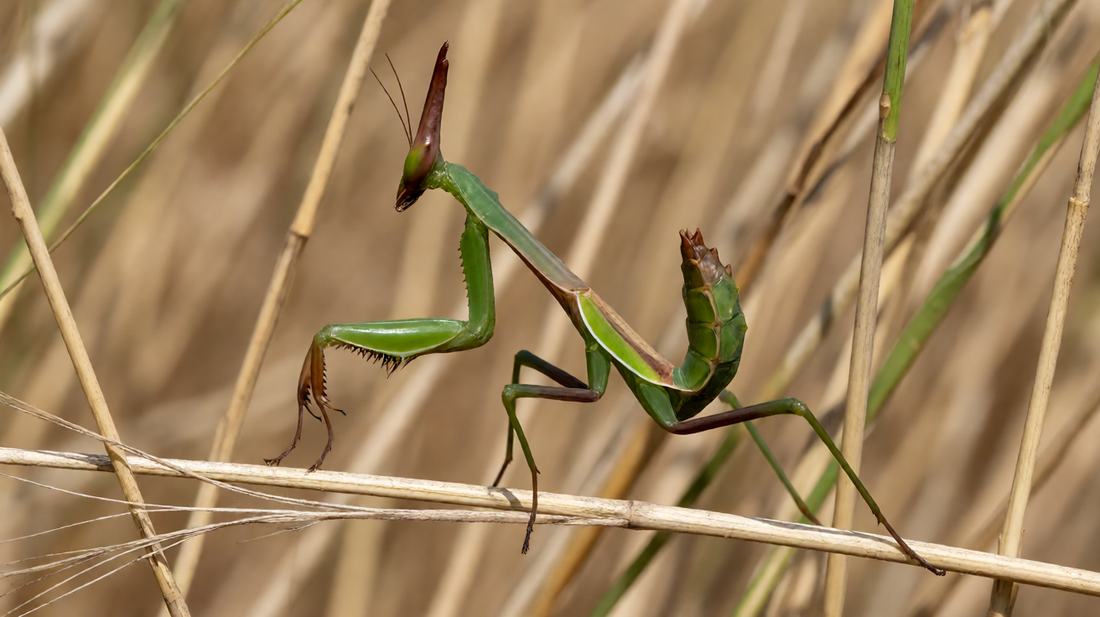
Empusa pennata | Conehead Mantis
Species Profile · Empusidae
Conehead Mantis
A very slender mantis of dry grassland that waits on a dead stem, wears a pointed cone on its head and curls its abdomen up like a scorpion.
A slender mantis with a tall cone on its head and a curled tail
Body
Head
Front legs
Prey
Winter
Adult
The conehead mantis
A slender hunter of warm grassland
The Conehead Mantis is a slender hunter of warm grassland. It is 1 of the strangest mantises of Europe. It sits still on a dry stem and waits.
Its body blends with the dead grass. A tall cone rises from its head. Its tail curls up like a scorpion.
The animal takes only live prey. It spends the winter as an egg.
Family tree
Mantodea, Empusidae
The Conehead Mantis sits in the phylum Arthropoda. Its class is the Insecta. Its order is the Mantodea. Its family is the Empusidae, the cone-headed mantises.
Our insect shares the order with the European Mantis. That insect has a plain rounded head. It grows larger and heavier. Our insect carries a tall pointed cone.
The 2 species both fold their front legs. Both also lay their eggs in a case. The family is a small one. Its members live in warm lands.
7 cm and a pointed cone
How to tell one
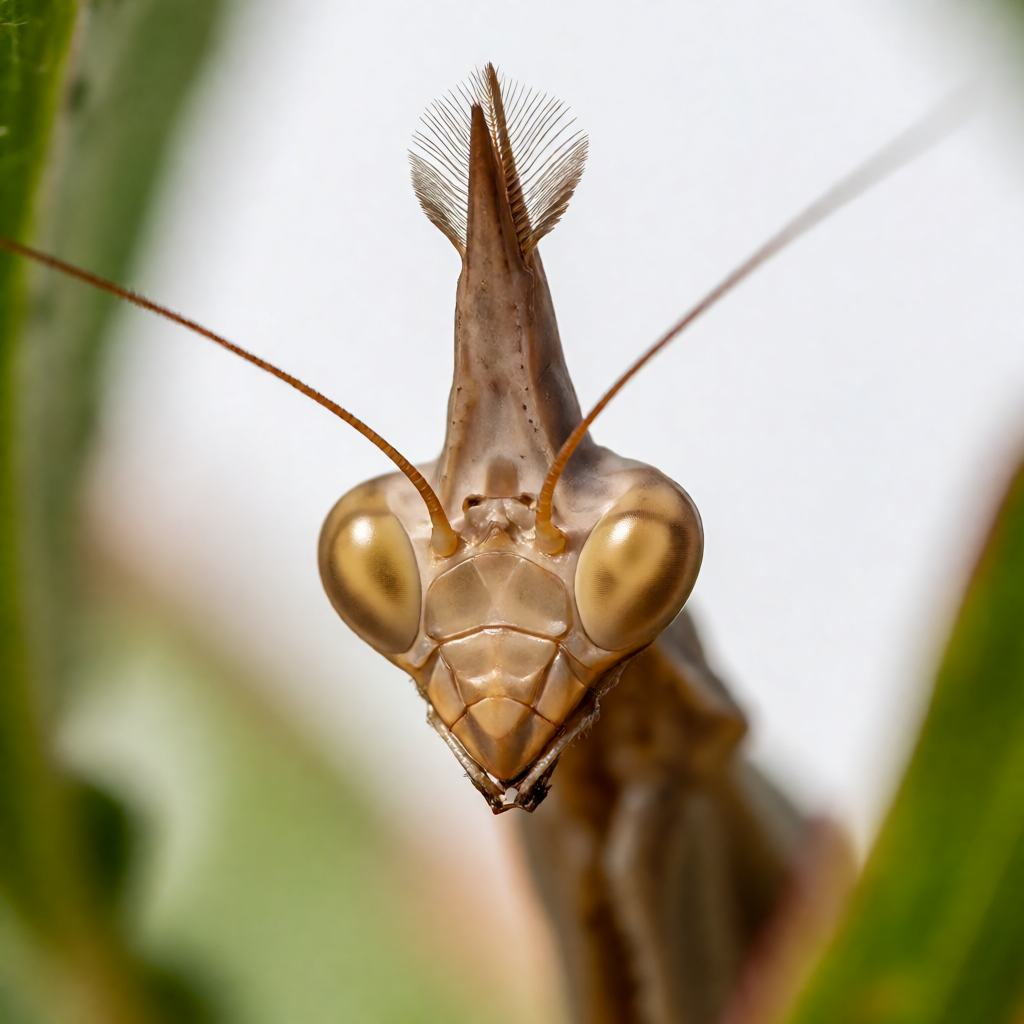
The body may reach about 7 cm in length. The male is smaller than the female. The head carries a tall pointed cone. A small crest sits on top of the cone.
The eyes are pointed, and they sit on the sides. The thorax is very long and thin. The front legs fold into a spiny trap. The middle and hind legs are slender.
The wings cover the body in the adult. The abdomen curls upward at the tip. The colour is a mix of brown and green. The whole animal looks like a dry stem.
1
2
3
Dry grassland and low scrub
Where it lives
The species lives in dry and open country. It favours grassland and low scrub. It also lives on warm rocky slopes. It needs tall stems for its ambush.
It sits on a stem with its head up. It prefers strong sun through the day. It does poorly in damp or shady places. The animal lives close to the ground.
A cold winter kills the adults. Only the eggs survive the season. A warm spring brings the young out.
Living insects only
What it eats
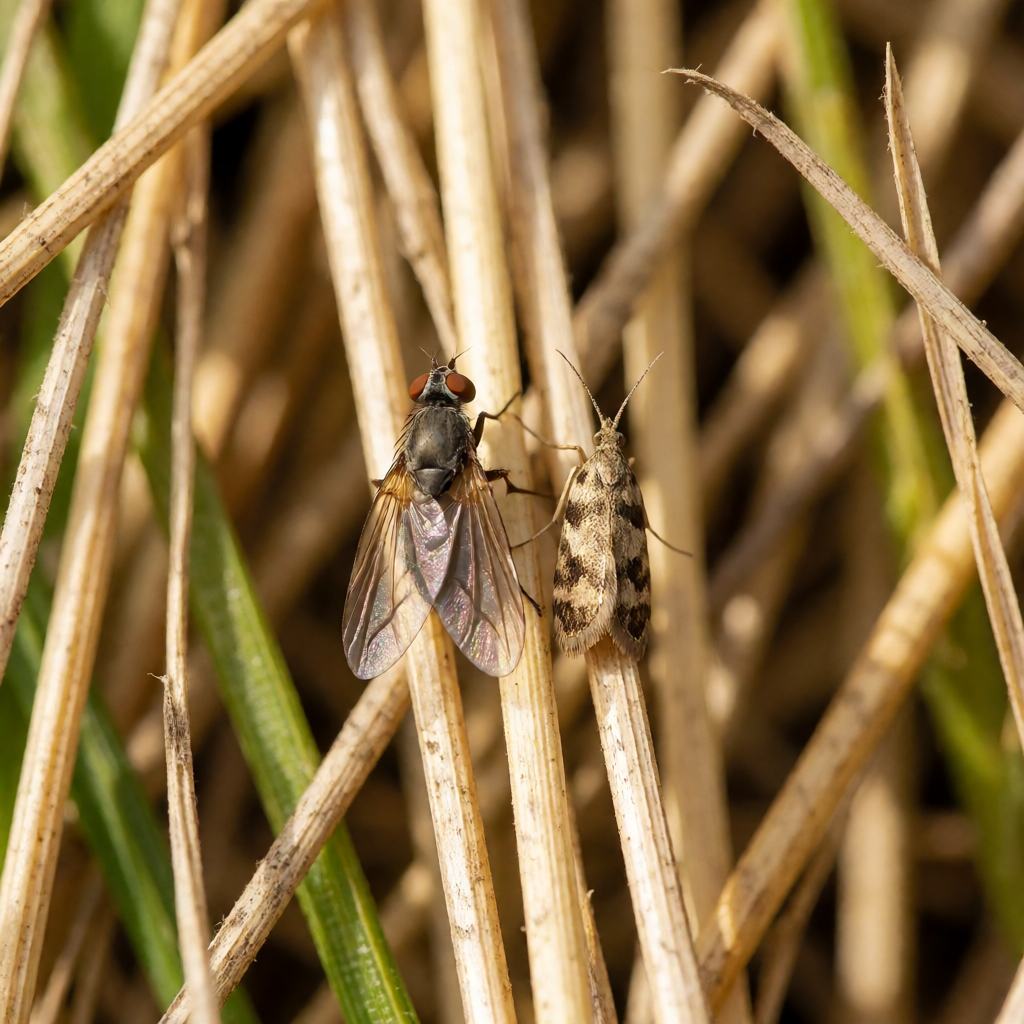
The Conehead Mantis is a pure hunter. It takes only live insects. Its prey includes flies and small moths. It also catches young grasshoppers.
The animal waits without any movement. Then it strikes with the front legs. Those legs close fast on the prey. Small spines hold the catch in place.
The jaws then chew the insect. The animal needs a meal every day or two. It will not touch dead food.
An egg case fixed to a stem
The breeding cycle
The female makes a case for her eggs. She fixes that case to a stem. The case is pale and shaped like a small pod. She fills it with a mass of eggs.
The female dies soon after that work. The eggs rest through the winter. The young hatch in the spring. They look like small adults without wings.
They hunt small flies from the start. They shed their skin several times. The adult appears in the middle of summer.
Ploughed grassland and building work
Conservation
The Conehead Mantis has not been assessed by the IUCN. It is local in the north of its range. It is common in warm parts of the south. It has no legal protection.
It needs dry grassland with tall stems. Ploughing destroys a whole site. Building work removes its open ground. Spraying also kills its insect prey.
The species has gone from several northern sites. A patch of rough grass gives it the best chance. So does a field left uncut.
Quick hits
Five things to remember
- It wears a tall cone on top of its head.
- Its tail curls up like the tail of a scorpion.
- It will take only prey that is alive.
- The young hatch without wings and gain them later.
- It can turn its head right round to look behind.