 By Iris
Euphractus sexcinctus | Six-banded Armadillo
Species Profile · Chlamyphoridae
Six-banded Armadillo
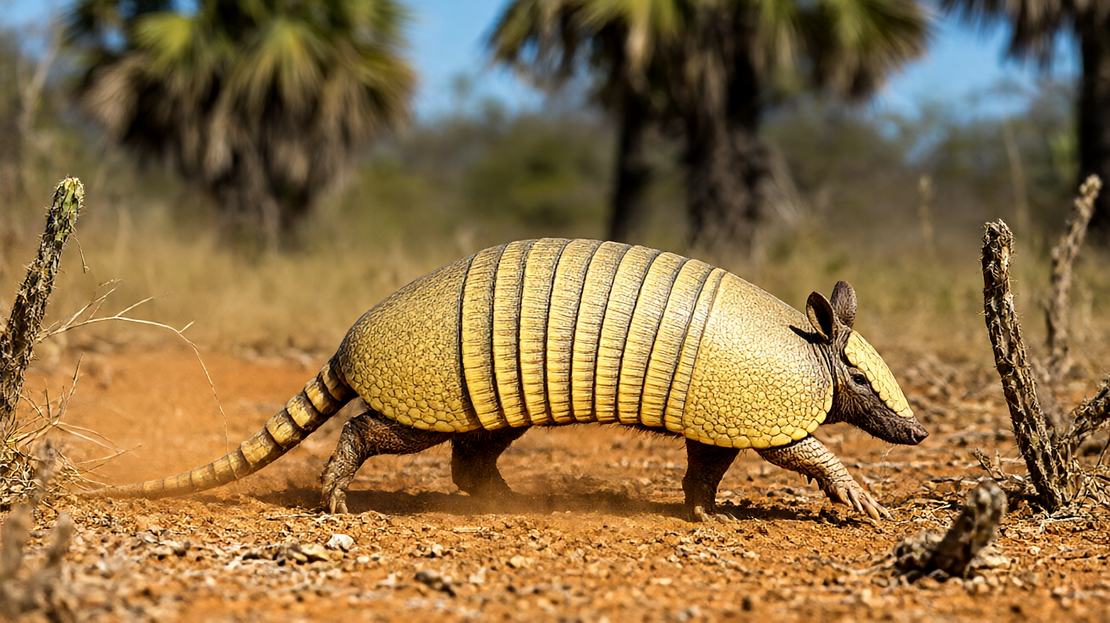
A pale armoured animal walks in full daylight with its nose down.
Least Concern
Length
Weight
Bands
Litter
Claws
Rating
The Six-banded Armadillo
The armadillo that works by day
A pale armoured animal walks across dry ground with its snout down. Six movable bands cross the middle of its shell. That count gave the species its name. Unlike most armadillos, it works in daylight.
Because the shell covers the head and the back, only the belly stays soft. Long claws turn the soil over in seconds. It digs without pause, and the soil keeps flying.
Family tree
Chlamyphoridae, the armoured family
Its proper name is Euphractus sexcinctus, the only species in its genus. Armadillos belong with sloths and anteaters in a group that arose in South America. A Nine-banded Armadillo spread north into Texas, and both animals carry the same banded shell.
Because the group lost its close relatives long ago, each living genus stands alone. Three subspecies are named, and they differ in size rather than in pattern. Early writers placed every armadillo in one family, which later work split apart.
Shell, bands and claws
How to tell one
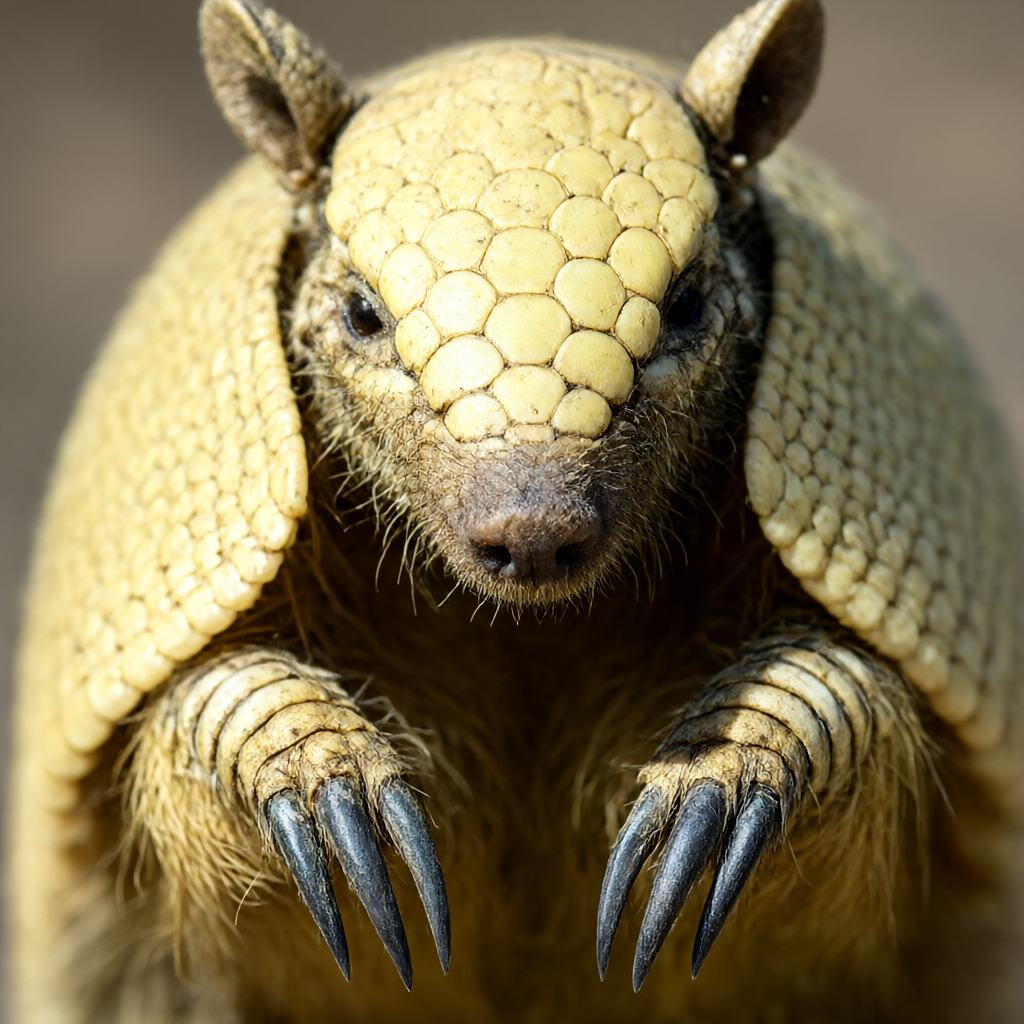
Adults run 40 to 50 cm from nose to tail base. Weight falls between 3 and 6 kg. A pale yellow shell covers the head, the back and the rump.
Six bands cross the middle, and each one moves on its own. Front feet carry five heavy claws, and they do the digging. Teeth stay small and peg like, since the animal needs no cutting edge.
Because the shell holds little fat, the body stays lean through the year. Because the animal rests underground through the hottest hours, the burrow holds a steady temperature all year round. Females carry two teats on the chest, which limits a litter to two.
1
2
3
Open dry country
Where it lives
Dry scrub, palm savanna and open chaco hold the species. Brazil, Paraguay and northern Argentina make up most of the range. It digs a burrow in soft ground, and it may take over one already dug.
Because the animal needs soil rather than rock, bare granite blocks it. Fire clears the grass, and the armadillo moves in afterwards. A Giant Anteater works the same open country, and both animals break into ant and termite nests.
Almost anything
What it eats
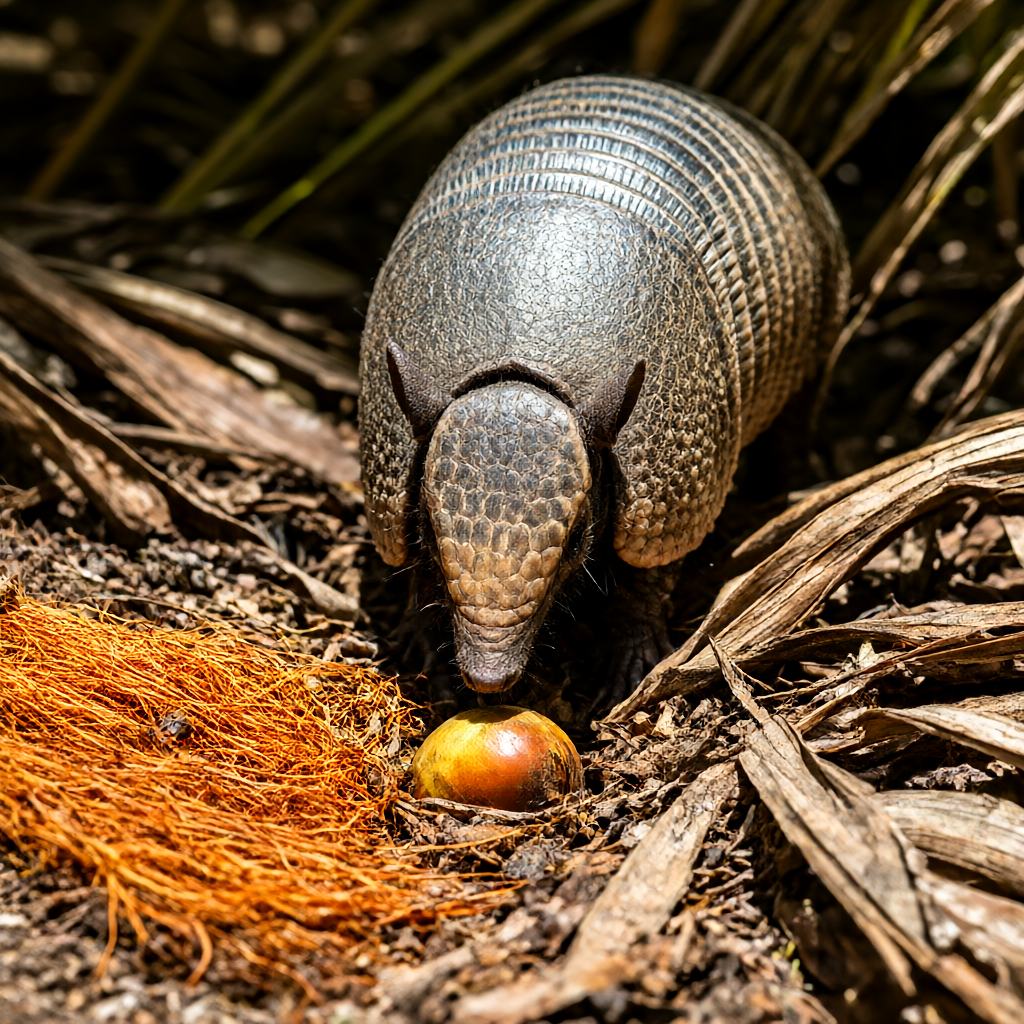
The species eats almost anything it meets. Insects, spiders and worms make up much of the diet. Carrion matters more here than it does for most armadillos. Fruit, tubers and fungi get eaten when the chance comes.
Claws open a nest in seconds, and the animal feeds fast and moves on. It also takes snakes and small rodents, which few armadillos attempt. A digging armadillo leaves a scatter of broken nests behind, and that mess shows exactly where it has fed.
Two young a year
The breeding cycle
A female bears one or two young after about two months. Newborn skin stays soft, and the shell hardens within weeks. Because the young stay in the burrow for a month, the mother returns to feed them. Two litters can follow in one year.
The male takes no part in rearing. Independence comes at about nine months. The young stay with the mother until the next litter arrives, and they then dig burrows of their own.
Hunted but stable
Conservation
The Red List calls the species Least Concern. Hunting takes a number across the range, since people eat the meat. Forest loss helps it, since the animal adapts to cleared ground. Farmers tolerate the species because it eats insects that attack crops, though it also raids planted ground nuts.
Roads kill many at night, though the species travels by day. Nothing suggests a serious decline. Protected areas hold stable groups, and farmland carries them too.
Side by side
How It Compares
| Trait | Six-banded Armadillo | Nine-banded Armadillo |
|---|---|---|
| Family | Chlamyphoridae | Dasypodidae |
| Length | 40-50 cm | 35-45 cm |
| Weight | 3-6 kg | 2.5-6.5 kg |
| Bands | six | nine |
| Litter | 1-2 young | four identical young |
| Rating | Least Concern | Least Concern |
Common misreadings
What People Get Wrong
- Not the common one. The band count is the quickest test. Six-banded animals carry a pale yellow shell and work in daylight, while the nine-banded species stays grey, digs at dusk, and crosses far more ground.
- Not a night animal. This one feeds through the day. Because the shell holds little fat, the animal must eat often, and a daytime run lets it find enough insects before the heat returns.
- Not a fussy eater. Carrion goes down as readily as insects. The animal takes snakes, small rodents and planted ground nuts, and because it digs fast it can clear a nest before the owner returns.
Going further
Sources and Further Reading
Quick hits
Five things to remember
- It is active by day.
- It eats carrion.
- It has six movable bands.
- It can hold its breath.
- It digs its own burrow.