 By Iris
Tragelaphus oryx | Common Eland
Species Profile · Bovidae
Common Eland
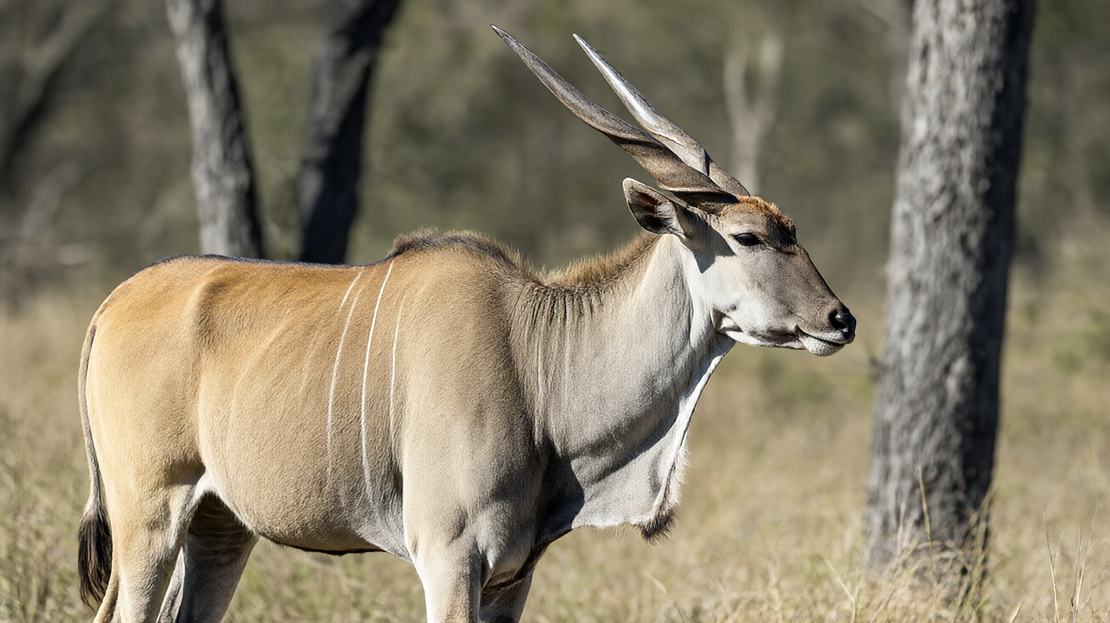
A heavy antelope stands in open woodland, and the biggest bulls reach almost a tonne.
Least Concern
Length
Weight
Horns
Calf
Dewlap
Rating
The Common Eland
A tonne of antelope that climbs
A heavy antelope stands in open woodland with its head held high. Males reach almost a tonne, which makes this the largest antelope alive. Yet it climbs well. Both sexes carry horns, and the spiral runs tight along the length.
A dewlap hangs under the throat, and it swings as the animal walks. Because the eland browses at shoulder height, it can feed in scrub that cattle leave almost untouched. A faint white stripe marks each flank, and the pattern shows best in good light.
Family tree
Bovidae, the spiral-horned line
Its proper name is Tragelaphus oryx, one of the spiral horned antelopes. The group includes the kudu and the bongo, and all of them carry twisted horns. A Cape Buffalo shares the same open country, and both animals gather in herds that move with the grass.
Because the two split long ago, they now differ in build and in temper. Two subspecies are named, one southern and one eastern. Early hunters treated the giant eland as a separate species, which later work rejected.
Horns, dewlap and stripe
How to tell one
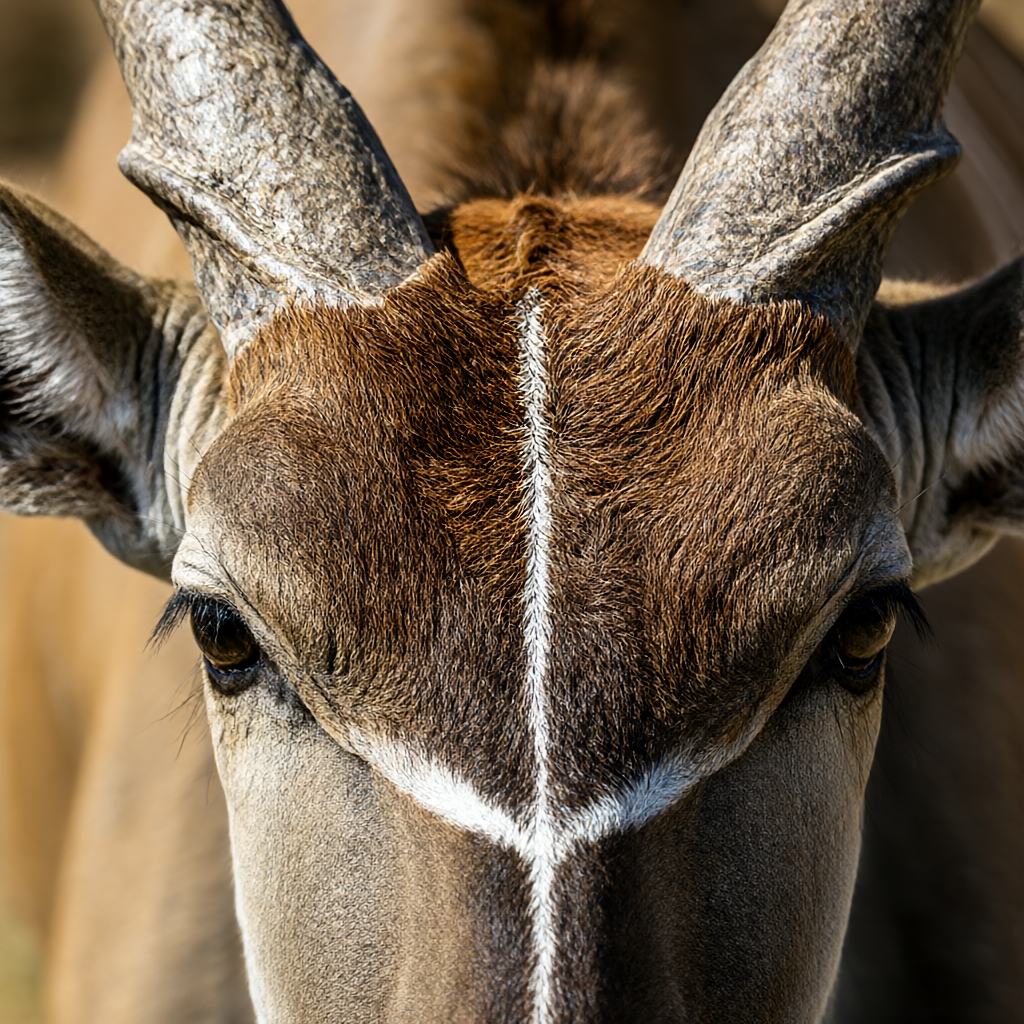
Adults run 200 to 280 cm from nose to tail base. Weight falls between 300 and 900 kg, and bulls run heavier than cows. Horns reach 65 cm, and they stay straight rather than curving back.
Because the coat carries a loose skin fold, the animal can turn inside it. Both sexes keep the dewlap, though it grows longer on the male. Its tail ends in a black tuft.
It switches without rest, and the herd reads that signal. A dark dorsal stripe runs down the spine, and faint bars cross the flanks. Females carry four teats, which suits a single calf.
1
2
3
Woodland and dry bush
Where it lives
Savanna, montane forest and semi desert all hold the species. Kenya, Tanzania and South Africa make up most of the range. Cover matters for the hottest hours, and the herd rests in shade rather than open ground.
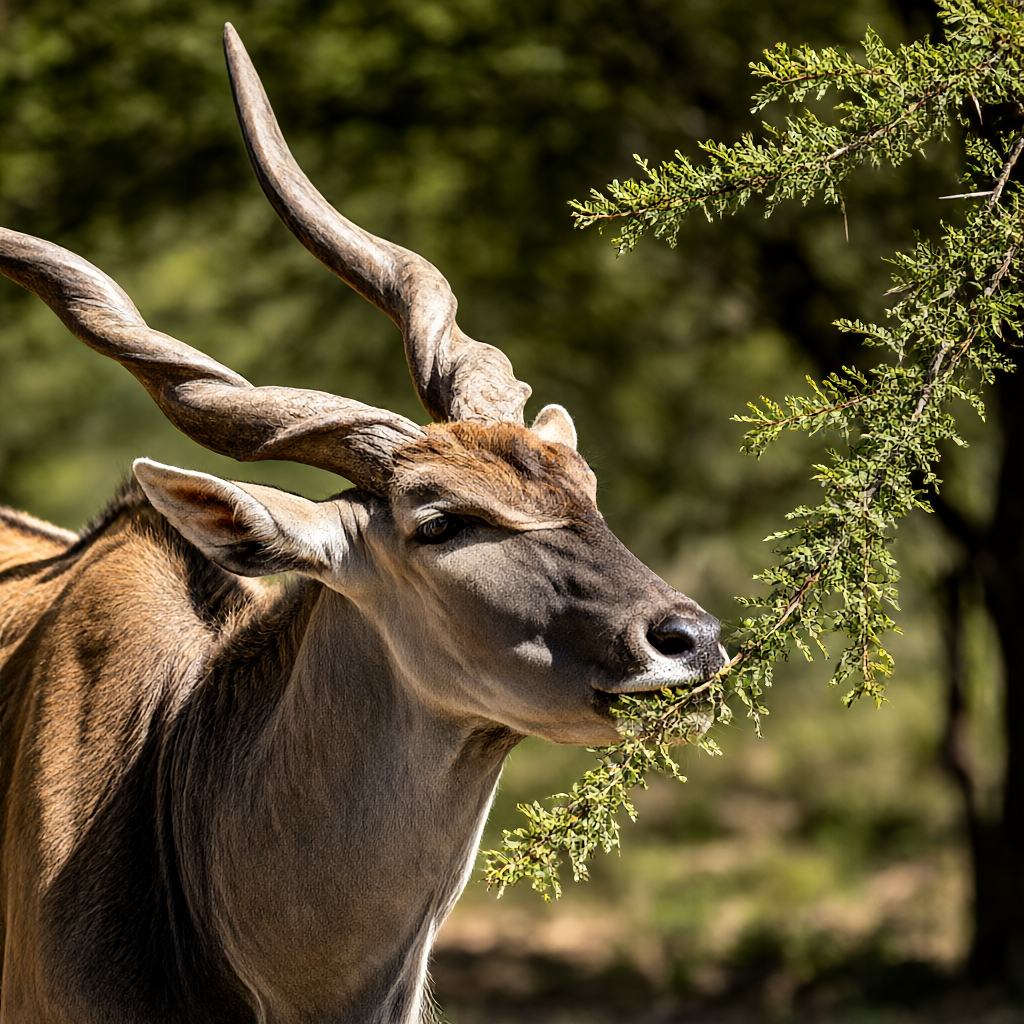
Because the eland browses high, it reaches leaves that cattle cannot touch. Herds move with the rains, and they return along the same routes. Scrub regrowth after clearing suits the species, since fresh shoots stay within reach.
Browse, not grass
What it eats
Leaves, shoots and seed pods make up most of the food. Leaves dominate. The animal takes browse at shoulder height, and it stretches upward with the head lifted. Because the diet carries little water, the eland can live far from a river.
Fruit and flowers get eaten in season, and grass matters mainly to young animals. Herds feed in the cool hours, then rest through the middle of the day. A browsing eland crops a bush in a way that keeps it low, and the plant regrows within a season.
One calf, slowly
The breeding cycle
Bulls join a herd of cows and defend them through the rut. Females bear one calf after about nine months. Newborn calves lie hidden for days, and the mother returns to feed them.
Because a calf stays with the herd for a year, cows breed slowly. Horns appear within weeks, and they grow through the first year. Bulls leave their natal herd at about two years, and they join bachelor groups.
Fences more than guns
Conservation
The Red List calls the species Least Concern. Rangeland fencing cuts the routes that herds follow, and it splits populations. Because the eland tolerates dry country, it survives where cattle cannot.
Hunting takes bulls for meat and for trophies, though the trade stays controlled. Nothing suggests a rapid decline across the range. Protected areas hold the strongest herds, and private farms carry many more.
Side by side
How It Compares
| Trait | Common Eland | Cape Buffalo |
|---|---|---|
| Family | Bovidae | Bovidae |
| Weight | 300-900 kg | 500-900 kg |
| Horns | straight spiral | curved and heavy |
| Diet | browse, taken high | grass, grazed low |
| Water | drinks rarely | drinks daily |
| Rating | Least Concern | Least Concern |
Common misreadings
What People Get Wrong
- Not a buffalo. The spiral horns rule that out. An eland carries its horns straight along the head with a tight twist, while a buffalo wears heavy curved horns joined across the skull in a single boss.
- Not a grazer. Feeding happens above the ground. Leaves, shoots and seed pods make up most of the diet, and because that food carries little water the herd can stay far from any river.
- Not a mountain animal, though it climbs. The coat carries a loose fold. That skin lets the animal turn inside it, and the same trick keeps the body cool while the herd moves through open woodland in the heat.
Going further
Sources and Further Reading
Quick hits
Five things to remember
- It is the largest antelope.
- Both sexes carry horns.
- Its knees click as it walks.
- It can live without drinking.
- A bull may reach 900 kg.