 By st20113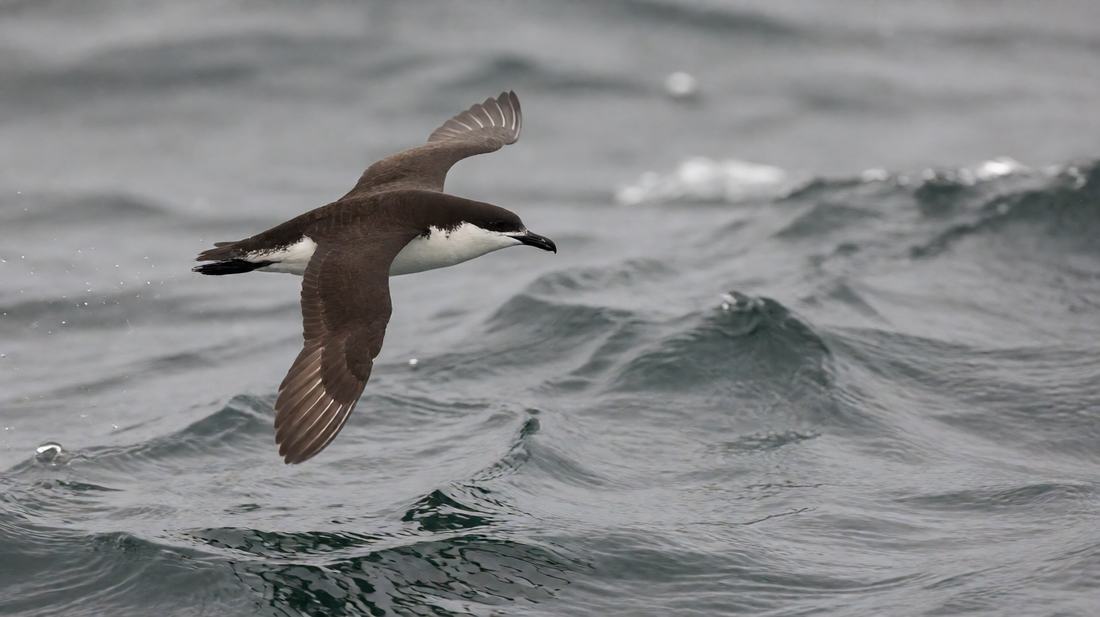
Puffinus puffinus | Manx Shearwater
Species Profile · Procellariidae
Manx Shearwater
A small black-and-white ocean glider that comes to land only in the dark — and whose British and Irish colonies hold the great majority of the world’s birds.
IUCN: Least Concern
Range
Length
Weight
Nest
Lifespan
The bird of the dark
A seabird that shuns the daylight
The Manx shearwater is an oceanic bird of the family Procellariidae. It is one of the most extraordinary seabirds of the North Atlantic. It spends the whole year on the open ocean. It comes to land for only a few months of summer. It visits the colony only in the darkness of the night. It nests in a burrow in the ground.
So a visitor standing on a colony island by day may see almost nothing. Yet that same ground may hold tens of thousands of birds. The species is the most numerous of the Atlantic shearwaters. It is also the most thoroughly studied. It glides on stiff, narrow wings. It banks and shears across the sea with a wing tip almost touching the water.
That flight gave the group its name. The British and Irish birds migrate to the south Atlantic after breeding. They reach Brazil and Argentina and return within the year. That round trip is one of the longest of any bird of its size.
Family tree
Puffinus, the shearwaters
The Manx shearwater sits in the genus Puffinus. This is a large, worldwide group of medium-sized shearwaters. Its members have a slender, hooked bill. They also have a long, narrow wing. The body is small in relation to the wing. The genus sits with the petrels and fulmars and albatrosses. All belong to the order Procellariiformes. Those birds share a strange nostril plan.
The nostrils sit in raised tubes on the upper bill. The tubes excrete excess salt. They also sense food and colony smells from far away. The Manx shearwater is the close relative of the European Storm Petrel (Hydrobates pelagicus). That tiny dark seabird shares the same colony islands. It shares the same nocturnal, burrow-nesting life. Yet it is a fraction of the size. Comparing the 2 species is instructive.
One of the smallest and one of the medium-sized tube-nosed birds. Both evolved the same answers to ocean life. Linnaeus described the species in 1758. The name refers to the Isle of Man. The bird is not really tied to that island. Today we treat it as a separate species. Other shearwaters of the Mediterranean and Pacific were once included.
Black above, white below
How to identify one
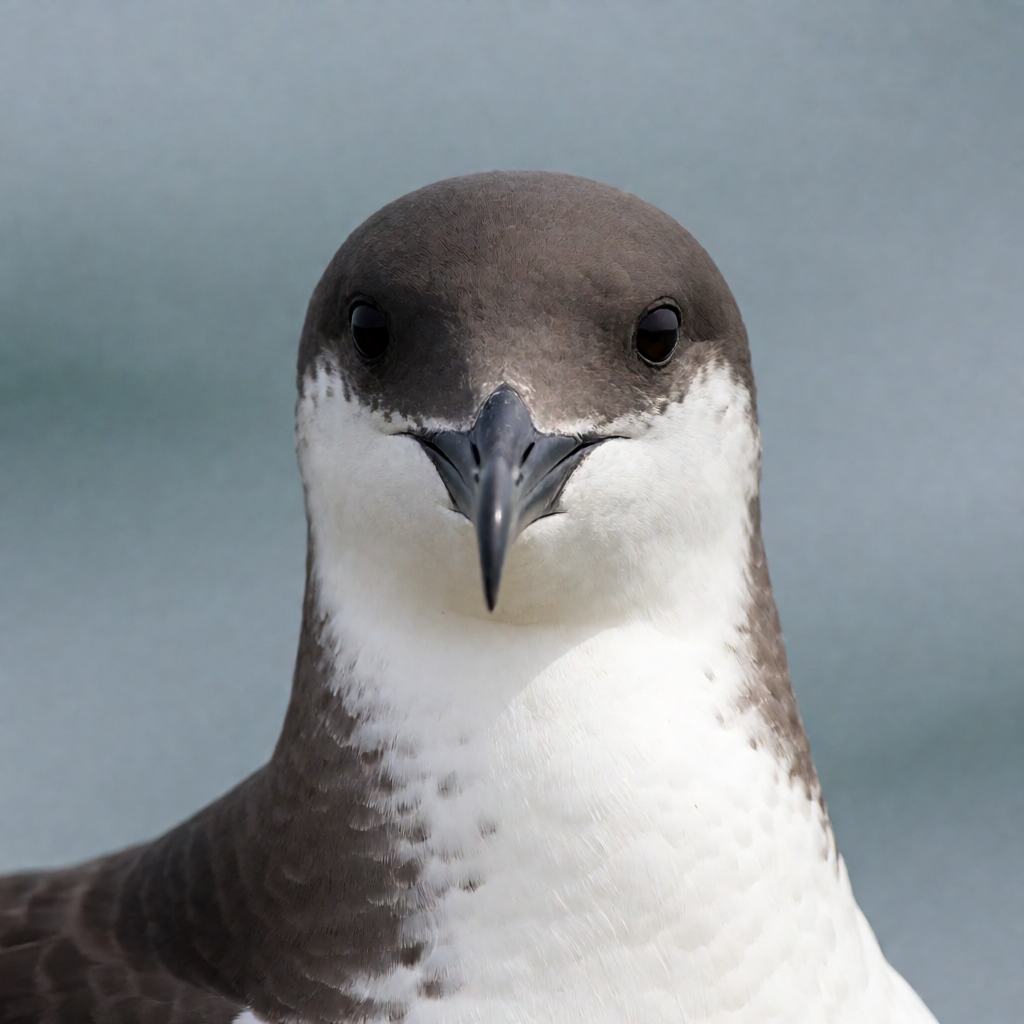
An adult Manx shearwater is 30 to 38 centimetres long. Its wingspan is 76 to 89 centimetres. It weighs 350 to 575 grams. It is a slender, streamlined bird. Its body is small next to its very long, narrow wing. That proportion gives it the gliding flight. It allows very long journeys with little effort. Both sexes look alike. The upper parts are uniform sooty black.
The underwing is dark too. The breast and belly are clean white. The line between black and white runs straight along the flank. The head is black above and white below. The dark crown covers the eye. The bill is slender and dark. Its nostril tubes sit raised on top. The legs and feet are pale pink. The outer toe is dark.
These marks separate it from other European shearwaters. The flight is the bird’s signature. It banks and glides with the tip nearly touching the wave. It alternates long glides with bursts of rapid shallow beats. It rarely flaps like a gull. It rarely settles on the water except to feed. Its colony voice is a loud, raucous cackle. That sound is unforgettable at night.
1
2
3
Island burrow and open ocean
Where it lives
The Manx shearwater needs deep, predator-free soil for its burrow. It also needs rich, cold Atlantic water. So it lives at sea for most of the year. It lives on land only for the breeding months. In summer it occupies the islands of the north-east Atlantic. Most of the world population breeds in Britain and Ireland. Birds also nest in Iceland and the Faroes.
Some nest on islands off north-west France. Colonies favour offshore islands and headlands. Such sites are free of rats and cats and other mammals. The bird digs its own burrow in the soil. It also uses cavities among rocks and boulders. It prefers a steep, grassy, burrowed slope to flat ground. In winter the bird leaves the north Atlantic entirely.
British and Irish birds travel to the south Atlantic. They reach the waters off Brazil and Argentina. That round trip is among the longest of any bird of its size. The birds are almost never seen from land then. So the species is among the most oceanic of northern birds.
A hunter of the surface
What it eats
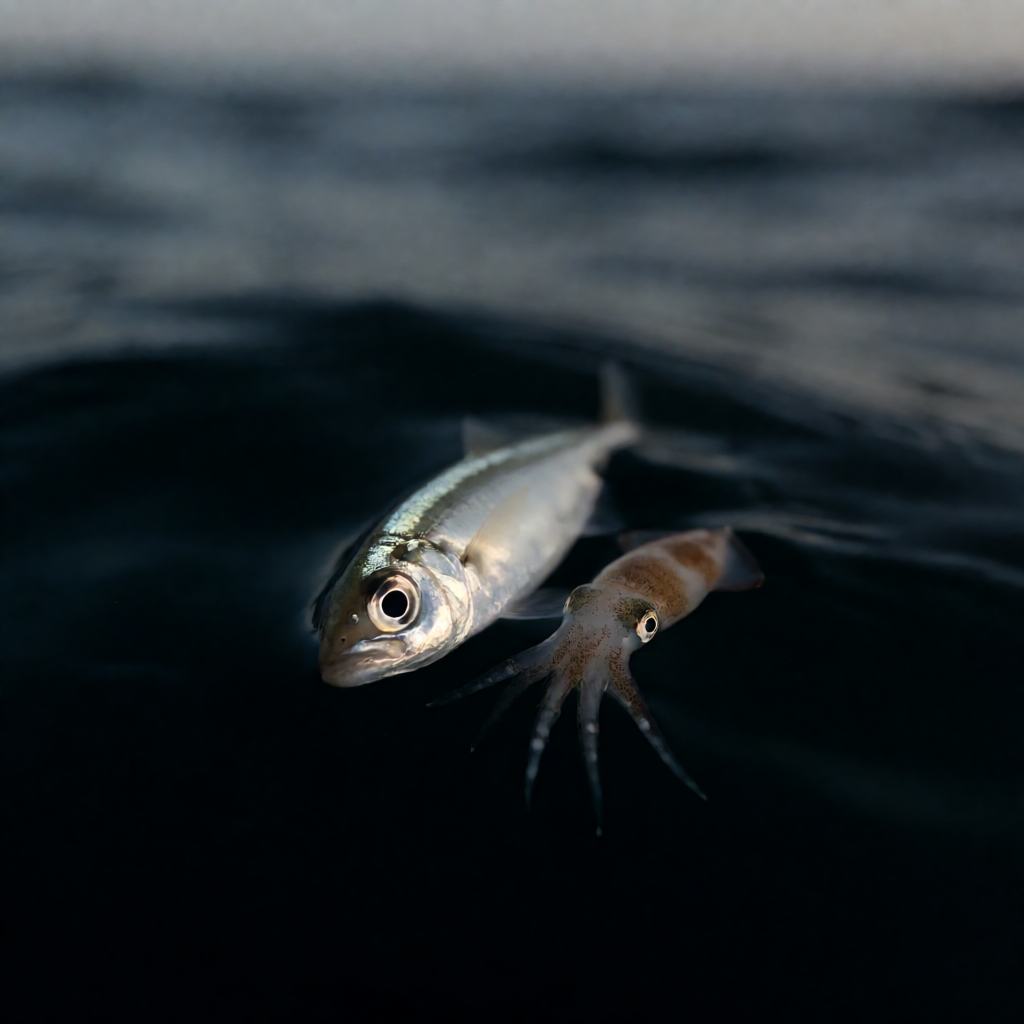
The Manx shearwater eats fish from the open ocean. Its diet is mostly small, slender fish of the surface and middle layers. Sprats are important. So are young herring and sandeels. So are small fish of the mackerel family. The bird also takes small squid. It eats crustaceans and surface plankton too. The feeding method is surface seizing.
This suits the smaller tube-nosed birds. The bird picks prey from the surface as it glides and settles. It paddles with its feet to stay in place. It does not dive like an auk or a diving petrel. It can still pursue prey below the surface with its wings. It reaches perhaps 30 or 50 metres. Some dives have gone deeper. Most feeding happens at or near the surface.
It happens in the top metre or two of water. The bird feeds mainly at night. Other members of the family do the same. Small fish and squid and plankton rise then. The bird also follows shoals of predatory fish. It follows whales and fishing boats as well. So it depends on small, abundant cold-water fish.
A burrow in the turf
The breeding cycle
Manx shearwaters pair for life in most cases. The bond is one of the most durable of any seabird. The pair returns to the same burrow each year. Both birds share the incubation and the rearing. The species comes to land only at night. The birds return in spring after the winter at sea. At nightfall the colony becomes a chaos of calling. Birds crash down in the dark and find their own burrows.
The nocturnal habit avoids the great gulls and skuas. Those predators would take the bird by day. The single egg is laid in the burrow in late spring. Both parents sit in long shifts of many days. The incubation lasts between 47 and 55 days. That is one of the longest periods of any bird of its size. Both parents then feed the chick for between 60 and 75 days. They feed it on oil made in the stomach from sea food.
The chick grows entirely in the dark of the burrow. The parents abandon it some days before it leaves. The chick then finds its own way to the sea at night. It can fly at once. It makes the whole migration south alone. Its lifespan is among the longest of any bird. Birds are known to live for more than 50 years. One Welsh bird was recovered at over 50 and still breeding.
A few islands hold the world
Conservation
The Manx shearwater is Least Concern on the global Red List. The world total runs to more than a million pairs. Most breed in the clean, well-guarded north-east Atlantic. Yet the species depends on a small number of island colonies. The world numbers are packed into a handful of sites. Britain and Ireland hold the great majority of it. So the fate of the species rests on how a few islands are run. The main threats come from introduced mammals.
Rats, cats and mink have destroyed colonies on many smaller islands. Removing those predators has become a key step. It has worked very well. Other pressures matter too. Recreation disturbs the colonies. Visitors and their dogs dig into the burrows. Man-made lights on the coast confuse young birds. Many then land and are killed on roads or by cats.
Oil and plastic pollute the sea. The species is protected across its whole range. Key colonies are reserves and special protection areas. They are wardened through the season. The species has become a badge of north-east Atlantic seabird care. Removing brought-in predators is one of the clearest regional wins.
Quick hits
Five things to remember
- The bird comes to land only in the dark. At nightfall the great colony becomes a chaos of calling and crashing. The birds tumble down and find their own burrows. The habit avoids the gulls and skuas that would take them by day.
- British and Irish birds migrate after breeding to the south Atlantic, reaching the waters off Brazil and Argentina and returning within the year. The round trip is one of the longest of any bird of its size.
- The species is among the longest lived of all birds. Birds are known to live for more than 50 years, and one bird from a Welsh colony was recovered at over 50 and was still breeding.
- The chick is fed in the dark of the burrow for 60 to 75 days. The parents make the oil from sea food. The young bird is abandoned some days before it leaves and makes the whole migration alone.
- The bird is named for the way it banks and shears across the sea. It flies on stiff, narrow wings. The tip almost touches the water. The flight is one of the most elegant sights of the open ocean.