 By st20113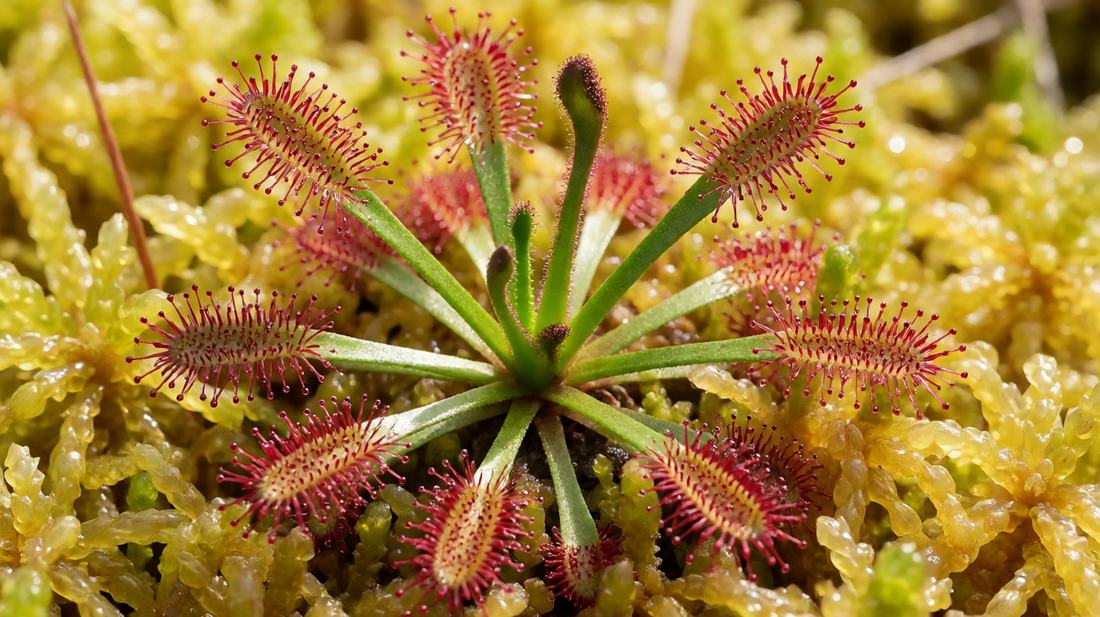
Drosera binata | Fork-leaved Sundew
Species Profile · Droseraceae
Fork-leaved Sundew
An Australian sundew whose leaves split into two narrow forks, each tip covered in sticky drops that catch small insects.
Not assessed globally
Leaves
Leaf length
Flower
Flower height
Cover
Rating
The Fork-leaved Sundew
A leaf split in two
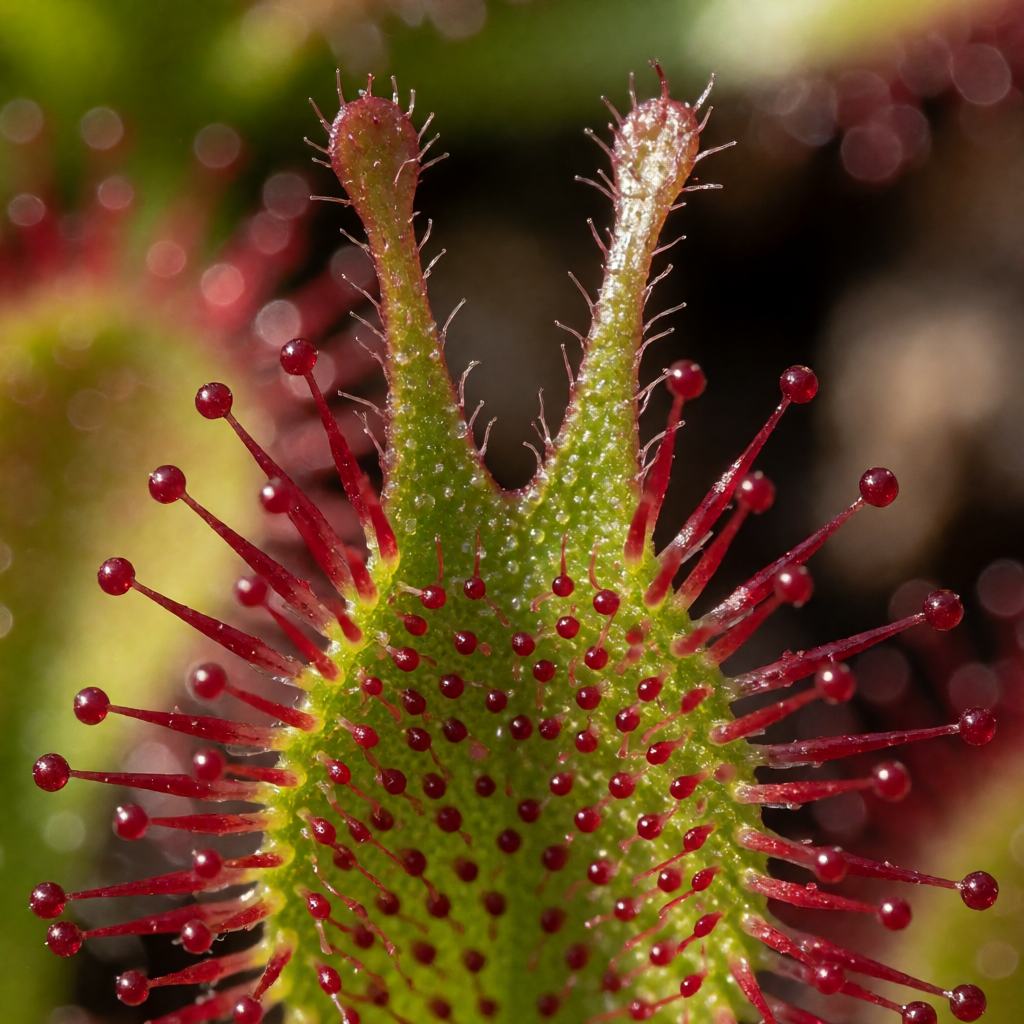
This sundew carries leaves split into two prongs. Each prong is a narrow strap 10 cm long. Clear glue covers the upper face.
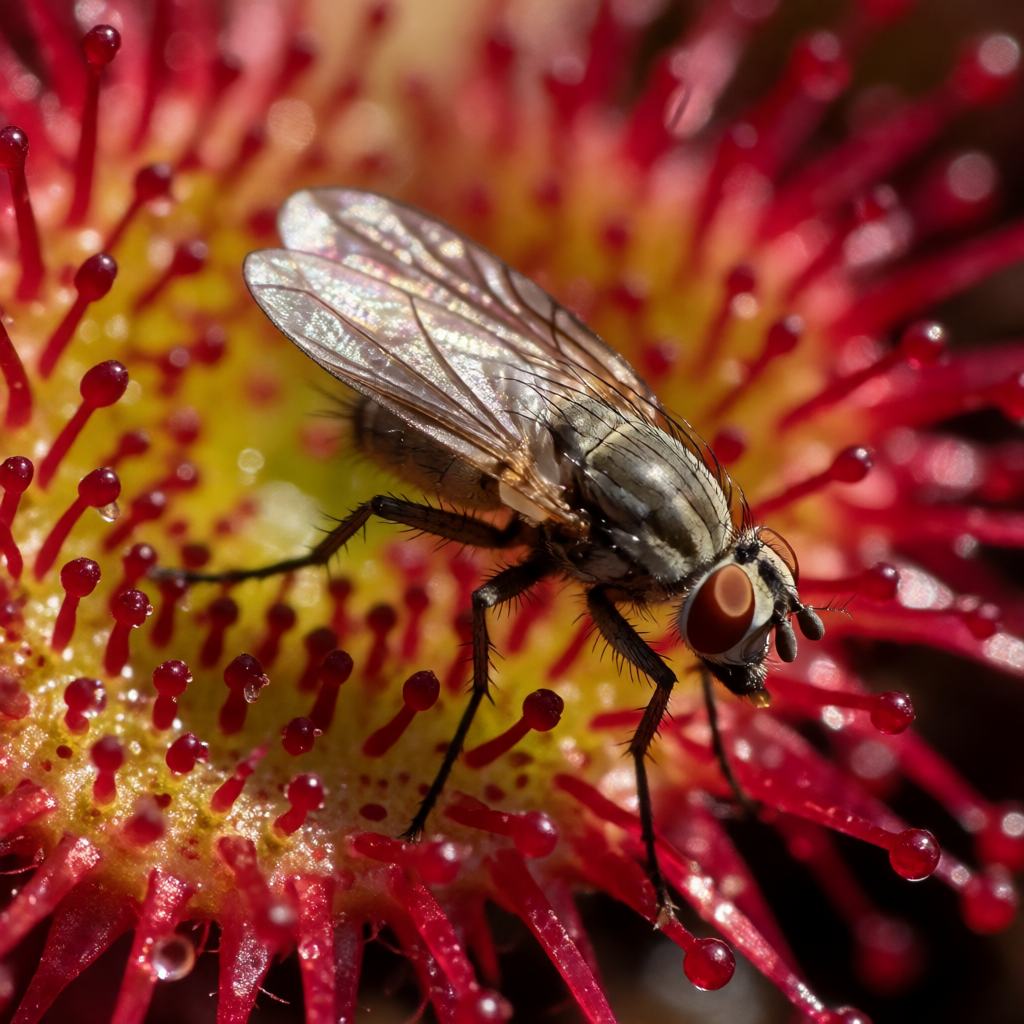
The drops shine like dew. Insects land to drink and stick fast. Because the soil holds almost no food, the plant hunts for it.
A leaf stalk can reach 30 cm. Flowers open white on a tall stem. Though the plant looks delicate, its sticky traps hold prey far heavier than the tiny hairs that carry the glue would suggest.
Family tree
Droseraceae, the sundews
This plant belongs to the sundew family, Droseraceae. A French botanist, Labillardiere, described it in 1804. Its name means paired, after the forked leaf. That leaf shape sets it apart from other sundews.
Most sundews carry round or spoon shaped blades, while this one forks. The Cape Sundew is a close relative. About 200 sundew species exist worldwide. Australia holds the greatest number.
No subspecies is accepted today, though several forms are grown. Because growers prize the big, multi-forked forms, garden names and wild names often part company, and the same plant can carry three labels.
30 cm of forked leaf
How to tell one
A leaf splits once into two long lobes. Some forms split again at the tip. Lobes stretch up to 10 cm. A stalk below runs 30 cm.
Young leaves stay coiled like a watch spring. Red hairs stand out along the surface. Each hair ends in a gland. The gland makes a clear, sticky drop.
Touch makes the lobe curl inward. Because the trap closes slowly, over minutes, a large insect can sometimes pull free, yet small flies rarely escape.
1
2
3
Wet heath and swamp margins
Where it lives
Swamps and creek banks are the main home. Wet sand and sandy peat suit it best. Seepage lines on rock faces also work. It grows from the coast to the mountains.
Australia holds the widest range. New Zealand has its own plants, since the two land masses have been apart for a long time. Fire, however, clears the ground and brings a flush. Drained swamps remove the plant at once.
Weeds shade out the small rosettes. Although the plant can survive a dry summer as a dormant root, it needs standing water through the growing season, and draining a single bog can wipe out a whole colony.
Small insects
What it eats
Small insects form the whole diet. Flies, ants and moths are caught most often. The glue holds the prey in place. Digestive fluid then covers it.
Only the soft parts are absorbed, while the shell is left. Hard wings and legs stay behind. The leaf unrolls after a few days. Wind then carries the husk away.
Each leaf can feed several times. Since the plant still makes its own sugar through green tissue, it hunts only for minerals that the wet, leached soil cannot supply.
White flowers on a tall stem
The breeding cycle
A tall stem rises above the leaves. It carries 15 to 30 white flowers. Blooming runs from December to April. Each flower opens for a short time, while neighbours bloom later.
Seed sets without a partner, though insects often help. The seed is pale brown and 2 mm long. Nine in ten seeds will sprout. Wind scatters them across the bog.
Root division also makes new plants. Fire encourages fresh growth from the root.
No global rating
Conservation
No global rating covers this plant. Regional lists tell a sharper story. South Australia lists it as Endangered in the Mount Lofty Ranges. The same state calls it Rare on Kangaroo Island.
Victoria and Tasmania, however, hold strong numbers. Drainage is the main threat. Peat mining destroys whole bogs. Collectors dig plants for the trade.
Growers now raise most stock from seed. Because so many populations sit outside reserves and depend on one small swamp each, a single drainage ditch can end a local line for good.
Side by side
How It Compares
| Trait | Fork-leaved Sundew | Cape Sundew |
|---|---|---|
| Leaf shape | forked into two prongs | a long narrow strap |
| Leaf stalk | up to 30 cm | short, in a tight rosette |
| Flowers | 15 to 30 white | pink |
| Range | Australia and New Zealand | the Cape region of South Africa |
| Winter | may die back to a root | stays green on a sill |
| Grower’s note | needs cool winters | easy to keep |
Common misreadings
What People Get Wrong
- Sundews eat insects for energy. They only need the minerals.
- Its leaves always stay open. Touch makes them curl.
- Rich soil is not needed. It grows where the soil is poor.
Going further
Sources and Further Reading
- IUCN Red List entry for Drosera binata
- Wikipedia, Drosera binata
- Electronic Flora of South Australia. Drosera binata species information, Government of South Australia.
- Labillardiere, J. J. H. 1804. Novae Hollandiae Plantarum Specimen.
Quick hits
Five things to remember
- Each hair makes a drop of glue.
- Growers cross it with other sundews.
- One plant can live for many years.
- A leaf may open again after feeding.
- Seed is scattered by wind across the bog.