 By st20113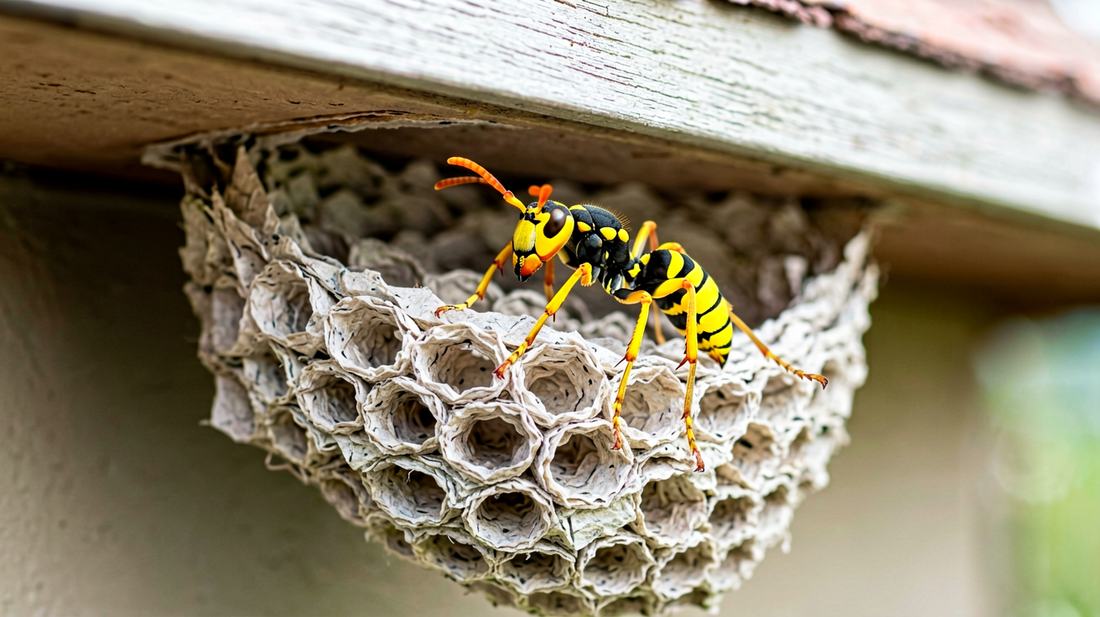
Polistes dominula | European Paper Wasp
Species Profile · Vespidae
European Paper Wasp
A slender yellow-and-black wasp with long dangling legs that builds a small open paper nest under the eaves of buildings.
Not assessed by IUCN
Range
Length
Nest
Foundresses
Introduced
The wasp with open cells
The European paper wasp
The European paper wasp is a thin wasp with long legs. It is yellow and black. It builds a small open paper nest under the eaves of houses and in sheds and barns. It is the wasp most often seen hanging from a nest of open cells. The common wasp builds a grey ball with a hidden comb.
Its society is far simpler and smaller than that of hornets and the common wasp. It is studied for how its colonies begin. Several females often start one nest together. Their rank shows in the marks on their faces. Those marks work as badges.
The species is native to Europe, North Africa and much of Asia. People have taken it to North America, Chile, Argentina, South Africa, Australia and New Zealand. There it does well in towns. It fights native paper wasps for the same sites. It may also cut the caterpillars that native wasps need.
Family tree
Among the paper wasps
The European paper wasp is in the family Vespidae. It sits in the subfamily Polistinae, the paper wasps. Most of those wasps build nests of exposed cells without an outer envelope. The species sits in the genus Polistes. That genus holds several hundred species. It is one of the largest genera in the family. An Italian naturalist described it in 1763.
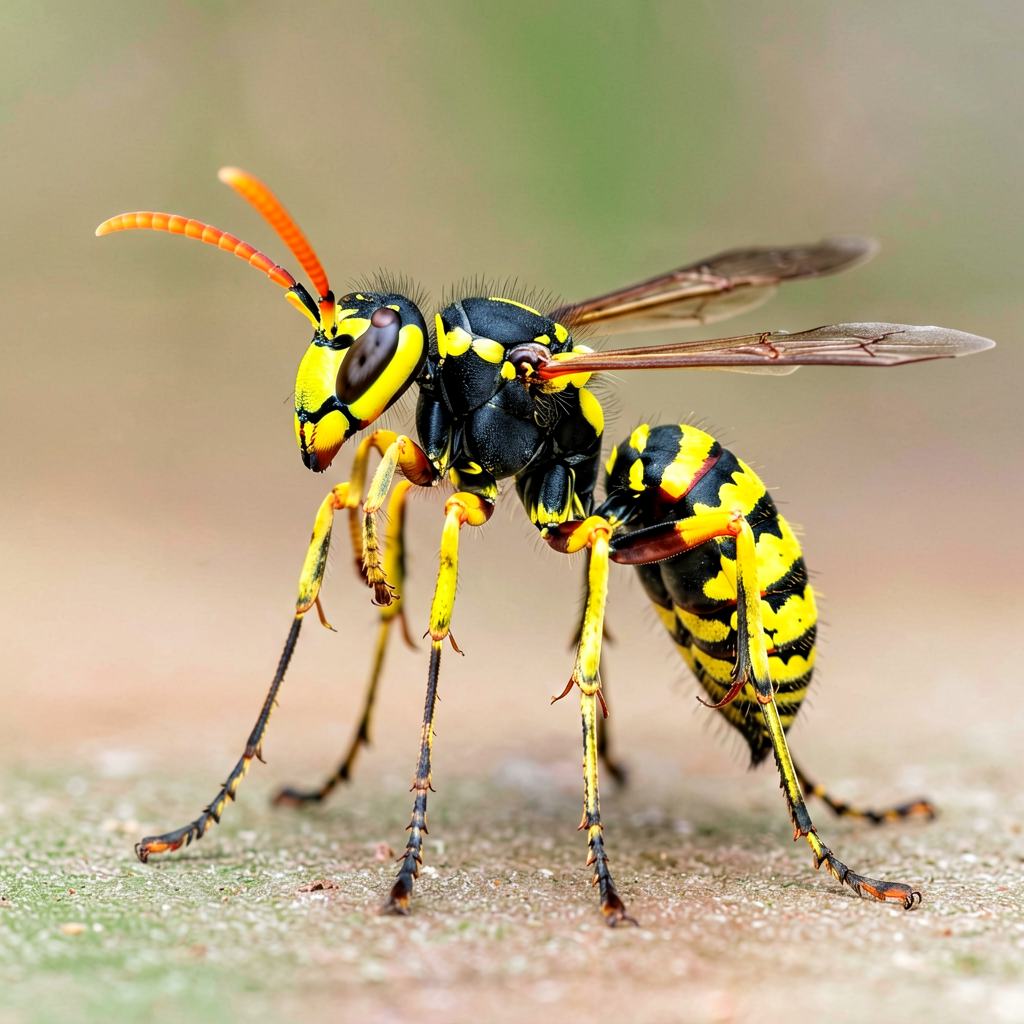
It is one of the commonest of its genus. It differs from the common wasp and the German wasp in several ways. Those two sit in the subfamily Vespinae and build enclosed nests. The paper wasp’s body is much slimmer. Its legs are longer and hang down in flight. Its antennae are orange with a dark tip. It builds one small open comb.
The species often allows several egg-laying females in one colony at the start of the season. That habit is called pleometrosis. Its dominance order can be read from the face. One insect of the same family lives under the same eaves. That is the Common Wasp. It builds an enclosed nest of grey paper with a single entrance hole.
Waist, legs and yellow bands
How to identify one
An adult European paper wasp is 13 to 18 mm long. Its shape is its most obvious feature. The body is narrow. The waist is very slim. The legs are long and thin. They hang below the body in flight. That gives a dangling outline. The common wasp looks compact by comparison. The colours are black and bright yellow. Yellow dominates the lower part of the abdomen.
The legs are mostly yellow with darker joints. The thorax is marked in black and yellow. Its antennae are orange-yellow with a dark last segment. That mark sets it apart from most other European wasps at a glance. Its head is triangular. Its eyes are large and deeply notched. The plate in the middle of its face carries dark marks. Those marks vary between individuals. The wasps use them as a sign of rank. A queen with a big dark spot is treated unlike one with a small mark.
Its wings are long and narrow. It folds them lengthways when at rest. Queens and workers both have a sting. The sting is painful but much milder than the common wasp’s. The species is not usually aggressive unless its nest is disturbed. The nest is built of paper. The wasps chew wood and mix it with spit. The nest is a single comb of cells on a short stalk. The cells point downwards.
1
2
3
Eaves, sheds and barns
Where it nests
The European paper wasp is native to Europe. Its native range runs through Asia from Turkey to central Asia. It also lives in North Africa. People brought it to North America. It was first recorded there in the late 1970s. It has since spread over much of the United States and southern Canada. It has also reached Chile, Argentina, South Africa, Australia and New Zealand. It is a wasp of warm, dry, sunny places.
It is most abundant in towns, villages, suburbs and farmyards. There it finds the two things it needs. It needs shelter for its nest. Roofs, eaves, window frames, shutters and open buildings all work. Hollow fence posts and similar cavities do too. It also needs a supply of caterpillars and other soft prey. Gardens, flower beds, waste ground and field edges supply those. It nests in different places from the common wasp.
The common wasp nests in dark closed holes and often underground. The paper wasp needs light. Its colony is small and has no envelope. So it nests under flat surfaces. The nest keeps off rain but stays open to light. It is common in almost any town in the warmer parts of its range. Its numbers depend on prey. Colonies do best where caterpillars are thick.
What it eats
Nectar for adults, meat for larvae
Adult paper wasps live mostly on nectar. They also take honeydew from aphids. The juice of ripe fruit is taken too. They visit many kinds of flower. They prefer flat flowers with easy to reach nectar. Fennel, ivy, parsnip and many garden plants are visited. They are also often seen on fallen fruit and on sugary drinks. The larvae are fed on animal food.
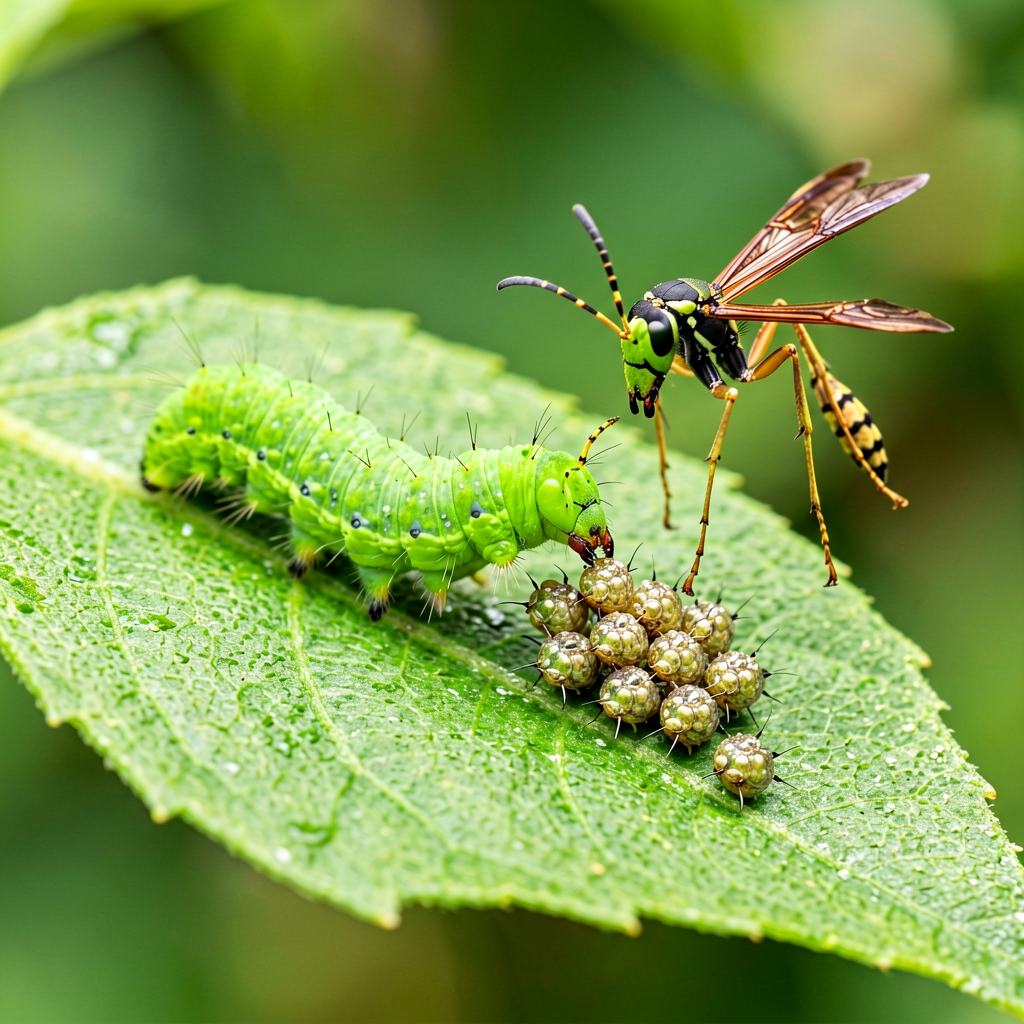
Workers hunt caterpillars and the young of flies and beetles. They also take small spiders and other soft prey. They chew the prey and feed it to the grubs in the cells. One colony may eat several thousand caterpillars in a summer. So the species is a useful killer of plant-eating insects. The same hunger worries people where it has been brought in. The caterpillars it takes include those of native butterflies. The adults eat no solid animal food.
The protein they gather goes to the larvae as a paste. The adults get their own fuel from nectar and other sugars. That system is normal among the social wasps. It explains why adult wasps so often turn up at flowers and on sweet food. The colony’s need for animal food rises as the larvae grow. Hunting peaks in midsummer. A colony may then make many hunting trips an hour.
Several queens, one nest
A simple colony cycle
European paper wasps have one colony cycle a year. How the colony starts varies a lot. Mated queens sleep through the winter. In spring they come out and build a new nest from scratch. Several queens often start one nest together. One lays most of the eggs. The others forage, build and guard. The lesser founders may later die or join the workforce.
The rank order is set by a run of meetings. The wasps size each other up during them. Studies show they use face marks to know each other and each one’s rank. So the species is a clear case of rank signals in an insect. The first workers come out after about 3 to 4 weeks of growth. From then on the queen stays on the nest and lays eggs. The workers build new cells, forage and feed the larvae. The comb grows outwards all summer.
A big colony may reach a few hundred cells. In late summer and autumn new males and queens appear. They leave the nest and mate. The mated queens then find sheltered spots to sleep through winter. The old queen, the workers and the males all die as it turns cold. So the colony lasts a single summer. The old comb is sometimes re-used, but more often it is left.
Native here, invasive there
Two very different verdicts
The European paper wasp has no formal conservation status. It is not protected where it is native. There it is one of the commonest wasps of gardens and buildings. Most people treat it as a pest, not a species of concern. Its position is harder to read where it has been brought in. In North America, Chile, Argentina, South Africa, Australia and New Zealand it is treated as an invasive species. It fights native Polistes species for nest sites.
It also fights for the caterpillars all paper wasps feed their larvae. In some towns it has pushed out or cut the numbers of native paper wasps. That is likely to affect the plants whose caterpillars it takes. In its native range the main changes are the ones affecting insects generally. Caterpillars and other soft prey have declined in farmland and gardens. That follows the loss of flowery and rough ground. Insect variety has fallen across Europe.
The rough, insect-rich places where colonies find prey have also shrunk. People often smash the nests. They usually do so because they fear the wasps. The species can sting and does guard its nest. But its colonies are small and its sting is mild. It is far less quick to sting near food and drink than the common wasp. Many scientists therefore think killing its nests is a needless loss.
Quick hits
Five things to remember
- A colony often begins with several queens building one nest together, and the wasps use the patterns on each other’s faces as badges of rank.
- Its nest is a single open comb of cells with no outer envelope, hung by a short stalk under eaves and roofs.
- The adults live on nectar and fruit juice, but the larvae are fed chewed caterpillars, so one colony can remove several thousand caterpillars in a summer.
- Its orange antennae with dark tips and its long dangling legs make it easy to tell from the common wasp in flight.
- In North America, southern South America, South Africa and Australasia it is an introduced species that competes with native paper wasps for nest sites and prey.
[…] The ruby tailed wasp is a parasite. Its name is Chrysis ignita. It is one of the cuckoo wasps. A larger relative is the European Paper Wasp. […]