 By st20113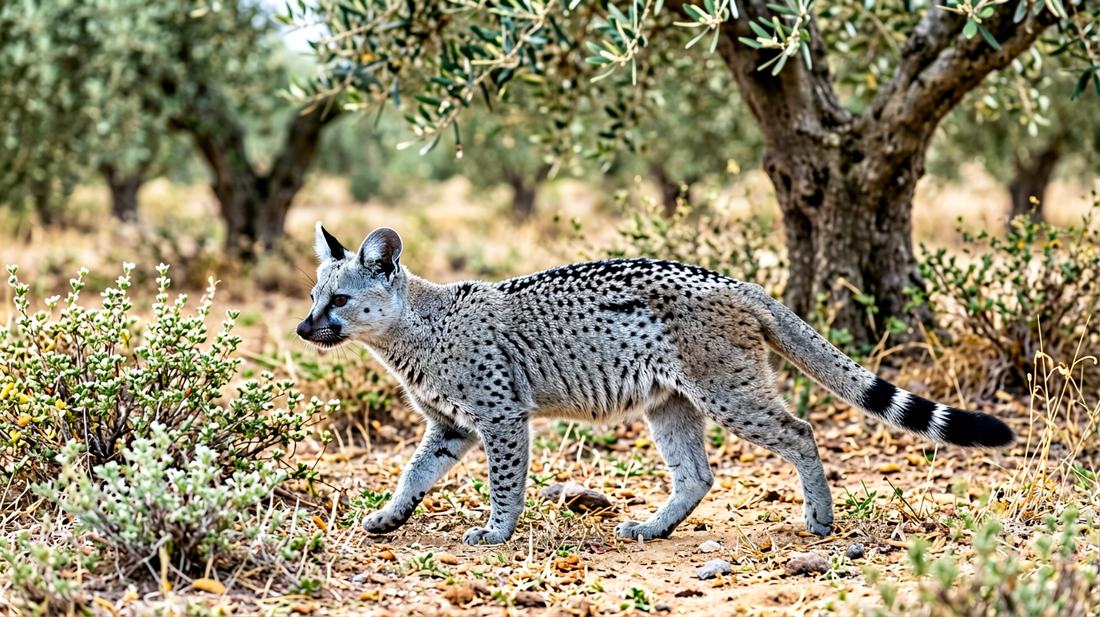
Herpestes ichneumon | Egyptian Mongoose
Species Profile · Herpestidae
Egyptian Mongoose
The only mongoose in Europe, a snake-killing hunter of Iberian scrub whose arrival on the continent is still argued over.
IUCN: Least Concern
Range
Length
Weight
Litter
Activity
Europe’s only mongoose
A snake hunter of the scrub
The Egyptian mongoose is the only mongoose in Europe. That alone makes it interesting to European naturalists. It is also famous for killing snakes. Its presence in Iberia is still argued over. Nobody is sure if it arrived on its own or was brought by people. It has been there long enough to fit into the landscape.
It fills a role like that of the pine marten further north. It eats small animals, insects and fruit. Nothing much comes amiss. It has heavy shoulders and short legs. Its body is long and low. Its tail is long and tapers to a point.
Its coat looks grey-brown and speckled with black. Each hair is banded light and dark. That gives the speckled effect. Most people see it alone or in a small family group. It moves with its nose to the ground. It works through low scrub and along watercourses.
Family tree
Herpestes, the tracker
The Egyptian mongoose is in the family Herpestidae. That family holds about 34 species. They live in Africa and southern Asia. One genus lives in South America. It sits in the genus Herpestes. That is the largest genus of mongooses. Several of its members have been moved to islands. There they have badly damaged native wildlife.
Its species name comes from the Greek word ichneumon. That means the tracker, or the one who follows tracks. It was the name used in ancient times for this animal. The same word is used for a group of wasps. They hunt caterpillars in a similar dogged way. The Iberian animals are often placed in a subspecies of their own. They average slightly smaller than the North African form. The difference is slight.
Genetic work has not settled the question. Comparing it with the banded mongoose is useful. That species lives in packs of up to 40. They move together over open savanna. The Egyptian mongoose is mostly solitary. It lives in dense Mediterranean scrub. Group members there could not keep in touch. So the savanna tactics would not pay.
Coat, teeth and flat pupils
How to identify one
An adult Egyptian mongoose is 48 to 60 cm long. Its tail adds 33 to 54 cm. The tail is usually over three-quarters of the body length. It weighs 1.7 to 4.0 kilograms. Males average 10 to 20 per cent heavier. Iberian animals tend to be at the small end. The body is long and rather tube-shaped. The shoulders are heavy compared with the hindquarters. The legs are short. The animal carries itself low, with a gently curved back. The tail is held out behind.
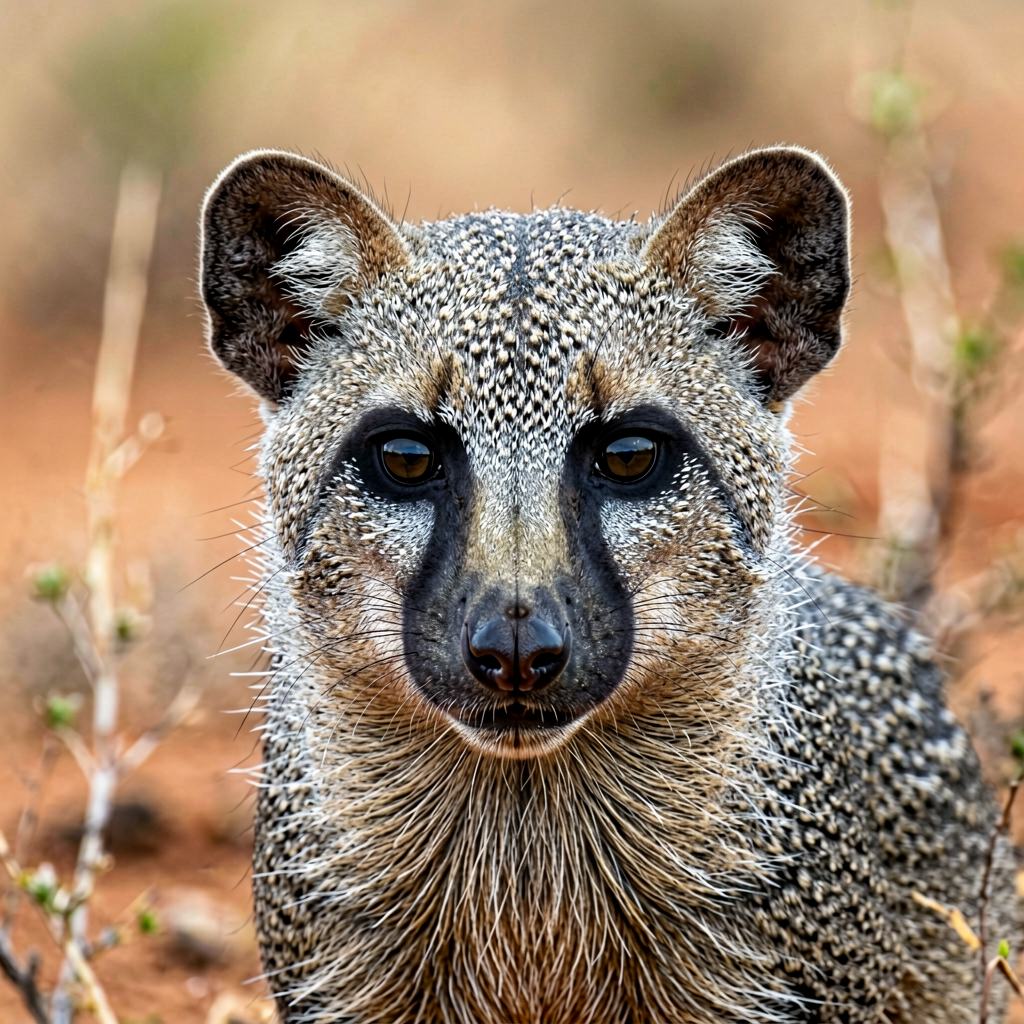
This shape suits pushing through thick low cover. It does not suit running down prey in the open. The head is small for the body. The muzzle is pointed. The ears are small, rounded and set low. The eyes are oval and have a flat pupil. Most nocturnal mongooses have vertical pupils instead. The teeth suit a mixed diet. The canines are well grown but not built for killing large prey. The shearing teeth are sharp but not powerful. The back teeth are broad and flat.
That lets it crush beetles and crab shells. It can also slice flesh. The coat is the most striking feature. The hairs are banded pale and dark. The dark bands sit near the tips. In slanting light the pelt looks almost iridescent. The legs, muzzle and last third of the tail are dark. Both sexes have an anal scent gland. It is largest in the male. He uses it to mark the group territory.
1
2
3
River banks and olive groves
Where it lives
In Africa the Egyptian mongoose lives south of the Sahara. It runs from Senegal and Ethiopia down to the Cape. It uses savanna woodland, forest edge, river thicket and farmland. It avoids the driest deserts and the wettest rainforest. Another group lives in the Nile delta and along the North African coast. It reaches from Egypt west into Tunisia. In Europe it lives only in Iberia. It is found in southern Portugal and in Spanish Extremadura and Andalusia.
Its northern limit runs through the centre of the peninsula. There it favours river corridors and the edges of marshes and lakes. It also uses low maquis and garrigue scrub. It lives in the stone-walled olive groves and vineyards of old Mediterranean farming. Water matters to it. It swims and dives well. That is unusual among mongooses. It digs simple dens under a rock or a bush.
It also uses the roots at the base of a hedge. Where rabbits have left burrows, it moves in. It rests there through the day. It comes out from mid-morning onwards. It is active again in the late afternoon. So it is neither fully day-active nor fully nocturnal.
Insects, eggs and fruit
What it eats
The Egyptian mongoose is a generalist. It eats whatever it can find. Insects make up most of its diet. They can be more than half of all the items eaten. It takes large grasshoppers and beetles. It eats larvae and pupae of many kinds. Near water it takes crabs and other crustaceans. It also eats a wide range of small animals. These include field mice and wood mice, shrews, lizards and geckos. It takes small snakes, frogs and toads. It eats the eggs and young of nesting birds.
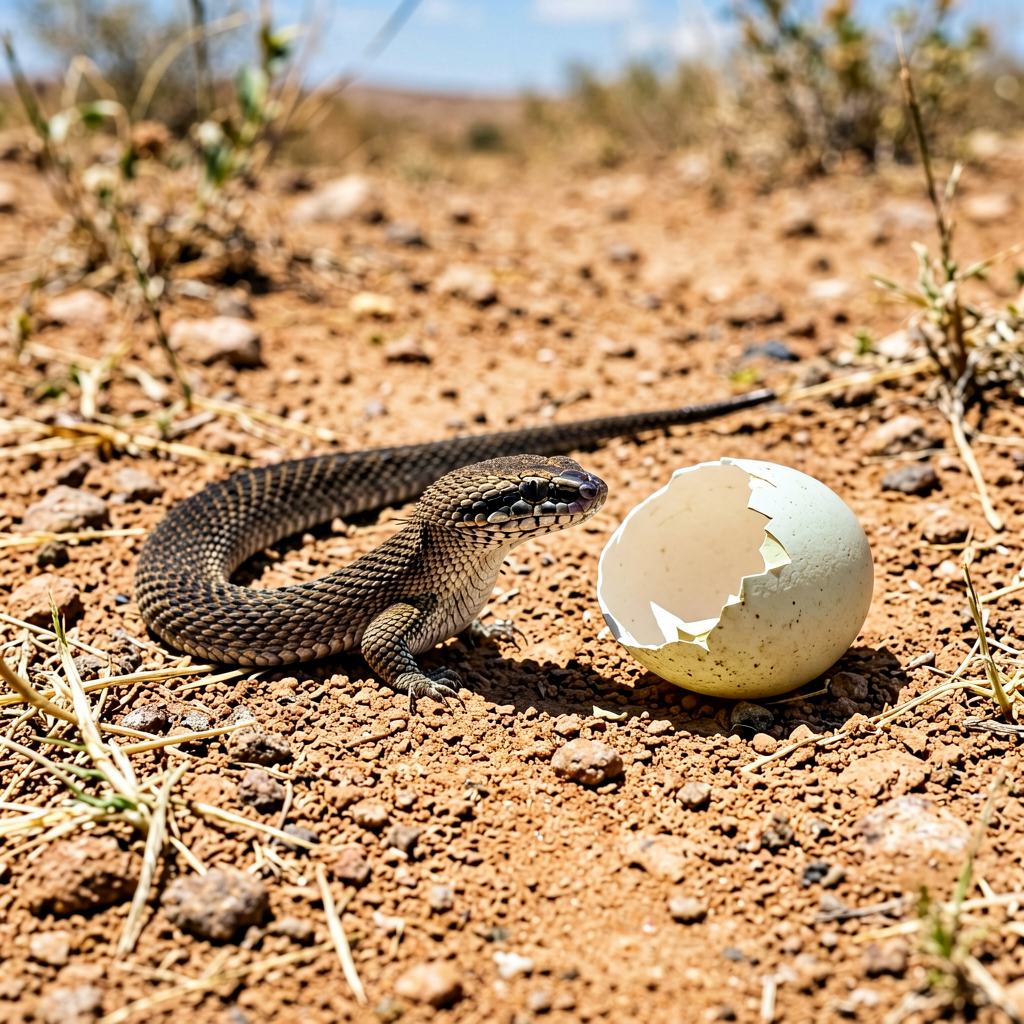
It can even take a full-grown rabbit or an adult viper. That happens far less often than old books suggest. Fruit matters in season. It eats figs, grapes, strawberries and blackberries. It also eats the fleshy coats of olives. So it is a true omnivore. It is not a meat eater with a taste for plants. Its way of eating an egg is odd. It holds the egg in its front paws. It lies on its side or back. Then it flings the egg backwards between its hind legs.
The egg breaks against a rock or a trunk. Hand-reared animals do this too. They have never seen an egg. They still make the throwing motion. So the trick is innate, not learned. It hunts snakes by agility, not by immunity. It darts in and out of range. It grabs the snake behind the head. Its loose, thick skin gives some protection. The idea that it shrugs off viper venom is not held by evidence.
Two years to breed
The breeding cycle
Females breed at about two years old. Males are usually a year later. In Europe there is one breeding season. It falls between March and May. In Africa there may be two or three litters a year. Conditions there stay good for longer. Pregnancy lasts 60 to 70 days. Mating is prolonged and noisy. The female has 1 to 5 young, most often 2 or 3. She makes a den lined with dry plants.
It sits in thick cover or in a burrow she enlarges herself. The young are born blind and nearly bare. Their eyes open at about two weeks. They suckle for four to six weeks. The mother brings them more and more solid food. They become independent at about four months. Then they move away. Radio tracking shows they can travel up to 6 km. That is a long way for an animal that hunts within about a kilometre a day. The social life is more complex than it looks.
The animals live in loose groups of two to five. They are usually related. They share a home range and a common latrine. They hunt apart through the day. In the late afternoon they gather to rest and groom. Males mark the boundary of the shared range. Females and young do not. So the male seems to defend the range for the whole group.
Pest, then protected
A contested native
The Egyptian mongoose is Least Concern worldwide. Its African range is enormous. It is common over much of that range. It copes well with farmland and modified land. There is no sign of a big decline in Africa. Europe is a different story. For much of the twentieth century it was treated as a pest in Iberia. It takes poultry, rabbits and the eggs of game birds. Gamekeepers persecuted it.
Several Spanish provinces paid a bounty for it. At the same time it vanished from the north of its Iberian range. The cause was land change. Terraces and grazing kept the scrub open. When farming stopped, dense pine and eucalyptus took over. The mongoose cannot hunt in such cover. Since the 1970s it has been safe in Spain and Portugal. It has come back modestly in the south. It has not returned to the north or the centre.
One question keeps coming back. Is it a native species or an old introduction? The case for natural arrival rests on fossils. Remains of Herpestes are known from Iberian deposits of the Middle and Late Pleistocene. The Strait of Gibraltar was narrower in some glacial periods. The animal may have crossed on its own. What is certain is that it is now part of Iberian wildlife. It is vulnerable to the loss of the walled and terraced landscape it hunts in. Road deaths are a local problem where it is commonest.
Quick hits
Five things to remember
- It is the only mongoose in Europe, and whether it crossed from Africa on its own or was carried there by people is still debated by scientists.
- In ancient Egypt it was a sacred animal, linked with guarding grain stores and with destroying snakes and crocodile eggs.
- The Greek root of its name, ichneumon, means the tracker, and it was given also to a family of wasps that hunt caterpillars in the same methodical way.
- Hand-reared mongooses that have never seen an egg still fling it backwards between the hind legs to break it, so the trick is innate rather than learned.
- Unlike most nocturnal mongooses it has a flat rather than a vertical pupil and does much of its hunting in daylight.