 By st20113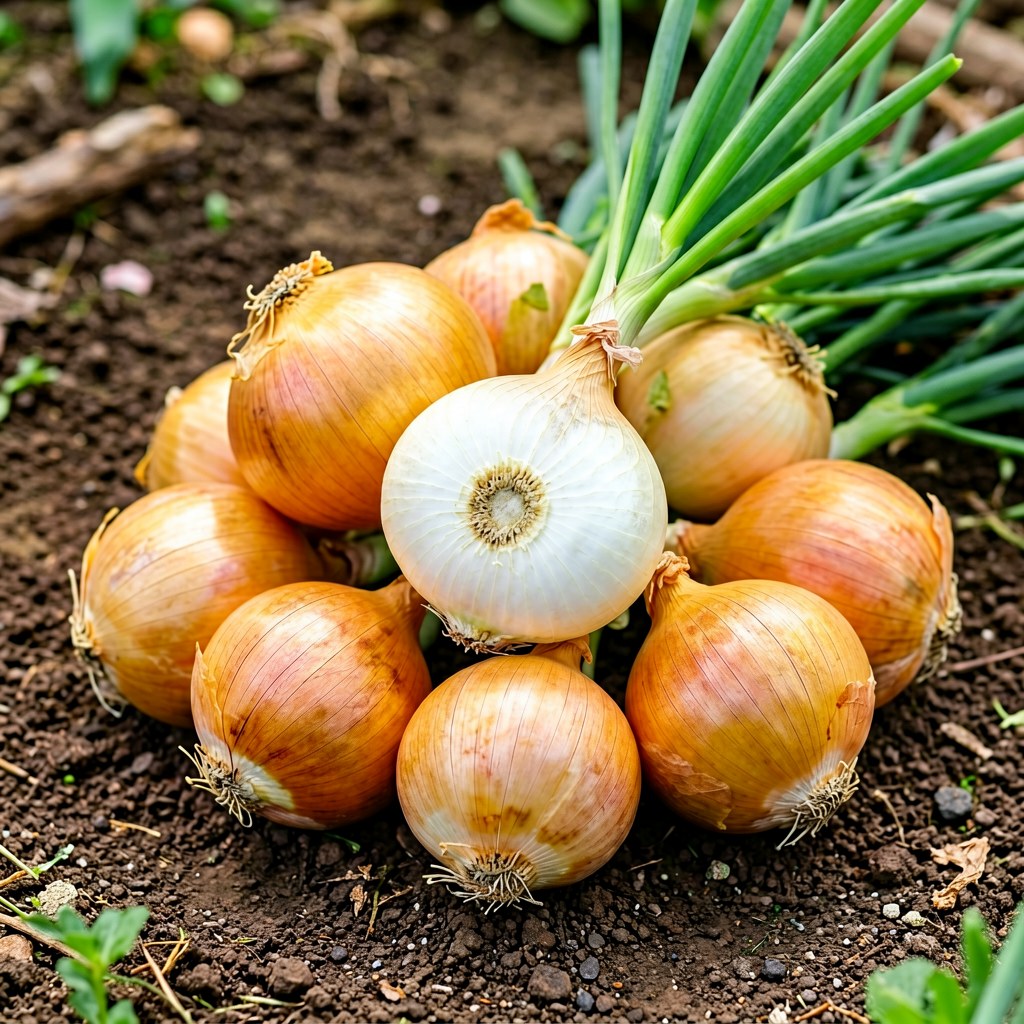
Allium cepa | Common Onion
Introduction
The common onion (Allium cepa) is one of the most widely cultivated vegetables on Earth, a staple flavoring and food crop grown on every inhabited continent and central to the cuisines of dozens of cultures. A biennial usually grown as an annual, it is prized for its layered underground bulb, pungent when cut and sweet when cooked, which stores readily through winter without processing. Onions were domesticated thousands of years ago in central or southwestern Asia and have since followed human migration into nearly every agricultural system. The plant also produces a spherical umbel of small white or purple flowers on a leafless stalk in its second year. Beyond the kitchen, onions have a long record of folk medicine, use as a preservative, and even symbolic roles in ritual and burial. Their easy cultivation, short season, and compact footprint make them ideal for home gardens, while mechanized agriculture supplies global markets year-round.
Taxonomy
Allium cepa was described by Carl Linnaeus in 1753 and sits in the family Amaryllidaceae, subfamily Allioideae, within the order Asparagales, a placement confirmed by both morphology and DNA sequence data. The genus Allium is one of the largest plant genera, with more than nine hundred species of bulb-forming monocots distributed across the northern temperate zone, ranging from wild garlics to chives and leeks. The cultivated onion is closely allied to Allium fistulosum, the Welsh onion, and to Allium oschaninii, a central Asian species considered a possible progenitor. The defining generic traits are a bulb composed of fleshy leaf bases, hollow or flat leaves, and the characteristic sulfurous aroma released when cells are damaged. For readers comparing monocot groups, the better-known [Orchid](https://www.gloencyc.com/orchid-orchidaceae/) also belongs to the broad monocot lineage Asparagales, though orchids are epiphyte or terrestrial ornamentals rather than edible bulbs. The crop’s countless cultivars are not formally ranked as botanical varieties but are grouped by dormancy, pungency, and day-length response.
Physical Characteristics
The onion plant consists of a short, disc-shaped stem at the base from which a tunicate bulb develops, formed by the swollen, fleshy bases of embryonic leaves wrapped in dry, papery outer skins. Bulb size varies from a few grams in scallions to more than a kilogram in large storage onions, and color ranges through white, yellow, and red depending on cultivar and pigment in the scale tissues. Above ground arise four to eight hollow, cylindrical, blue-green leaves that are fistular and filled with air, reducing weight while maintaining rigidity. In the reproductive year a leafless, inflated scape 0.5 to 1.5 meters tall lifts a terminal umbel of twenty to two hundred small, six-tepaled flowers, typically white, pink, or lavender. The inflorescence may also bear tiny bulbils in some forms. Cutting the bulb ruptures cell vacuoles containing sulfur compounds, releasing syn-propanethial-S-oxide that irritates the eyes. The whole plant is glabrous, and the seed is small, black, and angular, borne in a papery capsule after flowering.
Habitat
Native to the steppes and foothills of central and southwestern Asia, the wild progenitor of the onion grew in well-drained, sunny sites with cold winters and warm, dry summers that favored bulb maturation and dormancy. Domesticated forms retain this preference for full sun and loose, fertile, neutral to slightly alkaline soils with reliable moisture during leaf growth and dryness during bulbing. The plant is remarkably adaptable and is now farmed from the tropics to boreal latitudes by selecting cultivars matched to local day length and temperature. Onions cannot abide waterlogged ground, which invites fungal rot at the bulb base, nor deep shade, which prevents the leaves from photosynthesizing enough to swell the bulb. In home gardens they occupy raised beds and containers where drainage is controlled. Because the crop is entirely dependent on human sowing for spread, it is not invasive, though escaped scallions occasionally naturalize in temperate waste ground. Frost kills the foliage but a dormant bulb survives moderate freezing and resprouts in spring.
Diet
Like every green plant, the onion is an autotroph that feeds itself by photosynthesis, using its hollow green leaves as the primary sites of carbon fixation through the C3 pathway. Chloroplasts in the leaf mesophyll capture sunlight and convert atmospheric carbon dioxide and water into glucose, which the plant partitions toward expanding leaves and then into the storage sugars and fructans accumulated in the bulb scales. The bulb itself does not photosynthesize but serves as a reservoir of carbohydrates that powers regrowth and flowering in the plant’s second year. Mineral nutrition is drawn from the soil by a shallow fibrous root system, with the crop demanding steady supplies of nitrogen for leaf mass, potassium for bulb quality, and phosphorus for root development. No external food is required; instead the onion sustains itself on light, water, and dissolved minerals, storing surplus as the layered bulb that humans harvest.
Reproduction
The common onion is normally biennial, producing a bulb in its first growing season and flowering and setting seed in the second when cold vernalization has satisfied its requirement. Under shortening or lengthening day signals specific to the cultivar, the plant bolts, sending up a scape that terminates in a compound umbel of perfect flowers. Each flower bears six stamens and a three-chambered ovary, and pollination is chiefly by bees, flies, and other insects attracted to the nectar and pollen, though some self-pollination occurs. Fertilized ovaries ripen into small capsules, each releasing a few black seeds that are the standard means of commercial propagation. Vegetatively, onions are almost always grown from seed, sets, or transplanted seedlings, but certain forms such as the Egyptian or topset onion skip reliable seeding and reproduce through small aerial bulbils formed in the flower head, which drop and root to clone the parent. Seed-grown plants show the expected genetic segregation of traits.
Conservation
The cultivated onion itself faces no extinction risk and is among the most secure crop plants, yet its wild relatives are of growing conservation concern because they harbor genes for disease resistance, drought tolerance, and novel flavors that could bolster future breeding. Several Allium species related to the onion are threatened by habitat loss, overcollection, and agricultural intensification across central Asia. Botanical and gene banks, including international seed vaults and the collections of universities, maintain living and frozen samples of both crop landraces and wild progenitors. Maintaining genetic diversity among heirloom and regional onion cultivars is also a stated goal of seed-savers and agricultural heritage programs. There is no wild Allium cepa sensu stricto surviving independently in nature, so conservation focuses on the broader genepool and on preserving the traditional farming knowledge that sustains rare local varieties. Climate change and uniform modern cultivars threaten this diversity by narrowing the genetic base of commercial production. Responsible gardeners support resilience by growing open-pollinated types and saving seed.
Fun Facts
- Cutting an onion releases syn-propanethial-S-oxide, a volatile compound that triggers tears by stimulating the eyes’ pain nerves.
- Onions were placed in the tombs of Egyptian pharaohs as provisions for the afterlife, a practice recorded more than three thousand years ago.
- The plant is a monocot, meaning its bulb and flowering structure follow the same single-seed-leaf plan as lilies and grasses.
- Some onion cultivars are “long-day” while others are “short-day,” a trait breeders match to a garden’s latitude for proper bulbing.
- Topset, or Egyptian, onions grow clusters of tiny bulbs at the top of the flower stalk instead of producing normal seeds.