 By st20113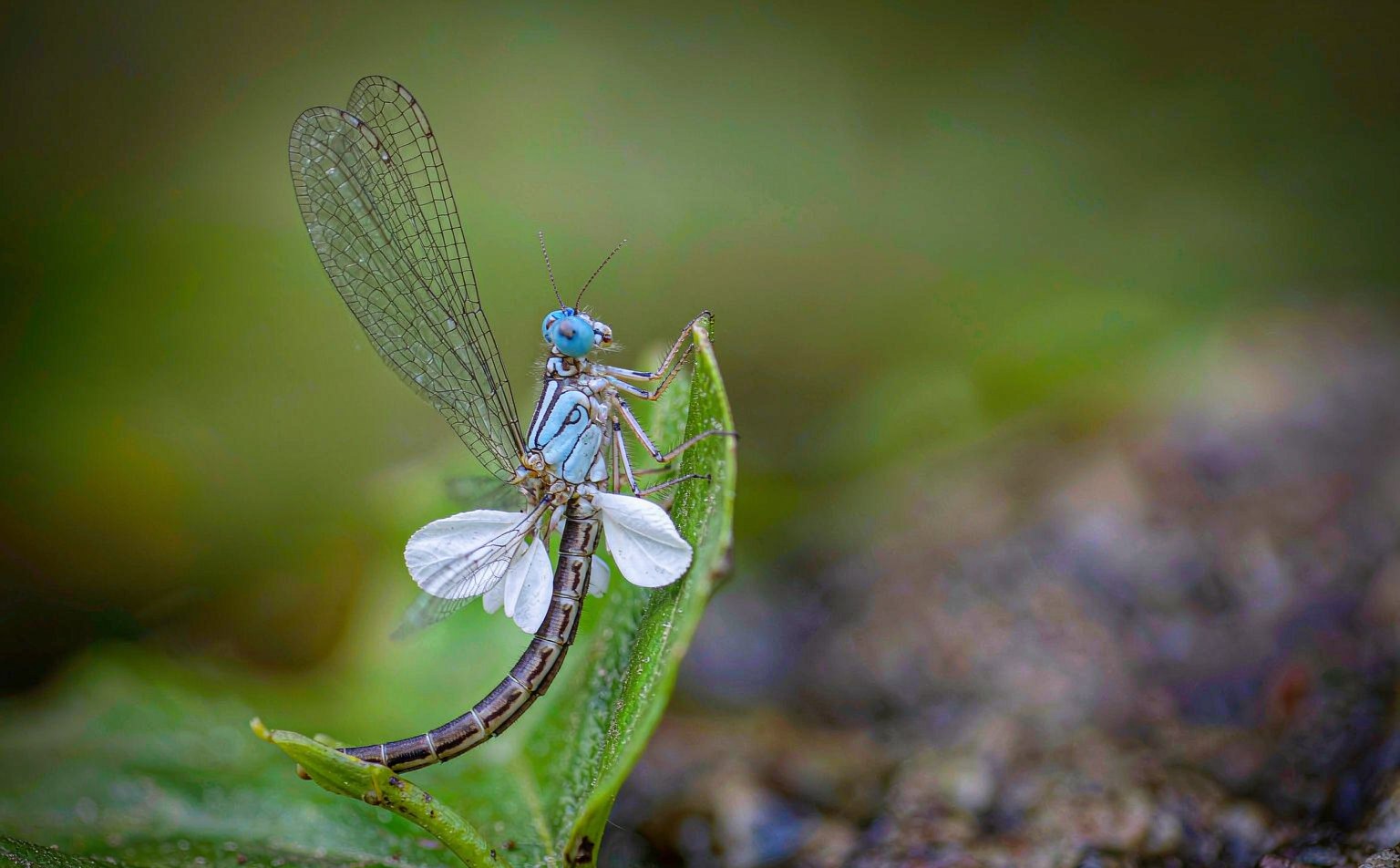
Platycnemis pennipes | White-legged Damselfly
Introduction
The White-legged Damselfly (Platycnemis pennipes) is a delicate, pale-bodied damselfly of slow rivers, streams and lush ponds, most easily recognised by the broad, white, leaf-like expansions on the legs of the male. Reaching about 3.5 to 4 centimetres, it is a graceful species that flits among waterside vegetation from late spring into summer. The powder-blue male and the yellow-green female both share the striking pale legs, a feature that gives the species its common name and makes it one of the easier damselflies to identify at rest.
Taxonomy
Platycnemis pennipes belongs to the family Platycnemididae, the white-legged damselflies, a group in which the males bear widened “feather” legs. It is the commonest member of its genus in Europe and is told from other damselflies by those pale, flattened legs and by the pale shoulder stripes on the thorax. It shares slow waters with the broader dragonfly fauna, including the Emperor Dragonfly, though it keeps to the stems and shade while the dragons patrol the open water.
Physical Characteristics
Adults are slim damselflies with a body length near 3.5 to 4 centimetres and clear, narrow wings held together above the body at rest. Males are pale blue on the thorax and abdomen, broken by fine black markings, and bear the broad, white, petal-like tibiae that give the species away; females are similar but greenish-yellow with narrower legs. The eyes are pale blue-green, and the wings have a narrow dark pterostigma. The thorax shows two pale, comma-shaped shoulder stripes. Freshly emerged adults are pale and colour up over a day or two, like most damselflies.
Habitat
White-legged damselflies prefer gently flowing or still, well-vegetated waters: slow rivers and streams, canals, lush ponds and the shaded margins of lakes where reeds, sedges and overhanging plants abound. They like clearer water than some pond species and often hunt among waterside foliage rather than over open water. They meet the European Pond Turtle and the Common Frog at the same vegetated margins, sharing the healthy waterside with a wide freshwater community.
Diet
Adults prey on small flying insects—midges, gnats, aphids and tiny flies—taken in short darts from a perch among the waterside plants or in slow handling flight. They are useful predators of nuisance insects around slow water. The larvae are aquatic hunters of water fleas, mosquito larvae and other small invertebrates, lurking among pond weeds and roots. Both stages link the underwater nursery to the air above, helping keep the water’s invertebrate life in balance within the stream and pond ecosystem.
Reproduction
Mating follows the typical damselfly tandem, the pair forming a heart-shaped wheel before flying to waterside plants. The female lays eggs alone or with the male still attached, inserting them into the soft tissue of living or dying stems just above or at the waterline. The larvae live among vegetation for several weeks to a few months before climbing a stem to moult into the adult. There is no care after egg-laying, and the adults live only a few weeks through late spring and summer.
Conservation
The white-legged damselfly is common and rated Least Concern across much of its range, but it favours clean, vegetated slow waters and so declines where streams are straightened, shaded out, or polluted. It benefits from leaving waterside plants and overhanging cover intact, from protecting the gentle margins of rivers and canals, and from reducing nutrient and pesticide runoff. Because it uses both running and still waters, conserving it helps connect the health of streams and ponds across a landscape.
Fun Facts
- The male’s legs are broadened into flat, white “feathers”.
- Its pale shoulder stripes help tell it from other blue damselflies.
- It often hunts among waterside leaves rather than open water.
- The female is yellow-green rather than blue.
- It uses both slow rivers and lush ponds through the warm months.