 By st20113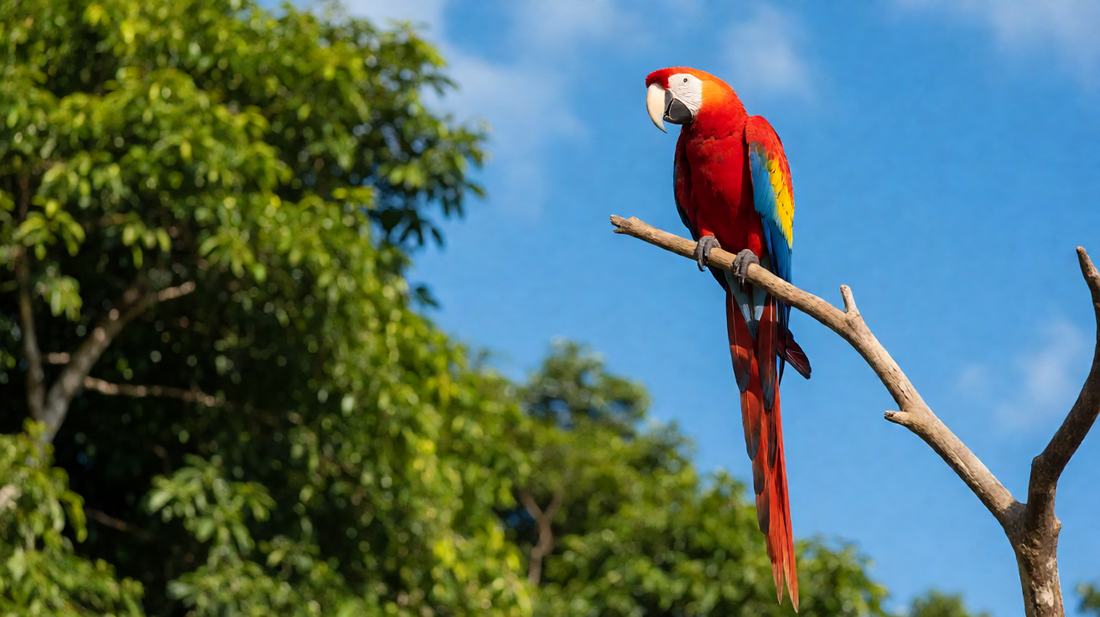
Ara macao | Scarlet Macaw
Species Profile · Psittacidae
Scarlet Macaw
A scarlet parrot of the Amazon canopy that flies in pairs, cracks nuts no other animal can open, and gathers at river clay banks each dawn.
Least Concern
Body length
Weight
Clutch
Incubation
Fledging
Rating
The Scarlet Macaw
A parrot that cracks what nothing else can
A loud red parrot crosses the canopy of the Amazon basin. Its wings flash blue and yellow. A long tail streams behind.
Pairs fly close, wing to wing, of course. Seeds and nuts make up most meals. The beak cracks hard shells with ease.
Clay banks are visited at dawn. Birds there swallow mud by the beakful. Because the flock roosts together each night, a single tree can hold dozens of birds and sound like a market at dusk.
Family tree
Psittacidae, the parrots
The species belongs to the family Psittacidae. Carl Linnaeus described it in 1758. Nine species now sit in the genus Ara, in addition. All are large, long-tailed New World parrots.
The peacock belongs to a very different bird order. Its colours come from feathers, not from diet. Both birds are loud and brightly marked, yet only one of them can mimic the sound of the human voice.
Scarlet, blue and yellow
How to tell one
Body length runs 81 to 96 cm. Much of that is tail. Weight falls near 1 kg.
Plumage is mostly scarlet. Wing feathers shift from yellow to blue. The rump and tail coverts are light blue.
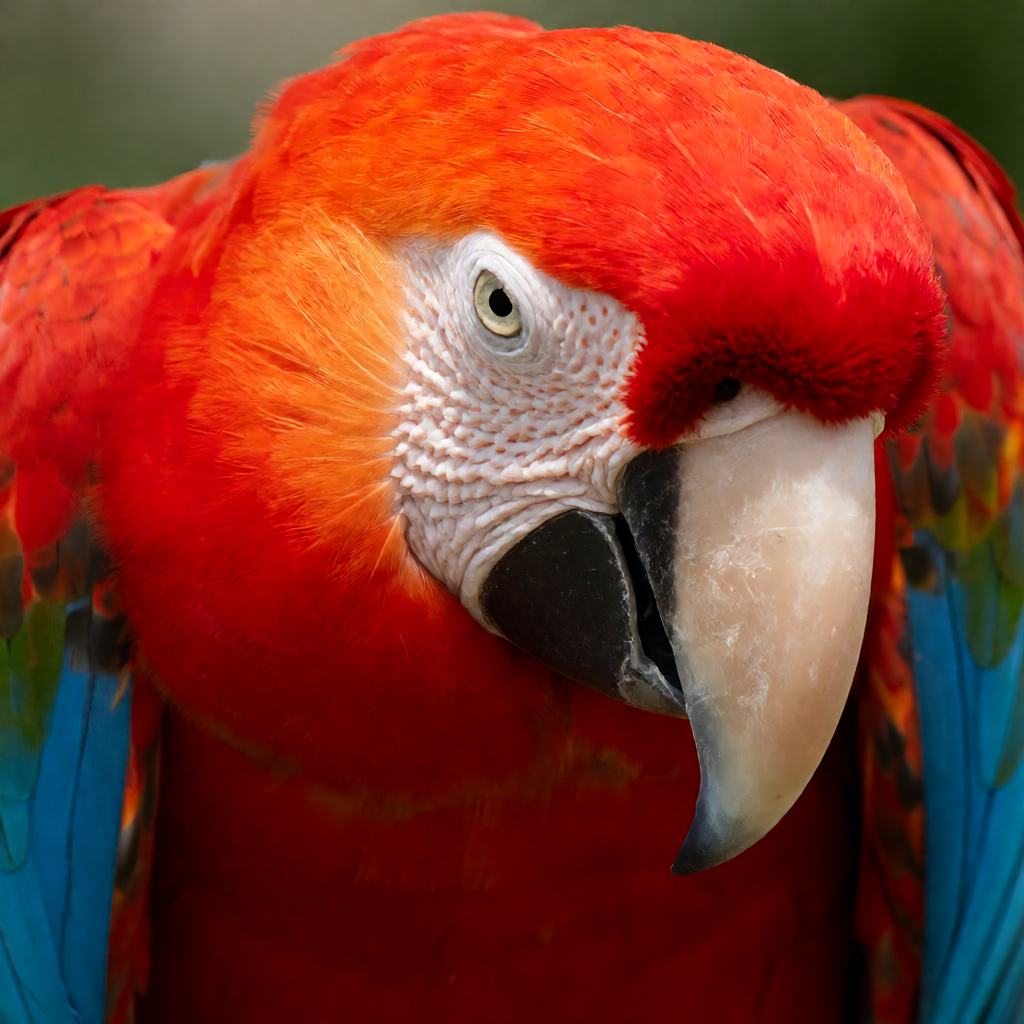
Bare white skin covers the face. A pale beak curves to a black tip, in turn. Nothing on the bird is dull, and even the bare face skin flushes red when the bird is angry or excited.
1
2
3
Lowland forest and river edges
Where it lives
Humid lowland forest is the core home. Gallery forest along rivers matters too. Savanna edges are used for feeding.
Its range runs from southern Mexico to Bolivia and Brazil. Trinidad and Coiba hold small groups. Tall dead palms give the best nest holes.
Cleared land is crossed, though rarely used. Because the bird needs a deep tree cavity, old forest with dead standing trunks matters far more than young, tidy, managed woodland.
Nuts, seeds and fruit
What it eats
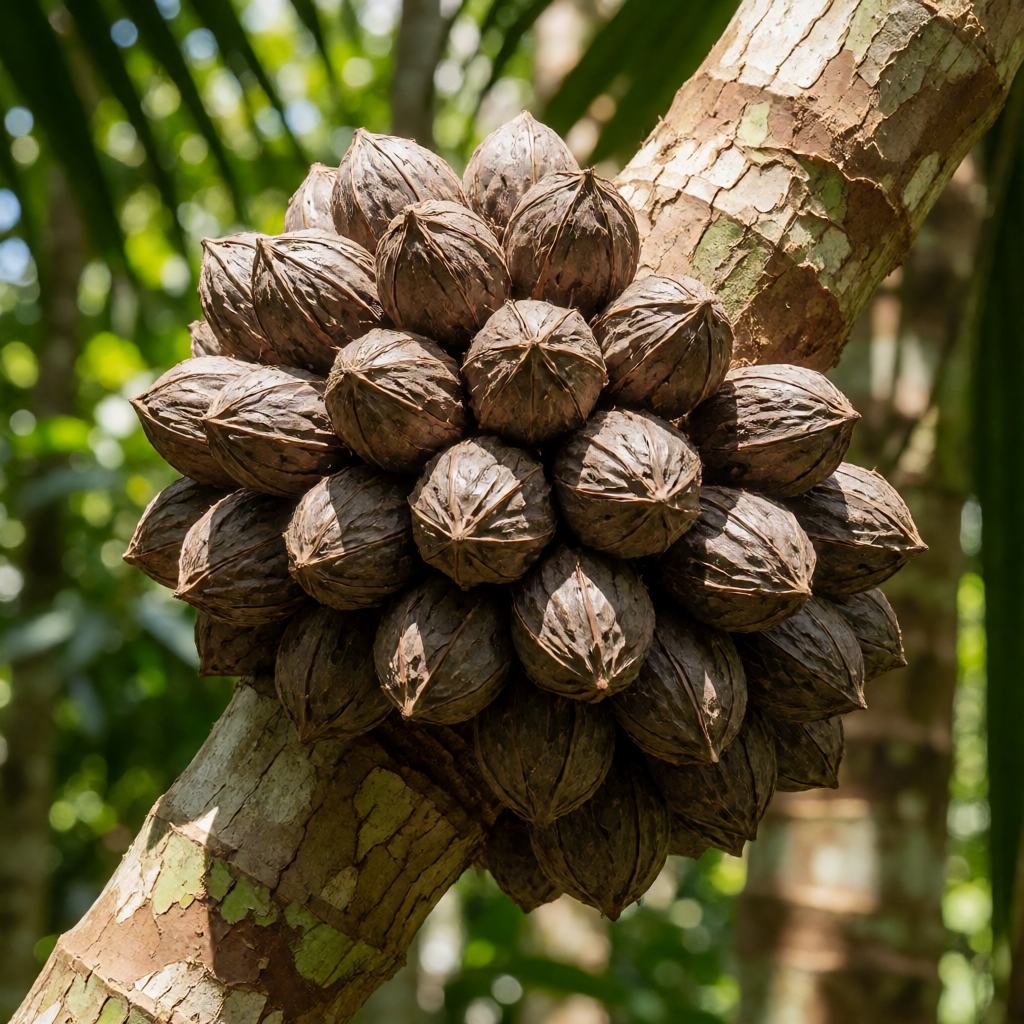
Nuts and hard seeds are staples. Brazil nuts are opened with ease. Fruits of many kinds are eaten.
Flowers, nectar and leaf buds follow as well. Some seeds are toxic to other animals. Clay from river banks seems to help.
Flocks feed in the canopy each morning. Food is held in one foot, in fact. Because seeds are defended by shells that few animals can open, this bird gets food that almost nothing else in the forest can reach.
Two eggs in a deep cavity
The breeding cycle
Pairs stay together for life. Nest holes are used year after year. Two eggs are the usual clutch.
Some nests hold up to 4. The female sits on the eggs. Incubation lasts 24 to 28 days.
Both parents feed the chicks. Young fledge at about 90 days. Even so, they stay with the parents for a year or more, since learning the safe feeding routes takes far longer than learning to fly.
Least Concern
Conservation
The IUCN rates the species as Least Concern. The range is still huge. South American numbers remain large.
Central American populations are far smaller, however. Trapping for the pet trade did the damage. In addition, nest trees are lost to logging.
CITES lists the bird on Appendix I. Unlike the sloth, which can live on in small cut-over patches, this bird needs big forest with old nest holes. That need means a logged valley loses both the food trees and the holes that the next generation would use.
Side by side
How It Compares
| Trait | Scarlet Macaw | Blue-and-yellow Macaw |
|---|---|---|
| Body colour | scarlet with blue and yellow wings | blue back, yellow underside |
| Face | bare white skin | bare white skin with black lines |
| Range | southern Mexico to Bolivia and Brazil | Panama to northern South America |
| Clutch | 2 eggs | 2 to 3 eggs |
| Lifespan | over 75 years in captivity | over 50 years in captivity |
| IUCN status | Least Concern | Least Concern |
Common misreadings
What People Get Wrong
- Bright colours are said to come from food. They sit in the feathers themselves.
- Macaws are solitary. Pairs stay together for life.
- Face skin looks always white, but it flushes red with excitement.
Going further
Sources and Further Reading
- Wikipedia, Scarlet macaw
- IUCN Red List, Ara macao. The IUCN Red List of Threatened Species.
- Animal Diversity Web, University of Michigan. Ara macao.
- Forshaw, J. M. 2010. Parrots of the World. Princeton University Press.
Quick hits
Five things to remember
- Pairs mate for life and fly side by side.
- The beak can crack a Brazil nut with one bite.
- Birds gather at clay banks to swallow mud.
- Captive birds have lived past 75 years.
- Its face flushes red when the bird gets angry.