 By st20113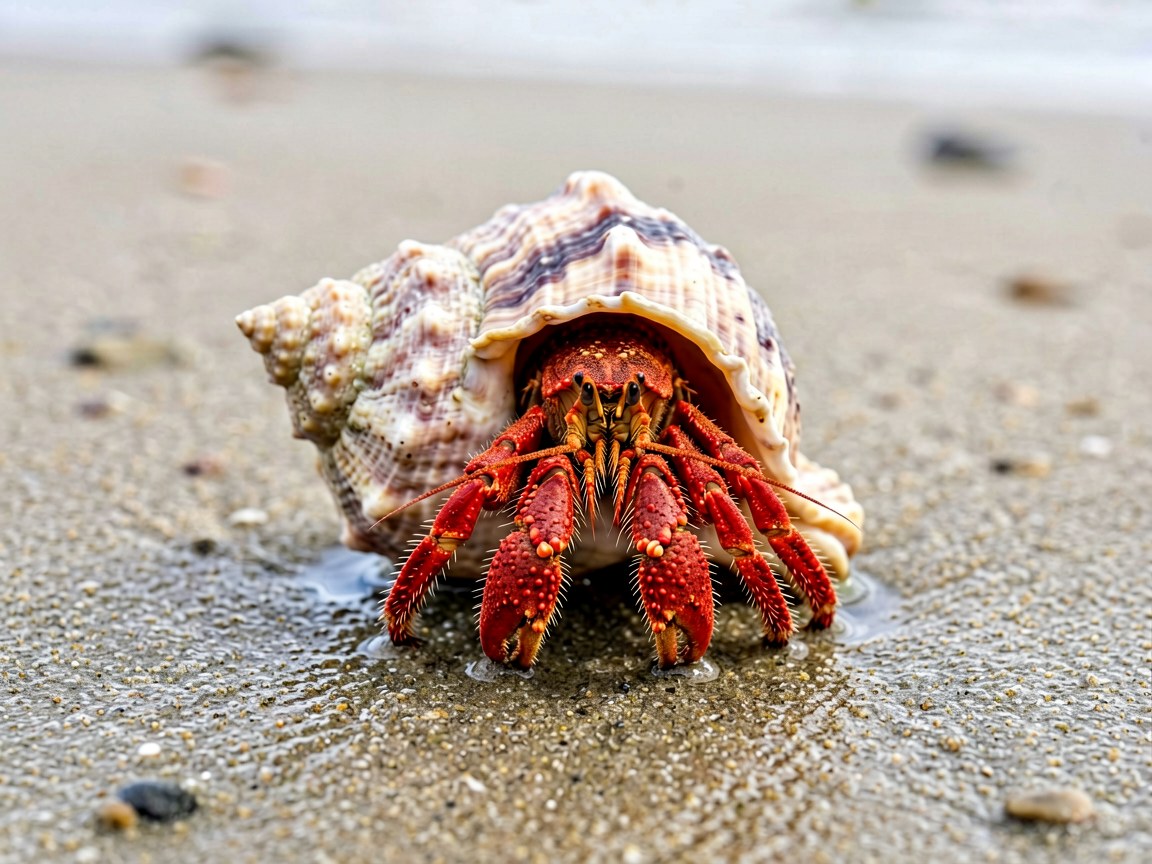
Pagurus bernhardus | Common Hermit Crab
Introduction
The common hermit crab (Pagurus bernhardus) is the comical tenant of the shore—a soft-bodied crab that lives inside borrowed empty shells, dragging its snail home wherever it goes. Found from the lower shore down into subtidal waters, it is a familiar sight in rock pools and on the seabed, forever shopping for a bigger shell as it grows. A close cousin of true crabs and of molluscs such as Octopus vulgaris, the common octopus, it shows how inventive marine life can be.
Taxonomy
Pagurus bernhardus is a crustacean in the class Malacostraca, within the order Decapoda—the ten-legged crabs, lobsters, and shrimp. It is a hermit crab in the family Paguridae. Despite its shell, it is not a mollusc; its jointed legs, antennae, and gills mark it as a true arthropod, related to the octopus only as a fellow inhabitant of the sea.
Physical Characteristics
The hermit crab has a soft, twisted abdomen protected by an empty gastropod shell it carries on its back. The front of the body bears two big claws—the larger one used for blocking the shell entrance—and four walking legs, plus two small rear legs that hook into the shell. Its eyestalks and antennae poke out, and it can withdraw completely into the shell when threatened. Colour is usually reddish with pale banding.
Habitat
Hermit crabs live on a range of seabeds from the low shore to dozens of metres deep, in rock pools, on mud, sand, and among weeds. They need a supply of empty shells—especially those of periwinkles and whelks—to move into as they moult and grow. They are common around the north-east Atlantic and are often seen wandering the shore or gathered where shells are plentiful.
Diet
Hermit crabs are omnivorous scavengers. They eat dead animals and plants, small live prey, and algae, using their claws to tear food and pass it to the mouth. They are important cleaners of the seabed, recycling carrion and scraps, and they will readily investigate anything edible, including bait left by fishers. Their scavenging keeps the shore tidy.
Reproduction
Hermit crabs breed in spring and summer. The female carries the fertilised eggs on her appendages under the shell until they hatch into tiny larvae that drift in the plankton. After several moults the young settle to the bottom and must find a suitably sized empty shell at once. Growth means a lifelong series of shell changes, each time trading up to a larger home.
Conservation
The common hermit crab is abundant and not considered threatened. Its well-being is tied to a steady supply of empty shells, so places where large whelks and periwinkles are over-collected can leave crabs short of homes. As a scavenger and prey for fish, birds, and octopuses, it is a small but busy link in the shore’s food web.
Fun Facts
- It is not born in a shell—it must find an empty snail shell and move in as a larva.
- As it grows it changes shells, often inspecting several before choosing a bigger one.
- Its soft body is why it needs a borrowed home; without one it is defenceless.
- The larger claw can plug the shell opening like a living door.
- It is a scavenger that helps keep the seabed free of dead matter.
[…] the clawed lobsters, within the order Decapoda—the ten-legged crustaceans that also include Pagurus bernhardus (Common Hermit Crab) and true crabs. It is distinguished from spiny and rock lobsters by its large, meaty claws. The […]