 By st20113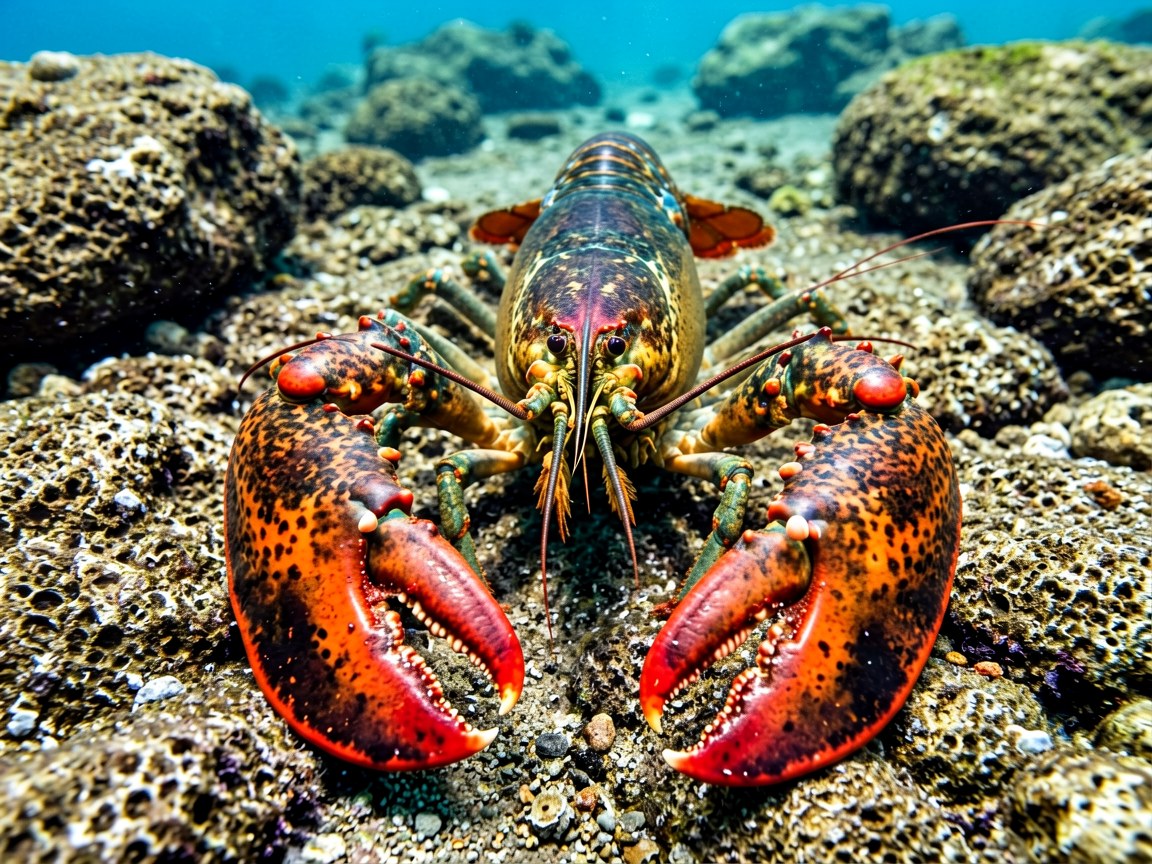
Homarus americanus | American Lobster
Introduction
Homarus americanus, the American lobster, is a large marine crustacean of the North Atlantic coast of North America, from Labrador to the Carolinas. It is the species behind the familiar “lobster” of restaurants and seafood markets, prized for its sweet, firm tail and claw meat. Reaching weights of over 20 kilograms in exceptional old individuals, it is among the heaviest arthropods alive. Far from the luxury food it is today, lobster was once so abundant it fed prisoners and servants, but intensive fishery management has made the Gulf of Maine population one of the rare fishery success stories. Beneath its armour, the lobster is a fascinating animal with keen senses, a lifelong habit of moulting, and a surprising capacity to regenerate lost limbs.
Taxonomy
Homarus americanus is the type species of the genus Homarus in the family Nephropidae, the clawed lobsters, within the order Decapoda—the ten-legged crustaceans that also include Pagurus bernhardus (Common Hermit Crab) and true crabs. It is distinguished from spiny and rock lobsters by its large, meaty claws. The genus name Homarus is the Latin word for lobster, and “americanus” marks its Western Atlantic home. Nephropids are separated from the slipper lobsters and squat lobsters by the form of the antennae and the powerful first pair of walking legs modified into crusher and pincer claws. The European Homarus gammarus is its close counterpart across the Atlantic, and the two are so similar they can hybridise in captivity.
Physical Characteristics
The American lobster has a segmented, armoured exoskeleton in mottled greenish-brown (rarely blue or albino), a spiny head with stalked, compound eyes, and two long antennae used for touch and smell. Its most famous features are the front claws: one broad “crusher” for breaking shells and one slender “pincer” for cutting and grasping. The body ends in a muscular, fanned tail (abdomen) of overlapping plates used for rapid backward swimming, and it walks on four pairs of legs. Lobsters have an excellent sense of smell via hairs on the antennae and legs, and they can detect chemicals and vibrations in the water. Being invertebrates with an external skeleton, they must shed (moult) to grow, emerging soft and vulnerable before the new shell hardens, sometimes taking years between size jumps in old age.
Habitat
This lobster lives on the continental shelf and slope of the northwest Atlantic, from shallow rocky coasts to depths beyond 700 metres, favouring temperatures of about 5–20°C. It shelters by day in crevices, burrows, and among rocks and kelp, emerging at night to forage across the seabed. It prefers hard substrate where it can hide and find prey, and it avoids open, silted flats. Populations are densest on the cobble and ledge grounds of the Gulf of Maine and Nova Scotia, where cold, productive water supports abundant food. Larvae drift in the plankton before settling, so successful recruitment depends on currents and coastal conditions. Warming seas are pushing some populations deeper or northward, reshaping the traditional fishing grounds.
Juvenile lobsters settle in shallow nursery areas among eelgrass and cobble, where they are safe from larger predators and can find small prey, before migrating to deeper adult grounds as they grow. The species thrives where cold, oxygen-rich water wells up along the shelf, which is why the Gulf of Maine and the waters off Nova Scotia support such dense populations. In warmer southern parts of its range, lobsters retreat to deeper, cooler holes during summer and may become inactive until temperatures fall. They are territorial about their shelters, often returning to the same crevice for years and tolerating neighbours at a distance. Increasing sea temperatures have already pushed the southern edge of the fishery northward and made shell disease more common, signalling that even a well-managed stock is not immune to a warming ocean.
Diet
Homarus americanus is an opportunistic omnivore and scavenger, eating whatever it can crush or tear. Its diet includes crabs, clams, mussels, sea urchins, worms, small fish, and carrion, plus algae and detritus when animal prey is scarce. The crusher claw cracks shells while the pincer snips flesh, and the mouthparts shred food before it is eaten. As a scavenger it plays a useful role in cleaning the seabed of dead organisms, but it is also an active predator on snails and urchins. Lobsters are largely nocturnal and will defend a shelter aggressively, waving claws at rivals. Their broadly varied diet and willingness to eat carrion help them thrive across a range of conditions, which is one reason the species has remained abundant where fishing is well managed.
In addition to hunting live prey, lobsters are important scavengers that clean the seabed of dead fish, molluscs, and other carrion, a role that links them to the wider cycling of nutrients in coastal ecosystems. They will even eat moults shed by other lobsters, recovering the calcium needed to harden their own next shell, a neat form of recycling within the population. Competition at a feeding site can be intense, and larger lobsters usually dominate smaller ones, using the crusher claw in displays that rarely escalate to serious injury. In lobster fisheries, baited traps exploit this scavenging instinct, luring animals with decaying fish or squid. Although lobsters are generalized feeders, the abundance of any one prey type strongly shapes where they concentrate, so their local diet shifts with the seasons and the availability of each resource.
Reproduction
Breeding in American lobsters is a slow affair. A female mates only after moulting, when her soft shell allows the male to invert beneath her and transfer sperm packets. She then carries the fertilised eggs attached to her tail swimmerets for over a year—sometimes 10,000 to 100,000 tiny green-black eggs—guarding them until they hatch into free-swimming larvae. The larvae pass through several planktonic stages before settling and moulting into miniature bottom-dwelling lobsters. Females may breed only every one to two years and do not moult while “in berry” (carrying eggs), so their growth pauses during brooding. This long, vulnerable early life means year-class strength varies greatly with ocean temperature and current patterns.
Conservation
The American lobster is not globally threatened and is managed as a valuable fishery, with the Gulf of Maine stock among the best-studied and most carefully regulated in the world. Success rests on measures such as minimum and maximum size limits, a ban on keeping egg-bearing females (marked by notching the tail), trap limits, and gear modifications to reduce the risk of entangling whales. The chief emerging threats are climate warming, which stresses lobsters and shifts their range, and the indirect effects of gear on protected marine species. Localised collapses have occurred where management weakened, showing that the abundance depends on constant oversight. Sustainably harvested lobster remains a model of how a valuable invertebrate can be fished without wiping out the population.
Fun Facts
- The American lobster can weigh over 20 kilograms, making it one of the heaviest arthropods.
- It has two different claws: a heavy crusher and a slender pincer.
- Lobsters moult their shells to grow and can regenerate lost legs or claws.
- Females carry tens of thousands of eggs on their tails for over a year.
- Once cheap food for prisoners, it is now a luxury seafood worldwide.