 By st20113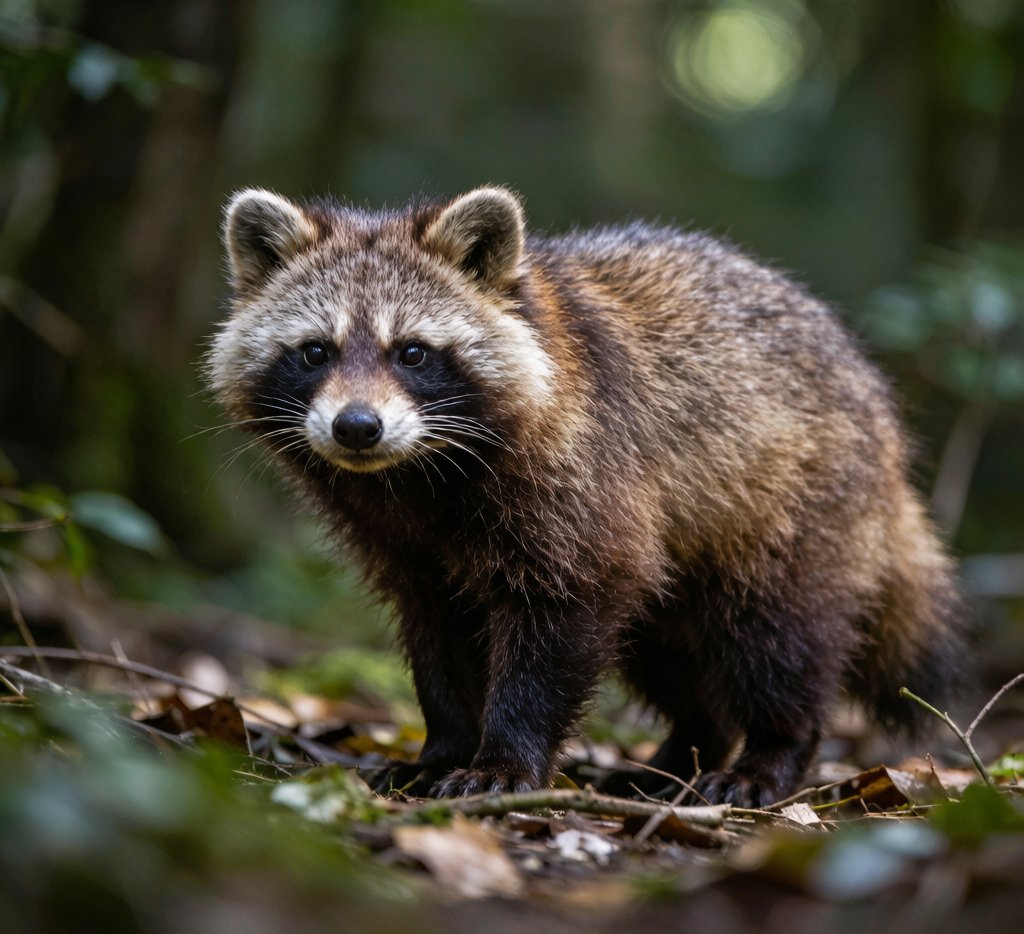
Introduction
The raccoon dog (Nyctereutes procyonoides) is a small, fox-like canid native to East Asia, named for the dark facial mask that makes it resemble a raccoon in appearance. Unlike true raccoons, it is a genuine member of the dog family, but it is unusual among canids for its habit of climbing trees and, in colder parts of its range, denning through the winter. Raccoon dogs are omnivorous, adaptable animals that thrive in forests, wetlands, and farmlands, and they have been introduced to parts of Europe, where their populations have become established and continue to spread.
Taxonomy
Nyctereutes procyonoides is the only living species in the genus Nyctereutes, within the family Canidae. Genetic evidence shows it is an ancient lineage, more closely related to true dogs such as the red fox than to the raccoon it superficially resembles. Two to five subspecies are recognized across its East Asian range. Fossils indicate the genus once occurred more widely across Eurasia. Its primitive dental and skull features have led scientists to call it a living relic of early canid evolution, retaining traits lost in most modern dogs, wolves, and foxes since the group diversified.
Physical Characteristics
Raccoon dogs measure about 50 to 65 centimeters in body length, with a tail of 13 to 18 centimeters, and stand roughly 20 centimeters tall at the shoulder. They weigh between 4 and 10 kilograms, with northern populations noticeably larger than southern ones. Their fur is long, dense, and coarse, colored grey to brown with dark guard hairs and a distinctive black mask across the eyes and muzzle. The legs are short and the build stocky. In winter the coat thickens and pales, providing insulation against snow and cold that allows survival where few other canids den.
Habitat
These animals occupy a broad range of habitats, including mixed and deciduous forests, river valleys, marshes, shrubland, and agricultural edges. They favor areas near water and dense cover, where they forage and often share burrow sites with the badger that excavates the same soft soils. Originally from China, Korea, Japan, and the Russian Far East, raccoon dogs have expanded into eastern and northern Europe following deliberate releases for fur farming. They are highly adaptable and tolerate human-altered landscapes better than many wild canids of the region.
Diet
Raccoon dogs are omnivores with a highly varied diet. They eat rodents, amphibians, fish, insects, birds and their eggs, carrion, fruits, berries, nuts, and roots. In autumn they feed heavily to build fat reserves for winter. They forage mainly at dusk and night, using their keen sense of smell to locate food on the ground and in shallow water. Plant matter forms a larger share of their intake than in most other canids, which helps them survive seasonal shortages when animal prey is scarce and the ground is frozen.
Reproduction
Raccoon dogs are monogamous, forming pairs that remain together through the breeding season. After a gestation of about 60 to 79 days, the female gives birth in a burrow or dense thicket to a litter of typically five to eight pups, sometimes more. Both parents care for the young, and older siblings from previous litters may help. The pups are born blind and helpless, open their eyes at about ten days, and are weaned by two months. Families often stay together through their first winter before the young disperse to find their own territories.
Conservation
In their native range raccoon dogs are generally common, though locally hunted for fur and meat. In Europe they are considered an invasive species, and concerns exist about competition with native wildlife and the spread of parasites such as fox tapeworm. Management includes culling in some countries. The species is not globally threatened, but its expansion highlights the risks of introducing adaptable predators. Monitoring and regulated control aim to balance ecological protection with the animal natural resilience in novel environments.
Fun Facts
Raccoon dogs are among the only canids that hibernate, denning in colder regions through the snowy season. They are skilled climbers and can scale trees to escape or forage. Despite the name, they are not close relatives of raccoons at all, a case of misleading appearance rather than true kinship. Their masked face is the result of convergent coloring rather than family ties. When threatened, they can release a strong musky odor from scent glands, much like a skunk, to deter attackers and rivals.