 By st20113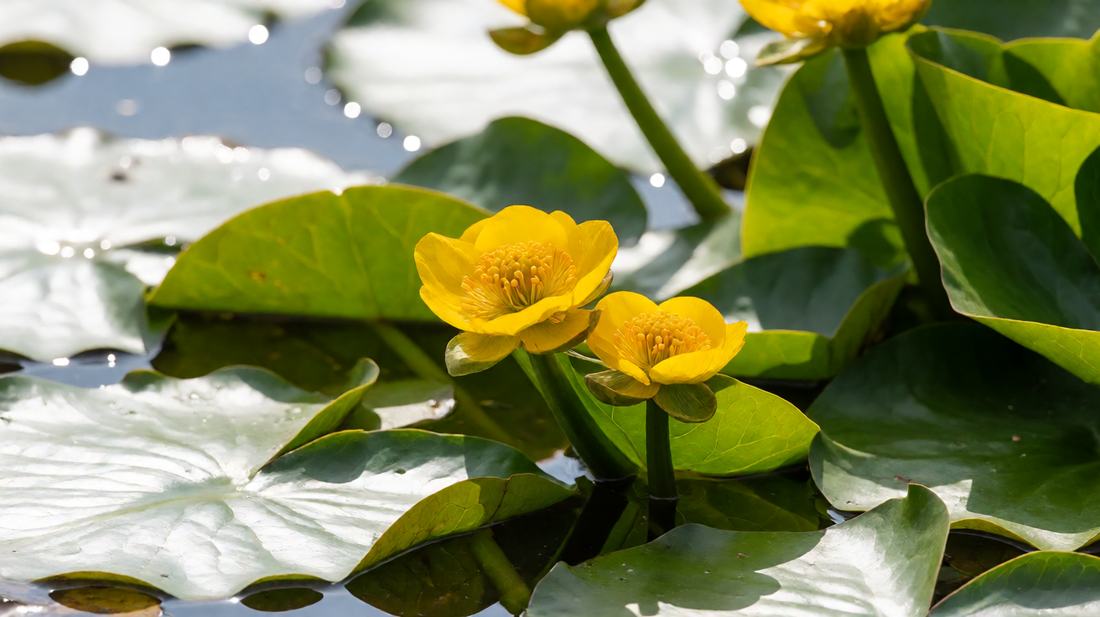
Nuphar lutea | Yellow Water-lily
Species Profile · Nymphaeaceae
Yellow Water-lily
The common floating lily of ponds and lakes, with rounded leaves and globular yellow flowers that ride the surface on long stalks.
IUCN: Least Concern
Range
Leaf
Stalk
Flower
Status
The floating lily
The yellow lily of still water
The yellow water-lily is the common floating lily of the ponds. Lakes and slow rivers of Europe. And the plant that turns still water yellow in high summer. It is not the showy white water-lily of the gardens. It is a wilder, smaller, more rounded flower. The colour of rich cream and butter. And it sits low on the surface like a small closed bowl.
Under the water the plant is more substantial than it looks. A thick, snaking rhizome runs through the mud. And from it rise the long stalks that hold the round leaves and the flowers at the surface. The leaves are the plant’s flag. They lie flat on the water, round and green. With a narrow slit from the edge to the centre. And they can cover a whole pond in a single carpet.
The flower opens by day and closes at night. And gives off a faint smell of fermenting fruit that draws a certain small beetle. The plant is a food and a shelter for water life. And one of the most familiar of all aquatic plants. It is also one of the oldest. Its kind has been in the northern lakes since long before people arrived. And its seeds have been found in deposits of the last Ice Age.
Family tree
Nymphaeaceae, the water-lilies
The yellow water-lily belongs to the family Nymphaeaceae, the water-lilies. It sits in the genus Nuphar. A small group of yellow and reddish water-lilies of the north. Linnaeus named it in 1758 as Nymphaea lutea. And it was later moved into its own genus as the flower was studied. The genus name Nuphar comes from a Persian word for the plant. The family is an old one. And its members share the floating leaves. The showy flowers and the thick rhizome. The yellow water-lily is one of the closest relatives of the white water-lily.
The larger white-flowered species of the same family. The two are easy to tell apart. The white water-lily has a flower 10 to 20 cm across that opens flat and wide. While the yellow water-lily has a flower 3 to 5 cm across that stays cupped and partly closed. The white water-lily has round leaves with a slit. And so does the yellow. But the yellow leaves are smaller and thicker. The two often grow in the same pond. And the yellow is the one that flowers first and lasts longest. The genus Nuphar holds about 10 species worldwide.
Most in the cool north. The yellow water-lily is the common European member. And it ranges from Britain and Iberia east across Russia and Siberia to Japan. And south to North Africa and the Caucasus. A few close relatives grow in North America. The plant has been known to people for a very long time. And its roots were eaten in hard times and its flowers used in folk medicine. It is not a lotus. Though the two are often confused by visitors. Because the lotus of Asia is a different plant of a different family.
Round leaves, yellow globe
How to identify one
The yellow water-lily is built to live on the surface of still water. The part under the ground is a thick rhizome. 2 to 5 cm across. It creeps through the mud and sends up new shoots each year. The rhizome stores starch and lets the plant survive the winter and the dry years. From it rise the leaf stalks and the flower stalks. Each up to 2 m long in deep water. So the leaf or flower can reach the surface. The leaves are round to oval, 15 to 40 cm across. With a deep, narrow notch from the edge to the centre. They float flat on the water and are held by the stalk at the centre of the underside.
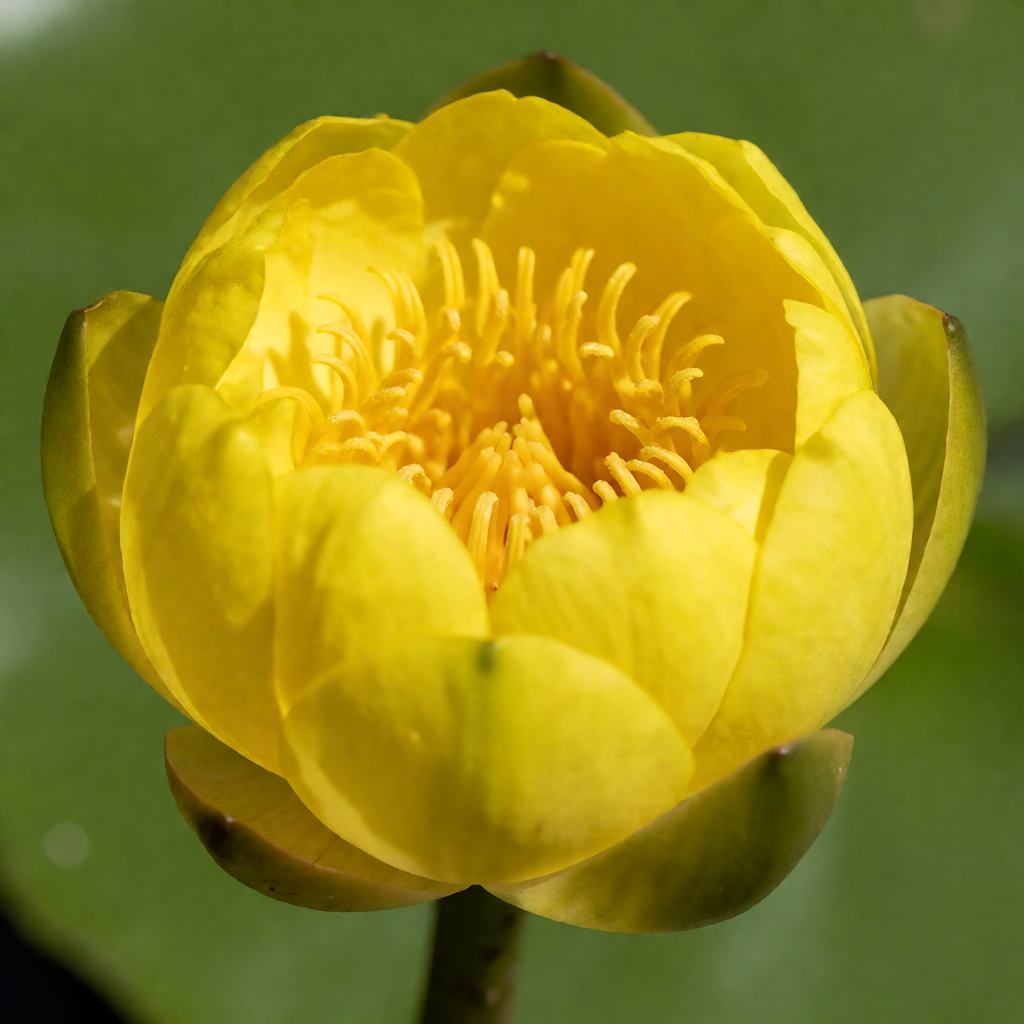
The upper side is green and slightly waxy. So water beads and runs off. And the underside is paler. The leaf is thick and leathery. This helps it float and resist the tears of wind and wave. The flower is the most distinctive part. It is 3 to 5 cm across. Globular and yellow, with many small. Fleshy petals and a ring of yellow stamens around a broad. Flat top. It looks like a small.
Closed cup rather than an open star. The smell is faint and sour, like weak cider. This draws its pollinator beetles. After flowering the seed pod swells into a flask shape that ripens under water and then breaks up to release the seeds. The seeds are small and rounded. And each carries a soft. Slimy coat that lets it float for a time before it sinks. The whole plant is full of a bitter, astringent sap. And most animals leave it alone. The stalks and the rhizome are full of air spaces that keep the plant buoyant and carry air down to the buried parts.
1
2
3
Ponds, lakes and slow rivers
Where it lives
The yellow water-lily lives in still or very slow fresh water. It grows in ponds, lakes, gravel pits, canals. Ditches and the backwaters of slow rivers. And avoids fast, cold, moving water. It likes water from a few centimetres to about 2 m deep. And does best where the mud at the bottom is rich and the surface is calm. It is a plant of the lowlands. And it ranges across almost the whole of temperate Europe and temperate Asia. From Britain and Spain east to Siberia and Japan. And south to North Africa and the Middle East.
It is common and widespread. And in many places it is the dominant plant of a small pond. It spreads by two means. The rhizome grows out and sends up new leaves. So a single plant can cover a wide patch of water in a few years. The seeds add new plants to new ponds, carried by water. By birds and by the movement of mud. The plant needs sun. And does poorly in deep shade. So it is found in open water rather than under woodland.
It tolerates a range of water chemistry. From slightly acid to slightly alkaline. And can stand a little pollution. Though it disappears from water that is badly eutrophic or choked with algae. Because it floats. It is not hurt by the rise and fall of the water level as long as the surface is not far away. A dry summer that lowers the pond can expose the rhizome. But the rhizome survives in the mud and sends up leaves again when the water returns. The plant gives shelter to fish and to the larvae of dragonflies and other insects. And the leaves are a resting place for frogs and for water insects.
It makes its own food
What it eats
The yellow water-lily is a plant. And makes its food by photosynthesis in its floating leaves. It takes carbon dioxide from the air and minerals from the water and the mud through its long rhizome. It is not a feeder on other living things. But it is a host and a larder for a small set of animals. The leaves are eaten by a few insects. Above all by the caterpillars of certain moths and by the beetles that live on water-lilies. The flowers are visited by pollinating beetles.
This are drawn by the smell and the heat the flower produces. The rhizome stores starch and is eaten by a few mammals and birds in hard conditions. Though it is bitter and most leave it. The seeds are eaten by ducks and by some fish. The plant competes with other water plants for light and space at the surface. In a pond with few competitors it can form a near-complete carpet of leaves. And that carpet cuts the light to the plants below and to the algae in the water. A thick stand of yellow water-lily can clear a pond of algae and keep the water cool and still.
This suits some animals and harms others. The plant is not usually a problem for people. Because it grows in still water rather than in rivers and channels. But a dense mat in a small pond can crowd out other plants and may be thinned by hand or by grass carp. It is one of the easier aquatic plants to live with. Because it stays where it is and does not block flow.
Seeds in the mud
The breeding cycle
The yellow water-lily reproduces both by seed and by the spread of its rhizome. The flower opens in the morning and closes at night. And does so through the summer from June to August. It is pollinated by small beetles that crawl into the cupped flower to feed on the pollen and the heat. And that carry pollen from one flower to the next. The flower is slightly warm. A trait that helps the beetle and may help the pollen. After pollination the seed pod swells under the water and ripens over several weeks.
When ready it breaks open and releases the seeds. Each in a slimy coat that lets it float for a while before it sinks into the mud. The seeds can lie in the mud and wait for a good year. This helps the plant survive in ponds that dry out. The rhizome is the faster way to spread. As it grows through the mud it throws up new leaf stalks. And a single plant can colonise a wide area of a pond in a few seasons. Pieces of rhizome broken off by ice or by a passing animal can drift and start a new plant elsewhere.
The plant flowers in its second or third year from seed. And then flowers every year. It does not need deep water to bloom. And a plant in 30 cm of water will flower as well as one in 2 m. The seeds and the rhizome together make the species a strong coloniser of new and cleared ponds. And they explain why it is one of the most common water plants of the north. The plant is long-lived as a clone. And a single rhizome system may persist for decades in a stable pond.
Least Concern, widespread
Conservation
The yellow water-lily is listed as Least Concern on the global Red List. It is a widespread and abundant plant across a very large part of Europe and temperate Asia. And it is not threatened as a species. It grows in a wide range of still waters and tolerates a fair degree of disturbance. So its numbers are secure across most of its range. The local concerns are the ones that affect all pond life. The loss and filling of ponds. The drainage of small wetlands and the shading of water by building and tree growth all remove the open. Sunny surface the plant needs.
Eutrophication, the excess of nutrients from farms and sewage. Can tip a pond towards a mat of algae that shades the lily and kills it. The planting of the wrong fish, above all grass carp. Can clear a pond of water-lilies and of most other plants at a stroke. In some regions the plant has been collected from the wild for garden ponds. But it is also widely sold as a nursery plant. So the trade does not threaten the wild stock. There is no global conservation programme for the species. And none is needed.
The useful action is the protection of small waters. A pond that is kept open. Unshaded and free of excess nutrients will carry yellow water-lilies and the whole community of animals that goes with them. The plant is in fact a fair sign of a healthy pond. Because it needs clean, still. Sunny water and it fails where the water is choked or dark. It is also grown on purpose in wildlife ponds for its value to insects and to fish. And it is one of the easiest native water plants to keep.
Quick hits
Five things to remember
- Its flower stays cupped and partly closed, unlike the white water-lily which opens flat and wide.
- The flower gives off a faint smell of fermenting fruit, which draws the small beetles that pollinate it.
- Its round leaves can be 15 to 40 cm across and they float on water up to about 2 m deep.
- A thick rhizome in the mud stores starch and lets the plant survive the winter and dry years.
- A single plant can cover a wide patch of pond in a few years as the rhizome spreads.