 By Iris
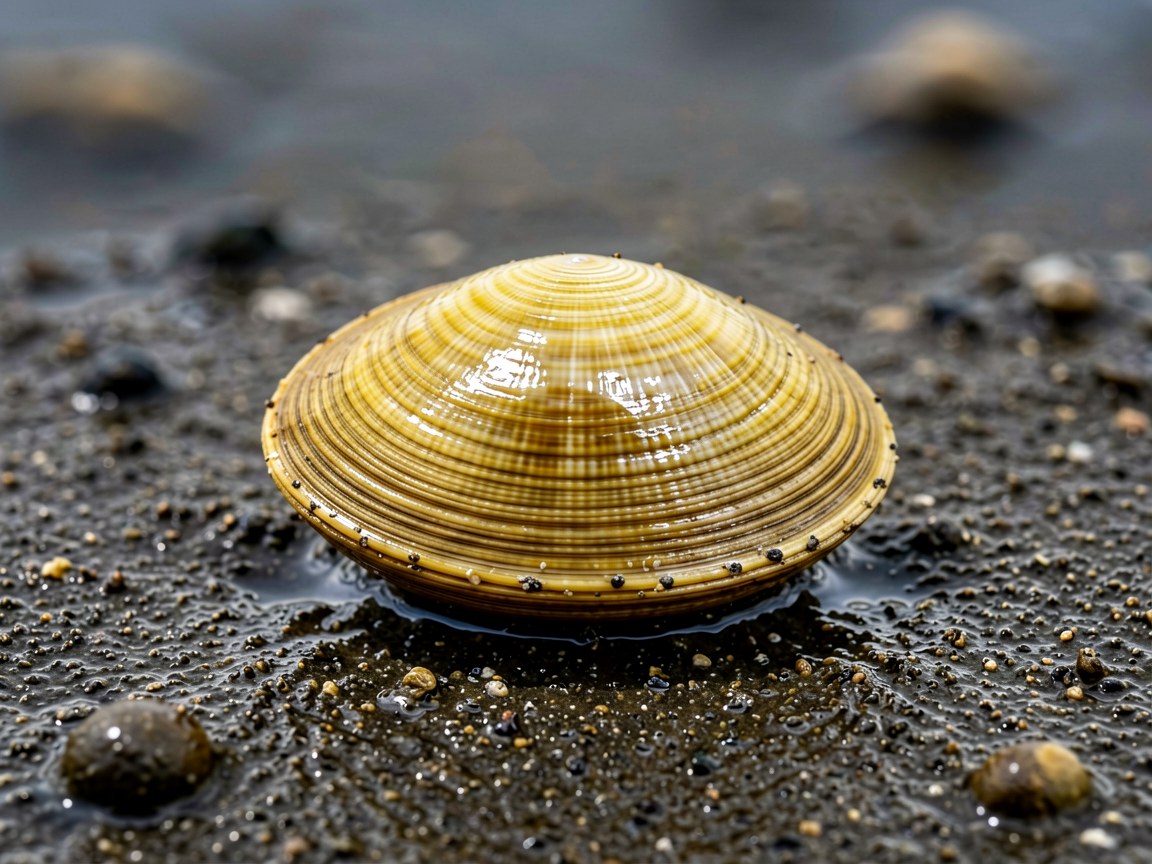
Nucula nucleus | Nut Shell
Introduction
Nucula nucleus, the nut shell, is a tiny, neat, almost unmistakable bivalve of the northern European seas, a small clam whose glossy, rounded, finely ribbed shell looks, as its name suggests, like a minute hazelnut. It is one of the most common small bivalves of the seabed from the low shore down into deep water, living buried in mud and sandy mud where it sifts the surface for the tiny particles of food it lives on. It is found in enormous numbers over much of the north-east Atlantic and neighbouring seas, and although it is only a centimetre or so long, it is an important part of the bottom fauna, eaten by flatfish, crabs and other predators and itself a busy recycler of organic matter on the seabed. It belongs to an ancient lineage of bivalves, the protobranchs, that retain a more primitive gill structure than the familiar mussels and oysters, and it is a close ecological cousin of Mytilus edulis, the common mussel, in that both are bivalve filter feeders, though the nut shell lives buried and feeds differently.
Taxonomy
The nut shell is a bivalve in the family Nuculidae, the nut clams, a group of small, rounded, thick-shelled bivalves that are among the most ancient living representatives of the class Bivalvia. The genus Nucula is cosmopolitan and contains many similar species, and the specific epithet nucleus means “kernel” or “nut,” a reference to the shape of the shell. The Nuculidae are protobranch bivalves, meaning their gills are relatively simple, comb-like organs used mainly for collecting the fine particles of food from the sediment rather than for filtering plankton from the water column as in more advanced bivalves; this places them close to the ancestral bivalve condition. The family is distinguished by a shell that is equilateral, with the hinge in the middle and a row of small, comb-like teeth, called taxodont teeth, running along both sides of the hinge in a distinctive arched row. In the north-east Atlantic, Nucula nucleus is the common small nut shell of muddy grounds, and it is told from its relatives by the fineness of its ribs, the shape of its hinge and its size. Its primitiveness makes it of interest to biologists studying the early evolution of the bivalves, a living relic of a very old body plan.
Physical Characteristics
The shell is small, usually eight to twelve millimetres long, solid, rounded to oval and slightly longer than high, with a smooth, glossy, yellowish, brownish or olive surface marked by many fine, closely spaced concentric ribs that give it a neatly engraved look. The two valves are equal and the hinge is in the centre, bearing the characteristic row of numerous small, similar teeth arranged in a chevron on either side of the hinge, the taxodont condition that defines the family. The shell is thick for its size and closes tightly, and the animal within has a small foot, a pair of short siphons and simple, comb-like gills. Inside, the shell is pearly near the hinge, and the muscle scars are small and neat. The animal is pale and soft, and it lacks the strong burrowing foot of the surf-zone clams, being built instead for a quieter life just below the surface of soft sediment. The whole shell is so regularly sculptured and so nut-like that it is one of the easiest small bivalves to name at a glance, and its sheen and symmetry make it a favourite of collectors of the smaller shells.
Habitat
The nut shell lives on soft bottoms, favouring mud and sandy mud, from the low shore down to considerable depths, sometimes hundreds of metres, across the north-east Atlantic, the North Sea, the Mediterranean and neighbouring waters. It is a species of sheltered and offshore grounds rather than of the wave-battered surf zone, and it is often the dominant small bivalve of muddy bays, estuaries with some salinity and the open seabed beyond. It burrows only shallowly, usually just beneath the surface of the sediment, where it can reach the layer of deposited organic matter on which it feeds. It tolerates a range of salinities and temperatures and is absent only from the most turbulent, coarse-sand or severely polluted sites, so it is one of the most widespread bivalves of the region’s seabed. Because it is small and numerous it is a staple of the infauna, the community of animals living in the sediment, and it is routinely counted in benthic surveys as an indicator of soft-bottom habitat. Its tolerance of muddy, low-energy conditions makes it a useful contrast to the wave-loving carpet shells and to the attached mussels, showing the range of ways a bivalve can make a living.
Diet
The nut shell is a deposit feeder, which sets it apart from the plankton-filtering mussels and carpet shells. Rather than straining food from the water, it uses its comb-like gills and a pair of long, searching palps to gather the fine organic particles, microbes and detritus that settle on the surface of the mud, sorting edible material from the sediment and consuming it. A small, mobile foot lets it shift position and re-burrow as it grazes across the surface film of food, and the short siphons are used mainly to keep the immediate surroundings clear rather than to draw a distant stream of water. In this way it recycles the rain of dead plankton and other organic matter that settles to the seabed, returning its nutrients to the food web and helping to keep the sediment clean. It is itself eaten by a range of bottom predators, including flatfish such as plaice and dab, by crabs and by larger bivalve-eating snails, so it forms a substantial link between the deposited detritus of the seabed and the fish and crustaceans above it. As a small, soft, abundant prey it is a cornerstone of the muddy-bottom community.
Reproduction
Like most bivalves the nut shell has separate sexes, and the females shed eggs and the males shed sperm into the water, where fertilisation occurs. The resulting larvae are planktonic for a time, drifting and feeding in the water column before they settle to the bottom and take up the burrowing, deposit-feeding life of the adult. This larval stage allows the species to spread across the seabed and to recolonise areas where the adults have been removed by disturbance or predation. The adults grow through the warmer part of the year and may live for several years, spawning in one or more batches across the breeding season. Because the species is so widespread and numerous, its populations are resilient, and a single favourable season can replenish local beds. The shell grows by adding material at the margin, so the finest concentric ribs record the animal’s growth, and the tiny hinge teeth, though small, are fully formed even in the youngest settled individuals, marking the nut shell as a bivalve of ancient and conservative design.
Conservation
The nut shell is abundant and widespread across its north Atlantic and neighbouring range and is not considered threatened; it is one of the commonest bivalves of soft bottoms and a routine, numerous record in benthic surveys, with stable populations over most of its distribution. Its main sensitivities are to the severe degradation of seabed habitat, such as intensive bottom-trawling that scrapes the sediment, and to heavy pollution or oxygen depletion in enclosed waters, which can smother or poison the infauna. Because it is small and not the target of any fishery it is not directly exploited, though it is taken incidentally in huge numbers by towed gear, and its quick recovery from such disturbance is one reason it remains common. It is not legally protected, and there is no conservation action specific to it, but it is valued by ecologists as an indicator of healthy, soft, muddy seabed and as a basic food for commercially important flatfish. Its primitiveness and abundance together make it both a living fossil and a living larder of the seabed, a small clam with an outsized ecological role.
Fun Facts
- Its shell is shaped and sculptured like a tiny hazelnut, which is why it is called the nut shell.
- It is a protobranch, one of the most ancient kinds of bivalve, with simple comb-like gills.
- Unlike mussels, it feeds on detritus deposited on the mud, not on plankton filtered from the water.
- The row of tiny teeth along its hinge is arranged in a chevron, a family trademark.
- It is one of the commonest small bivalves of the seabed and a staple food for flatfish.