 By st20113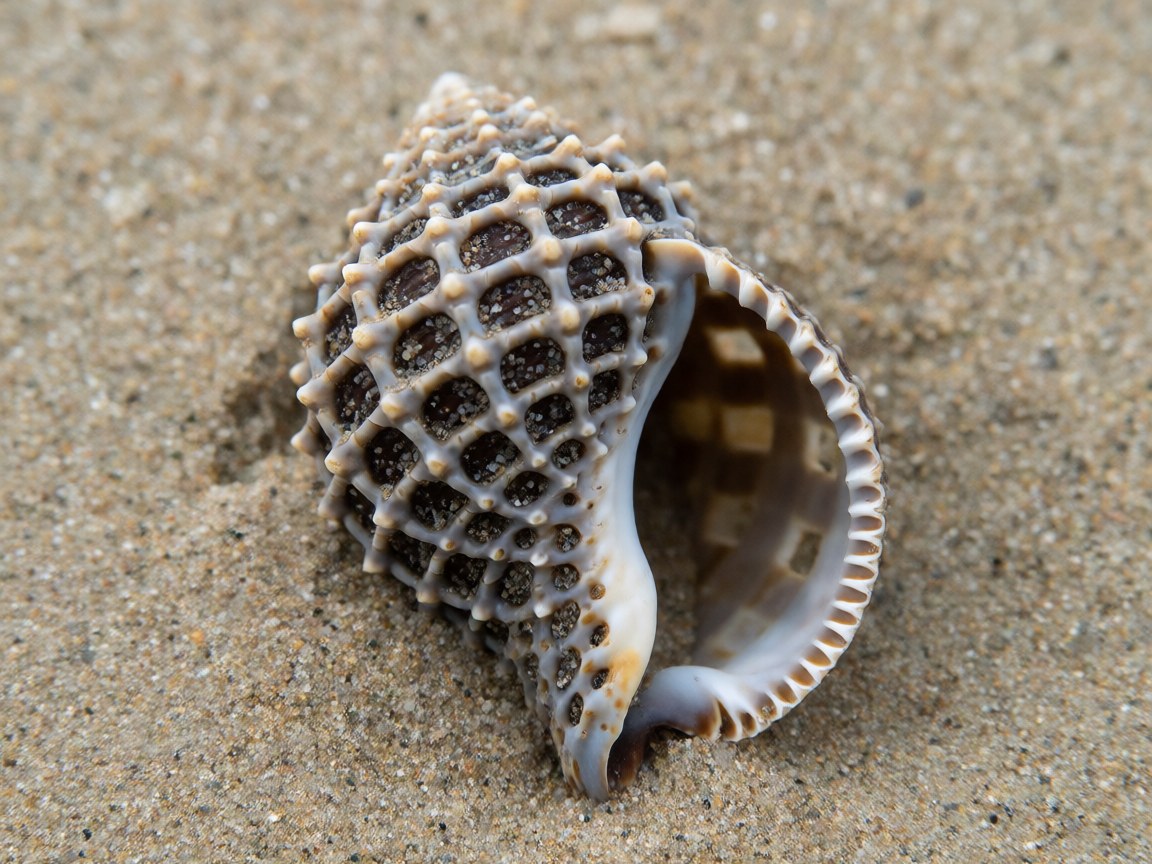
Nassarius reticulatus | Netted Dog Whelk
Introduction
The netted dog whelk (Nassarius reticulatus) is a small, robust sea snail of sandy and muddy seabeds, and one of the most efficient scavengers in shallow European seas. Its shell is a neat oval cone, up to about three centimetres tall, sculptured with a lattice of raised ribs and spiral cords that gives the species its name, and its colour varies so widely — cream, yellow, grey, brown, banded, or almost plain — that shell pattern alone cannot be trusted for identification. What makes the animal remarkable is not its shell but its nose: a single dead fish or cracked crab left on the seabed will summon dog whelks from metres away within minutes, because the snail can detect the scent of carrion at extraordinary dilution and follow it upstream. Large numbers of them can strip a bait bag, a trap, or a carcass to nothing overnight.
Taxonomy
Nassarius reticulatus is a gastropod mollusc in the family Nassariidae, a group of small to medium-sized scavenging and predatory snails placed within the neogastropods, the most derived and species-rich lineage of marine snails. The family is characterised by a long, mobile proboscis, an extensible siphon, and a well-developed sense of smell. The genus Nassarius is large and widespread, with many species in warm seas, and N. reticulatus is the common representative in the north-east Atlantic. It is not closely related to the larger, heavier dog whelk Nucella lapillus of rocky shores, which belongs to a different family entirely, though their similar English names long predated any understanding of the relationship. It is a snail rather than a cephalopod, but it shares the molluscan body plan with animals such as Octopus vulgaris, and like that animal it is an active, mobile hunter rather than a passive grazer. The specific name reticulatus refers to the net-like sculpture of the shell.
Physical Characteristics
The shell is solid and oval-conical with a pointed spire of seven or eight whorls, typically twenty to thirty millimetres tall and sometimes more. Its most obvious feature is the sculpture: strong, slightly curved axial ribs crossed by spiral cords of similar strength, producing a regular lattice of small squares across the whole surface. The colour is extremely variable, from almost white through cream, yellow, and grey to reddish brown or purple-grey, often with darker spiral bands or blotches and usually paler around the aperture. The aperture is oval, drawn out below into a short siphonal canal; the outer lip is thickened in adults and usually bears a series of small teeth on the inside, while the inner lip is covered with a smooth, shiny callus that spreads onto the body whorl. The operculum is horny, oval, and has a finely toothed or serrated edge. The soft parts are pale with darker markings; the head carries a pair of long, slender tentacles with the eyes at their outer bases, and bears a long, highly mobile tubular siphon that the animal extends above the sediment to sample the water. Inside the mantle cavity lies the osphradium, a chemosensory organ that in this species is unusually large — the anatomical basis of its legendary sense of smell.
Habitat
It lives on soft bottoms — muddy sand, fine sand, shell gravel, and mud — from the lower shore down to depths of around a hundred metres, and it is commonest on sheltered, organically enriched sediment in estuaries, harbours, sea lochs, and shallow coastal water. The animals normally burrow just beneath the surface, leaving only the tip of the siphon exposed, and they move through the top few centimetres of sediment leaving a distinctive meandering trail on the surface. They are also frequent in baited traps, on fishing-ground debris, and around any concentration of dead animals. The species occurs from Norway and the Baltic south to the Mediterranean and north-west Africa, and is common all around the coasts of Britain and Ireland wherever there is soft sediment. It tolerates reduced salinity and lowered oxygen far better than most marine snails, which is why it persists in harbours and in the organically enriched mud beneath fish cages and outfalls.
Diet
The netted dog whelk is a facultative scavenger and predator. Carrion is the mainstay: dead and dying fish, crabs, molluscs, worms, and any other animal protein, detected by chemical cues carried in the water and tracked by extending the siphon and sampling. Once at the food, the snail everts a long proboscis and rasps the flesh with its radula, often with many individuals gathered at a single carcass tearing it down in a matter of hours. It also attacks living prey, including small bivalves, polychaete worms, and other snails, and it will take organic detritus and bacterial film when nothing better is available. Because it aggregates so strongly on bait, it is a familiar nuisance to anglers and to anyone setting crab pots, and it plays an important role in the shallow sea by disposing of carcasses that would otherwise rot and deplete oxygen. Its feeding brings it into contact with a great deal of sediment, and it is known to accumulate metals and other contaminants from the mud it lives in.
Reproduction
The sexes are separate and fertilisation is internal. Mating takes place on the sediment surface, usually in spring and summer, and the female afterwards lays her eggs in characteristic flask- or vase-shaped capsules, each attached by a stalk to a stone, shell, or piece of seaweed and each containing several hundred eggs. Within the capsule the embryos develop, and a substantial proportion of the eggs serve as nurse eggs that nourish the developing young rather than becoming snails themselves. The young leave the capsule as free-swimming larvae and spend a period in the plankton before settling onto suitable sediment and metamorphosing, and this planktonic phase is the main means of dispersal along the coast. Growth is relatively fast, maturity is reached within a year or two, and adults probably live for several years. Breeding success is strongly tied to temperature, and populations in cooler northern waters have a shorter and more constrained breeding season.
Conservation
The species is abundant and widespread and is not considered threatened. Its scientific importance is as a sentinel: like several other neogastropods, it develops imposex, the growth of male sex organs in females, in response to tributyltin and other organotin compounds from antifouling paints, and it has been used widely as a bioindicator of this contamination, in some regions more sensitively than Nucella. Populations near harbours and marinas have historically shown high imposex rates, and the gradual recovery following the international restrictions on organotin paints has been tracked using this species. Physical disturbance of the seabed by dredging and trawling affects it as it does all soft-sediment fauna, and because the snails concentrate contaminants from the sediment, they are also used in pollution monitoring programmes.
Fun Facts
- A dead fish left on the seabed can attract dozens of these snails within minutes.
- The shell is sculptured with a lattice of ribs and cords, which is what “reticulatus” means.
- Colour varies so much that clean banded shells and plain grey ones are the same species.
- It has an unusually large chemosensory organ, which is how it smells carrion from metres away.
- It develops male organs when exposed to organotin pollution, which makes it a useful pollution indicator.