 By st20113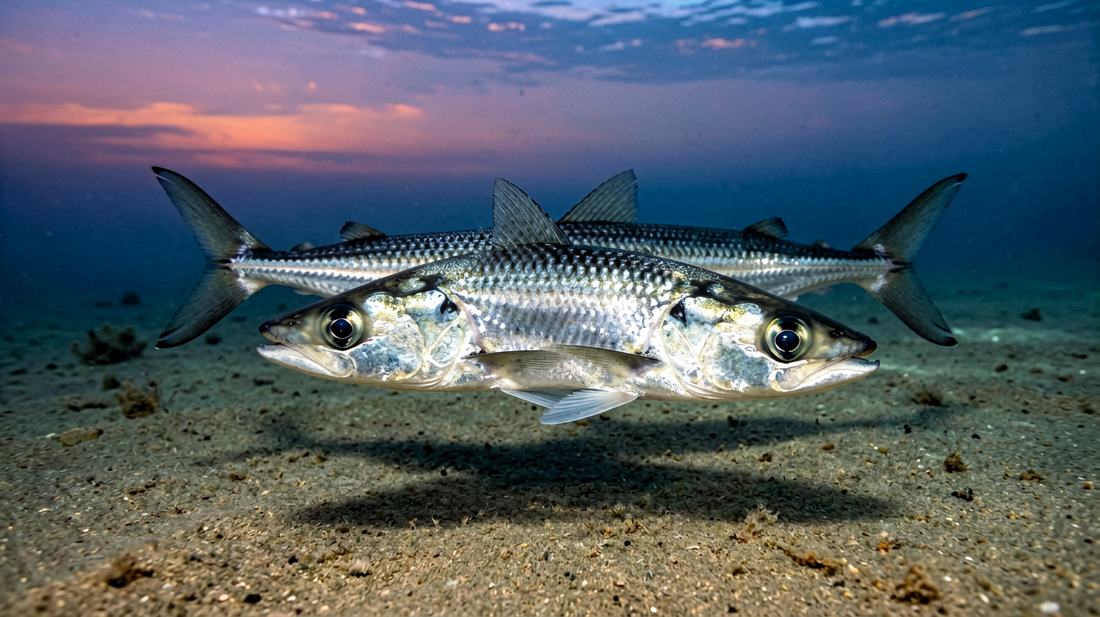
Merluccius merluccius | European Hake
Species Profile · Merlucciidae
European Hake
A slender silver hunter of the shelf edge, with no barbel under the chin, that rises off the seabed every dusk — and that fisheries have had to rebuild twice.
IUCN: Least Concern
Range
Depth
Max length
Maturity
Daily move
The hunter off the shelf
Silver, slender, no barbel
The European hake is a slender, silver-grey fish with a long body. It is a hunter. It belongs to the cod order. It is one of the main food fishes of the eastern Atlantic and the Mediterranean. It is also a typical hunter of the deeper shelf and the upper slope. There it hunts small shoaling fish by night. It does so in open water above the seabed. The species differs from the cod in several ways. It has no chin barbel.
Its body is much more slender and long. Its second dorsal and anal fins run almost to the tail. Its first dorsal fin is sharply pointed. And its large mouth carries rows of sharp teeth with a slight curve. Those teeth hold a slippery fish rather than crush it. The European hake grows to between 30 and 60 centimetres in the ordinary course of its life. Large females of more than a metre and 10 kilograms or more come from the deeper water of the Bay of Biscay and the Celtic Sea. The species is odd among the fishes of the region in one more way. It makes a daily move up and down the water.
It rises at dusk from the seabed to the midwater layers where its prey gathers. It goes back to the bottom at dawn. So a fish caught in a bottom trawl at midday may have been swimming in midwater a few hours earlier. The hake matures late and lives fairly long. Its young grow up in shallow inshore grounds. The adults live in deeper water. That mix has made the species one of the central problems of European fishing.
Family tree
Merluccius, the hakes
The European hake sits in the genus Merluccius. This is a group of about 15 species of slender, hunting fishes. They live in the Atlantic, the eastern Pacific and the Mediterranean. The fish belongs with its relatives in the hake family. That family sits with the cods, the haddocks, the whiting and the pollack in the cod order. That order is a group of fishes of cold temperate and deep water. Its members have soft-rayed fins and no true spines. They have smooth scales. In some families they also have a pair of drumming muscles on the swim bladder.
The hakes differ from the true cods in a number of structures. The most obvious is the complete lack of the barbel under the chin. The cod, the ling, the whiting and the haddock all have one. That barbel is the quickest way to tell a common fish of the cod family from the hake sold beside it. The genus is a rather recent line. Several named forms differ only a little in fin-ray count and in scale. They also differ in the number of vertebrae. Among the European species, the old split between the European hake of the eastern Atlantic and the shallow-water hake of the west African coast has been argued over. The European hake itself is monotypic.
Its range runs from the coasts of Norway and Iceland in the north. It goes on through the North Sea, the English Channel and the Celtic Sea. It covers the Bay of Biscay and the Atlantic waters of Iberia and Morocco. It also covers the whole Mediterranean and the Sea of Marmara. The comparison with a cod, Gadus morhua, is the most useful one for a European reader. The 2 species are taken by the same boats in the same waters. Both are among the most heavily fished food fishes of the region. Both are long-lived and mature late. And both have needed recovery steps after periods of heavy overfishing.
Fins, jaws and a black mouth
How to identify one
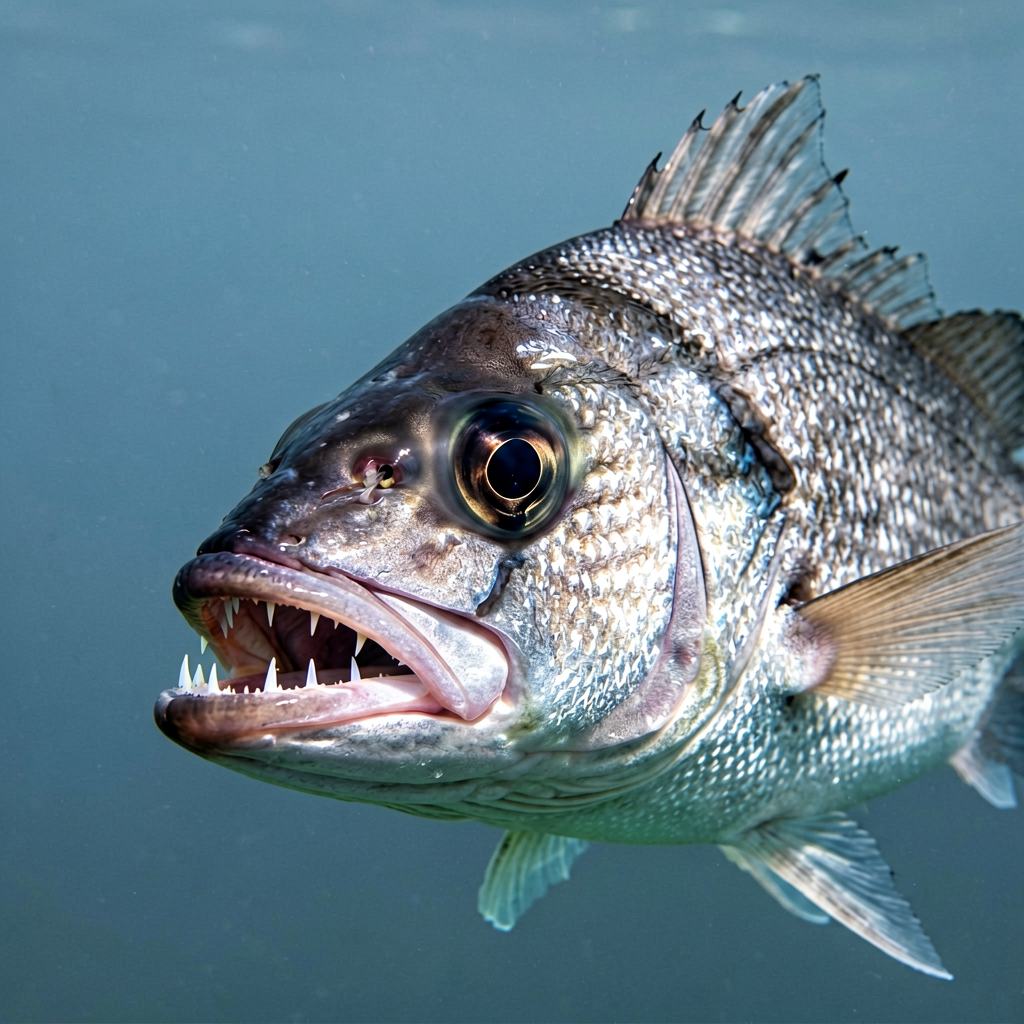
The European hake has a long, slender body, almost like a spindle. It tapers towards a narrow tail base. The head is large. The mouth is at the front and opens wide. The lower jaw sticks out in some specimens. The eyes are large and well formed. There is no chin barbel. Its top length is about 140 centimetres. Its top recorded weight is about 15 kilograms. A fish of more than 90 centimetres is unusual today. Most of the fish landed are between 25 and 60 centimetres long. The dorsal fin is split into 2 parts.
The first is short, high and shaped like a triangle with 8 or 9 rays. The second is very long and low, with about 36 to 40 rays. The anal fin is long in the same way with about 36 to 40 rays. It runs for the greater part of the length of the body. The pectoral fins are long, slender and set fairly low. The pelvic fins sit below or a little in front of the pectorals. The tail fin is small and slightly forked. The mouth is lined with rows of long, sharp teeth with a slight curve. More bands of teeth sit on the vomer and the palatines. The gill rakers are long and numerous. The skin carries small, smooth scales that shed easily. The colour of the fish is a pale grey or silver-grey.
The back is darker olive-grey or grey-brown and the belly is whitish. The inside of the mouth is black. A faint dark line marks the lateral line. The sexes look much alike. But the female grows much larger and lives longer than the male. Males mature at a length of between about 35 and 40 centimetres. Females mature at between 55 and 60 centimetres. That gap in the size and age at maturity matters a great deal. A fishery that takes large fish takes more females than males. So it removes the most productive part of the breeding stock. That pattern has been found in the hake. It has also been found in the cod and in many other fished species.
1
2
3
Shelf, slope and the daily rise
Where it lives
The European hake is a fish of the continental shelf and the upper slope. It is found from about 30 metres down to about 1,000 metres. Most of the population lives between 70 and 500 metres. It favours muddy, sandy and mixed bottoms. The range of the species is strongly tied to the size and age of the fish. The young of the year and juveniles of up to about 20 centimetres live in much shallower water than the adults. They gather on the inshore nursery grounds of the shelf, at depths of between 30 and 200 metres. The large mature fish live in deeper water at the edge of the shelf and on the upper slope. They make a seasonal move towards the spawning grounds.
In the Mediterranean that happens in winter. In the Atlantic it happens in the late winter and the spring. The species is found throughout the Mediterranean. In the eastern Atlantic it ranges from the north of Norway and Iceland to the coast of Mauritania. It is most numerous in the Bay of Biscay and the Celtic Sea. It is also numerous in the western approaches to the English Channel. It is common off Atlantic Iberia and in the narrower seas of the Mediterranean. The daily pattern of the fish is one of the most striking features of its biology. The hake hunts at dusk and at night.
It spends the hours of daylight close to the seabed. It rises into the water column at dusk. There it hunts small open-water fishes that are moving upwards themselves. That habit has shaped the fishery. In some places the fish are taken at night with midwater trawls. It has also made survey data harder to read. A fish that is on the bottom by day and in midwater by night will be caught in very different numbers. That depends on the time of day at which the trawl is towed.
Small fish after dark
What it eats
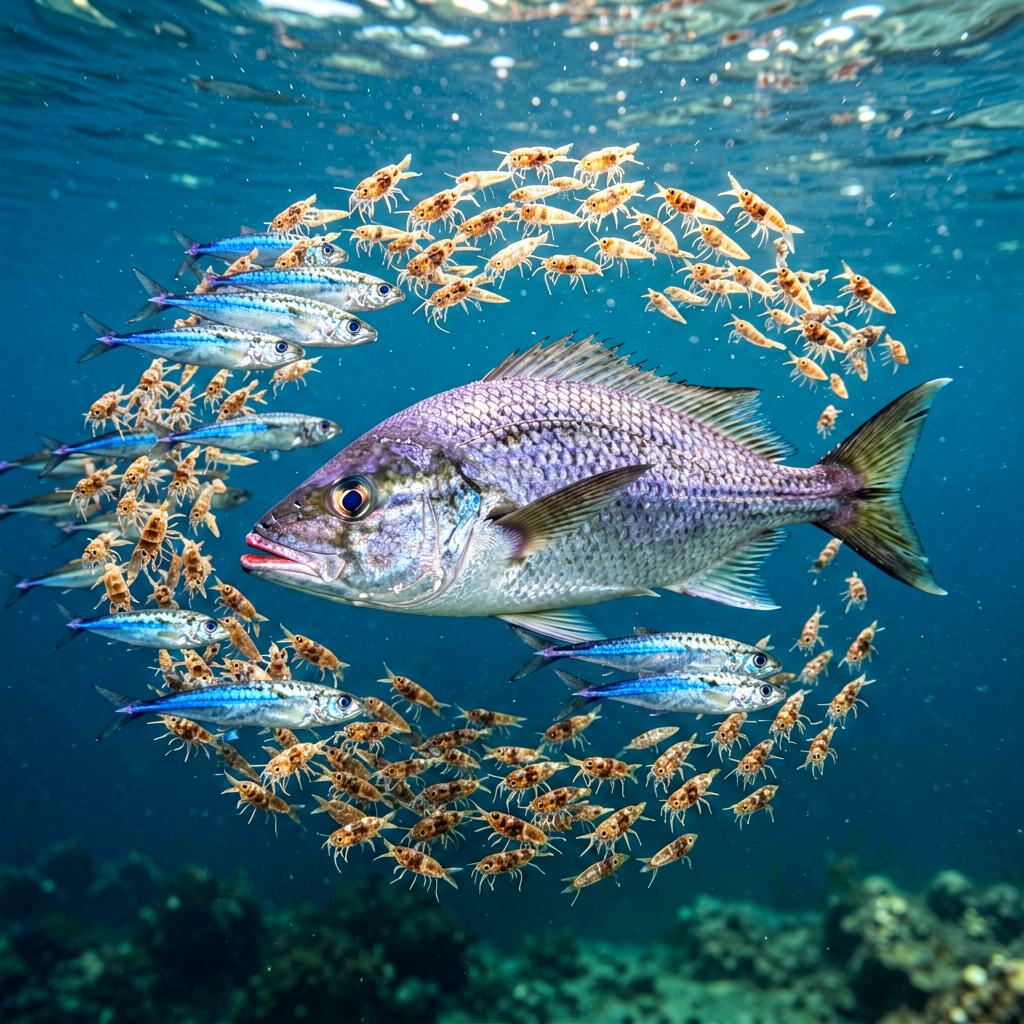
The European hake eats fish for most of its life. Its prey includes the sardine, the anchovy, the sprat and the pilchard. It takes the herring, the horse mackerel and the mackerel as well. It also eats the blue whiting, the poor cod and the Norway pout. A wide range of smaller cod-like fishes goes into the diet too. So do the young of its own and other species. To this fish diet the species adds squid and cuttlefish. It takes the larger shrimps and prawns and a number of other crustaceans. The very small hake of the nursery grounds feed mostly on small crustaceans.
They also take the larvae of fish and small fishes of the inshore community. Later they move up to the adult hunting habit. The species is a quick and greedy hunter. It takes its prey in the water column by night. It can swallow a fish that is nearly half its own length. The hake is also known to eat its own kind. Large individuals take smaller members of their own species when they can. That habit tends to cut the survival of the smaller year classes where the adults are numerous. The feeding of the young fish is gathered in the shallow nursery grounds of the shelf.
Good food, shelter and a supply of small prey allow a fast rate of growth there. A juvenile hake can reach a length of 15 to 20 centimetres within its first year. Growth then slows as the fish matures and moves into deeper water. That water is less rich. The species is a top hunter of the shelf and the upper slope. So its numbers are shaped by the state of the smaller fish stocks it depends on. The fall or the recovery of the sardine and anchovy fisheries of Iberia has a clear effect on the condition of the hake that feed on them.
Batches of eggs at depth
The breeding cycle
The European hake is long-lived, late to mature and highly fertile. Its power to recover from heavy fishing is limited. The females do not reach maturity until they are between 4 and 7 years old. They are then about 55 or 60 centimetres in length. The males mature at about 2 or 3 years and 35 or 40 centimetres. That gap is typical of the cod-like fishes. It has important results for the running of the stock. The spawning season is long and varies with the region. The Mediterranean fish spawn mostly in the winter and the early spring.
The Atlantic fish spawn in the late winter and the spring. The species is a batch spawner. An individual female releases her eggs in a series of batches over several weeks. She does not release them all at once. That spreads the risk to the eggs and larvae. A spell of bad weather or a shortage of food would otherwise destroy the whole brood at once. The eggs are small, floating spheres of about 1 millimetre across. They float in the upper layers of the water and hatch within a few days. The larvae then pass through an open-water phase of several months.
They settle on the nursery grounds of the shelf. There they take up the bottom-living life of the adult. A large female produces several hundred thousand eggs in a season. Her output rises with her length in an almost explosive way. So a single large female produces as many eggs as a good number of small ones. The young fish grow fast in the warm, rich water of the nursery grounds. The species as a whole grows slowly after maturity. The oldest individuals live for 12 years or more. The females live longer than the males.
A stock rebuilt, a stock in trouble
Conservation
The European hake is listed as Least Concern on the global Red List. Its range is large and the total population is still substantial. Yet the species has been fished too hard over a large part of its range for many years. The northern stock around Iberia and in the Bay of Biscay was fished so hard in the 1980s and 1990s that a formal recovery plan had to be brought in for it. The southern hake stock of the Iberian Atlantic has also been under pressure. So have the stocks of the Mediterranean. Those are taken by the trawlers of Spain, Italy, France, Greece and the north African states. In a number of years those stocks have been judged to be fished outside safe limits. Two features of the biology of the species make it so open to harm.
The first is the late maturity of the females. The second is the way the fishery fastens on the larger and older fish of the deeper water. That is just the part of the population that produces most of the eggs. Several steps have been applied to the species. A minimum landing size was set at 20 centimetres for the Mediterranean and higher for some Atlantic waters. Technical steps protect the inshore nursery grounds and cut the capture of young fish. Limits on effort were placed on the fleets concerned. And for the northern stock there was a formal recovery plan. It set a target for the spawning stock and a top rate of fishing that the fleet had to respect.
The northern stock has answered those steps and is now in a much better state. The stock of the Mediterranean remains in trouble. The gap between the two shows something important. The recovery of a fish stock depends on the will of the states concerned to enforce the limits they have agreed. The hake is also taken as bycatch in other fisheries. Its young are caught in the shrimp and small-fish trawls of the inshore nursery grounds. Many biologists regard the shield of those nursery areas from trawling as the single most effective measure that could be taken for the species.
Quick hits
Five things to remember
- The hake has no barbel under its chin. That absence is the easiest way to tell it apart from the cod, the haddock and the whiting on a fishmonger’s slab.
- It spends the day on the seabed and rises into midwater at dusk to hunt. So the same fish can be caught in a midwater trawl at night and in a bottom trawl by day.
- The female grows much larger and matures much later than the male. She reaches maturity at about 60 centimetres, when the male is already mature at 35. That makes the fishing of large fish unusually damaging to the stock.
- A single large female may release several hundred thousand eggs in a season. She does so in a series of batches spread over several weeks rather than all at once.
- The northern hake stock of the Bay of Biscay had to be given a formal recovery plan after the heavy fishing of the 1980s and 1990s. That stock has since recovered, while the stock of the Mediterranean has not.