 By st20113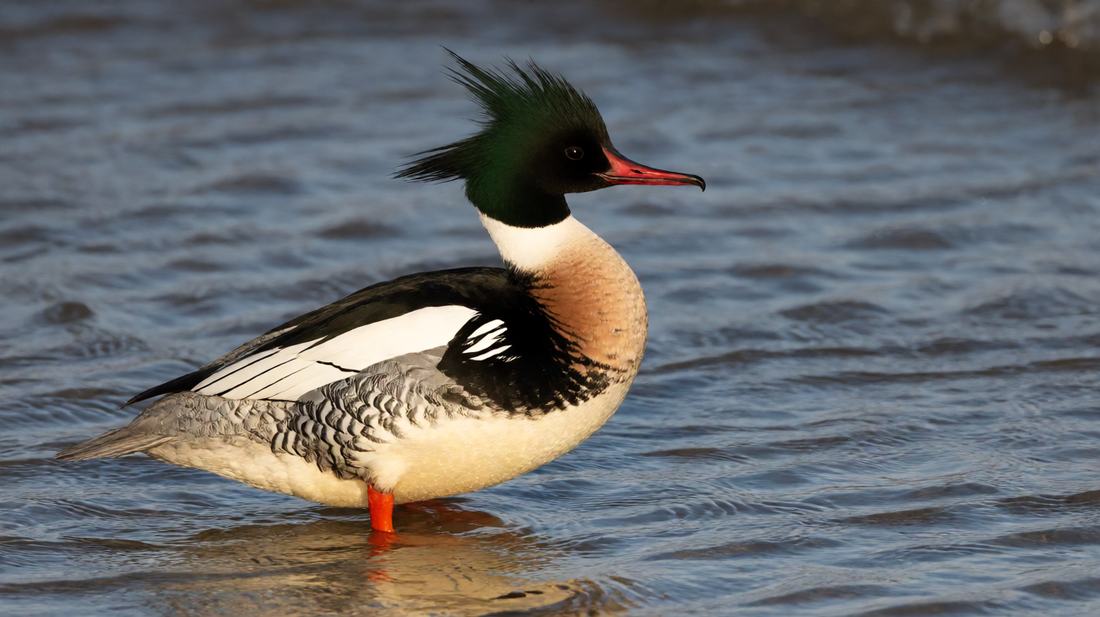
Mergus serrator | Red-breasted Merganser
Species Profile · Anatidae
Red-breasted Merganser
The most marine of the European mergansers, a sawbilled duck of the estuary that chases fish under water and wears a crest like a bad hair day.
IUCN: Least Concern
Range
Length
Weight
Nest
Incubation
The duck of the sawbill
A fish-eater of the estuary
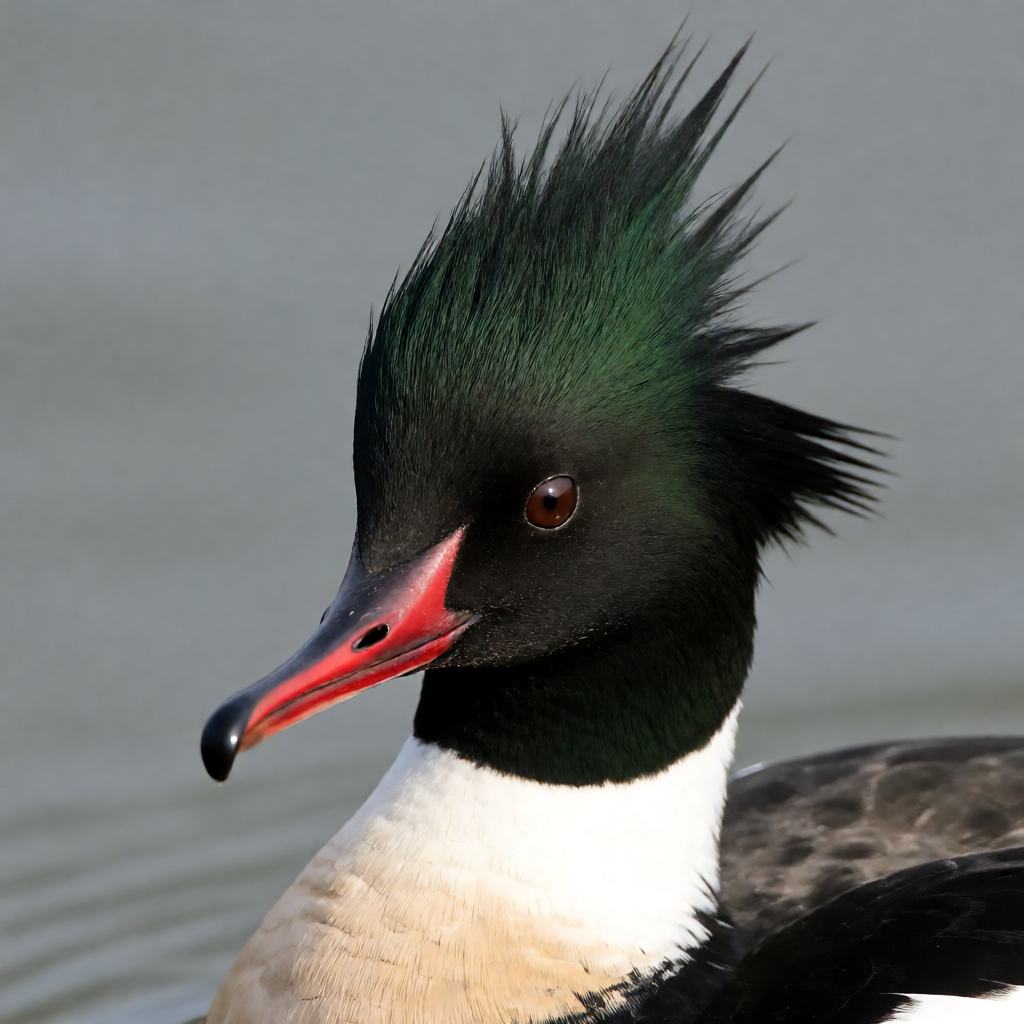
The red-breasted merganser is the most marine of the 3 mergansers of Europe. It is the one that is most often seen on the open coast in the winter. It is also the one most often seen on the estuary in the winter. It is a large and a very active fish-eating duck. It has taken the habits of the diving birds of the sea. It has kept the anatomy of the fish-eating birds of the river. The drake in the full plumage is a dashing bird. He is one of the most handsome of the ducks of the north. His head is a dark and a glossy green. It carries a shaggy and a double crest. A broad collar of the white surrounds the neck. The breast is a warm and a mottled reddish-brown.
The bill is long and thin and a brilliant red. The fiery red of the eye sets the bill off. The species is a bird of the cold and the clear water of the north. It breeds on the lakes and the rivers of the north. It also uses the sheltered coasts of that region. It winters on the coasts and the estuaries of the temperate zone. The bird is a very strong and a very rapid diver. It chases the small fish under the water. The wings are half opened in the chase. The feet act as the rudder. The whole of the feeding of the species is done under the surface. The bird can spend a long time below.
It can cover a considerable distance in a single dive. The merganser is the duck of the fish. The whole of its anatomy is a departure from the plan of the ordinary duck. The bill is that of the sawbill. The legs are set far back on the body. The tail is long and stiff and the body is low and streamlined. That arrangement makes the bird very awkward on the land. It makes the bird very efficient in the water. The bird therefore spends the greater part of its life afloat. It comes to the land only for the breeding and for the resting.
Family tree
Mergus, the mergansers
The red-breasted merganser was described by Linnaeus in 1758. He gave it its present name. The modern treatment places it in the genus Mergus. Those are the mergansers, or the sawbills. The family is the Anatidae. That is the great group of the ducks and the geese and the swans. The mergansers are the most specialised of the ducks. They feed on the fish and the small invertebrates of the water. The genus Mergus contains 4 or 5 species depending on the treatment. The red-breasted merganser is the most widely distributed of them. It is also the most marine. The common merganser of the rivers of the north is one of the others.
The smew of the lakes of the taiga is another. The scaly-sided merganser of the rivers of the far east of Asia is the third. That last bird is one of the rarest of all the ducks of the world. The mergansers are united by the long and the narrow and the serrated bill. That bill carries a row of the small and the backward-pointing teeth. The teeth run along the cutting edge of the upper and the lower mandible. The teeth are not true teeth. They are formed of the horn of the bill. Their function is to hold the slippery fish in the grip of the jaws. The arrangement is one of the most distinctive of the adaptations of the family. The red-breasted merganser is the close relative of the Tufted Duck (Aythya fuligula). That is the common diving duck of the lakes and the reservoirs of Europe.
The 2 birds share the family and the same diving habit. They share the same general requirement of the clear and the fish-rich water. They differ in the structure of the bill and in the method of the feeding. The tufted duck has a broad and a short and a blunt bill. It takes the molluscs and the other bottom-living animals from the mud. The merganser has a long and a slender and a saw-toothed bill. It chases the fish in the open water. The species is monotypic in the greater part of the modern treatment. The birds of the Old World and of the New World are very much alike. So no subspecies is generally recognised. The birds of the extreme north differ slightly in the average size. So do the birds of the south of the range.
Green head, red bill
How to identify one
An adult red-breasted merganser is between 51 and 64 centimetres in length. Its wingspan is between 70 and 86 centimetres. Its mass is between about 780 and 1350 grams. The male is the larger and the heavier sex. The difference between the 2 is clearly visible on the water. The drake in the full breeding plumage carries a head of a dark glossy green. A crest of fine and loose feathers gives the head its shaggy outline. A broad and white collar separates the head from the body. The breast is a reddish-brown. It is marked with the spots of the black. The back and the flank are a pale grey. They are covered with the fine vermiculation of the dark.
The wing carries a large and a very conspicuous white patch. That patch shows in the flight. It is one of the best of the field characters of the species. The female and the young drake are a very different bird. The head is a reddish-brown. The crest is even more shaggy than that of the male. The chin and the throat are white. The body is a uniform grey-brown. The female of the merganser is very like the female of the common merganser. Telling the 2 apart is a classic problem of the ducks of the northern waters. The best of the characters is the longer and the thinner bill. The paler and the more mottled body is another one.
The bill of the species is long and narrow. It is a brilliant red in the male and a duller orange-red in the female. The upper mandible is slightly hooked at the tip. The whole of the cutting edge carries a row of teeth. They are fine and hard ones. The eye of the male is a brilliant and a fiery red. The eye of the female is a dark brown. The legs and the feet are a reddish-orange. The young bird is a duller version of the female. The head and the throat are paler. The crest is shorter.
1
2
3
Lake, river and sheltered coast
Where it lives
The red-breasted merganser is a bird of the cold and the clear water. The water must also be rich in fish. The species uses the freshwater lake and the river of the north for the breeding. It uses the sheltered coast and the estuary and the lagoon for the winter. The bird is therefore one of the ducks that changes its habitat with the season. It is the most marine of the mergansers at every time of the year. The breeding range covers the whole of the northern belt of the world. The bird nests in Iceland and in Scandinavia. It also nests in Scotland and in Ireland. It nests in the north of Russia and in Greenland as well. It also nests across the whole of the northern part of North America.
The species is a bird of the tundra and of the open forest. It is found on the rocky coast of the north too. It is commonest where the shallow water of the lake is clear. The shallow water of the coastal bay must be clear as well. The small fish and the crustaceans of the bottom must be abundant there. In the winter the species moves south. It is then a bird of the estuary and of the coastal bay. It uses the harbour and the sheltered sandy shore as well. It is common on the coasts of the North Sea and of the Baltic. It is common on the Atlantic coast of Europe too. It reaches the Mediterranean in the south of the range.
The Black Sea lies within the winter range as well. In North America the bird winters on both the Atlantic and the Pacific coasts. It also winters inland on the large lakes and rivers that remain open. The species nests on the ground in the cover of the vegetation. It nests among the rocks and under the bushes too. It very often places the nest in the shelter of a boulder. A fallen tree close to the water serves the same purpose. The female takes the chicks to the water within a day of the hatching. The brood is then a very conspicuous sight. The female swims with a line of 8 or 10 of the young behind her.
A diver that chases fish
What it eats
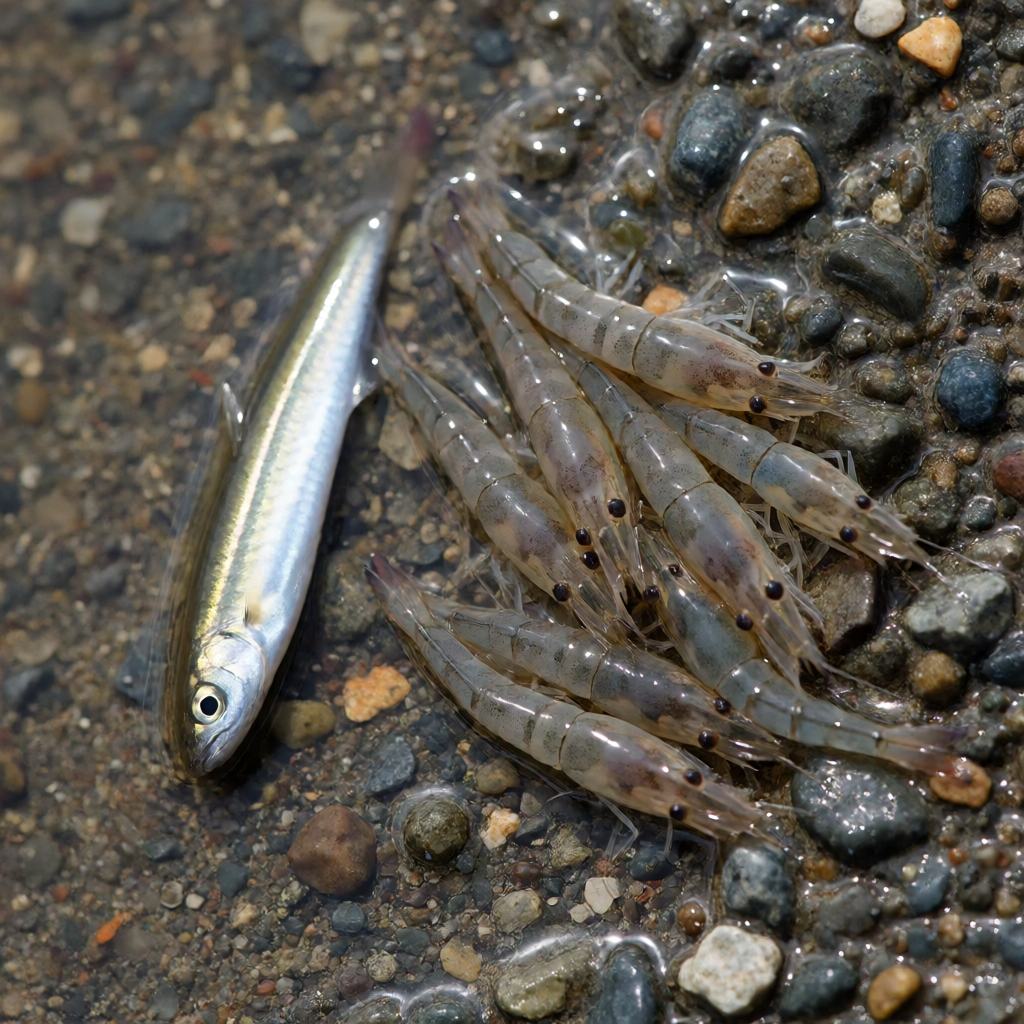
The red-breasted merganser is a specialist of the small and the medium-sized fish. The diet is dominated by the fish of the shallow water. The species takes the sandeels and the sprats and the young herring. It takes the sticklebacks and the small flatfish and the gobies. The blennies are on the list too. It also takes the shrimps and the crabs and the other crustaceans. The aquatic insects and the molluscs matter as well. The composition of the diet changes with the season. It changes with the habitat and with the age of the bird too. The method of the hunt is the pursuit dive. The bird swims on the surface with the head under the water. It locates the shoal with the eye. It then dives with a single and a smooth movement.
The bird uses the webbed feet as the main means of the propulsion. The half-opened wings do the steering. The dive lasts for between about 20 and 45 seconds. It takes the bird down to a depth of a few metres. The fish is caught in the saw-toothed bill. It is brought to the surface and is swallowed head first. The species often hunts in a group. The birds drive the shoal of the fish towards a shallow place. They can also drive it against the shore. The cooperation of the flock is a very conspicuous sight. It is best seen on the coast in the winter. The mergansers are frequently found with the cormorants. The divers and the grebes keep the same company.
The whole of the group exploits the same supply of the small fish. Those fish live in the coastal water. The bird must eat a very considerable quantity of the fish. It needs that much in the course of the day. The fish is a food of a high quality. The fish is a food of a small size. It passes very quickly through the gut. The species feeds most actively in the early morning. It feeds again in the late afternoon. It spends the middle of the day in the resting and the preening. It does so on the water or on a low rock.
A scrape beside the water
The breeding cycle
The red-breasted merganser arrives on the breeding ground in the early spring. The drake performs a very conspicuous courtship display on the water. He stretches the neck and dips the bill. He raises the crest and gives the harsh and the rolling call. The drakes gather around a single female. Their display is one of the most lively of all the ducks of the north. The species nests on the ground. The nest is a shallow scrape. It is placed among the vegetation or the rocks. The roots of the trees serve the same purpose. The female lines the scrape with the down of her own breast.
The nest is very often placed in a very exposed situation. The female relies on the concealment of the site. She relies on the close feathering of her own plumage as well. The clutch usually contains between 7 and 12 eggs. The eggs are laid at the intervals of about a day. The incubation lasts for between 28 and 35 days. It is carried out by the female alone. The drake abandons the female and the brood when the eggs hatch. He then joins the flock of the other males. The chicks are covered in a down of a dark brown and the white. They leave the nest within a day of the hatching.
They swim and dive and feed themselves from the first hours of the life. They take the small insects and the crustaceans. The female leads them to the places where the water is the richest. The young birds can fly at between 60 and 65 days of age. The brood remains with the female until the young are able to fly. It often stays for a period afterwards. The species raises a single brood in the year. The female will sometimes lay a second clutch in the nest of another female. So a single brood may contain more than 20 eggs. The bird breeds for the first time at the age of 2 years.
Common, but losing ground
Conservation
The red-breasted merganser is assessed as Least Concern on the global Red List. The world population is a very large one of several hundred thousand birds. The species has an enormous range. It covers the whole of the northern part of the world. The bird is there in the breeding season. It reaches the temperate zone in the winter. The bird is not thought to be close to the thresholds. None of the threatened categories apply. The species has nevertheless declined in a number of the countries. Those countries lie in the south of the breeding range. The bird has lost ground in the north of Europe and in the Baltic. Its range there has contracted greatly. The loss of the breeding habitat is one of the causes.
The disturbance of the nesting site is another. The changes in the water quality matter too. So do the changes in the supply of the fish. The bird has also suffered from the effects of the oil on the wintering grounds. The merganser spends the winter on the water of the coast and of the estuary. A spill of the oil collects in that water. The gill nets of the coastal fishery kill a great many birds. The merganser is one of the worst affected species. The drowning of the diving ducks in the nets is a serious cause of death. That cause is very much underestimated. It affects the birds of the inshore waters. The merganser is among the most frequently caught of the ducks. The nets of the Baltic and of the North Sea take it often.
The bird is shot as a quarry of the wildfowler in a number of countries. It is shot in some numbers on the coast in the winter. The species is also affected by the ingestion of the lead shot. The poisoning of the lead follows it. The bird is protected by the law in most of the countries of the range. The species is covered by the international agreements. Those agreements concern the migratory waterfowl. The management of the species now depends mainly on 1 thing. The breeding lakes must be protected. It also depends on the protection of the coastal waters. Those waters matter at the other end of the year.
Quick hits
Five things to remember
- The bill of the merganser carries a row of the hard and the backward-pointing teeth along the edge of the jaws. The teeth are formed of the horn of the bill. They are used to hold the slippery fish.
- The whole of the feeding of the species is done under the water. The bird uses the feet as the main means of propulsion. The steering is done with the half-opened wings.
- The drake leaves the female and the brood at about the time of the hatching. The whole of the rearing of the brood is carried out by the female alone.
- The species is the most marine of the 3 mergansers of Europe. It is more often found on the open coast and in the estuary in the winter than on the inland water.
- The female will sometimes lay her eggs in the nest of another female. A single brood that contains more than 20 young is a sign of that habit.