 By st20113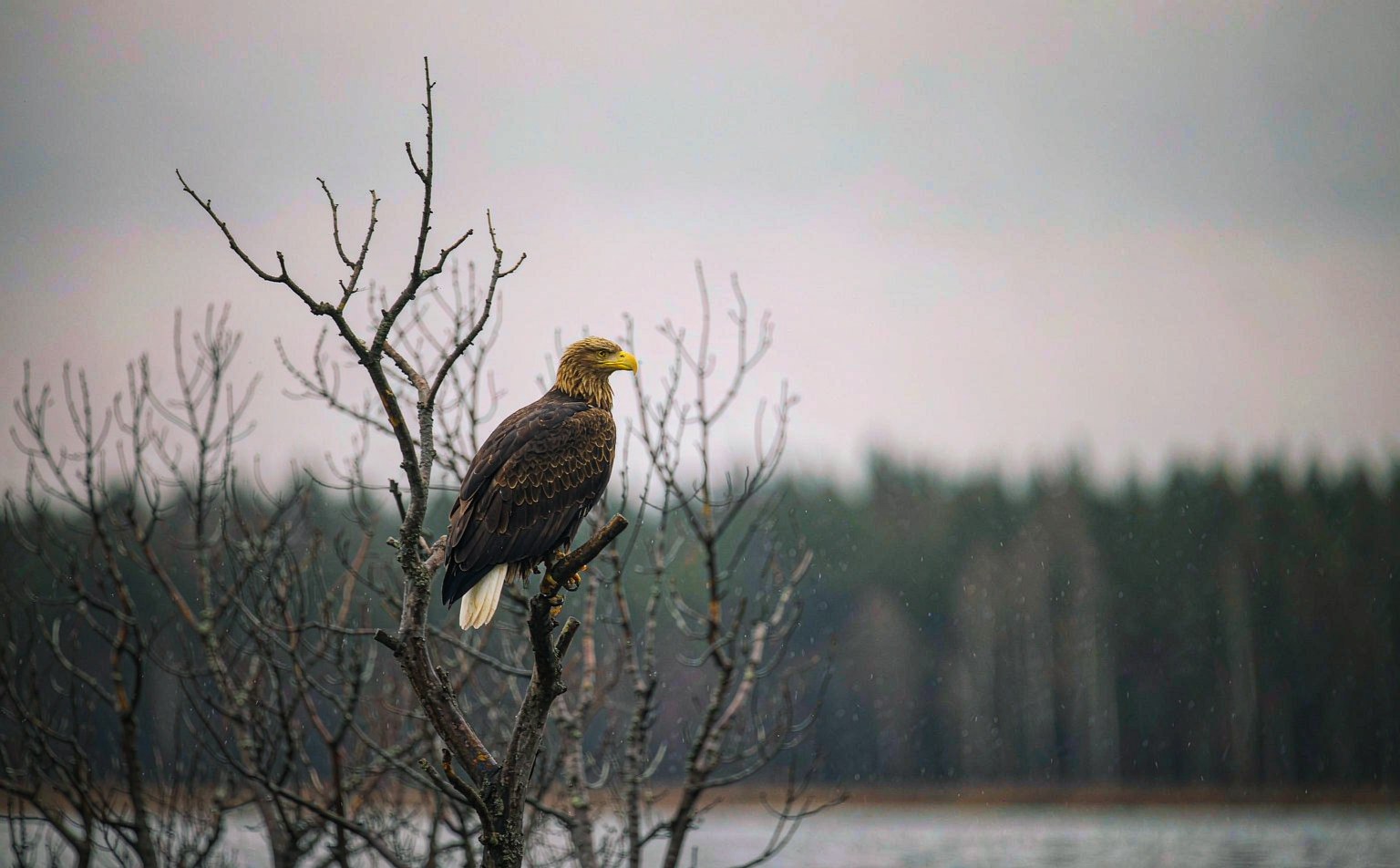
Haliaeetus albicilla | White-tailed Eagle
Introduction
The White-tailed Eagle (Haliaeetus albicilla) is the largest bird of prey in Europe and a magnificent symbol of wild coastal and lakeland landscapes, from the fjords of Scandinavia to the estuaries of the Baltic and the rocky shores of the North Atlantic. As a member of the sea eagle group, it is built for a life spent above water, scanning for fish, waterfowl, and carrion along coasts, rivers, and large lakes. Often called the “white-tailed sea eagle,” it is the close cousin of the bald eagle of North America and shares that species’ imposing presence and broad, fingered wingtips.
Once pushed to the edge of extinction across much of its range by hunting and poisoning, the White-tailed Eagle has staged one of the great conservation recoveries of European wildlife. Reintroductions and strict legal protection have restored breeding populations to countries where the bird had vanished for generations, and today the sight of a pair wheeling above a northern bay is no longer a rarity but a growing expectation.
The species is a long-lived, slow-breeding raptor that forms strong, often lifelong pair bonds and returns to the same massive nest year after year. Its comeback is frequently cited alongside that of the golden eagle, another apex raptor whose fortunes have also improved under protection, though the two occupy different niches and rarely compete directly.
Taxonomy
The White-tailed Eagle was first formally described by Carl Linnaeus in 1758 and is the type species of the genus Haliaeetus, the sea eagles, which includes the bald eagle, the African fish eagle, and the Steller’s sea eagle of the northwest Pacific. The scientific name combines the Greek haliaietos, meaning “sea eagle,” with the Latin albicilla, referring to the white tail of the adult bird.
Adults are readily identified by their pale headed appearance, brown body, and distinctive short, wedge-shaped white tail, while immatures are darker and only acquire the white tail and creamy head after several years. Two weakly differentiated subspecies are sometimes recognized, one in Greenland and one across the Eurasian mainland and Japan, but most authorities treat the species as monotypic across its wide range.
Molecular work places the sea eagles among the basal lineages of the Accipitridae, more closely related to the kites and fish eagles than to the true eagles of the genus Aquila. The closest living relative of the White-tailed Eagle is the bald eagle (Haliaeetus leucocephalus) of North America, with which it forms a well-supported pair, and the two species are known to hybridize in the wild where their ranges have come into contact through introductions.
Physical Description
The White-tailed Eagle is a very large raptor, with a body length of 70 to 95 centimeters and a wingspan commonly reaching 200 to 240 centimeters. Adult males weigh roughly 3.5 to 5 kilograms and females 4 to 7 kilograms, making the species among the heaviest flying birds in its range. In flight it is unmistakable: long, broad wings held flat or in a shallow dihedral, a short wedge-shaped white tail, and a pale, often golden-tinged head.
The plumage of adults is mostly a uniform dark brown, with the pale head and pure white tail providing the key field marks. The bill is large and hooked, pale yellowish in adults, and the eyes are a pale lemon yellow. Juveniles are darker overall, lacking the white tail and pale head, and only gradually attain adult coloration over four to five years, a slow maturation that is typical of long-lived sea eagles.
On the ground the bird appears bulky and powerful, with feathered legs and large talons adapted for gripping slippery prey. Its massive beak reflects a diet that includes not only live fish but also carrion and the carcasses of mammals and birds, which the eagle can tear with considerable force. The combination of size, pale head, and white tail makes even a distant adult easy to separate from the golden eagle and other large raptors.
Habitat
White-tailed Eagles are closely tied to water, nesting in large trees near coasts, lakes, and rivers, or on coastal cliffs and islets where such sites are available. They require old, sturdy trees or inaccessible ledges for their enormous nests, which can reach several meters across and weigh hundreds of kilograms after decades of use. In treeless northern regions the birds nest on cliffs and rocky islands, often returning to the same site for many consecutive years.
The surrounding landscape must provide reliable food, principally fish and waterbirds, along with quiet during the breeding season. Estuaries, shallow bays, fish-rich lakes, and river systems are especially important, and the eagles will travel considerable distances from the nest to feed. In winter, when inland waters freeze, birds concentrate along ice-free coastlines and around fish-processing areas and roosting gull colonies.
Although the species is tolerant of cold and thrives in remote northern wilderness, it has also recolonized productive lowland areas where food is abundant and persecution has ceased. The main limitation is human disturbance at the nest, which can cause abandonment, so the most successful populations are found where nesting sites are protected and access is limited during the breeding months.
Diet
The White-tailed Eagle is an opportunistic feeder whose diet centers on fish, particularly slow or wounded individuals caught near the surface or scavenged after death. It captures live fish by snatching them from the water in a shallow plunge or by paddling along the surface, but a large portion of its intake comes from carrion and from fish discarded by fisheries, which makes it an important recycler of dead organic matter in aquatic ecosystems. A wide range of prey is taken, from salmonids and whitefish to the discarded bycatch of commercial boats.
Waterbirds form a major secondary component, and the eagle readily takes ducks, gulls, grebes, and coots, often surprising them on open water or stealing catches from smaller raptors and divers. It also feeds on mammals, from hares and young seals to the carcasses of deer and livestock, and will pirate food from otters, ospreys, and other birds through outright kleptoparasitism.
In lean seasons the eagle leans heavily on carrion, including washed-up fish and the bodies of animals along the shore, which allows it to survive when live prey is scarce. This flexibility, together with its ability to exploit human-associated food sources such as fish farms and landfill, has been central to its recovery, much as abundant prey has aided other recovering raptors across Europe.
Reproduction
Breeding begins in late winter, when established pairs return to their nest and renew bonds through spectacular mutual soaring and talon-grappling displays. The nest is a massive structure of branches, lined with softer material, built in a tall tree or on a cliff ledge, and added to each year until it becomes a towering platform. In some populations the same nest is used for decades and may support the weight of a small car.
The female lays two eggs, occasionally one or three, at intervals of a few days, and both parents incubate for about 38 to 42 days. The chicks hatch asynchronously and, as with many large raptors, the older nestling may dominate or outcompete the younger, so broods of two often fledge only a single young in poor years. The parents share feeding duties, tearing food into small pieces for the chicks.
Fledging occurs at roughly ten to twelve weeks, but the young remain near the nest and dependent for several more months, learning to fish and scavenge through their first autumn. White-tailed Eagles do not breed until they are four to five years old and may live for more than twenty years in the wild, forming long-term pair bonds that strengthen the stability of established territories.
Conservation
The White-tailed Eagle was exterminated from much of central and western Europe by the mid-twentieth century, the victim of relentless shooting, egg collecting, and the cumulative effects of pesticides such as DDT that thinned eggshells and reduced reproductive success. By the 1970s only a handful of populations survived, chiefly in remote parts of Norway, Russia, and Greenland.
Its recovery is a conservation landmark. Legal protection under national and European law, the banning of DDT, and ambitious reintroduction programs in Germany, Scotland, Ireland, and France have rebuilt breeding ranges across the continent. Translocated birds from healthy populations established new territories, and the species now breeds again in countries where it had been absent for generations, often becoming a focal point for ecotourism.
Ongoing threats include illegal poisoning, lead poisoning from ingested spent ammunition in carrion, collision with wind turbines and power lines, and disturbance at nest sites. Because the eagle is long-lived and slow to reproduce, populations remain vulnerable to any increase in adult mortality. Continued monitoring, the provision of safe nesting areas, and stricter controls on environmental poisons are essential to secure the gains already made, building on the example set by earlier successes with the golden eagle and other protected raptors.
Fun Facts
- The White-tailed Eagle’s nest can grow so large over decades of use that it ranks among the biggest bird nests in the world, sometimes exceeding two meters in width and depth.
- Pairs perform dramatic “cartwheel” displays in which they lock talons and tumble through the air before separating, a spectacular reaffirmation of the pair bond.
- An adult can swallow surprisingly large mouthfuls of fish, but it often carries prey to a perch to tear it apart rather than eating in flight.
- The species has been revered since antiquity and appears on coats of arms and national emblems across northern Europe.
- White-tailed Eagles are known to live more than twenty-five years in the wild, and a single pair may occupy and rebuild the same nest for over a decade.