 By st20113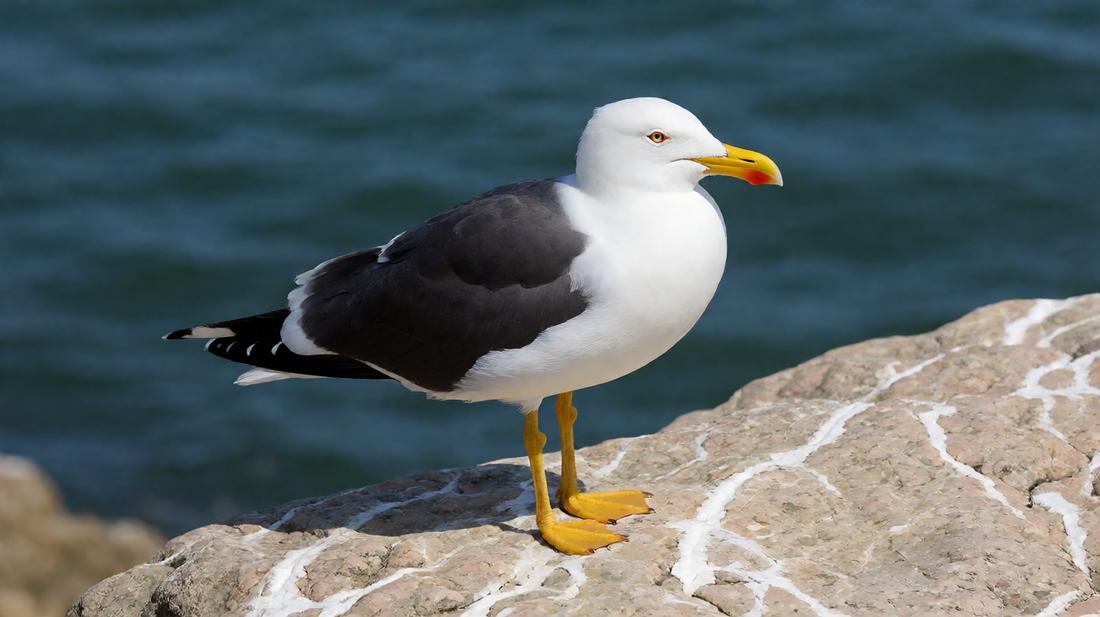
Larus fuscus | Lesser Black-backed Gull
Species Profile · Laridae
Lesser Black-backed Gull
The dark-backed gull of the north-east Atlantic, whose last hundred years were a story of expansion — and whose last thirty have gone into reverse.
IUCN: Least Concern
Range
Length
Weight
Nest
Incubation
The gull that moved inland
An opportunist of coast and town
The Lesser Black-backed Gull is a large, powerful gull of the north-east Atlantic. It is easy to name at a glance. Its back and wings are dark slate grey, almost charcoal. That colour contrasts with a pure white head and underparts. The legs and bill are bright yellow. Dark mantle plus yellow legs is the quickest test. It separates the bird from the Herring Gull. The Herring Gull has a pale grey back and pink legs. The bird is 52 to 64 cm long. Its wings span 117 to 150 cm. It weighs about 450 g at the light end and 1100 g at the heavy end. That places it in the middle of the European gull size range.
It is larger than the Black-headed Gull of the same coasts. It is smaller than the Great Black-backed Gull. That bird is its close competitor. A young bird needs 4 years to reach full adult plumage. It passes through a series of brown and mottled plumages. Those stages get progressively greyer. They make young birds a real challenge to name. The species is abundant and adaptable. Its last hundred years have been a story of expansion. It has spread north and west across Europe. It has taken to nesting on the flat roofs of towns. It has learned to follow fishing boats.
It now uses refuse tips and fields. Where it meets the larger Herring Gull it often wins. It tends to displace that bird from shared sites. The last few decades are more complicated. Numbers breeding in Britain and Ireland have fallen markedly. Those countries hold a large share of the world population. So the species is now a bird of conservation concern in the United Kingdom. Globally it is still common. It is classed as Least Concern on the global Red List. It is one of the few large gulls with a long-distance migration. Many birds travel from northern Europe to the coasts of western Africa.
Family tree
Larus, the large white-headed gulls
The Lesser Black-backed Gull belongs to the family Laridae and the genus Larus. Those are the large white-headed gulls. The members of this group are closely related and very similar. Their relationships have been revised again and again. These gulls of Europe are still hard to tell apart. The Lesser Black-backed Gull and the Herring Gull were once treated as one species. The main reason was that they hybridise where their ranges meet. Mixed pairs and intermediate young do occur. The two are now always treated as separate species. Within the genus the closest relatives are other dark-backed large gulls. These include the Great Black-backed Gull.
They also include several dark species of the Pacific and the Arctic. In the field the bird is often compared with the Herring Gull. It is also compared with the Black-headed Gull. That is a much smaller and slighter bird of the same coasts. Its dark hood in summer and black-tipped red bill make the difference clear. Size and structure settle the rest once the two are side by side. The species was described by Linnaeus in 1758. Four subspecies are accepted today. Graellsii lives in western Europe. Intermedius lives in Scandinavia and the Low Countries. Fuscus lives in the Baltic and is the darkest of all.
Barabensis lives on the steppes of central Asia. They differ in the shade of the mantle. They also differ in the amount of black in the wingtip. Their migration destinations differ too. Baltic birds travel furthest. Birds of western Europe make fairly short trips. The scientific name simply describes the bird. Larus is the classical Latin word for a gull. Fuscus is Latin for dark or dusky. So the name means the dusky gull. The English name notes that the bird is smaller than the Great Black-backed Gull.
Charcoal back, yellow legs
How to identify one
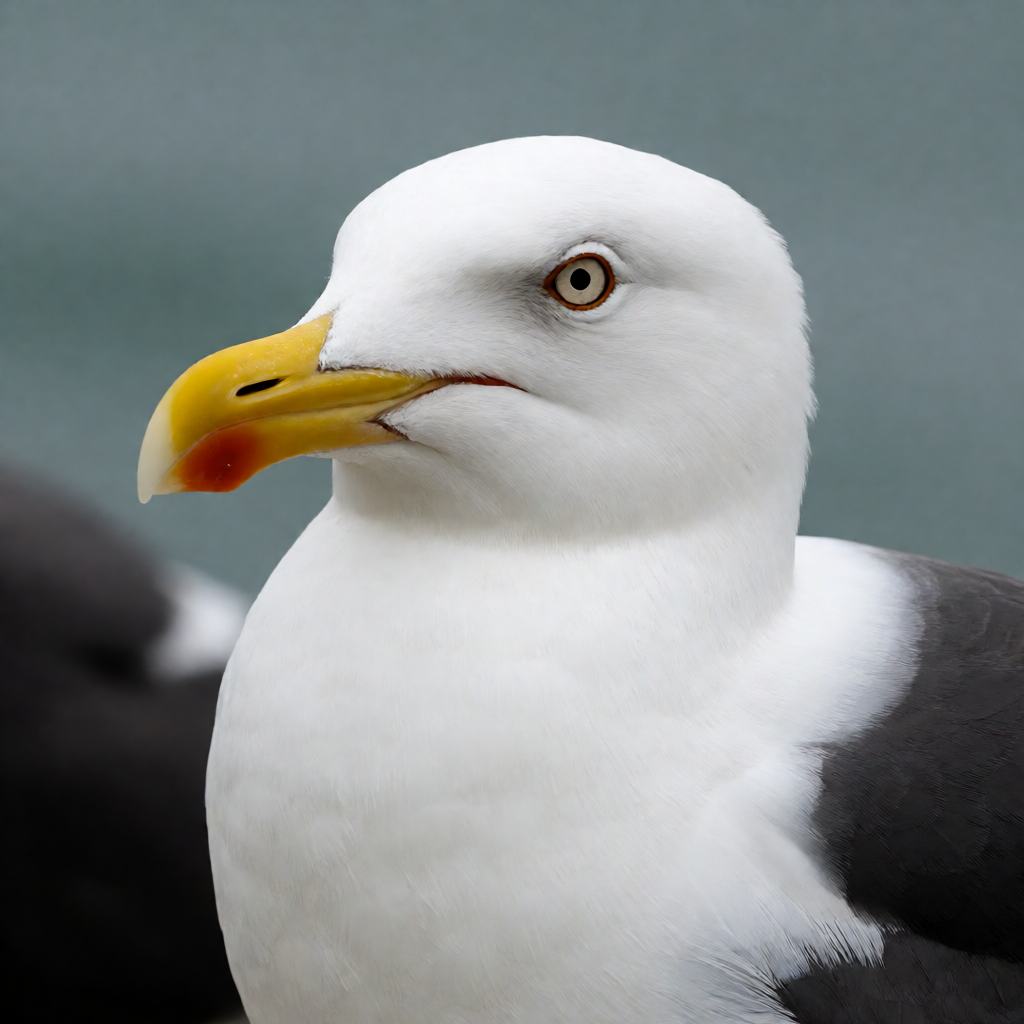
An adult in breeding plumage is a strikingly clean bird. The head, neck, breast and belly are pure white. The back and upper wings are deep slate grey. That grey is darker in the east. The wingtips are black. One or 2 small white spots sit at the end of the outermost feathers. The bare parts are as bright as the plumage is dark. The legs and feet are a rich yellow. The bill is yellow too. A red spot sits near the tip of the lower mandible. That spot works as a target for begging chicks. The eye is pale yellow with a dark ring around it.
In winter the head and neck become lightly streaked with brown. A bird on a harbour wall in January looks less clean than in June. Young birds are entirely different from adults. They pass through a long series of plumages over 4 years. The first is a dark brown, scaly juvenile. It could almost pass for a small Great Black-backed Gull. Later stages grow paler. The back turns grey while the wing coverts stay brown. A young bird has a dark bill with a pale base. Its legs are pinkish rather than yellow. That is often the most useful clue for ageing birds in a mixed flock. The wings are long and broad.
The flight is powerful and deliberate. Wing beats are steady and unhurried and there are long glides. On the ground the bird walks well. It can run after food with surprising speed. On the water it floats high and buoyantly, as is typical of the genus. The sexes are alike in plumage. Males average slightly larger and heavier than females. Once a bird reaches full adult plumage it does not change further with age. It may live a very long time. Ringed birds have lived for more than 30 years.
1
2
3
Cliff, dune and flat roof
Where it lives
The Lesser Black-backed Gull is a bird of the coast and the open sea. It is also one of the most adaptable of all gulls. It now breeds far inland as well. Its range runs across the north-east Atlantic. It reaches from Iceland and Scandinavia southward through western Europe to Iberia. It breeds on rocky islands, cliffs, sand dunes and shingle beaches. It also nests on moorland and on the shores of lakes and reservoirs far from the sea. Increasingly it uses the flat gravel roofs of industrial buildings. It uses the pitched roofs of towns too.
There the birds are largely free from land predators. They are also free from human disturbance, which makes life hard on the ground. Outside the breeding season it uses estuaries, harbours and coastal waters. It also uses refuse tips, ploughed fields and the outfalls of sewage works. A flock of dark-backed gulls on a freshly ploughed field is a familiar winter sight. The species will follow fishing boats for discards. It gathers in large numbers wherever there is waste. Birds of the western form tend to stay put. They move no further than the coasts of Iberia and Morocco in winter.
Birds of the Baltic race leave their breeding grounds entirely. They fly to the Mediterranean and the Middle East. Some travel down the western coast of Africa as far as Senegal and beyond. So the species is partly resident and partly a long-distance migrant. Migration is largely by day. It often follows coastlines and river valleys. Young birds wander widely. They may spend their first summers far north or south of where they were reared.
An eater of almost anything
What it eats
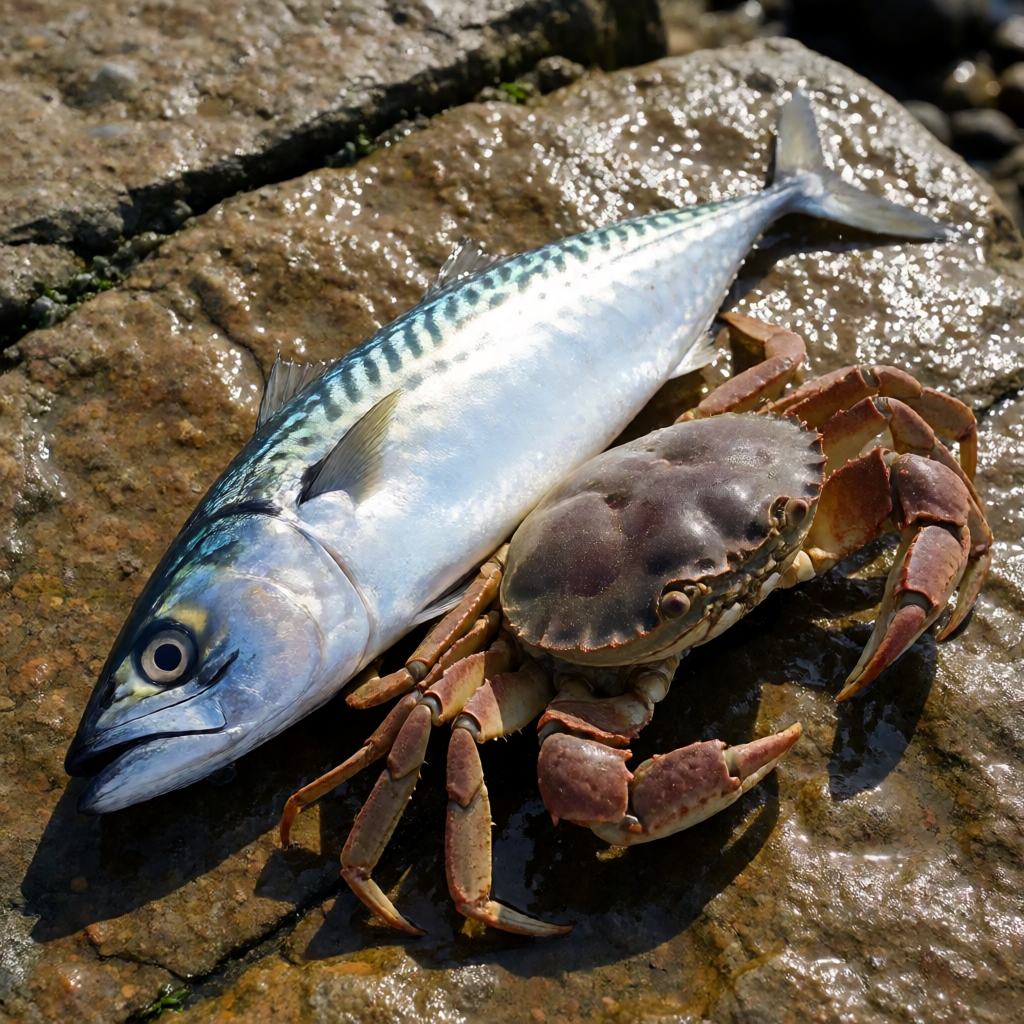
The Lesser Black-backed Gull is an opportunistic omnivore and a determined scavenger. Its diet on the breeding grounds is mostly animal matter. It will eat almost anything edible it can find, obtain or steal. That is the main reason it has done so well alongside people. Fish make up a large part of the diet. Some are live prey taken from the surface of the sea. Others are discards and offal thrown from fishing boats. Crustaceans such as crabs and shrimps matter in some places. Marine worms and molluscs are taken on the shore at low tide. On land the bird eats earthworms and insects from fields and grassland.
It is a serious predator of the eggs and chicks of other seabirds. Its targets include terns, auks, cormorants and smaller gulls. It is also a notorious scavenger of refuse. It picks over tips and bins. That waste forms a very substantial part of the diet of urban birds. It will take carrion and weak or dying animals. It eats berries and fruit in season. It takes food scraps given or dropped by people. In coastal towns it has learned to open rubbish bags. It will take food from the hands of visitors.
Feeding happens on the wing, on the ground and on the water. The bird can swim after prey and upend like a duck. It can also dive-bomb another bird until it drops its catch. The species is large, intelligent, long-lived and able to switch prey. So it responds quickly to changes in the food supply. That flexibility has helped it greatly. So has the removal of many predators and competitors. So has the enormous increase in the waste produced by human society. Together these explain its rapid growth in the 1900s.
A colony on the ground or a roof
The breeding cycle
The Lesser Black-backed Gull nests in colonies. These are usually smaller than those of the Herring Gull. They may still hold several thousand pairs. Birds usually return to the site where they were reared. The same birds hold the same sites year after year. The oldest birds often take the best positions. Nesting starts in April or May. It starts later in the north of the range than in the south. The nest is a substantial build of grass, seaweed and moss. It uses any other suitable material to hand. It sits on the ground among plants or on a bare roof.
It is sometimes reused and enlarged in later seasons. Between 2 and 3 eggs are laid, most often 3. Both adults incubate them for about 24 to 27 days. During that time the birds are attentive and aggressive. They will attack anyone who approaches the nest. They fly at their heads and strike with the bill or the feet. The chicks hatch covered in grey-brown down with darker spots. That helps them blend with pebbles and vegetation. They leave the nest within a few days and hide in the cover around it. They fledge at between 30 and 40 days of age. They keep being fed by their parents for a further period.
They beg for food long after they can fly well. The family party may stay together on the coast into the winter. Breeding success varies greatly with the food supply. Colonies that rely on refuse produce chicks of lower quality. Colonies that feed mainly on fish do better. So the growth of the tip population may not mean a secure breeding population. Nesting failure comes mainly from foxes, rats and large birds. Flooding of low-lying sites and human disturbance add to it. In some places eggs or chicks are removed by researchers or authorities. The species is treated as a nuisance there. That has become a significant issue.
Growth, then a sharp fall
Conservation
The Lesser Black-backed Gull is classed as Least Concern on the global Red List. Its total population is large and its range vast. The detail of its recent history shows how global and local pictures can differ. Across much of northern Europe the species expanded through the twentieth century. It increased its range and its numbers. Colonisation of towns and industrial sites helped. So did the growth of refuse disposal. Together these let it breed in districts where it had never bred before. That expansion came largely at the expense of the Herring Gull.
The smaller but more aggressive relative took its sites and territories. Britain and Ireland hold a very large share of the world breeding population. There the trend has reversed sharply since the 1990s. The species is now on the national list of birds of conservation concern. Food has fallen at sea and at refuse tips. Landfill sites have closed. Gull numbers are controlled in towns. Safe breeding sites have been lost. All of these feed the decline.
The bird’s habits bring it into conflict with human interests. So its management raises difficult questions. Culling, egg removal and the netting of buildings are widely practised. Places that see the birds as a hazard or a nuisance do this. Other areas protect and monitor their colonies. In the long run the species in Europe may depend on the marine food chain. It may also depend on whether the birds keep finding safe places to nest. A bird that gained so much from human activity may find its fortunes turning. The very changes that once favoured it could now work against it.
Quick hits
Five things to remember
- Its dark charcoal back and bright yellow legs mark it out at once from the pale-backed Herring Gull.
- A young bird takes 4 years to reach adult plumage, passing through several brown and mottled stages.
- Birds that breed in the Baltic travel as far as western Africa for the winter.
- Roof-nesting birds are often far more successful than ground nesters, because predators cannot reach them.
- Birds banded in Europe have been recovered at more than 30 years old.