 By st20113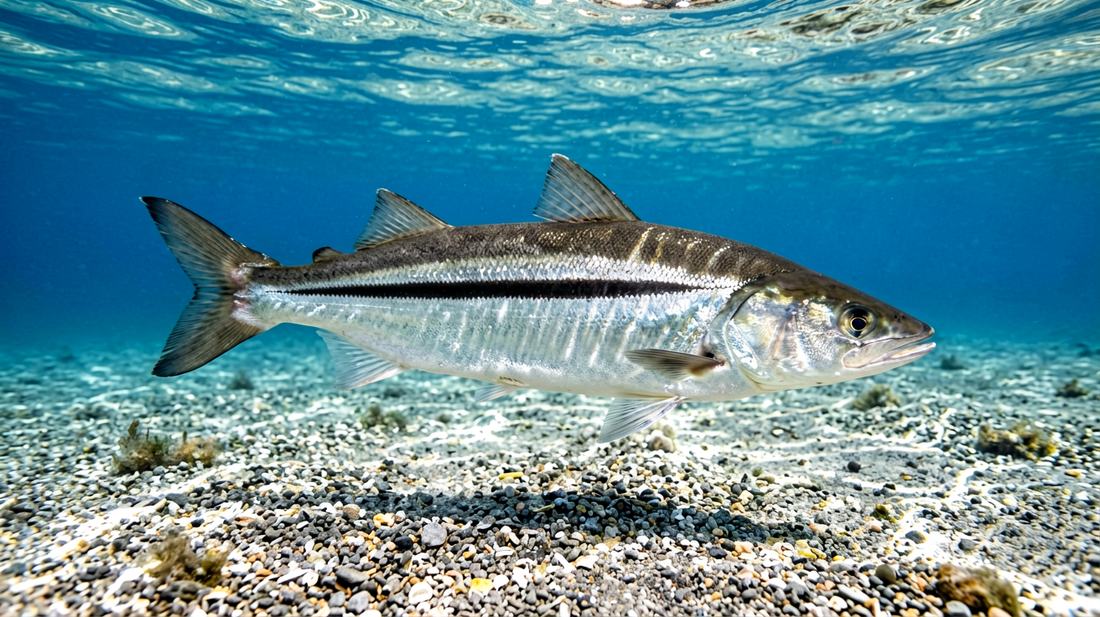
Melanogrammus aeglefinus | Haddock
Species Profile · Gadidae
Haddock
The fish behind fish and chips, marked by a dark lateral line and the Devil’s own thumbprint.
IUCN: Vulnerable
Range
Size
Weight
Life
Status
The fish supper
Haddock on the plate
The haddock is the fish in British fish and chips. It gives the smoky taste of an Arbroath smokie. It is a bottom-living kin of the cod. It has a slim body. It has a small chin barbel. It has a very dark lateral line.
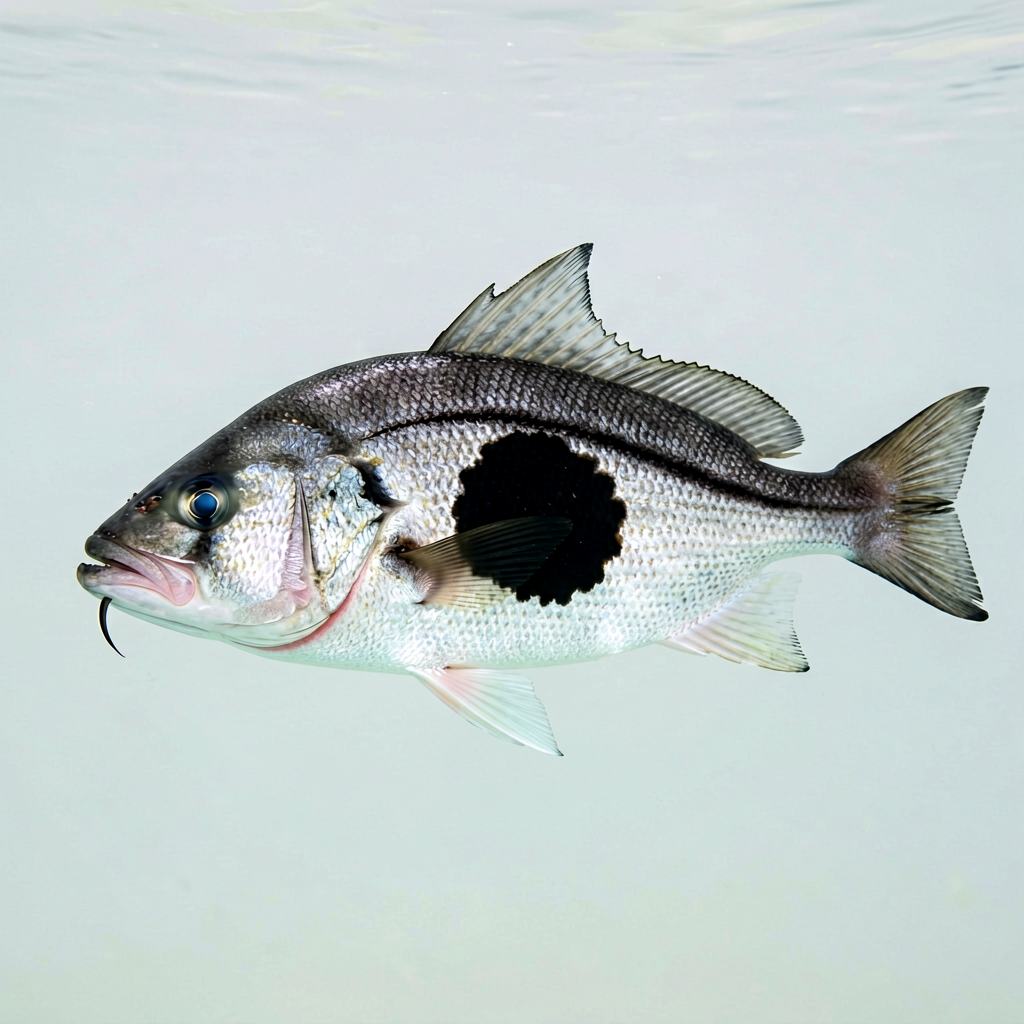
The best clue is a black blotch above the pectoral fin. It is thumb-shaped. Fishermen call it the Devil’s thumbprint. Haddock live on both sides of the North Atlantic. They live in cool water over sand, gravel and shell. They gather in huge schools.
They spawn in late winter. They produce millions of eggs. This abundance once fed a great fishery. It made the species a case study. It shows how fast a stock can be pushed to the edge.
Family tree
One of the true cods
Haddock belong to the family Gadidae. These are the true cods. They are in the order Gadiformes. Their closest kin is the Atlantic Cod. It shares three dorsal fins. It has two anal fins and a chin barbel. Other family members include whiting. They include saithe, pollack and the ling.
Haddock are odd. They are the only living species in the genus Melanogrammus. The name comes from Greek words. One means black. One means letter. It refers to the dark lateral line down the flank. Linnaeus described the fish in 1758. He placed it with the cods in the genus Gadus.
Later work gave it its own genus. It had a smaller mouth. It had a straight lower jaw. It had a black shoulder blotch. Fossil gadids from the North Atlantic show the family’s age. They have lived in these cool seas for millions of years.
Black line, pale flank
How to identify a haddock
A boat-caught haddock is usually 30 to 70 centimetres long. It weighs 1 to 3 kilograms. The official maximum is about 112 centimetres. It weighs 16.8 kilograms. The oldest on record reached about 20 years. The body is long and tapering. It has a wedge-shaped snout. The lower jaw is shorter than the upper. This gives a straight look that cod lack.
A small barbel hangs under the chin. The first dorsal fin is triangular. The anal fins are pale with black speckles at the base. The dorsal, pectoral and tail fins are dark. Three dorsal fins run along the back. Two anal fins sit below. The upper body is dark grey-brown to near black. The flanks are dull silver. The lateral line is black.
It runs unbroken to the tail. It curves gently above the pectoral fin. Just beneath it lies a large oval blotch. This blotch gives the genus its name. Coloured variants appear now and then. Some are golden-backed with bars. Some lack the shoulder blotch. Overlapping scales make the skin rough and gritty.
1
2
3
Cold northern seas
Where haddock swim
The haddock lives in the North Atlantic and near Arctic. It ranges from Cape Hatteras and the Gulf of Maine. In the west it goes to Greenland, Iceland, Spitsbergen and the Barents Sea. In the north-east it goes south to the Bay of Biscay. It is far more common on the European side. It prefers depths of 10 to 200 metres.
It has been caught as deep as 450 metres. It keeps to water of about 4 to 10 degrees Celsius. Gravel, sand, shell and rock all suit it. Northern stocks make long feeding trips. Barents Sea haddock move hundreds of kilometres. They move between spawning and feeding grounds.
Icelandic fish do the same. Tagging shows individuals return to the same spawning area. They do this year after year. Young fish spend their first months in shallow coastal water. Then they join the adult schools offshore.
What it eats
Feeding on the seabed
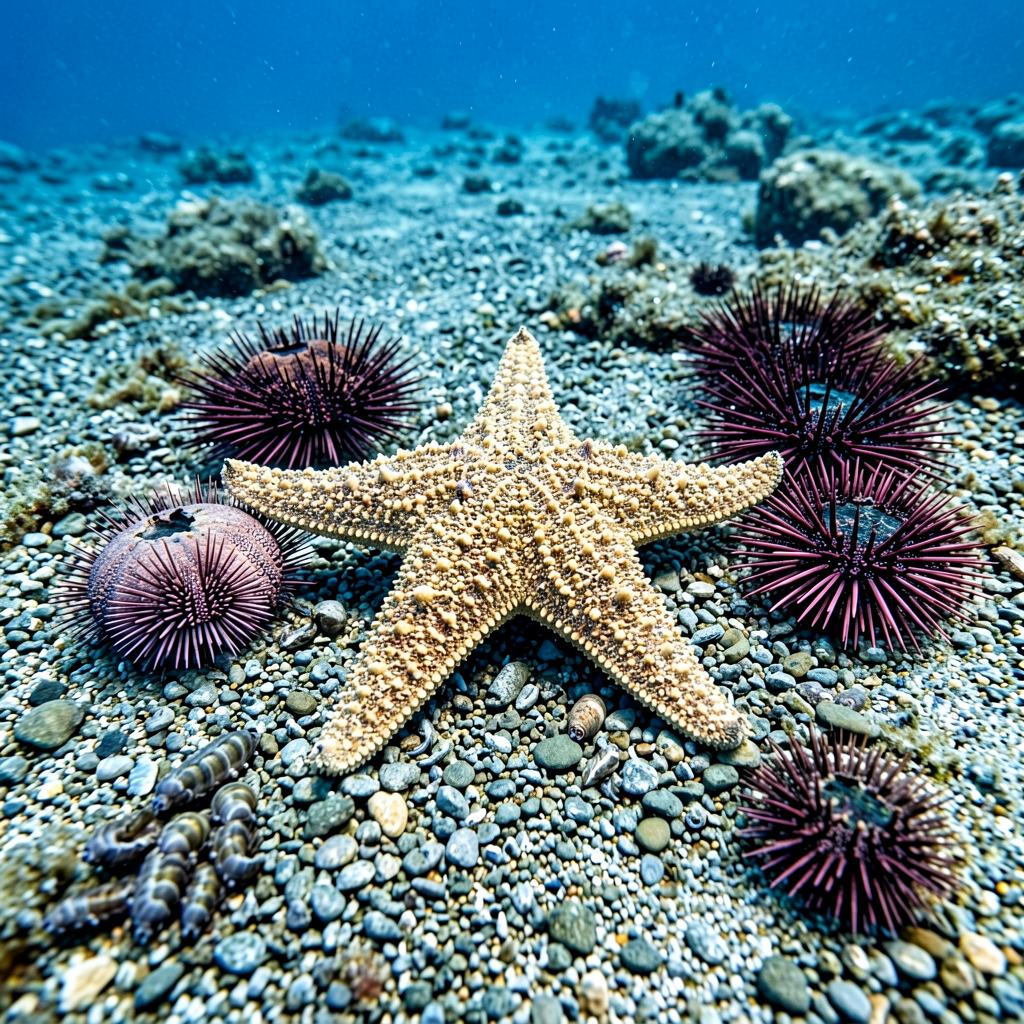
Haddock feed mostly on the seabed. Their menu is broad. Brittle stars and sea urchins are key food. So are mussels, clams and other molluscs. Ragworms and other polychaete worms are eaten. So are shrimps and small crabs. They also eat small fish.
These include sand lance and capelin. They include young herring, silver hake and argentines. They take herring eggs from the bottom. Young fish eat far more small crustaceans. The small mouth limits meal size. Haddock pick at many small items. They do not swallow one large prey.
Like other cods they feed at dawn and dusk. Their taste buds and barbel find prey in dim light. Bony plates in the throat pass food down. The stomach can stretch. Crews often find it packed with sea urchin spines.
Millions of eggs
Spawning in late winter
Haddock spawn in late winter and spring. This is February to April in most areas. It is later in the far north. They gather in dense schools. They gather over gravel or hard ground. This is at depths of 50 to 150 metres. A female is a batch spawner. She releases several batches of eggs. This happens over a few weeks. A large female can produce one to three million eggs.
The eggs are buoyant. They drift in the plankton for one to three weeks. Then they hatch. Their survival depends on currents. It depends on the plankton bloom. One season can yield a huge year class. The next may yield almost none. Haddock grow fast where food is rich. A strong year class shows in the fishery three or four years later. That is when young fish first enter the nets.
The larvae are also pelagic. They drift with currents for weeks more. Then they settle to the bottom as small fish. Growth depends on water warmth and food. A North Sea haddock matures at three or four years. Northern fish may take longer. Half the females are mature at about 35 centimetres. Cod, pollock, hakes, spiny dogfish, skates and grey seals eat haddock. Young fish are eaten by the same predators that eat cod.
A stock under management
Quotas and bycatch
Haddock has fed major fisheries for centuries. This is true in the North Sea. It is true off Iceland, Norway and the Barents Sea. The Northwest Atlantic stock collapsed. This followed decades of heavy fishing. It has been slow to recover. On the European side stocks are managed by quota.
This follows ICES advice. Several are fished sustainably. The largest is in the Barents Sea. It has produced strong year classes in recent years. The IUCN Red List entry dates from 1996. It lists the species as Vulnerable. That status reflects old conditions, not the present.
Modern worries focus on bycatch. Cod and whiting are caught in trawl gear. Dragged gear harms the seabed. Warming water changes where the fish spawn and feed. Haddock need cold water. A warming Atlantic may shift their range north.
Quick hits
Five things to remember
- A dark blotch above the pectoral fin is called the Devil’s thumbprint. The devil is said to have gripped the first haddock there.
- Haddock are the only living members of the genus Melanogrammus.
- A single large female can release up to three million eggs in one season.
- The heaviest haddock on record weighed about 16.8 kilograms.
- Smoked haddock gives us the Arbroath smokie. This is a traditional Scottish speciality.