 By Iris
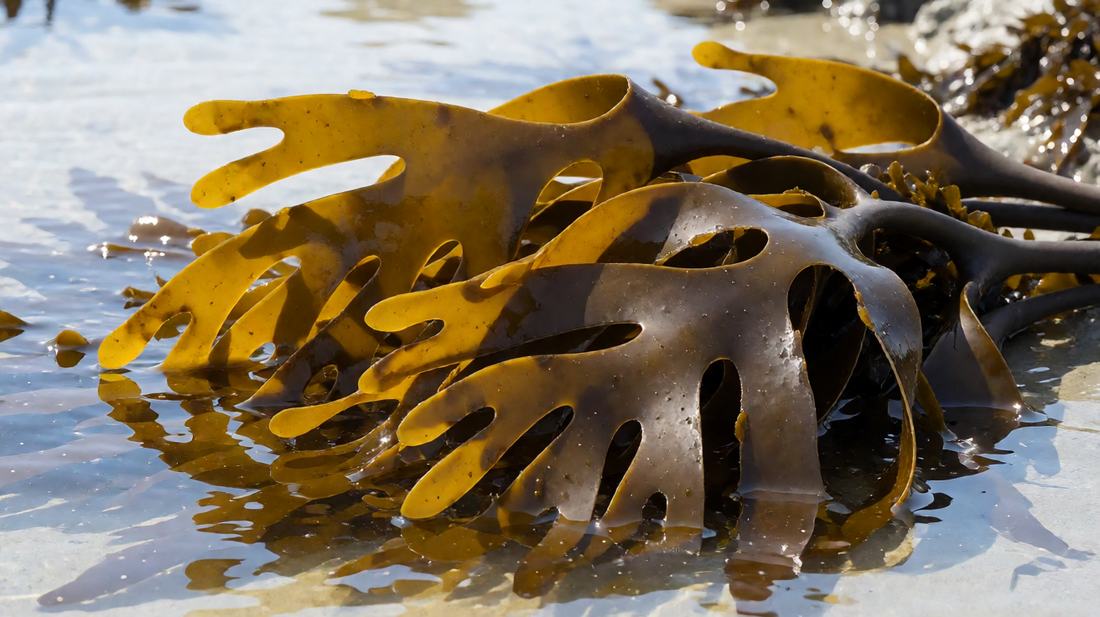
Laminaria digitata | Oarweed
Species Profile · Laminariaceae
Oarweed
A leathery brown kelp whose frond splits like fingers, and whose holdfast shelters worms and brittle stars.
No firm global rating, but harvest is growing
Length
Depth
Growth
Life span
Harvest
Family
The Oarweed
A forest under the tide
The oarweed is a large brown seaweed. It grows in cold shallow seas. Its frond splits into finger shapes.
It can reach 2 m or more. It forms dense beds under water.
Family tree
Laminariaceae, the kelps
This alga sits in the genus Laminaria. Its scientific name is Laminaria digitata. It belongs to the kelps.
Kelps are large brown algae. They are not plants in the strict sense. Like the Edible Sea Urchin that grazes on it, it is a familiar sight on rocky sea beds.
2 m of leathery frond
How to tell one
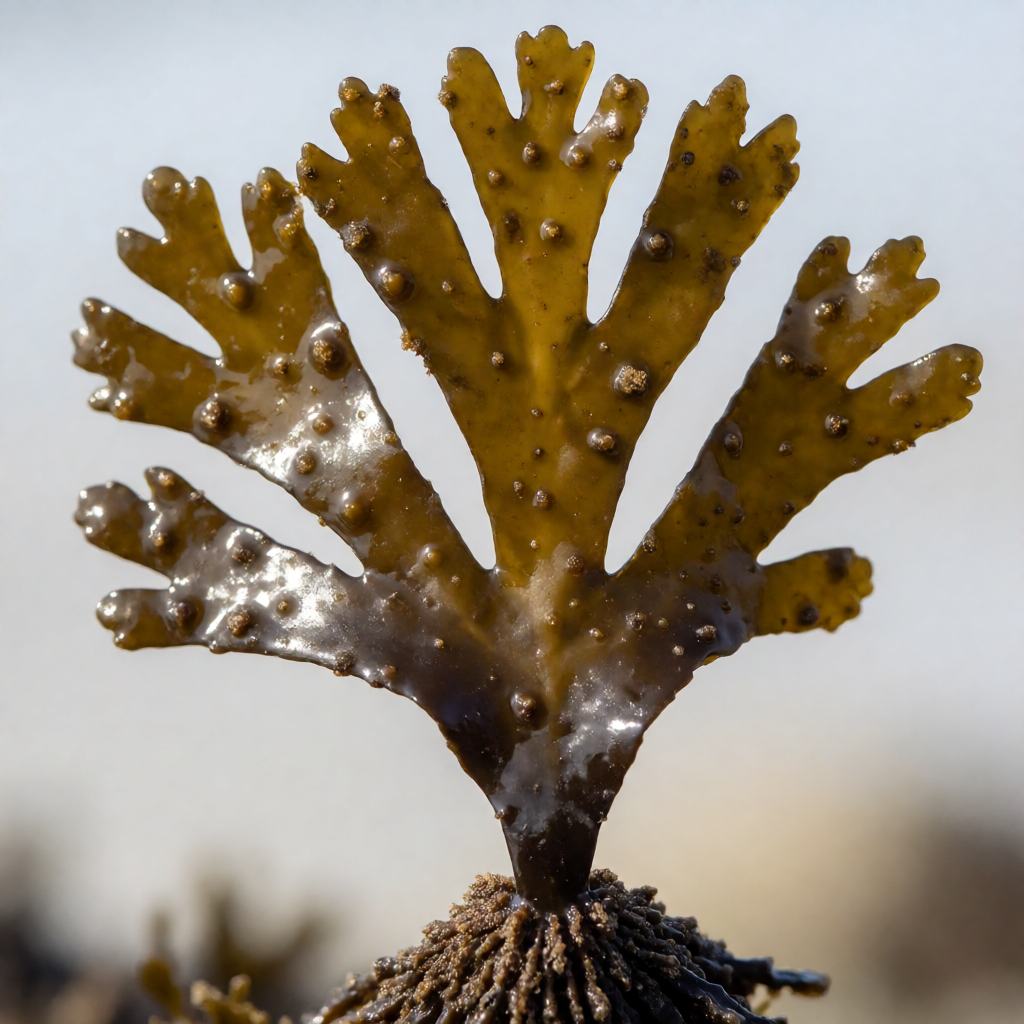
The frond is flat and leathery. It is dark brown in colour. The blade splits into several strips. Those strips look like fingers.
A flexible stalk joins the blade to the holdfast. The holdfast grips rock with root like fingers. The alga may live for 4 years or more.
1
2
3
Rocky lower shores
Where it lives
This alga grows on rocky shores. It sits in the lower shore and below the tide. It grows down to about 20 m.
It prefers places with strong water movement. It forms thick beds in such places. It is found on both sides of the North Atlantic.
Minerals and sunlight
What it eats
The alga makes its own food. It uses sunlight in its brown cells. It takes in minerals straight from the sea.
It also holds many nutrients through winter. It grows fast in spring. It can add 5 percent of its weight each day.
Two very different stages
The breeding cycle
The alga has 2 very different stages. The large frond is the first stage. It makes spores in patches on the blade.
The spores grow into tiny thread like plants. Those small plants release sex cells. The young then grow into new large fronds.
No firm rating, harvest rising
Conservation
This alga carries no firm global rating. Growing demand has led to more harvesting. Cutting the holdfast kills the plant.
Trimming the blade lets it grow again. Kelp beds shelter fish and crabs. Some countries now limit the harvest.
Quick hits
Five things to remember
- Its stalk can stretch like rubber in rough surf.
- The holdfast shelters worms and brittle stars.
- It was once burnt for potash and iodine.
- Its frond has a texture like tough leather.
- It grows fastest in spring when the sea is bright.