 By Iris
Puya raimondii | Queen of the Andes
Species Profile · Bromeliaceae
Queen of the Andes
A single stalk rises ten metres above the rocks.
Endangered
Stalk
Rosette
Flowers
Lifespan
Altitude
Rating
The Queen of the Andes
A century of waiting
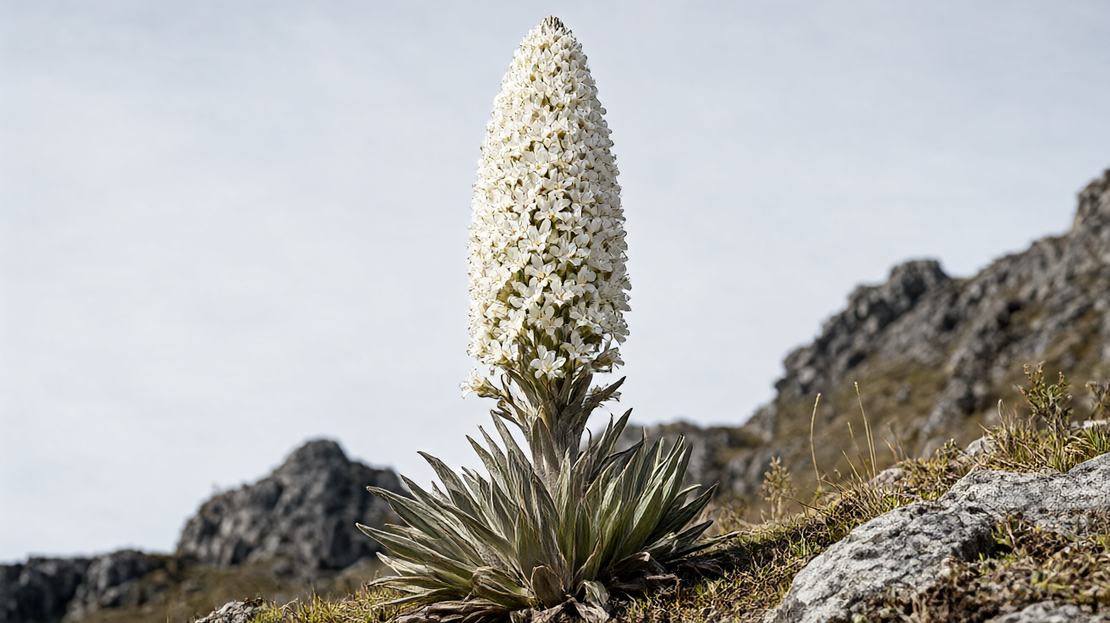
A single stalk rises ten metres above the rocks. Nothing else comes close. It holds thousands of flowers, and the top reaches higher than a house. Its leaves form a rosette, and each one ends in a hooked spine.
Nothing else in the high Andes grows this large. The plant waits a century for that stalk, and then it dies. Puya raimondii grows on cold slopes above 3000 m, where frost comes most nights and the air stays thin.
Family tree
Bromeliaceae, the largest of them
Puya raimondii sits in the bromeliad family, Bromeliaceae. More than 200 species fill the genus, and all of them live in South America, where the Andes gives them room. Its name honours Antonio Raimondi, since the Italian naturalist mapped much of Peru. Workers place the plant among the terrestrial bromeliads, though it grows larger than any relative.
Pineapple shares the family. Pineapple and puya look nothing alike. No subspecies are recognised, and the stands stay isolated on separate ridges.
Hooked leaves, water tank
How to tell one
Rosettes spread 2 to 3 m across. Leaves stay stiff and grey green, and hooks line every edge. A stalk rises 8 to 15 m, and it holds the flowers. Its base holds water, and the tank supports insects and frogs.
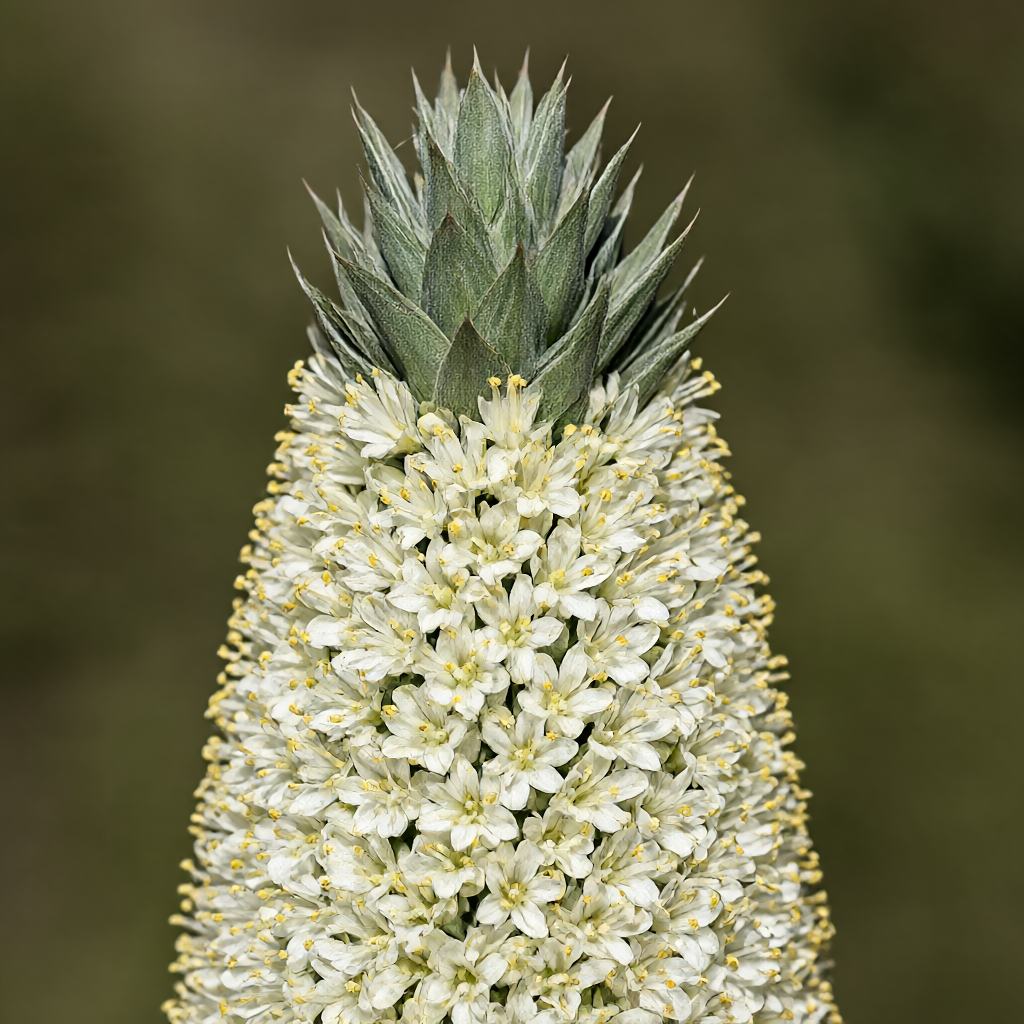
Thousands of blooms open at once, and each one shows pale green, which draws visitors from a distance. The plant dies after flowering, since the whole body goes into the stalk. Weight at the base stays heavy, because the rosette stores water.
1
2
3
Cold high slopes
Where it lives
High slopes hold the species in Peru and Bolivia. Altitude matters, because the plant grows between 3000 and 4800 m. Its range stays fragmented, and each ridge holds its own stand. Dry seasons matter little, since fog supplies much of the water.
Because the ground stays rocky, the roots anchor deep. Fire sweeps the slopes in dry years, and old plants survive while seedlings do not. One neighbour, the Dragon Blood Tree, holds water in a trunk rather than a leaf tank.
Water, light, debris
What it eats
Water and light do most of the work. Water in the tank traps debris, and the plant takes nutrients from it. Insects fall in. They break down into food.
Because the soil stays poor, the tank matters more than the roots. Nothing gets wasted, since leaves funnel every drop toward the centre. Fog collects on the spines, and the water runs down the leaves.
One flowering, then death
The breeding cycle
Flowering happens once, and the plant dies after it. A single stalk holds millions of flowers, and each one offers nectar. Hummingbirds and insects visit, since the blooms open over several weeks.
Because the plant stands so tall, visitors reach it from far away, and the bloom gets visited within hours. Seed ripens in capsules, and the wind holds it downslope. Seedlings need bare ground, and grazing animals remove that chance.
Fire and grazing
Conservation
The Red List calls the species Endangered. Its range keeps shrinking, and few stands hold more than a thousand plants, so each burnt slope matters. Fire kills seedlings, because the rosette burns before it stores water.
Grazing adds pressure, though livestock avoids the spiny leaves. Because the plant flowers once, a burnt stand takes a century to replace. Reserves protect some slopes, yet the largest stands sit outside them.
Side by side
How It Compares
| Trait | Queen of the Andes | Puya chilensis |
|---|---|---|
| Family | Bromeliaceae | Bromeliaceae |
| Stalk | 8-15 m | 2-4 m |
| Lifespan | 80-100 years | 20-40 years |
| Altitude | 3000-4800 m | lowland slopes |
| Flowering | once, then dies | once, then dies |
| Rating | Endangered | Least Concern |
Common misreadings
What People Get Wrong
- Not a tree. The stalk carries flowers, not wood. The plant builds the spike from stored sugar over a single season, and because the effort empties the body it dies once seeding ends.
- Not a cactus. The hooks belong to bromeliad leaves. Spines line every leaf edge, and the rosette holds water in a tank that insects and frogs use between rains.
- Not a plant that spreads. Each ridge holds its own population. Seed falls close to the parent, so a burnt slope waits for a neighbour to flower before the species returns.
Going further
Sources and Further Reading
Quick hits
Five things to remember
- A flowering stalk can carry more than 8000 flowers, and each one opens for a day.
- The plant lives 80 to 100 years before it blooms.
- Its leaves end in hooks, and the spines catch clothing and fur.
- A relative in the same genus grows on cliff faces, though it stays far smaller.
- Local people call the plant the queen of the Andes, and the name fits.